
Road rules in Montenegro
Before driving in Montenegro, check the restrictions that apply to you, then those for the road and car. Your age, driving experience and engine power can affect your choice of car and travel time.
The usual speed limits do not apply equally to every driver. Young and novice drivers have additional rules, with further restrictions introduced in August 2026 for drivers under 21. Check the rental company’s conditions separately from your legal right to drive.
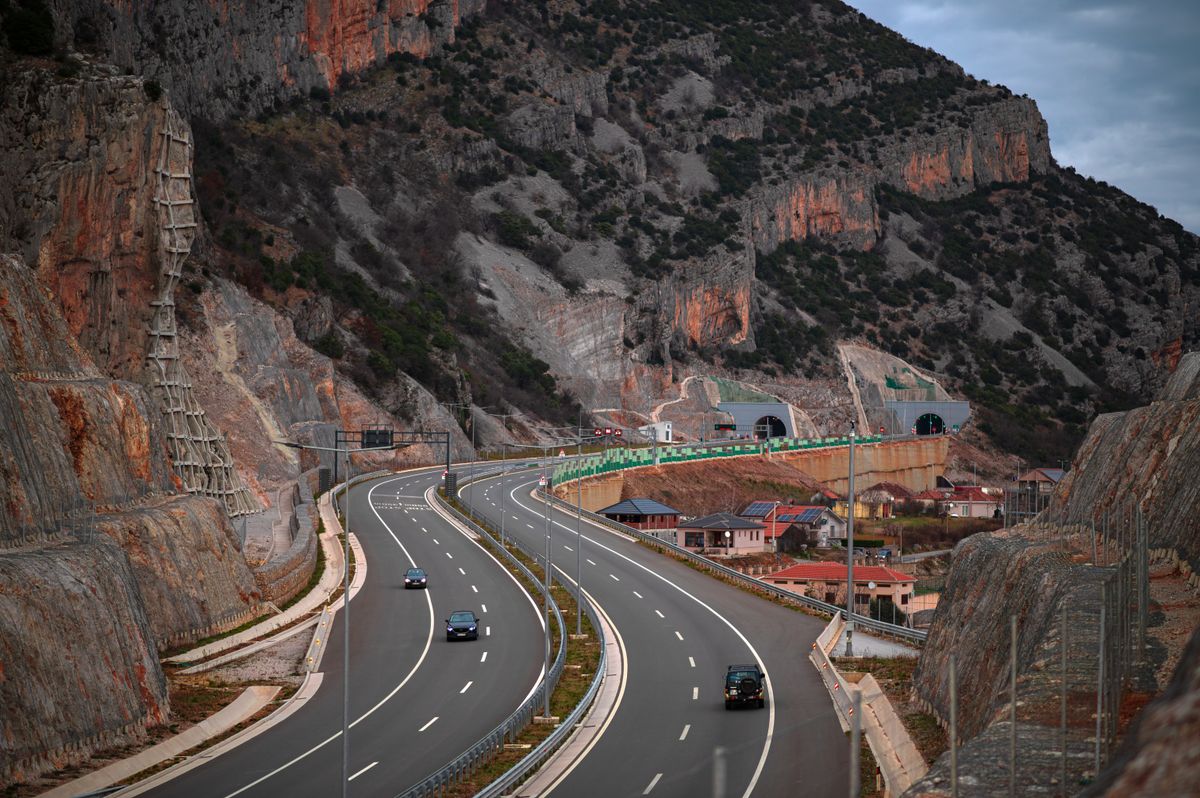
What to check before choosing a car
Start checking before you book, while you can still change the car or the person who will drive it. Ask for engine power in kilowatts and read the driving-experience requirement for the particular rental company. If you plan to share the driving, check every person who will take the wheel. You can then confirm that collection suits your planned driver and late arrival, with the passenger equipment you need. Once those points are clear, choose your departure time and route.
Passenger-car rules at a glance
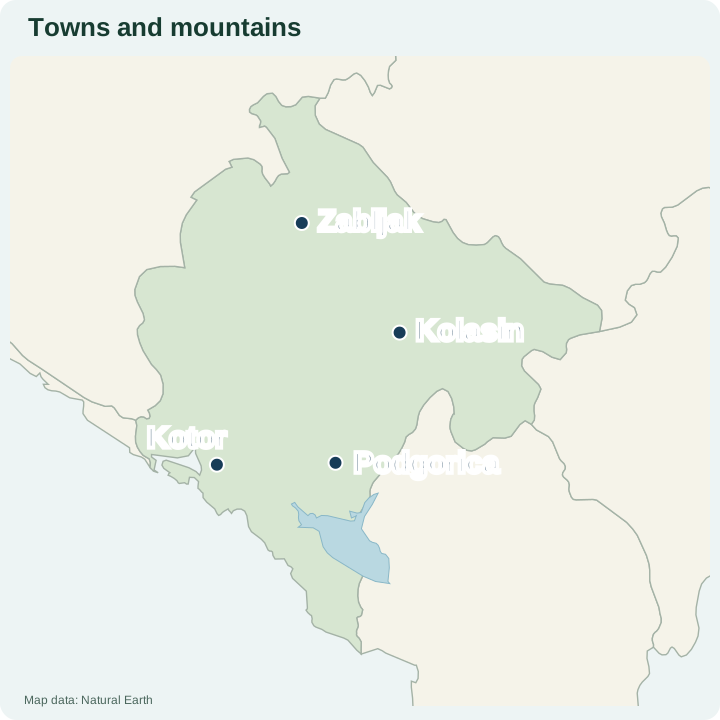
Towns and mountains on one map
Kotor and Podgorica are reference points for the urban part of a trip, with Kolasin and Zabljak for the mountains. The map helps you identify the areas on your journey. It does not show speed limits, stretches requiring winter tyres or current road access.
Checks before departure and when stopped
01Prepare your licence and vehicle documents
Before booking and collecting the car
A temporary visitor needs a valid licence for the appropriate vehicle category and must carry it. Where required, an international driving permit accompanies the national licence. Before travelling, check the requirement for the country that issued your licence and the type you hold. Information about an ordinary valid national licence does not automatically cover a probationary or provisional licence. The first question below the article examines the international-permit issue in more detail.
For a rental car, have the agreement, vehicle documents and insurance details ready. Check that every intended driver is accepted and named as required by the company. The minimum age, required experience, deposit and insurance depend on the particular offer and agreement. A legal right to drive does not oblige every company to rent you a car. If your trip includes another country, check the rental company’s permission and insurance for that journey separately.
02Buckle up passengers and set up your phone
While the car is parked
The driver and passengers must use the seat belts fitted, including those in the rear. Under Article 25, a child under five years old must travel in a secured child seat or infant carrier. A child under 12 must not travel in the front seat. There is a narrow exception for a child under three years old in a rear-facing seat where the car has no airbag for that position or it is switched off. When booking, state the child’s age and check which seat you will receive and how it fits the chosen car.
Use a phone while driving only with equipment that allows hands-free operation. Enter your destination and connect the device before moving off. If you need to change the route or read a message, stop safely first. Under the general rule, a driver is considered under the influence at an alcohol level above 0.3 g/kg, while young and novice drivers must have none in their system. Do not turn that threshold into a calculation of how many drinks you can have. Plan to avoid alcohol on any day you drive.
03Check the lights and where equipment is kept
Before joining the road
Dipped headlights or daytime running lights are compulsory during the day. In a tunnel or conditions requiring dipped headlights, select the appropriate setting rather than relying solely on daytime running lights. At collection, check how the lights work in that particular car. Daytime running lights and the lights needed to illuminate the road serve different functions.
Ask to be shown the warning triangle, reflective vest and first-aid kit. A passenger car must carry a vest and one first-aid kit. Keep the vest somewhere you can reach before getting out. If the car is forced to stop on the carriageway in circumstances requiring a warning, switch on the hazard lights and place the triangle behind it. The legal minimum is 50 m outside a built-up area and 10 m within one, with enough advance visibility. Adapt your actions to the immediate danger and do not step into traffic to measure the distance.
04Follow instructions and keep the paperwork
If stopped or involved in a collision
At a police check, stop as instructed and have your licence and vehicle documents ready. If you receive a notice or other document about an offence, check what it concerns and the deadline and procedure stated on it. Keep the document and proof of any payment. Another traveller’s account of an amount or payment method cannot replace your official document.
After a collision, first assess injuries and immediate danger. Call 112 for emergency assistance and coordination, or 122 to reach the police. The European Accident Statement is intended for a collision with no injuries, damage confined to vehicles, both vehicles able to continue and agreement between those involved about the circumstances. The absence of injuries alone is not enough. With a rental car, notify the company immediately and check the agreed procedure and documents required for a damage claim. Signing the form does not itself confirm that every insurance condition has been met.
Speed, driver status and winter journeys
01Speed depends on the road, signs and driver

For passenger cars, the general limits are 50 km/h in built-up areas, 80 km/h on other roads outside them, 100 km/h on expressways and 130 km/h on motorways. Signs set the limit for a particular stretch. In a built-up area, a sign may permit up to 80 km/h, so a town’s name alone does not establish the limit on every road within it. A lower restriction for the driver or vehicle still applies. Visibility, the road surface or traffic may require a speed below the permitted maximum.
Since 2026, the law expressly covers both instantaneous and average measured speed. Briefly braking at one point therefore does not establish that your average over the measured stretch is within the limit. At a junction of roads of equal priority, give way to vehicles from the right unless signs, road markings or traffic signals indicate otherwise. When turning left, give way to oncoming vehicles going straight ahead or turning right. When joining an asphalt-surfaced road from an unpaved road, give way to all vehicles on the asphalt road even without a priority sign. When joining from a driveway, car park or other area off the road, give way to road users already on it. The size of the street and your navigation route do not confer priority.
02Special rules for young and novice drivers
The law defines a young driver as a driver under 24 years of age, and a novice as someone with less than 12 months of driving experience. Both groups have maximum speeds of 70 km/h on roads and 100 km/h on motorways, subject to a lower signed limit. Both must have no alcohol in their system. An experienced driver aged 22 and a person aged 30 who has just passed their test therefore face these restrictions for different reasons.
A driver who has not turned 21 has also faced further restrictions since August 2026: a driving ban between 00 and 05 and a power restriction for category B cars. A car above 80 kW may be driven only under the supervision of someone in that car who has held a valid category B licence for at least five years. That exception concerns engine power. An experienced passenger does not remove the night-driving ban. Check power in the documents for the actual car, rather than judging by its size or model badge. The Police Directorate also reported enforcement of these new restrictions in August 2026.
03Check winter tyres for your entire journey

From 15 November to 1 April, a passenger car must have winter tyres on every wheel in winter conditions. These conditions include snowfall, snow, ice or black ice on the carriageway. The minimum tyre tread depth during that period is 4 mm. A separate Order specifies roads and stretches where winter tyres are compulsory even without those weather conditions. These are two distinct grounds for the requirement.
For a journey from the coast towards Kolasin or Zabljak, check every stretch rather than just the weather at collection. Ask which tyres are fitted to the car you will receive and whether its equipment suits your journey. Before setting off, read the current announcement and the Order applicable to your travel date, alongside AMSCG road conditions. Suitable tyres do not confirm that a mountain road is open.
Questions about renting and travelling
Do I need an international driving permit with my national licence?
Check the answer for the issuing country and your licence type. Serbia’s Ministry of Foreign Affairs states that a valid Serbian licence can be used without an international permit. This does not confirm the position for every other country or for a Serbian probationary licence. Check the consular information for your document and the company’s requirements before paying for a booking. An international permit accompanies the national licence when used and does not replace it. If the company requires another document, clarify this in writing before arrival, along with whether it accepts your particular licence type.
I am 20 and my flight lands after midnight. Can I collect a car?
Receiving the keys and being allowed to drive immediately are separate questions. If you have not turned 21, the driving ban between 00 and 05 applies even if the company can hand over the car at that time. A passenger with more driving experience does not create an exception. Arrange later collection, a transfer to your accommodation or another driver who meets both legal and contractual conditions. If the same person drives after 05, the car’s power and the other young-driver restrictions still need checking. The August 2026 rules extend beyond the night-time hours.
Can an offence notice arrive after I return a rental car?
Yes. Returning the keys does not end proceedings for an earlier offence. The 2026 amendments require an owner or user, when requested by the police, to provide reliable information identifying the driver within eight days of notification. This is neither a deadline for you to receive a fine nor the payment deadline for every fine. If the company contacts you, ask for the official document and the date, vehicle and offence details, then compare them with your rental. Check any company administration fee separately in the agreement. Keep the correspondence and proof of payment so the same obligation does not remain unresolved.
Related articles for drivers
Practical guides for your stay
City guides for the rest of your trip
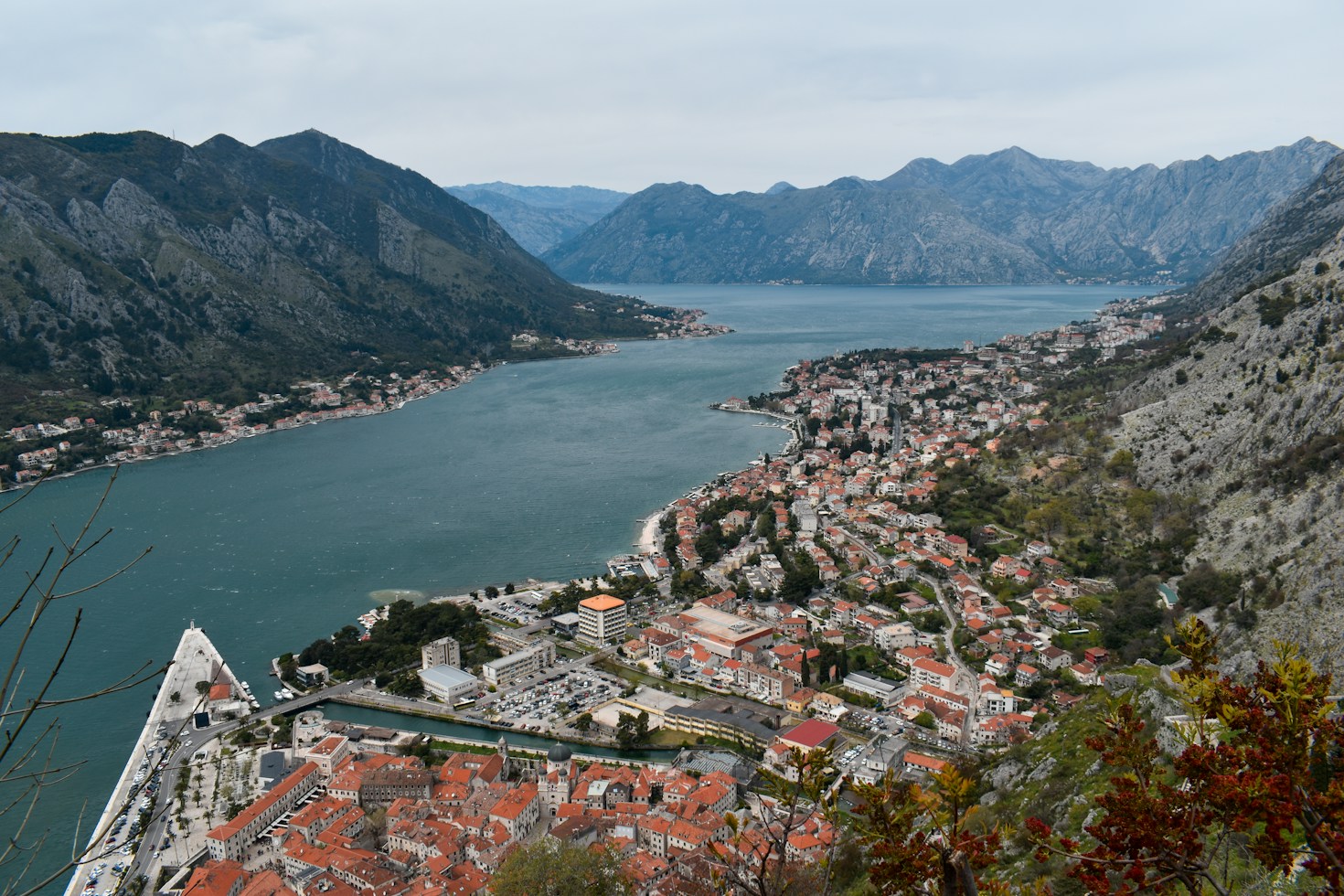 Kotor
 Zabljak
Use the Montenegro guide to compare places, bases and activities, then match your destination with transport that suits you.
