
Food culture in Montenegro
On the coast, choosing fish also means choosing how it is prepared. Around Skadar Lake you find baked and smoked fish, in Njegusi cured ham and cheese, and in the north dishes combining dairy products with potatoes or flour.
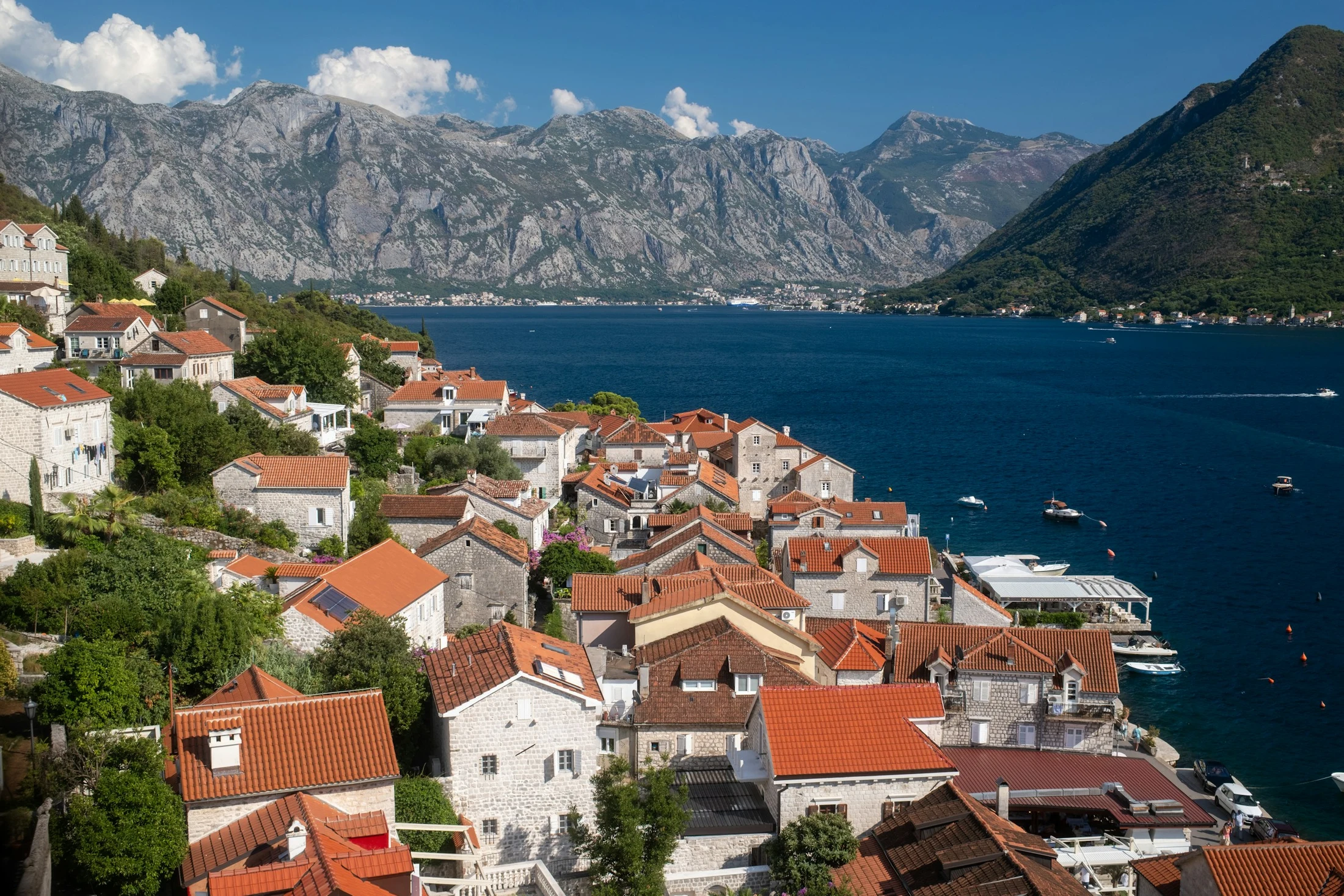
Four culinary starting points
- Coast
- Fish preparations and olive oil
- Skadar Lake
- Baked and smoked lake fish
- Njegusi
- Cured ham, cheese and a household meal
- North
- Kacamak, cicvara and lisnati cheese
Regional dishes and where you eat them
A dish associated with one area can also turn up elsewhere. The published menu of Jadran restaurant in Budva lists Njegusi cured ham and cheese. You do not necessarily need to change the town where you are staying to try them.
A visit to a producer serves a different purpose. You may be interested in how oil or cheese is made, while at a restaurant you choose a prepared meal. A tasting of a single product and lunch served by rural hosts therefore call for different arrangements about what the visit includes.
01Coastal fish preparations and olive oil
Coastal fish preparations and olive oil
Fish na gradele is grilled, leso fish is cooked in water with other ingredients, and brodet is simmered with onions and spices. Brodet is served with polenta, a dish made from maize flour. The National Tourism Organisation's brochure lists boiled potatoes or chard as accompaniments to leso fish.
Metovic olive mill in Stari Bar describes a summer tour of the factory outside the olive processing season, with an explanation of how the oil is made and a tasting of oil made from Barska zutica, an olive variety. If you want to see processing in progress, ask specifically when that is possible, and arrange the date and content of your tasting visit.
02Baked and smoked fish from Skadar Lake
Baked and smoked fish from Skadar Lake
Krap means carp, while ukljeva is a small fish from Skadar Lake. In krap u tavu, the fish is baked with onions and fruit such as plums, apples and quinces. Alongside this baked dish, the National Tourism Organisation's description of lake cuisine includes smoked carp and fresh or smoked ukljeva.
The National Tourism Organisation describes dried, smoked carp topped with a marinade of olive oil, garlic, parsley and lemon.
03Njegusi products and a household meal
Njegusi products and a household meal
Njegusi cured ham is made from pork leg by drying it and smoking it over beech wood. You can try it with Njegusi cheese, which the National Tourism Organisation's brochure classifies as semi-hard to hard. According to the same brochure, after it is made, Njegusi cheese is kept in a shaded, airy place for up to three months before use.
In Kopito, in Njegusi, the Bogdanovic household publishes a traditional menu with cured ham, cheese, salads and rastan, a leafy vegetable served with homemade sausage. The household states that it welcomes guests from March to November, so arrange a date and choose a menu for your visit.
04Kacamak, cicvara and lisnati cheese in the north
Kacamak, cicvara and lisnati cheese in the north
In the recipe from the National Tourism Organisation's brochure, smocani kacamak is made from boiled potatoes and wheat or maize flour, with cheese and kajmak topping the finished mixture. Kajmak is a dairy product made from the fatty layer that separates after milk has been boiled and left to stand. In cicvara, rich cheese and kajmak are cooked with maize flour.
Lisnati cheese is recognizable by its thin, leaf-like slices, and the National Tourism Organisation's brochure associates its production with the municipalities of Kolasin and Mojkovac.
Questions about choosing food during your trip
What can I choose for breakfast if I want local flavors?
One example is the Bogdanovic household's published breakfast menu in Njegusi, which includes priganice, homemade bread, cured ham, cheese, eggs and jams. Priganice are fried dough that you can try with a savory or sweet accompaniment.
Can I get to know this cuisine if I do not eat meat?
Yes, but choose according to the dish's actual ingredients. The Bogdanovic household also publishes a vegetarian menu with vegetable soups, salads, homemade gnocchi and pasta with vegetable sauces. If you also avoid milk or eggs, a vegetarian menu label alone does not confirm that the ingredients suit you. The recipes described for smocani kacamak and cicvara contain dairy products.
How can I tell whether fish is priced per portion or by weight?
Read the unit listed beside the specific item. Jadran's menu lists a kilogram alongside its fish categories, while Zeleni Gaj lists half a kilogram for certain fish and a different weight for fillets. Before ordering, ask what quantity the price covers and what the total will be for the fish you choose.
More stories about life in Montenegro
From food, move on to longer stays, daily life and local habits.
What a longer stay in Montenegro is like
How to choose a place for a longer stay and decide whether to use one base or spend time in several areas.Everyday life in Montenegro
Daily life through shopping, getting around town, walks and cultural events.Local habits in Montenegro
A separate story about local habits, coffee and everyday encounters during your trip.Open the relevant guide for accommodation choices, transport and other travel practicalities.
Continue with city guides and stories
Podgorica
Open the city guide
Tivat
Open the city guide
Zabljak
Open the city guide
Herceg Novi
Open the city guideLocal stories from these cities
Continue planning your destinations, arrival and activities during the trip. If you plan to visit a producer or household in another area, compare rental offers with those drives in mind.
