
Trebinje by car from Herceg Novi, with Tvrdoš and Hercegovačka Gračanica
Trebinje lies along the Trebišnjica, between the stone walls of the Old Town and Crkvina hill, where the poet Jovan Dučić is buried. The overland route from Herceg Novi reaches it via Sitnica and Zupci, and a day in the city brings together monastery art, the streets of an Ottoman fortification and a view of the river from above.
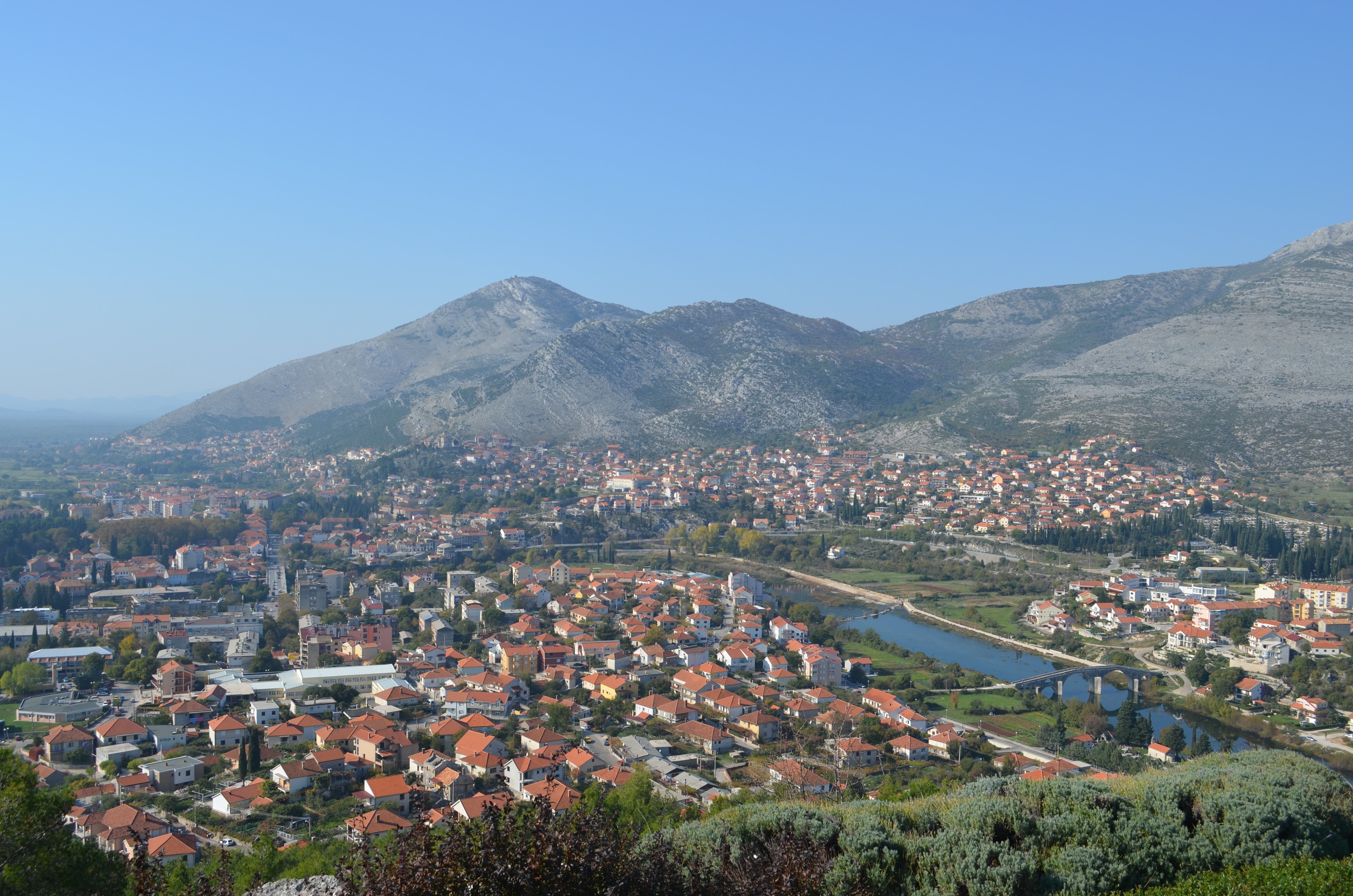
Trip overview
- Trip duration
- 12-13 hours
- Places and breaks
- 5
- Route length
- About 100 km
Why set aside a day for this trip
This trip follows the history of Herceg Novi across the border. After the Venetian conquest of the city, some of its residents found refuge in the Trebinje area, while treasures from the destroyed Tvrdoš Monastery were moved to Savina. Trebinje also has enough to fill a day: you explore the city centre on foot beside the river, and a car lets you add the monastery west of the city and a final view from Crkvina.
Trip and costs at a glance
| Trip duration | About 12-13 hours |
|---|---|
| Transport | A car is needed · car hire offers |
| Sights on this trip | |
| Fuel consumption | Estimated 8-12 l |
| Tolls | No charge |
| Admission costs | No charge |
| Navigation | Open the prepared route for navigation |
Map and navigation

Route, visits and breaks
Lunch and both border crossings are included in the duration. The riverside walking route includes steps.
01Via Sitnica and Zupci to Tvrdoš Monastery
1 h 5 min driving · 45 min for the border · 10 min for parking · 1 h 10 min for the approach and visit
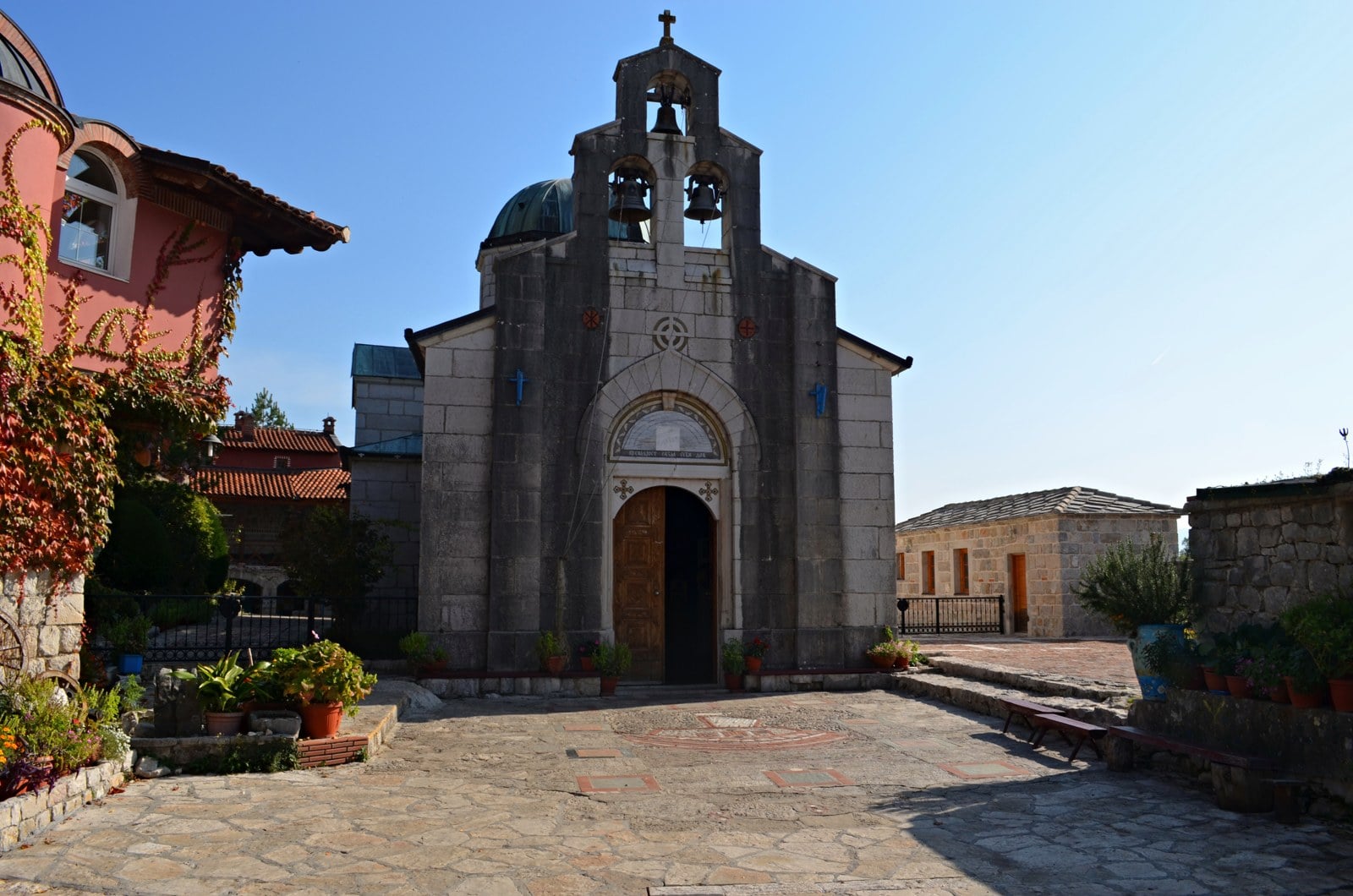
Leave Herceg Novi in the morning on the overland road towards Sitnica and Zupci. After the border crossing, continue towards Trebinje and Tvrdoš Monastery, your first visit. Allow about an hour and five minutes for this drive, plus a separate 45 minutes for border checks and possible waiting.
Leave the car in the car park outside the monastery complex. The walk to the church and back to your vehicle is approximately 530 metres. Ten minutes are set aside for the approach, and one hour for the visit itself. In the Church of the Dormition of the Most Holy Mother of God, look through the glass section of the floor at the foundations of an earlier church, and take time to see the interior and courtyard.
Wine-cellar tours and tastings are separate from this monastery visit. Before travelling, check the entry requirements for Bosnia and Herzegovina and re-entry requirements for Montenegro, along with permission from your car hire provider.
02Trebinje's centre and Old Town on foot
15 min driving · 15 min for parking · 2 h 10 min for walking and sightseeing
Allow about 15 minutes to drive from Tvrdoš to the car park on Vojvode Stepe Stepanovića Street. Leave the car outside the Old Town, where traffic is restricted and stopping and parking are prohibited. The published rate for the enclosed car park on this street is 1.50 KM per hour or part of an hour.
From the car park, walk through the city centre past the cathedral, then enter the Old Town through the southern gate. Explore the streets and squares inside the walls, viewing the exterior of the Osman Pasha Mosque and the area beside the river. An hour and a half is set aside for sightseeing, with 40 minutes for walking through the centre. Your car stays in the same car park until you finish the next walk to the bridge.
The Museum of Herzegovina is in the Old Town. Visiting its interior is a separate cultural option that adds another hour to the basic day trip.
03Lunch break in central Trebinje
5 min walking · 1 h 15 min for the meal
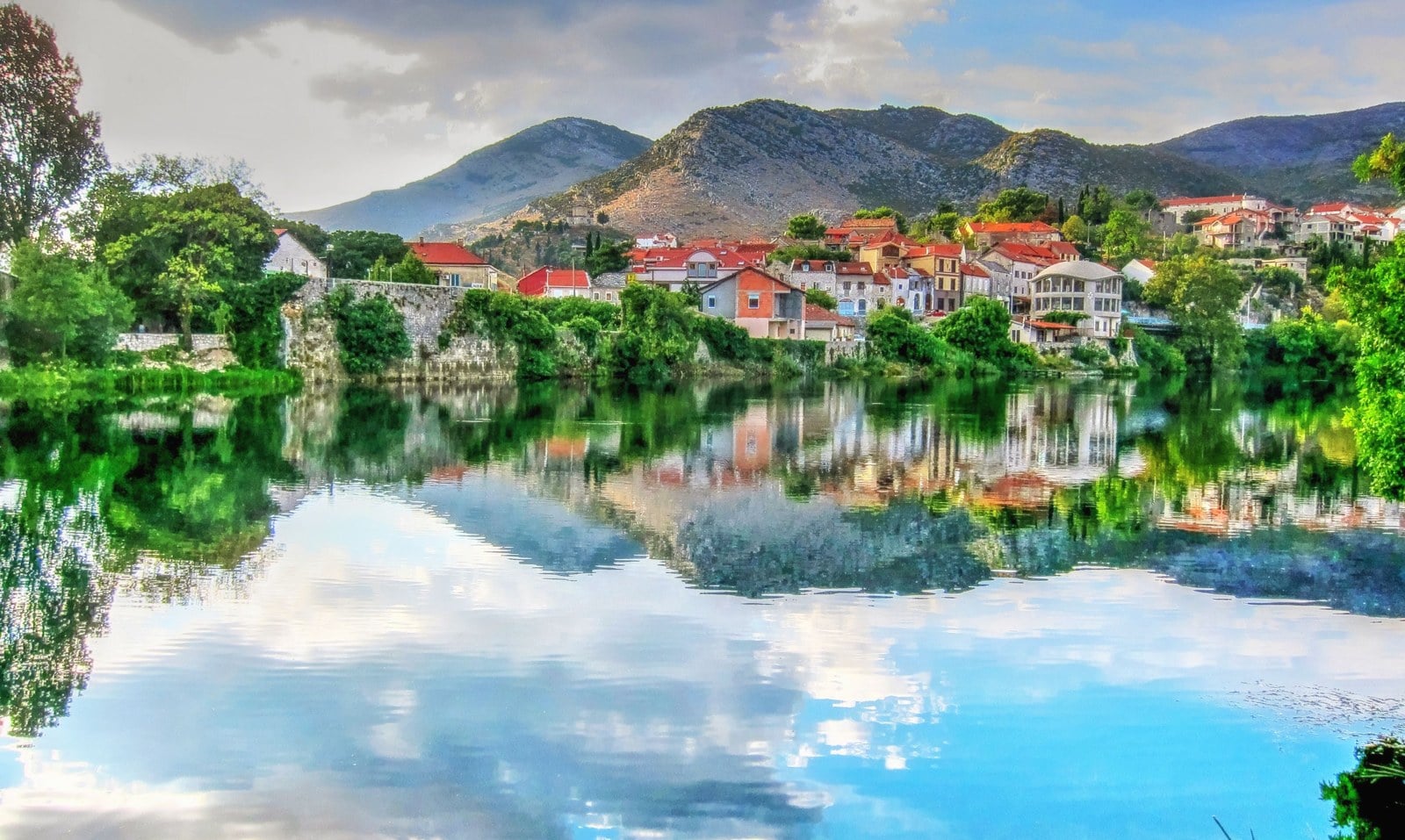
It is about 380 metres from the Old Town to Sesto Senso on Obala Mića Ljubibratića. The restaurant has a terrace beside the Trebišnjica, placing the break along your next walk to the bridge. An hour and 15 minutes are set aside for the meal and any waiting.
04Walk along the Trebišnjica to Arslanagića Bridge
1 h for the walk, bridge and return to your car
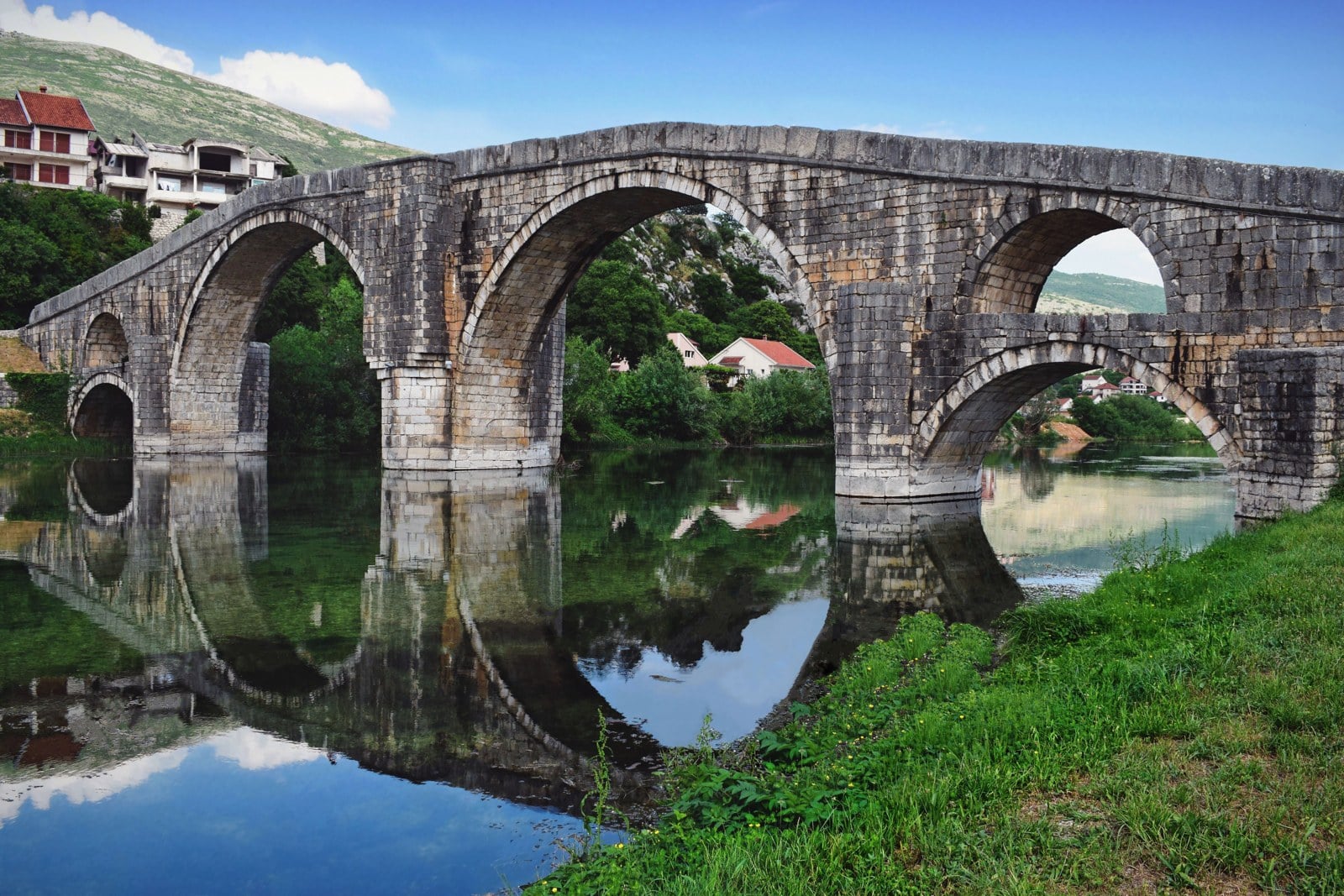
From Sesto Senso, continue along the Trebišnjica to Arslanagića Bridge. The walking route includes steps on the approaches to the riverbank. Cross the bridge to the opposite bank, pause to look at its stone span, then cross back.
The route from the restaurant, across the bridge and back to the car park on Vojvode Stepe Stepanovića Street is about 2.2 km. One hour is set aside for the walk and time at the bridge together. The full city loop from the car park, through the centre and Old Town, via lunch and the bridge and back to your car, is about 3.2 km. After returning to your vehicle, continue by car to Crkvina.
05Hercegovačka Gračanica and the view from Crkvina
10 min driving · 10 min for parking and the approach · 1 h 15 min for the visit
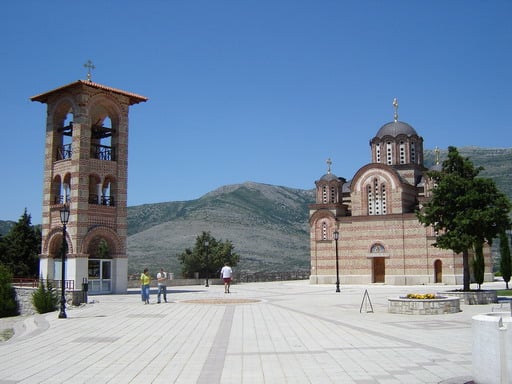
Allow about ten minutes to drive from the city car park to the car park on Crkvina. Another ten minutes are set aside for parking and the short walk to the church and back. The round-trip walk is about 250 metres.
Leave an hour and 15 minutes for this final attraction. Explore the terrace with its bell tower, look over the city and the course of the Trebišnjica, and, when the church is open, enter to see Dučić's tomb, the frescoes and the iconostasis. The visit does not assume that every gallery and other building in the complex will be open.
06Return to Herceg Novi
1 h 5 min driving · 45 min for the border
Descend from Crkvina to the road towards the Zupci - Sitnica border crossing and continue to Herceg Novi. About an hour and five minutes are allowed for the return drive, with 45 minutes set aside for crossing the border in this direction.
The full day trip, including parking, walks to the sights and back, visits, the meal, both border crossings and an extra half-hour buffer, takes approximately 12-13 hours. A longer wait at the border can extend that estimate. The option with the Museum of Herzegovina needs another hour for the collection.
Trip highlights
01Tvrdoš and the traces of earlier churches
Tvrdoš is a monastery dedicated to the Dormition of the Most Holy Mother of God, on the rocks beside the right bank of the Trebišnjica west of the city. The present church was built over earlier church foundations, and the glass section of the floor lets you see those remains beneath the space where services are held today.
The monastery's extensive restoration is associated with Metropolitan Visarion in 1509. The foundations, six stone columns, sections of wall and remnants of frescoes survive from the domed three-aisled church of that period. The church and monastery were destroyed in 1694 during the war between the Ottomans and Venetians. The church was rebuilt in 1928 with the support of Nikola Runjevac, a native of Trebinje who lived in America.
This history connects Tvrdoš directly with Herceg Novi. After the destruction, sacred objects and treasures were moved to Savina, while monastic life also continued in nearby Duži.
Saint Basil of Ostrog received his monastic tonsure and priestly ordination at Tvrdoš. The monastery is also associated with a long tradition of wine production in its cellars.
02The Old Town, walls and squares of Trebinje
Trebinje's Old Town, known as Kastel, was built beside the right bank of the Trebišnjica. Its origins are tied to Ottoman efforts to fortify holdings in Herzegovina after Herceg Novi and Risan came under Venetian rule.
Osman Pasha Resulbegović began building the fortification in the early 18th century. Craftsmen came from Dubrovnik, while labourers came from surrounding places. Mosques and a clock tower took shape alongside the walls and towers, and a channel connected to the river surrounded the town. In front of today's entrance gate, a movable bridge once crossed that channel. The channel was later filled in.
Outside the walls, Jovana Dučića Street and Trg slobode form another part of the city walk. Beside this area is Platani, a garden known for the natural shade of its tall trees.
03Arslanagića Bridge and the Trebišnjica
Arslanagića Bridge, also known as Perovića Bridge, is part of Trebinje's 16th-century Ottoman heritage. Its construction is associated with Mehmed Pasha Sokolović, and its later name with Arslan-aga, who was granted the right to charge for crossing the Trebišnjica. Arslan-aga arrived in Trebinje among families who left Herceg Novi after the withdrawal of Ottoman rule, so the bridge's history directly connects the two cities.
The bridge is not in its original location. It stood upstream near Mičevac until the construction of a hydroelectric system threatened that area. The bridge was dismantled and moved to its present site between Gradina and Police. Rather than remaining beneath the reservoir's water, its stone span was preserved as part of the city landscape.
04Hercegovačka Gračanica and Dučić on Crkvina
The Church of the Annunciation, known as Hercegovačka Gračanica, was built on Crkvina hill above Trebinje. Jovan Dučić, the poet and diplomat, is buried there. The church was built to a design by Predrag Ristić, drawing on the architecture of Gračanica in Kosovo.
The church has five domes. Stone alternates with brick decoration on the exterior, while 16 columns support the interior. One of the columns has a circular base and rests on a stone brought from Gračanica in Kosovo. The tradition of carrying a stone from the hearth speaks of the bond between an old home and a new one.
Inside, the floor inspired by the Church of the Holy Archangels in Prizren, frescoes by Aleksandar Živadinović and an iconostasis made at Tvrdoš Monastery stand out. The floor is the work of Vladan Banković, and Sister Tekla of Dobrićevo painted the principal icons on the iconostasis.
The Crkvina complex includes a bell tower, an amphitheatre and buildings with gallery spaces. From the terrace, you can see how the Trebišnjica flows between the city's neighbourhoods.
05The Museum of Herzegovina for a longer cultural visit
The Museum of Herzegovina is in the Old Town, in a building that served as an Austro-Hungarian barracks and later as a school. Its archaeological collections include prehistoric, ancient and medieval material.
Add one full hour to the basic trip for the collection. An individual ticket costs 4 KM per person. Published opening hours are Monday to Saturday, 08:00-20:00, and Sunday, 14:00-20:00. The 14:00 opening on Sunday shifts lunch and the walk that follows. Choose this longer option when enough daylight remains after the museum for the bridge and the final view from Crkvina. The basic day trip does not depend on the museum being open.
With the museum, the plan takes about 13-14 hours. The visit is added during your time in the centre, while Gračanica remains the final attraction before the return.
Questions before a day trip to Trebinje
Can I take a hire car to Trebinje and return to Montenegro?
The crossing is possible with your chosen provider's permission and the appropriate documents for the travellers and vehicle. For a hire car, ask for written permission to enter Bosnia and Herzegovina, and check the territorial coverage of insurance and roadside assistance, along with any cross-border fee in the specific offer. The right to enter Bosnia and Herzegovina and return to Montenegro depends on each traveller's citizenship and documents. Staying in Montenegro does not in itself give you the right to enter Bosnia and Herzegovina. If you are using a Montenegrin visa, check whether it allows re-entry.
How much time should I allow for both border crossings?
This plan sets aside 45 minutes for the outward crossing at Sitnica - Zupci and 45 minutes for the return crossing, an hour and a half in total. This is a buffer in the day's schedule, not a published or guaranteed waiting time. Longer lines at the crossing can extend the full trip beyond the stated estimate of 12-13 hours.
Can I visit Trebinje, Tvrdoš and Gračanica in one day?
Yes, this round-trip plan from Herceg Novi covers about 100 km of driving and approximately 12-13 hours, including visits, lunch, walks back to your car and a buffer for both border crossings. Tvrdoš comes first, followed by the city and bridge on foot, with Gračanica as the final attraction. The museum is a separate cultural option that adds an hour and a 4 KM ticket, so allow about 13-14 hours for that version.
More day trips from Herceg Novi
Dubrovnik by car from Herceg Novi: the Old Town and city walls
A full-day trip via Debeli Brijeg and Karasovići, with a complete circuit of the walls, Dubrovnik's streets and harbour, Lovrijenac and a final view from Srđ.Orjen and stone villages by car from Herceg Novi
A day in the hills behind Herceg Novi: views from Tajno Brdo, stone roofs in Žlijebi and the beech forest at Vrbanj, with a meal arranged in advance and a return drive.Risan, Perast and Kotor by car from Herceg Novi
A day along the northern shore of the Bay of Kotor, visiting Roman mosaics, Perast palaces and Kotor. Museums, a waterfront lunch and the climb to Saint John's Fortress, with prepared navigation.Guides to day trips and stays in nearby cities
Igalo
Open city guide
Tivat
Open city guide
Kotor
Open city guide
Budva
Open city guide
Cetinje
Open city guide
Petrovac
Open city guide
Podgorica
Open city guide
Bar
Open city guide
Ulcinj
Open city guide
Zabljak
Open city guideDrives and day trips from nearby destinations
Continue with guides to Montenegrin towns, airports, parking, accommodation, food, sights and excursions.
