
Cetinje Neighborhoods: Bajice and Aerodrom
In Bajice, older stone houses were built in small groups along the edge of the field and hillside. In Aerodrom, rows of lower family houses were joined by multistory apartment blocks.
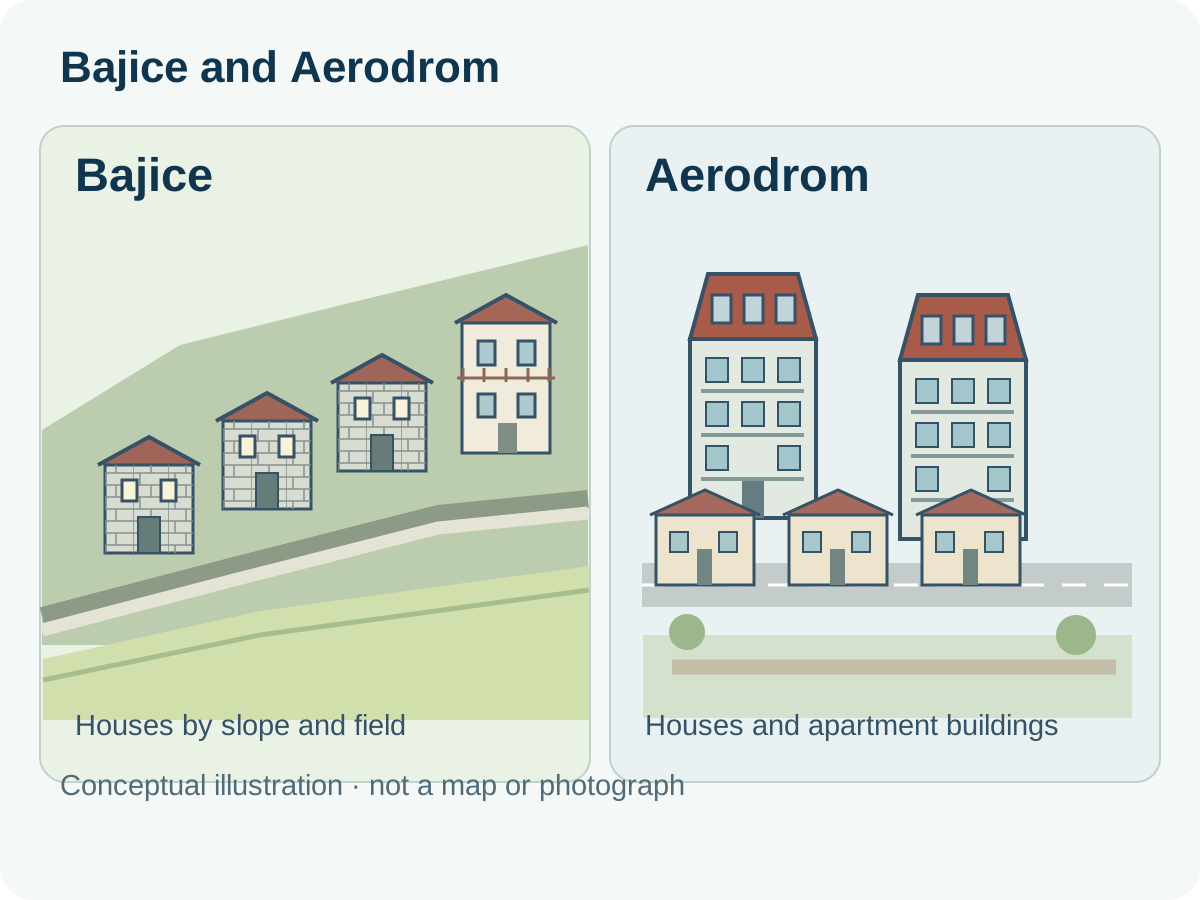
An Illustration of Building Types
- Bajice
- Stone houses and retaining walls by the hillside
- Aerodrom
- Rows of family houses and apartment blocks
The House and the Space Around It
Cetinje's housing developed from stone houses in settlements around the plain. Alongside single-story houses, homes with an upper floor and attic were built, and stone facades were later plastered. Here we explore Bajice and Aerodrom through two changes: how the house developed, and how houses and apartment buildings relate to yards, access paths, and the street.
01Bajice
The older part of Bajice developed as small groups of stone houses at the boundary between cultivated fields and the hillside. House locations followed the steep, rocky terrain, and the groups shared access paths. On steep ground, retaining walls known locally as podzide held the soil in place beside the houses.
A traditional house in Bajice had a vaulted ground-floor room called a konoba and an upper floor. Local stone formed its walls, while a wooden frame supported a roof with two sloping sides. Straw and wooden roof coverings were later replaced with roof tiles.
Later construction introduced larger, detached family houses with yards around them. Some were built alongside roads, while others formed small groups around a shared access street. Both single-story houses and houses with an upper floor and attic were built.
On one roadside plot in Bajice, an old stone house stands beside a lower building with plastered walls. A stone wall separates the plot from the street, while a rocky slope rises behind the house. For the city's wider development, read our guide to Cetinje.
02Aerodrom
Cetinje's Aerodrom neighborhood combines rows of family houses with separate multistory apartment blocks. Rows of lower family houses were built along Baja Pivljanina Street, with facades facing the street and yards inside the blocks. They included single-story houses and houses with an upper floor and attic.
Some family houses gained extra floors, while separate apartment blocks were built on open land. Buildings with balconies on several floors and large red roofs with windows and steep lower slopes were also built in Aerodrom.
Gipos is a separate group of apartment buildings within Aerodrom. There are footpaths, grassy areas, and trees between its buildings.
Want more stories about Cetinje?
Get to know Cetinje further through local stories and guides to the city and its surroundings.
For more on your stay, choose a guide to getting here, accommodation, food, attractions, or day trips from Cetinje.
Guides to Other Cities
Kotor
Open the city guide
Budva
Open the city guide
Tivat
Open the city guide
Petrovac
Open the city guide
Podgorica
Open the city guide
Herceg Novi
Open the city guide
Igalo
Open the city guide
Bar
Open the city guide
Ulcinj
Open the city guide
Zabljak
Open the city guideCity Stories from Other Destinations
Connect your stay in Cetinje with other coastal and mountain cities, airports, and practical information for the rest of the country.
