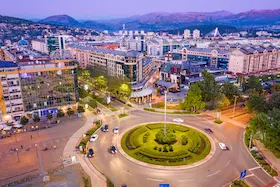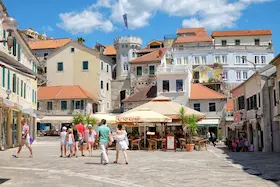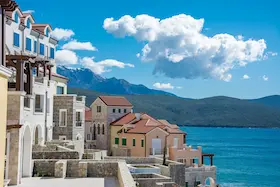
Town and surrounding area

Hidden Places in Cetinje and the Surrounding Area

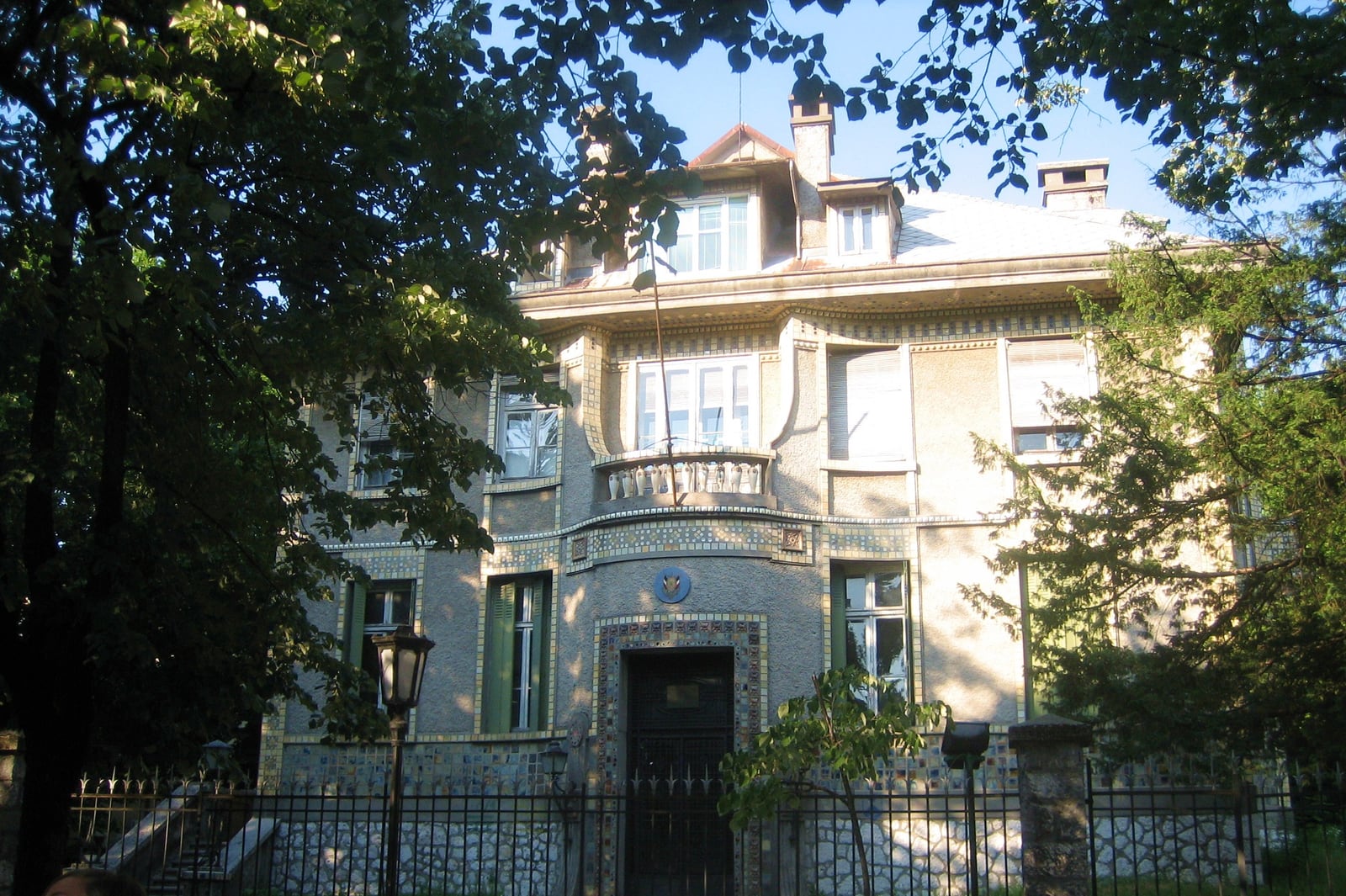
Ceramic tiles frame the doors and windows of the former French Legation. Part of the National Library of Montenegro now operates inside. You can see the building from the street, while its interior serves readers and librarians.

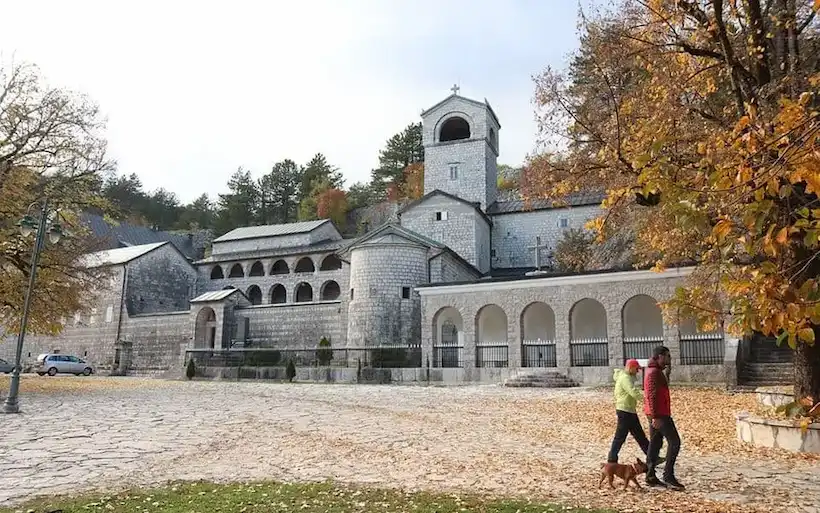
Cetinje Monastery with its bell tower and arcades beneath autumn trees
AuthorHire And Travel Editorial TeamLast updated

The guide was prepared through research into hidden places in Cetinje and the surrounding area. The content was reviewed, confirmed and verified by Milovan Johnson on October 10, 2026.

Where the places are

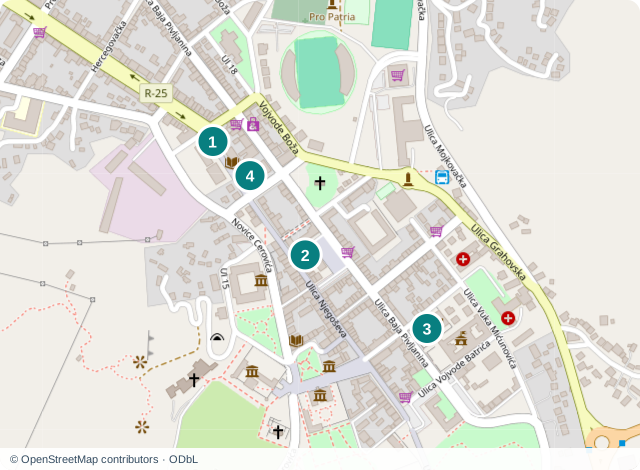
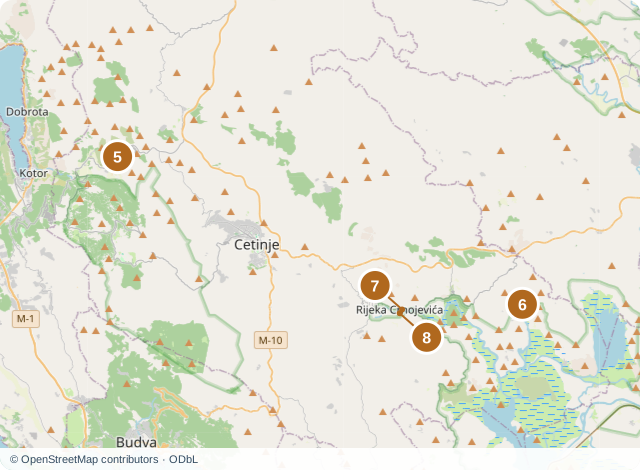
Cetinje and its surroundings on two maps

Four places are in town. Njegos's Birth House, Karuc, Danilo's Bridge and Obod are separate outings within Cetinje municipality. The pins mark buildings or the village, not parking spaces or an entrance to every building.

Cetinje and nearby outings

Cetinje has other places like this: their past is visible from the street, while their present use determines how you can actually visit them.

01
Money Museum of the Central Bank of Montenegro
Money Museum of the Central Bank of Montenegro

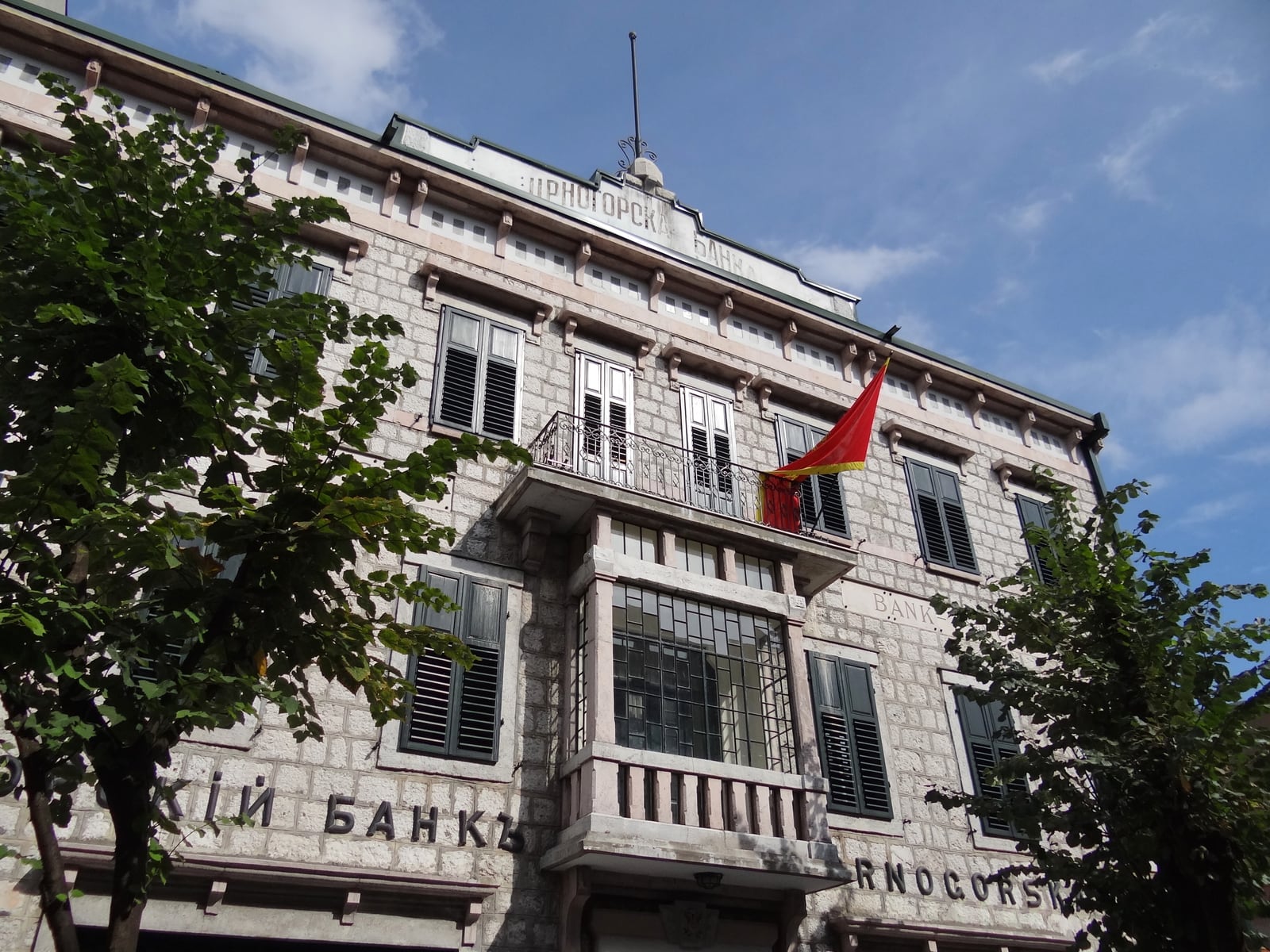
Stone facade of the Money Museum in the former bank building in Cetinje

The old bank's stone facade on Njegoseva Street still bears its banking inscription. Inside are coins and banknotes used in Montenegro at different times, with explanations of when they circulated and who issued them. Money that once passed from hand to hand becomes a way to follow the country's history.

Alongside the historic money, the Central Bank has installed a multimedia area and a machine where visitors can make a replica of the Montenegrin perper. There is also an opportunity to have a photograph made on a 50-perper banknote.

The museum lists free admission and seasonal opening hours. Last entry is thirty minutes before closing, so arriving near the end of the day may leave less time than the published hours first suggest. Check the seasonal hours on the Money Museum page. Money Museum of the Central Bank of Montenegro on Google Maps

02
Montenegrin Art Gallery "Miodrag Dado Djuric"
Montenegrin Art Gallery "Miodrag Dado Djuric"

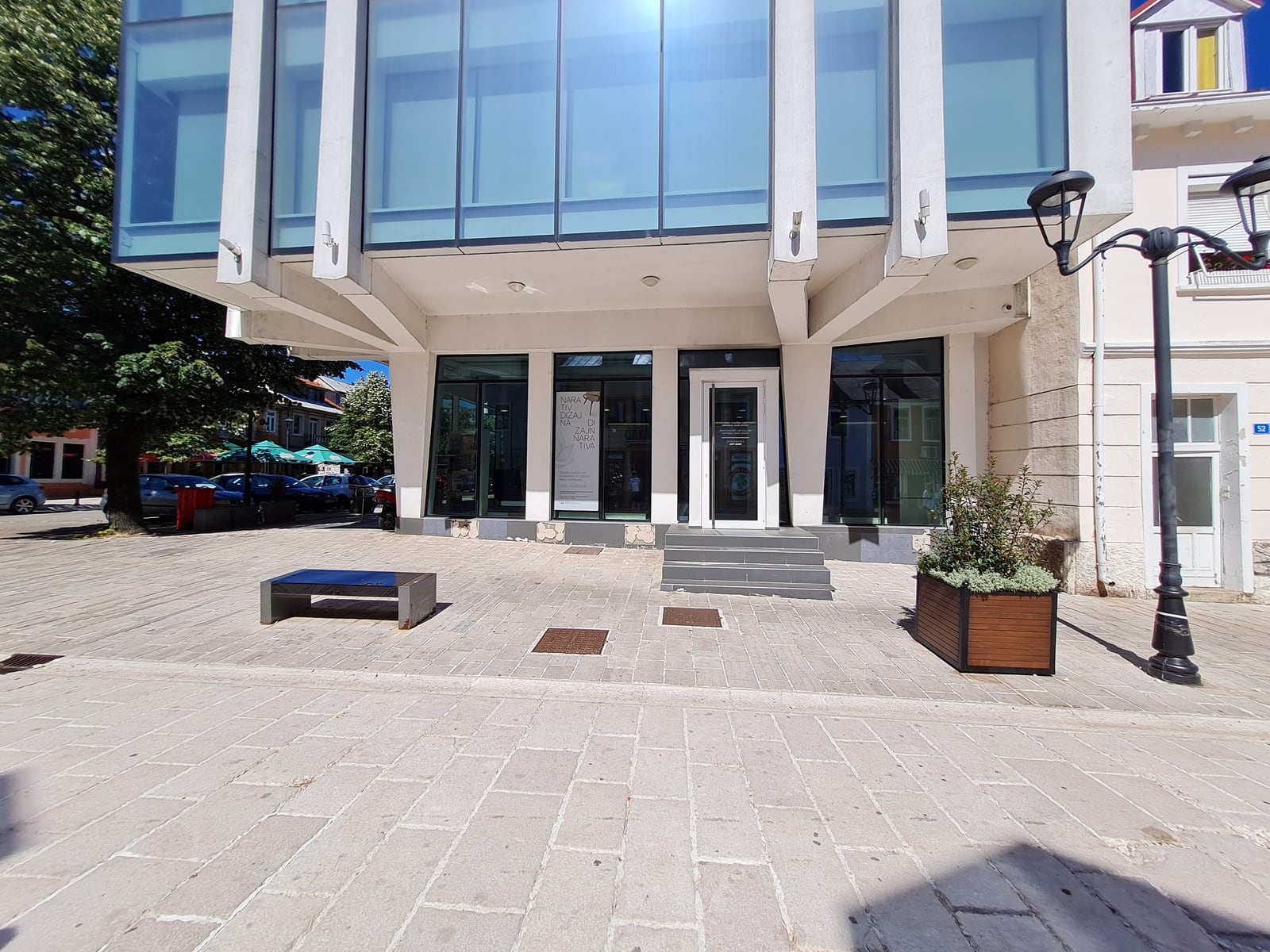
Glass entrance to the Miodrag Dado Djuric Gallery on Balsica Pazar

The glass entrance on Balsica Pazar leads into the Montenegrin Art Gallery "Miodrag Dado Djuric". Beyond the glass, exhibitions of contemporary art change, so what you see depends on the programme in place when you visit. In a town known for historical museums, here you can see work by artists much closer to our own time.

The National Museum opened the gallery in 2012 in the former Trgopromet building. It takes its name from the Montenegrin artist Miodrag Dado Djuric.

The National Museum lists free admission. Before setting off, check the gallery programme on the National Museum website. Montenegrin Art Gallery "Miodrag Dado Djuric" on Google Maps

03
Royal Theatre Zetski Dom

Royal Theatre Zetski Dom

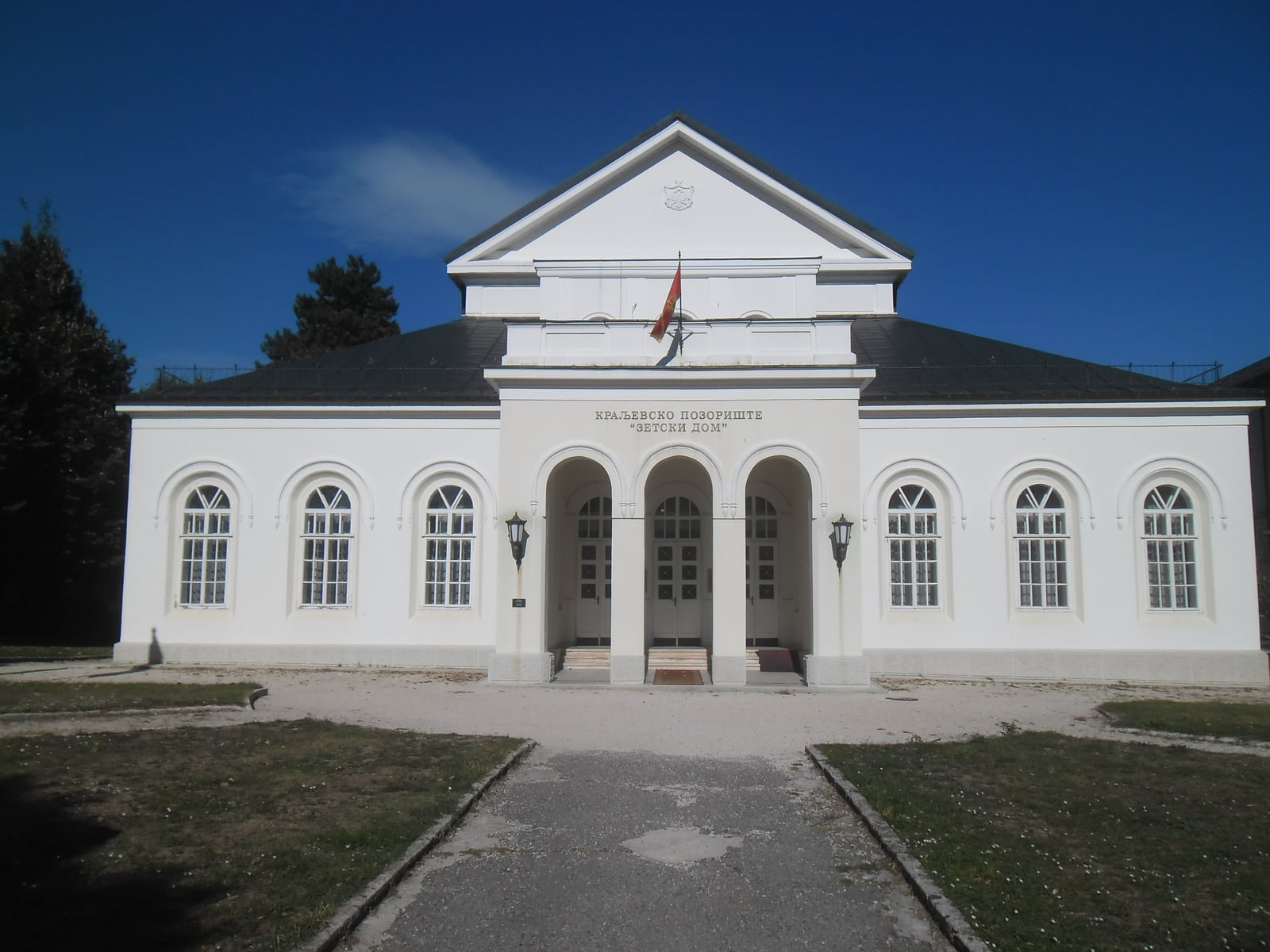
White facade of Zetski Dom with three entrance arches and the theatre inscription

On Zetski Dom's white facade, the name of the royal theatre stands above three entrance arches. The building still welcomes audiences, so it is more than a reminder of the time when Cetinje was establishing its first public cultural institutions.

The theatre dates its beginnings to 1884 and still operates as a professional national stage. Alongside plays, it announces concerts, film programmes, festivals and events for young people. Its schedule changes through the year, so your reason to go inside might be a play, a concert or another advertised event.

For entry to the auditorium, check the official Zetski Dom website and the terms for the particular event. Walk-in tourist visits to the interior have not been confirmed, and a theatre programme is not a museum's opening schedule. If the building itself interests you, you can see its facade without matching your visit to a performance. Royal Theatre Zetski Dom on Google Maps

04
Former French Legation

Former French Legation

Ceramic tiles on the former French Legation facade behind a street fence

At the former French Legation, ceramic tiles around the entrance, under the balcony and along the facade draw the eye. There is plenty of stone and plaster in the street, so this building's coloured pattern stands out. Even without going inside, you can see how much care the former diplomatic mission gave to its public face.

The building was erected in 1910 to a design by Paul Gaudet, with the Perret brothers also involved. It served as a legation until the First World War. Since 1949, part of the National Library of Montenegro has operated there, holding old and rare books along with other collections. It remains a working institution, so its diplomatic past does not mean the rooms have become a tourist exhibition.

You can see the facade from the public street, behind the fence. Access to the reading rooms, library collections and enclosed grounds has not been confirmed for ordinary tourist visits. Stop for the exterior details, and check the institution's rules separately if you want to use the library. Former French Legation on Google Maps

05
Njegos's Birth House in Erakovici

Njegos's Birth House in Erakovici

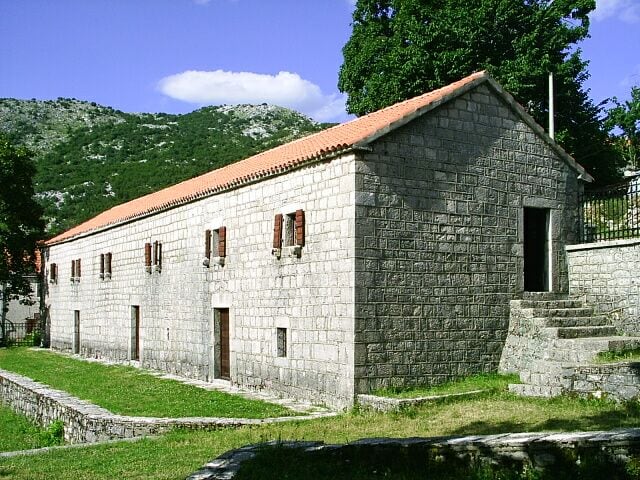
Low stone building of Njegos's Birth House in Erakovici, with steps and a red roof

In Erakovici, a hamlet of Njegusi, a long, low stone house stands with a red roof and steps at one end. This is Njegos's Birth House. Its rooms form a memorial museum devoted to the future ruler and poet, in the house where his life began.

According to the National Museum, Petar I built the house in 1779 and Petar II Petrovic Njegos was born there in 1813. It was arranged as a memorial museum in 1973. The display includes ethnographic objects and weapons. The house introduces his family origins, while the objects also show how a household in Njegusi lived.

The birth house is a museum interior with seasonal opening arrangements. Before making a trip specifically to Erakovici, check the birth house visiting information for the day you have chosen, especially outside summer. You can combine the visit with a trip to Lovcen, but confirmation that one museum is open does not confirm admission to the other site. Njegos's Birth House in Erakovici on Google Maps

06
Karuc

Karuc

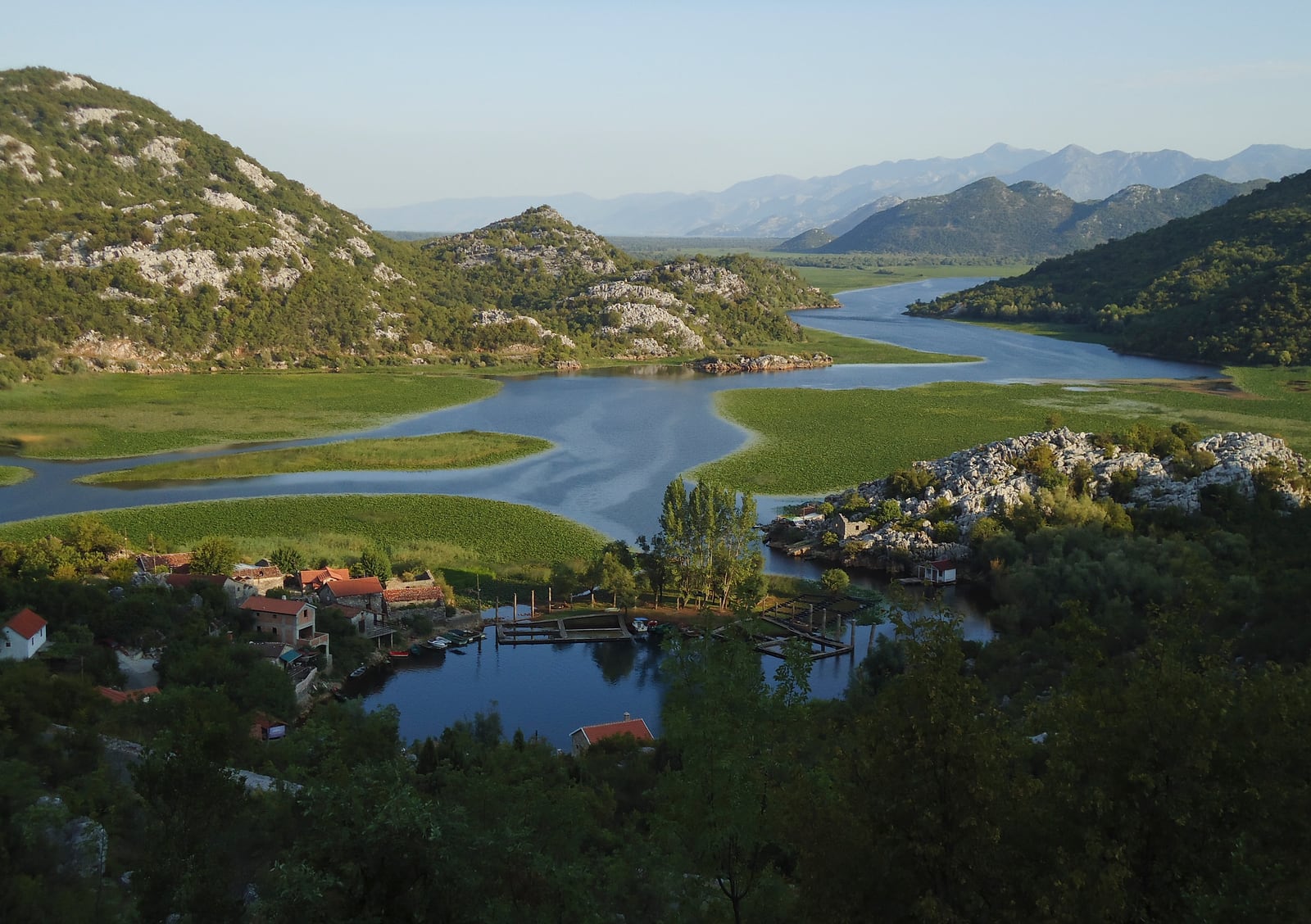
Karuc beside a lake inlet, with stone houses and boat moorings

Karuc sits beside a narrow inlet of Lake Skadar, below stony slopes. The roofs of the small village descend towards the water and boat moorings. People still live here: the passages between houses run past private yards and spaces used for boats.

The tourist organisation points out a tower in Karuc associated with the winter stays of Petar I Petrovic Njegos in the 19th century. This trace of a ruler's time by the lake stands below the slopes among the fishing houses. View the tower from outside. Tourist entry has not been confirmed.

A narrow, winding road leads to Karuc, and the visitor description mentions only a small parking area at the village entrance. That does not confirm an available parking space for every vehicle or permission to step onto any pontoon. Keep to accessible village paths and views from public space. Karuc on Google Maps

07
Danilo's Bridge in Rijeka Crnojevica

Danilo's Bridge in Rijeka Crnojevica

The two stone arches of Danilo's Bridge and the Mostina house by Rijeka Crnojevica

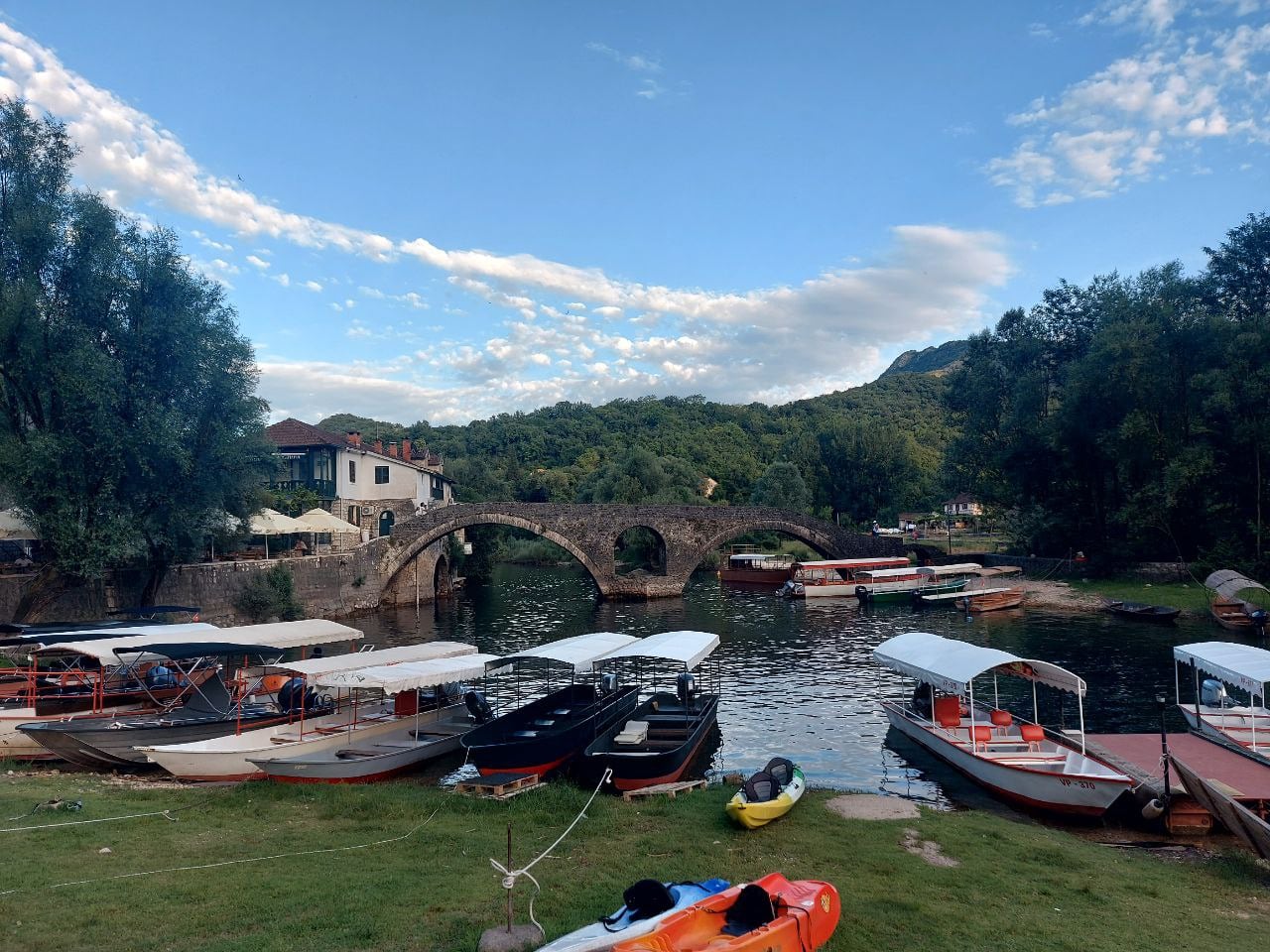
Two broad stone arches of Danilo's Bridge connect the banks at Rijeka Crnojevica, with the Mostina house beside one end. From the riverside quay you can see both the crossing and the house that has become a recognisable part of the village.

The road across the bridge once led towards Rijecki Grad, or Obod, and then on towards Virpazar. Its arches are therefore more than an attractive frame for the river: from this spot you can still trace the old direction of travel before continuing towards the hill above the village.

You can see the bridge and the Mostina house from the public part of the riverside village. There is no need to arrange entry into nearby buildings. Obod is a separate site on higher ground. Continuing there means leaving the riverbank for a marked footpath, with different visiting conditions. Danilo's Bridge in Rijeka Crnojevica on Google Maps

08
Obod / Rijecki Grad

Obod / Rijecki Grad

Low stone walls and a plaque at Obod on the hill above Rijeka Crnojevica

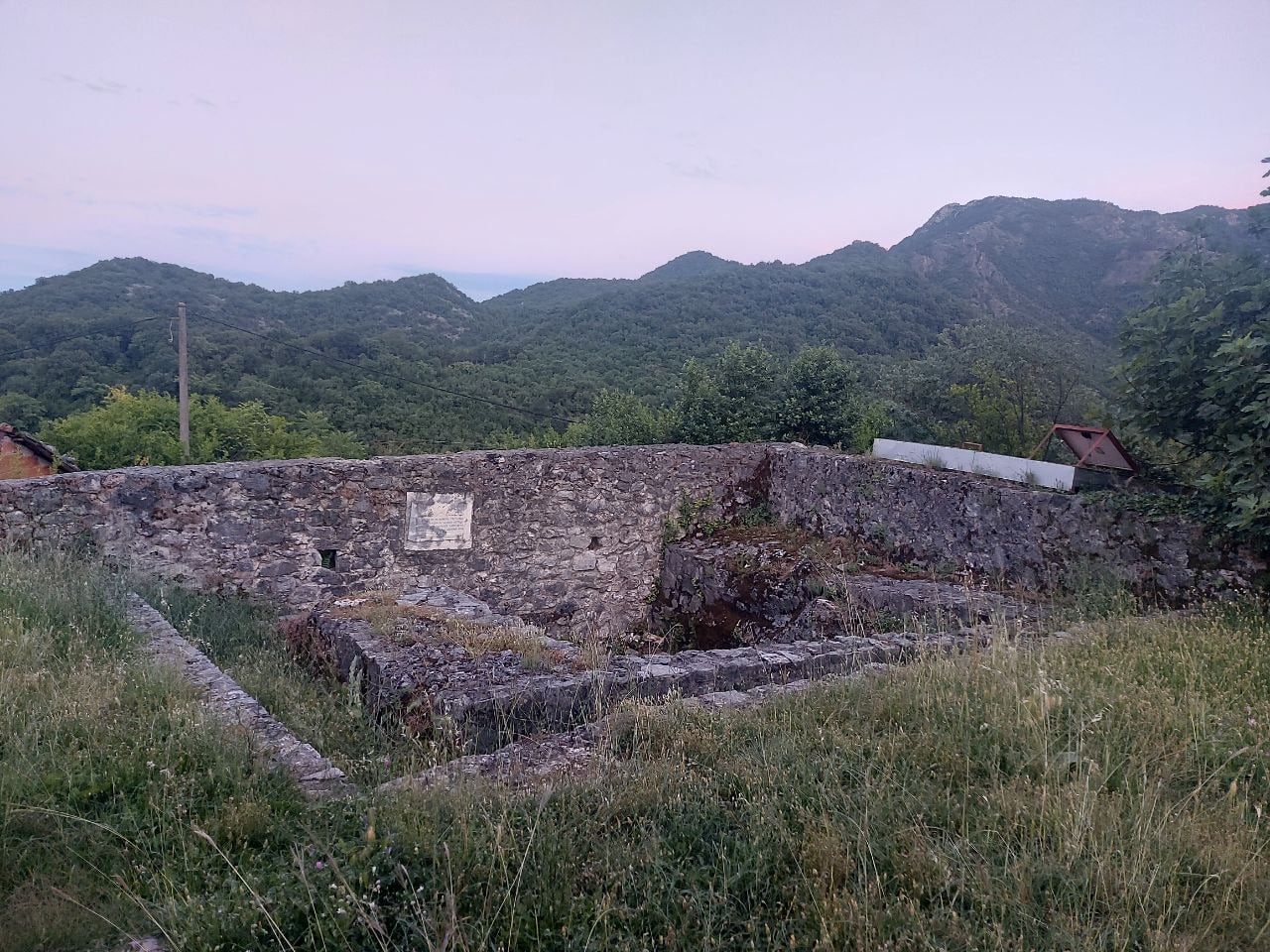
Low stone walls remain at Obod, or Rijecki Grad, above Rijeka Crnojevica. A plaque helps you find the site, but the landscape and surviving stone do not look like a complete castle. A marked walking route leads from the riverside village to the site on the hill above it.

Ivan Crnojevic had a fortified seat at Obod in the final decades of the 15th century. What remains today are low walls, and their layout does not establish the use of every room. You can still see where that seat stood in relation to the riverside road below.

From the stone bridge, follow the marked walking route towards Obod. The national parks authority has reported renewing the markers along this route, so stay on the path for an exterior visit. Access into the ruins themselves, the cave at Obod or the platforms has not been confirmed. Obod / Rijecki Grad on Google Maps

Choosing a visitAn exhibition, a performance or a riverside outing
TownAn exhibition or a performance

The Money Museum has a permanent collection and an interactive area, with published opening hours. You can experience the inside of Zetski Dom during a specific performance or another scheduled event. If you are choosing by what is on, check the museum's hours and the theatre programme first.

RiverTwo different places along the same river

At Danilo's Bridge you can see its arches, the Mostina house and the crossing from the public riverbank. Reaching Obod means following a marked footpath to the site above the village, with no confirmed access into the ruins.

Different places

The Dado gallery and Njegos's sites

Gallery
The Dado Gallery and the former Dado Studio

The Montenegrin Art Gallery "Miodrag Dado Djuric" is on Balsica Pazar. The former Dado Studio on Dvorski Trg is a different building, which the Cetinje city authorities adapted as the Centre for Culture.

Njegos
Birth house and mausoleum

Njegos's Birth House is a memorial museum in Erakovici, in Njegusi. The mausoleum stands on Jezerski Vrh on Lovcen. Check access and opening hours for the two places separately.

Further choices

Theatre and gallery programmes

Theatre
If there is no performance

Zetski Dom's website offers a virtual tour of the theatre and auditorium, so you can see the interior even when no event is listed for your day in Cetinje. That does not confirm physical admission outside a programme.

Gallery
If you are visiting for an event

Alongside Dado Gallery exhibitions, the National Museum lists talks, lectures and workshops. Check the programme for their dates: free admission to an exhibition does not mean an additional event is taking place that day.
Questions about lesser-known places around Cetinje

If I only have time for the Money Museum or the Dado Gallery, which should I choose?

Choose the Money Museum for historic banknotes, coins and how the perper was made. Choose the Dado Gallery for contemporary art and an exhibition that changes with the programme. Both list free admission, but check their current hours and programmes separately.

What can we see in Cetinje if we are stopping briefly on the way to Njegos's mausoleum?

For a short walk, see the exterior of Zetski Dom and the former French Legation's facade. For the Money Museum or Dado Gallery, check current hours or the programme. Njegos's Birth House is not in central Cetinje but in Erakovici, in Njegusi, and its seasonal opening arrangements need a separate check.

If we choose between Karuc and Rijeka Crnojevica, what can we see without taking a boat?

Karuc is a small inhabited village with a narrow access road, stone houses and a tower visible from outside. In Rijeka Crnojevica, you can see Danilo's Bridge from the public riverbank and follow a marked path towards Obod. These are different land-based visits. If you want a boat trip or to enter private property, check the arrangements separately.

A car for outings from CetinjeCompare rental offers and collection terms if you plan a separate trip to Njegusi, Karuc or Rijeka Crnojevica.
Find a car
Continue with the Cetinje guide
Guides to popular destinations

City guides for nearby destinations

Hidden places in nearby towns

Country guideContinue your trip through Montenegro

Compare coastal towns, mountain regions, airports, parking, and routes before choosing where to travel after Cetinje.