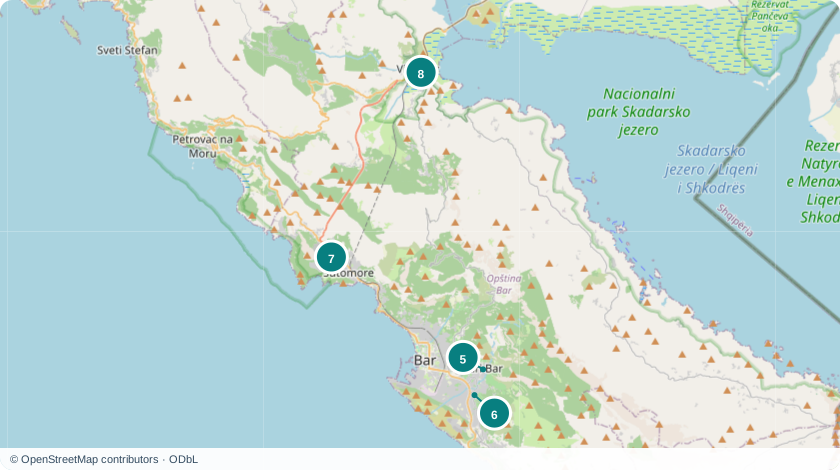
01In the coastal town of Bar
King Nikola's Palace and Local History Museum
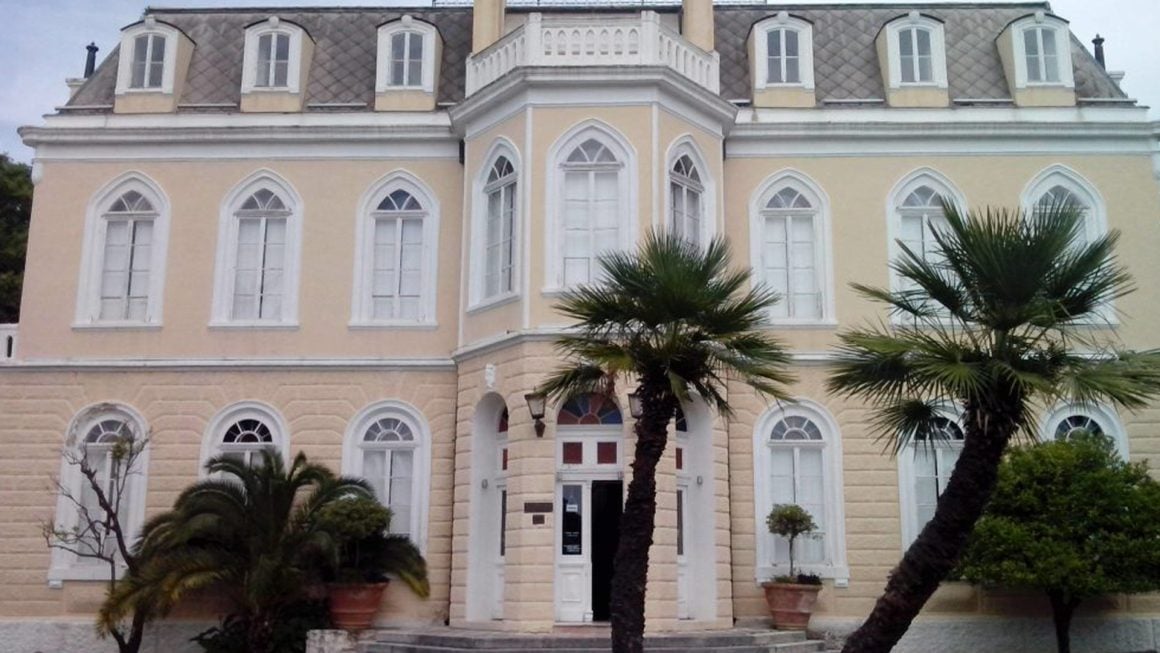
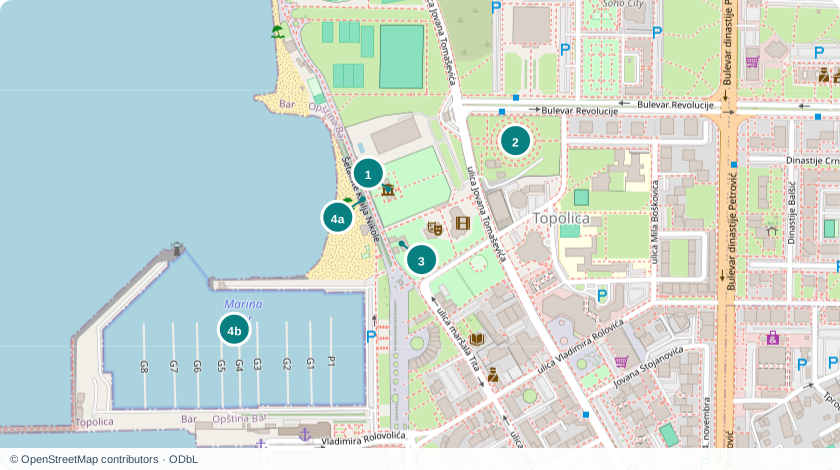
King Nikola's Palace stands at Topolica beside the sea, with the Local History Museum in its main building. Outside, you can see the decorated facade and the low hexagonal guardhouses at the corners of the boundary fence. Inside, the former royal residence is also a place that preserves the history of the Bar area.
The Large Palace is part of a 19th-century complex that also includes the Small Palace, winter garden and chapel. The main building combines neo-Renaissance and neoclassical forms, while the chapel porch has decorative metal columns. The palace complex therefore comprises more than the house with museum rooms. Together, the buildings and park show how a seaside residence was laid out.
The museum holds archaeological, historical, ethnological and art collections. Coins, weapons, decorations and archival material tell of government, trade and historical events, while clothing and objects used for household work introduce everyday life. Not all of these collections will be on display during any one visit.
Museum entry: The Bar Cultural Center publishes museum hours of 08:00 to 20:00 and an adult admission price of EUR 4. Opening days and seasonal changes are not specified. The museum's conditions apply to individual rooms and displays.
Bar Cultural Center, institutions and visitsCathedral of Saint Jovan Vladimir
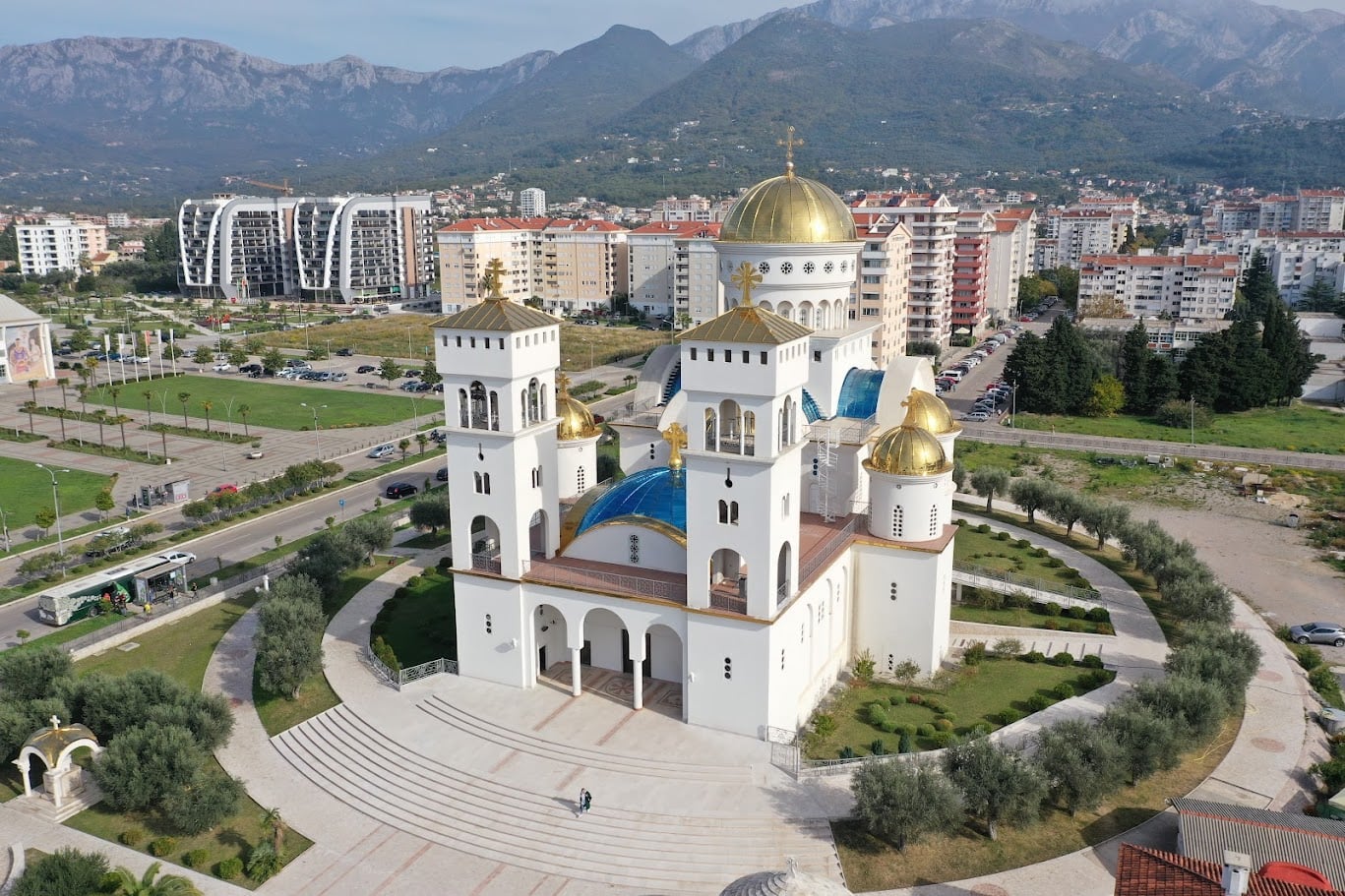
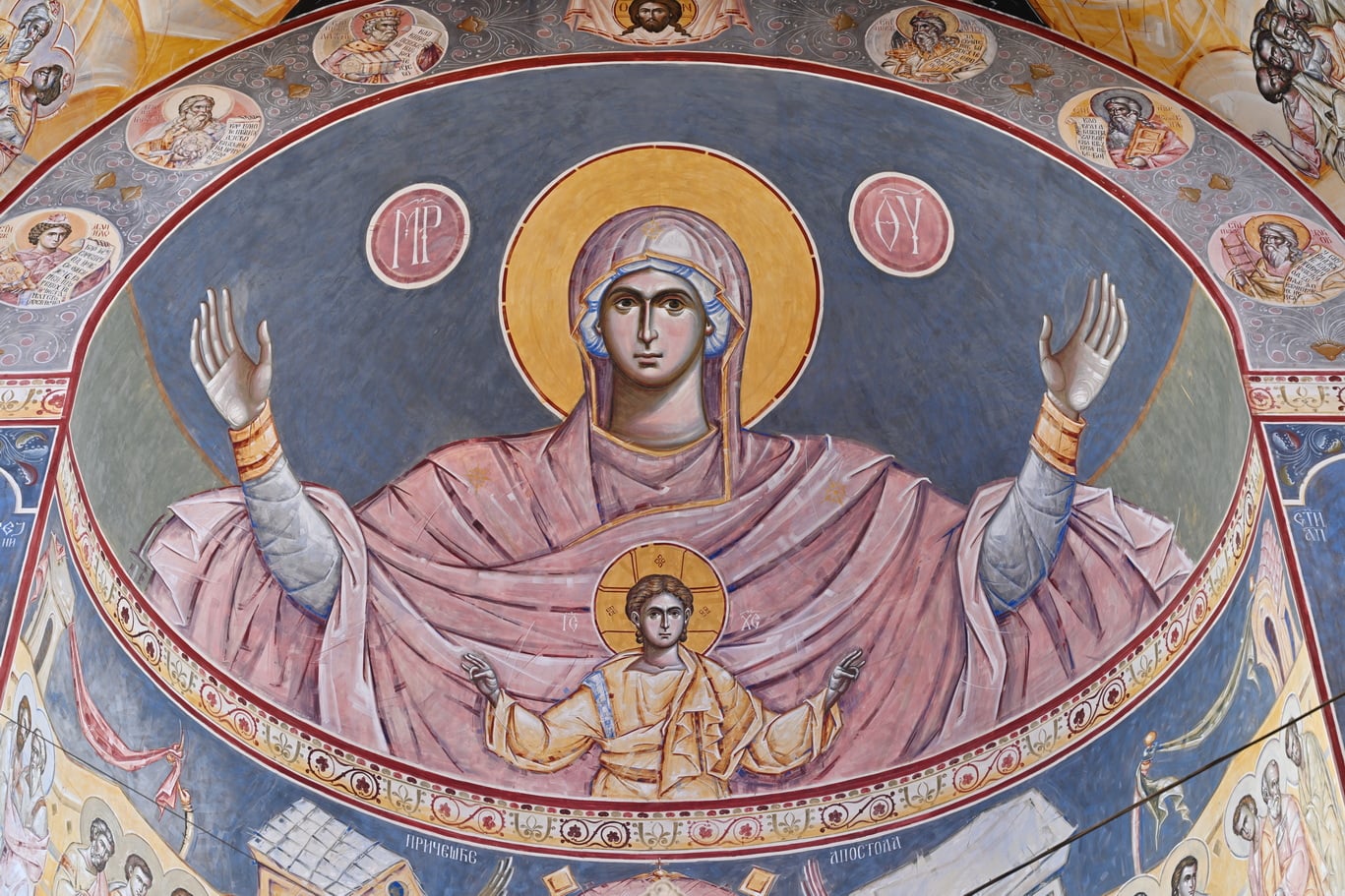
The Cathedral of Saint Jovan Vladimir is recognizable by its central dome, smaller domes and bell towers rising among modern town buildings. The interior is decorated with a floor mosaic, a stone iconostasis and painted walls.
The cathedral is a modern Orthodox church, consecrated in 2016. A replica of Saint Jovan Vladimir's cross stands on top of the central dome. This detail links the new building to the saint to whom it is dedicated, but does not make the church itself a medieval monument.
Several kinds of stone were used in the iconostasis and floor decoration. Their surfaces and patterns complement the frescoes covering the walls, so the stone carving and painting can be viewed separately inside. The cathedral is used for worship. An interior visit is different from viewing the exterior and must fit around the church program.
Visiting the cathedral: Times for sightseeing inside and any admission charge have not been confirmed. The service schedule is different from a sightseeing timetable.
Cathedral informationVelimir A. Lekovic Gallery
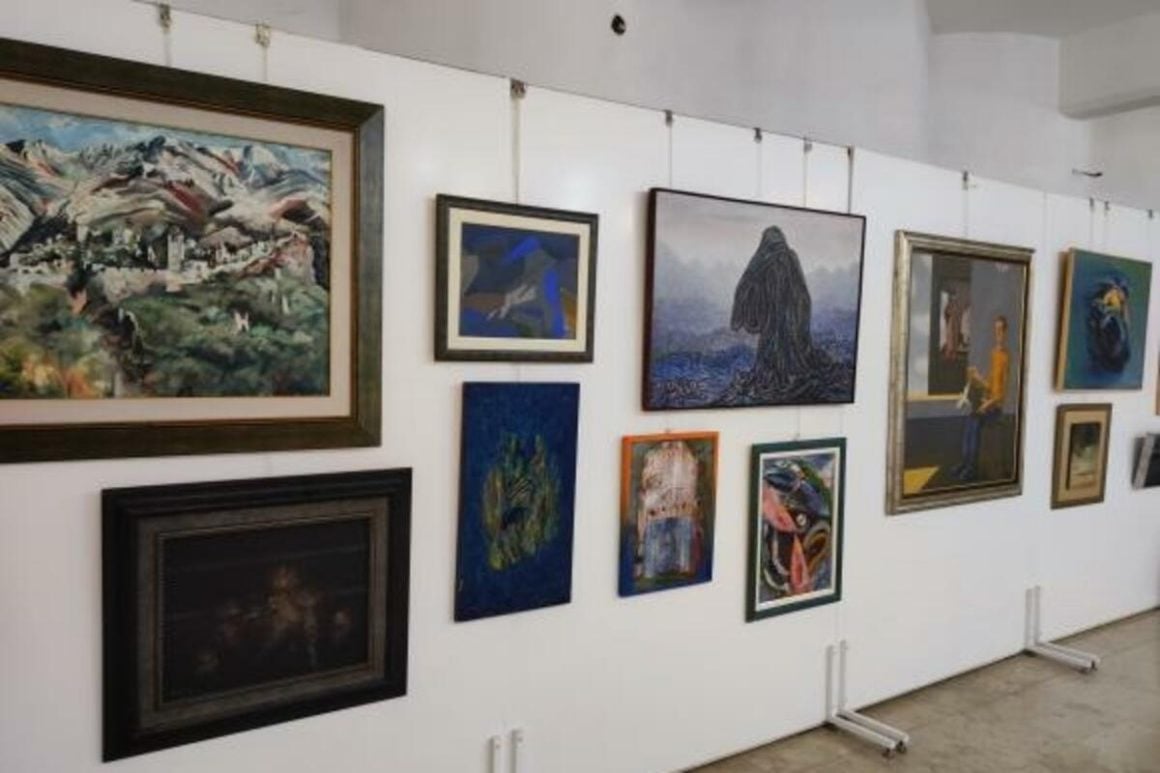
The Velimir A. Lekovic Gallery is on the Bar promenade beside the sea. Its modern building, constructed in 1976, has two exhibition spaces. A visit to the waterfront can continue with contemporary art, with the works on display depending on the gallery program.
The program includes solo and group exhibitions by contemporary artists. The spaces accommodate drawings, prints, paintings and sculptures, as well as video works, installations and other multimedia displays. The type of exhibition can therefore vary considerably from one visit to another.
The gallery also has its own art collection, with works by artists from the former Yugoslav republics and bequests from Nikola Gvozdenovic and Uros Toskovic. An exhibition does not necessarily present these collections. The gallery also hosts guest artists, so the announcement for the particular exhibition determines what you can see at that time.
Current exhibition: The gallery hours published by the Bar Cultural Center and the museum portal differ. For the times of a particular exhibition, contact the gallery on +382 30 315 998. An admission price has not been confirmed.
Bar Cultural Center, GalleryPromenade and view of Bar Marina
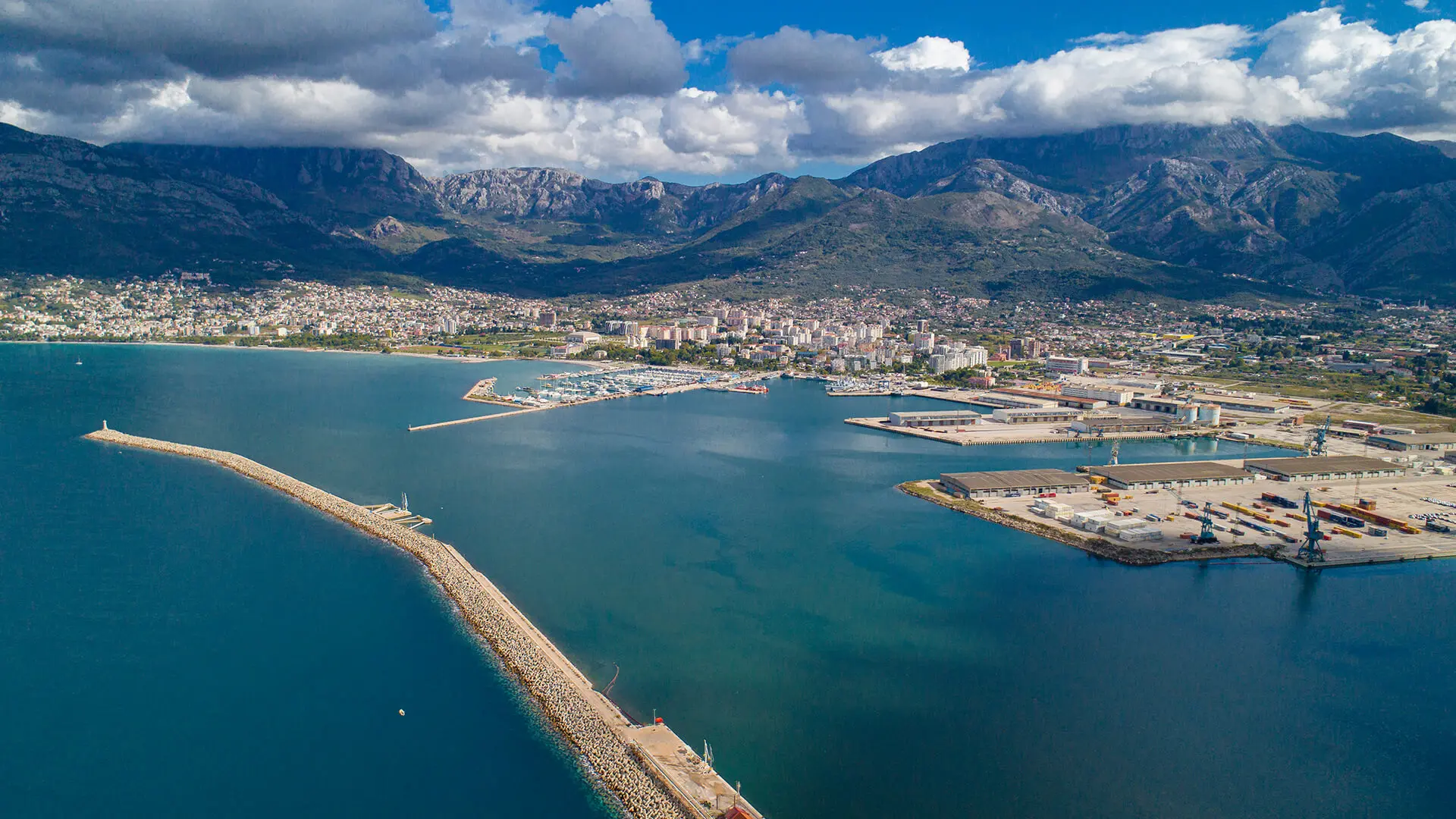
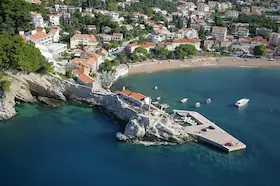
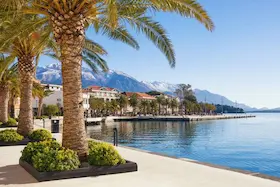
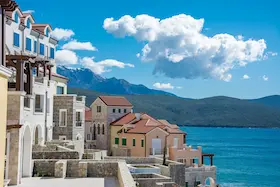
From King Nikola Promenade, the view opens across Bar Bay towards the marina's moorings and boats. Town buildings stand behind them, and the broader coastal view takes in the commercial port. Sailing boats, berths and port structures are part of the waterfront of this maritime town.
The promenade is a coastal space for pedestrians, while the marina pontoons are used to moor vessels. You can view the boats from the shore without taking a boat trip.
Coastal view: Viewing the marina from the town waterfront does not include access to all pontoons and berths. Permitted entrances and access to individual parts of the marina have not been confirmed.
Bar Tourism Organization, waterfront and marina02Old Bar and attractions outside the coastal center
Bar Old Town
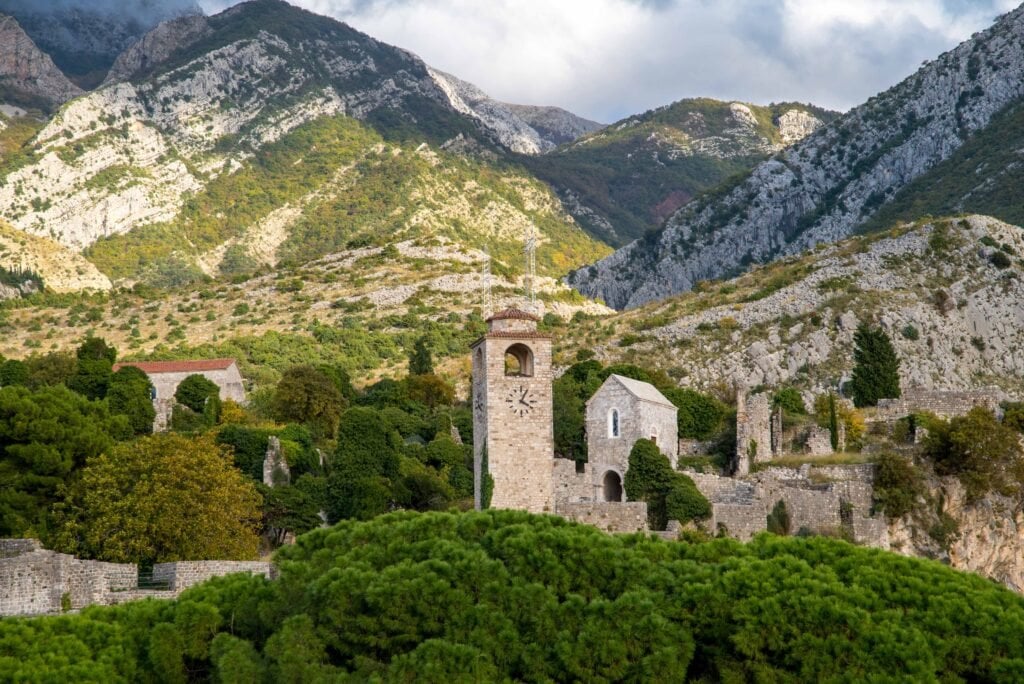
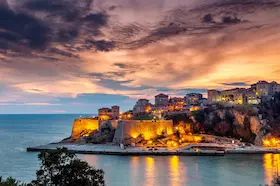
In Old Bar, you can explore the remains of the former town within its walls. Churches, palaces and other stone buildings show that this was more than a military fortification. It was a settlement where people lived, worked and traded.
The old town stands below Rumija, outside today's coastal center. The remains of olive mills tell of production, while the Ottoman aqueduct shows how water was brought to the town. The bazaar and settlement outside the walls form a separate area, so approaching through them and entering the archaeological site are different parts of the visit.
The restored Customs House contains a visitor center, and the Archbishop's Palace houses the Archaeological Museum of the Town of Bar. Among the remains of older structures are therefore buildings that now have new cultural uses.
Old Town entry: The Bar Cultural Center publishes opening hours of 08:00 to 20:00 and an adult admission price of EUR 5. Opening days and seasonal changes are not specified. Access to individual restored buildings and displays is checked separately from entry to the archaeological site.
Bar Cultural Center, institutions and visitsOld Olive Tree at Mirovica
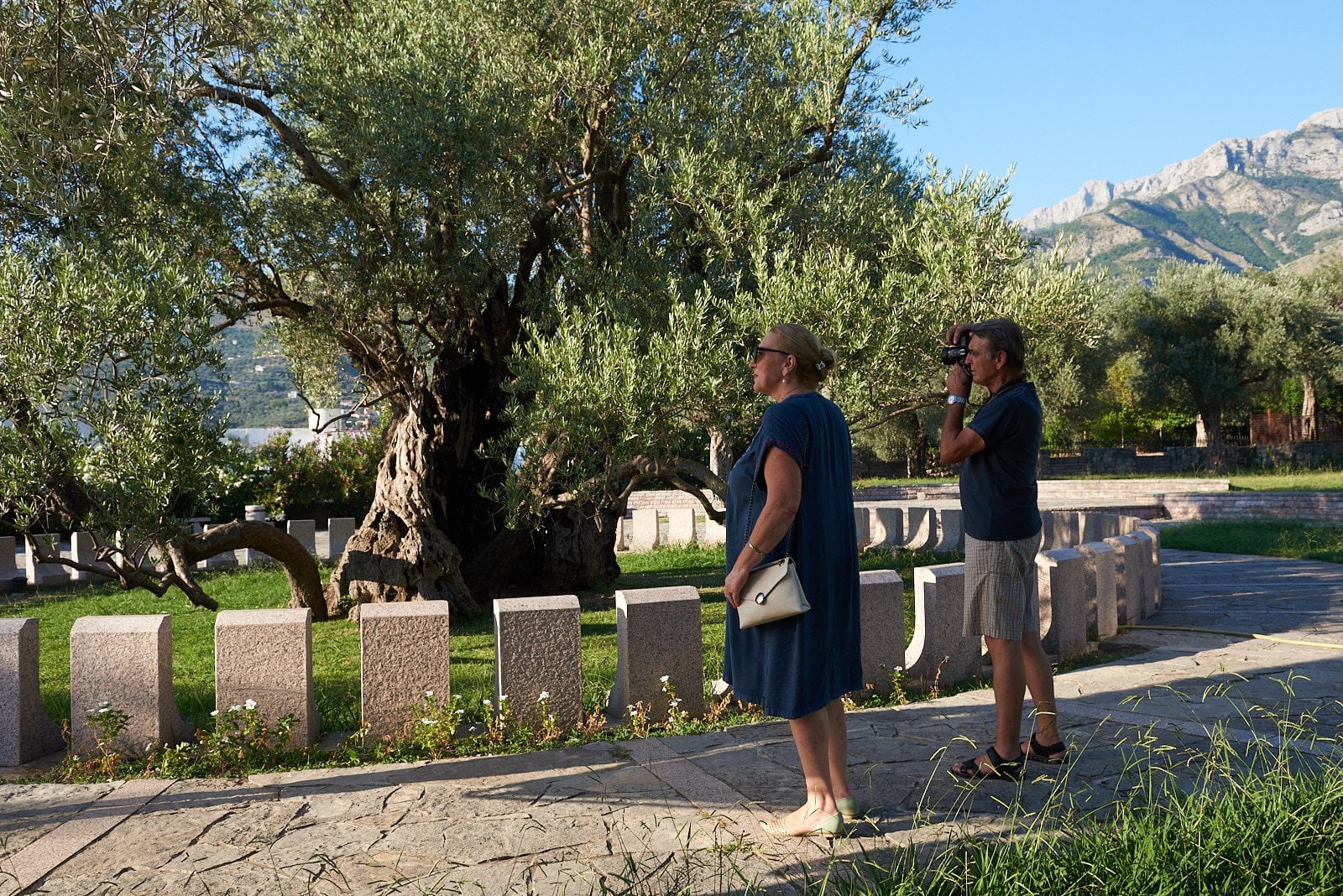
The Old Olive Tree at Mirovica is a protected living tree that can be seen in a designated visitor area. Its branching trunk and broad crown draw attention. The trunk branches close to the ground, and its uneven surface has hollows and bulges.
The Municipality of Bar estimates its age at more than 2,200 years. The olive belongs to the zutica variety. A visit is to the visitor site at Mirovica, separate from visiting olive groves or buying oil.
Ticket office at Mirovica: The House of Olives lists daily hours of 08:00 to 18:00 for the ticket office beside the Old Olive Tree. The price and any special seasonal changes have not been confirmed by a current price list. These hours do not apply to the House of Olives shop.
House of Olives, contact and opening hoursHaj-Nehaj
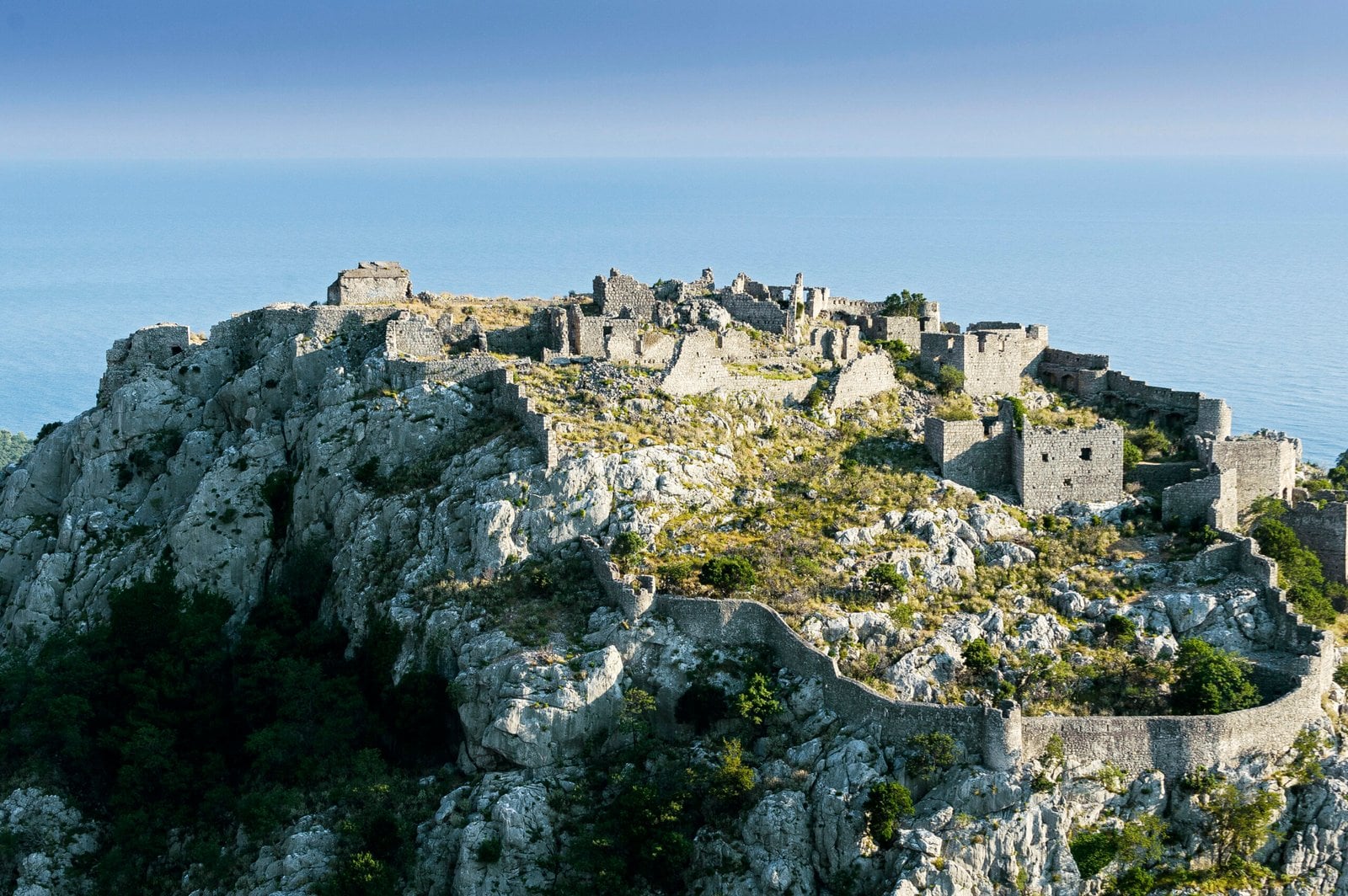
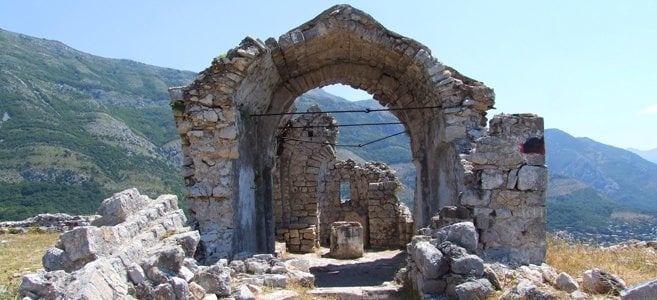
Haj-Nehaj occupies a rocky rise above Spicansko Field, near Sutomore. The surviving stone walls follow the hilly terrain, and the position above the settlement explains the fortification's defensive role. To see the remains up close, you need to reach the hill. From below, you can see where the fortification stands, but cannot inspect the remains.
The fortification is associated with the Venetian period, with its first written mention in 1542. Within the walls, on a raised platform on the southern side, are the remains of Saint Demetrius Church. The church is older than the Venetian fortification, so the same hill preserves traces of different periods.
The archaeological description records a single-nave church with a vault and two altars. It is a smaller religious building within a large defensive enclosure. Remains of painting are mentioned in research. Their present state of preservation and accessibility have not been confirmed.
Reaching the fortification: The Bar Tourism Organization publishes a walking route to the fortification. Its current condition, entry arrangements and church access have not been confirmed, so the published route does not guarantee that it is passable on the day of your visit.
Bar Tourism Organization hiking brochureBesac Fortress
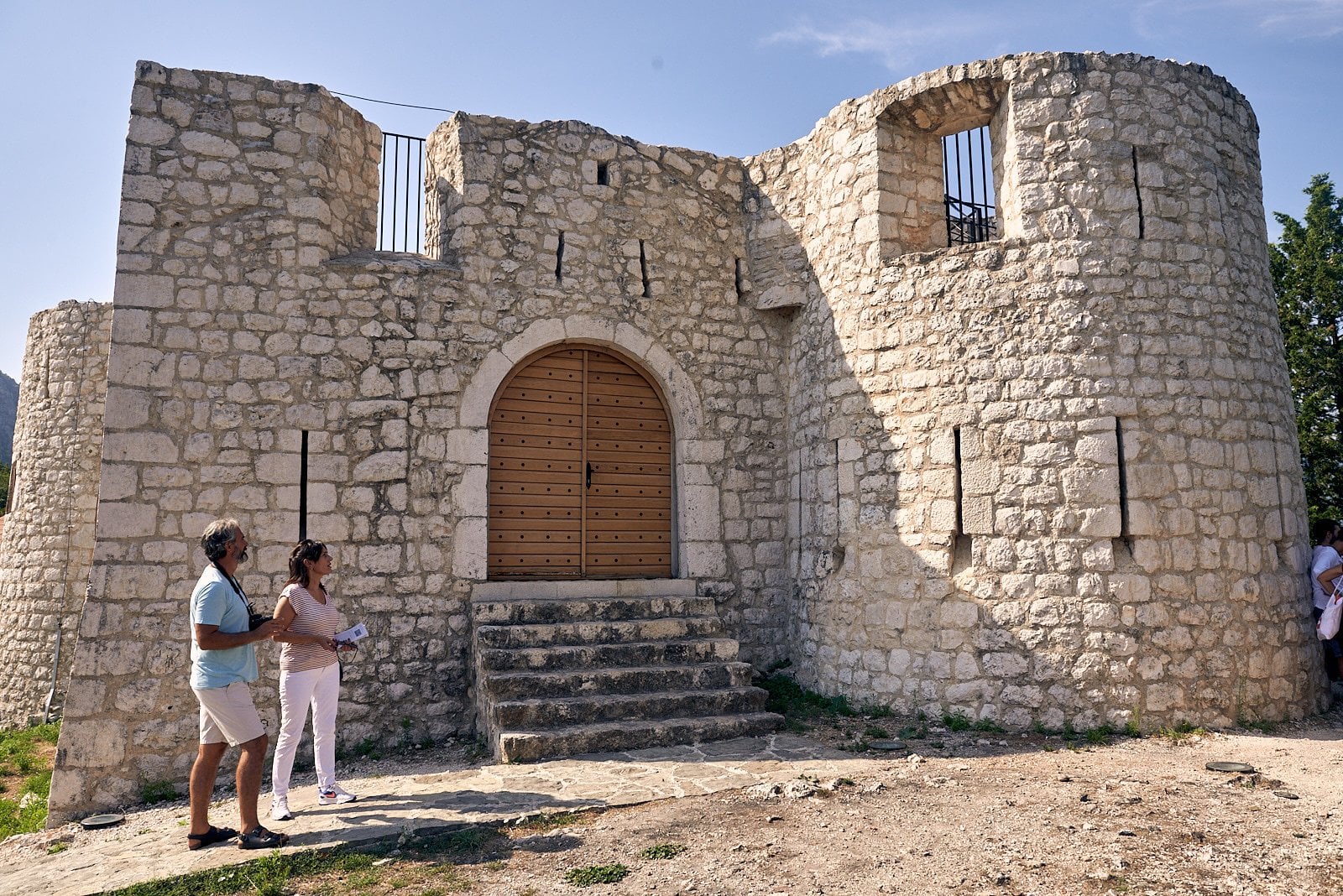
Besac Fortress stands on a hill above Virpazar, on the lake side of the municipality of Bar. The fortification's stone walls and openings can be viewed together with the outlook towards Lake Skadar.
Besac is outside the coastal town of Bar. It is approached by land from the direction of Virpazar, so visiting the fortress does not require a boat trip.
The tourism description lists a panoramic terrace, wine museum, restaurant and shop in the restored complex. These facilities have different purposes and conditions of use. Restaurant hours do not confirm when you can enter the museum, and the description of the complex does not mean that an admission ticket includes a tasting or a meal.
Fortress and additional facilities: The Bar Tourism Organization publishes opening hours of 10:00 to 18:00. Seasonal arrangements, the admission charge and access to the wine museum have not been confirmed. Restaurant hours cannot be used as the opening hours of the entire fortress.
Bar Tourism Organization, BesacTo see historical objects from the Bar area, visit the museum display in the palace. For contemporary art, your choice depends on the exhibition announced by the gallery. The museum collections and the gallery program therefore cater to different interests.
To explore the remains of an entire settlement, Old Bar offers religious buildings, homes and structures used for work within its walls. At Haj-Nehaj, reaching the walls involves an approach uphill. This is different from entering an exhibition beside the town promenade.
At Mirovica, you approach a single protected tree and its visitor area. For a view of the sea and berths, you can stay on the town waterfront without entering an indoor exhibition or reserving a boat trip.
Two clarifications before finding a place
The Local History Museum is an institution in King Nikola's Palace at Topolica. The term "open-air museum" in descriptions of Old Bar refers to the fortified archaeological site inland. These two names lead to different destinations.
The Old Olive Tree is a protected tree at Mirovica. The House of Olives manages this site and has its own shop. When looking for the place to see the tree, look for Mirovica. The name of the operator does not identify the same physical space.
Details in the palace, cathedral and gallery
A ballroom was added to the western side of the palace in 1910, rectangular with rounded corners. This space for court celebrations is now also used for exhibitions and musical events. Its shape and later use show the residence's transformation into a cultural venue.
The icons on the iconostasis are painted on linden wood, with gold leaf in their halos. The frescoes were painted onto plaster while it was still wet. The different surfaces and ways of applying paint explain two painting techniques found in the same cathedral.
Pastel landscapes are singled out in the gallery collection. They portray places through the color and light of the Mediterranean environment. When exhibited, these works offer a different view of the coastal area from a photograph or a historical map. The entire gallery collection is not available to see on every visit.