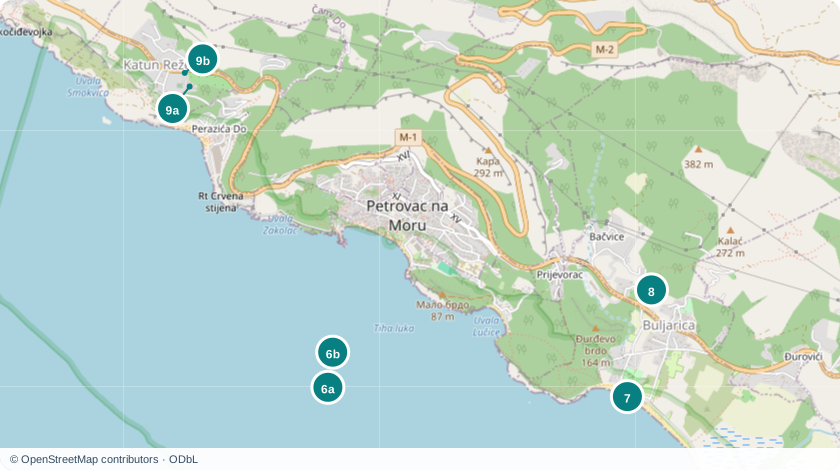
01In Petrovac and around the town bay
Kastio and Lazaret
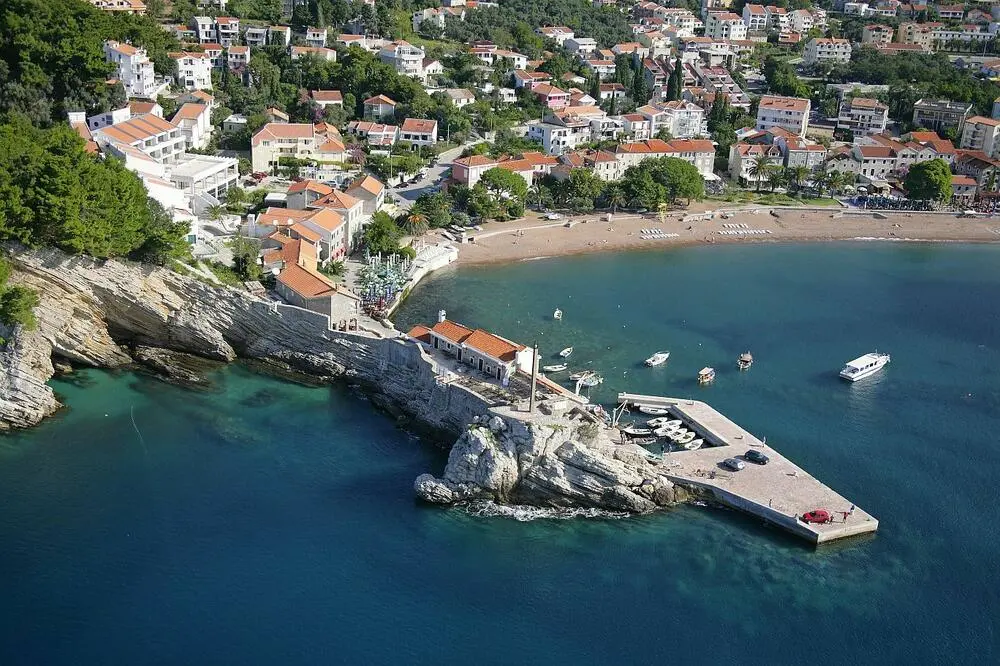
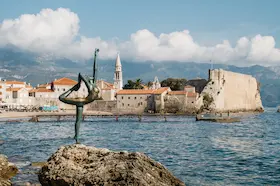
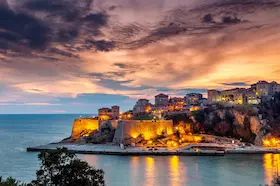
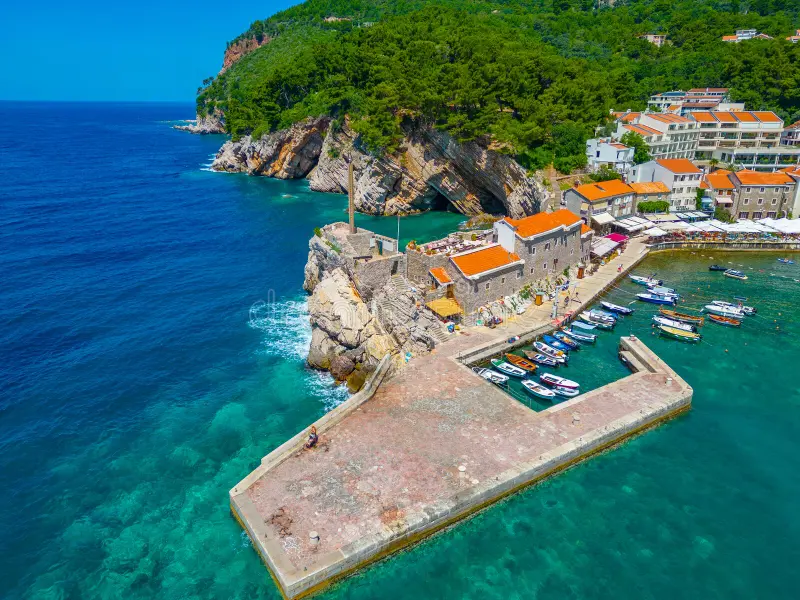
Kastio is a fortified rocky headland at the end of Petrovac harbor, with walls and terraces immediately above the landing area. Its stone walls extend toward the bay, with boats and the town waterfront below. Beside the fortification are the remains of Lazaret, a former quarantine facility for people who were ill during epidemics.
A Venetian garrison used the fortress, while wine and other goods destined for export by ship were kept in its warehouses. Lazaret served to monitor arrivals from the sea. Walls remain from these historic buildings, and today you can view them together with the rock on which they were built and the small harbor beside them.
Visit: The walls and waterfront structures can be seen by the harbor. Regular opening arrangements have not been published for some enclosed spaces, so do not count on an interior visit without confirmation.
Kastio and LazaretRoman mosaics at Miriste
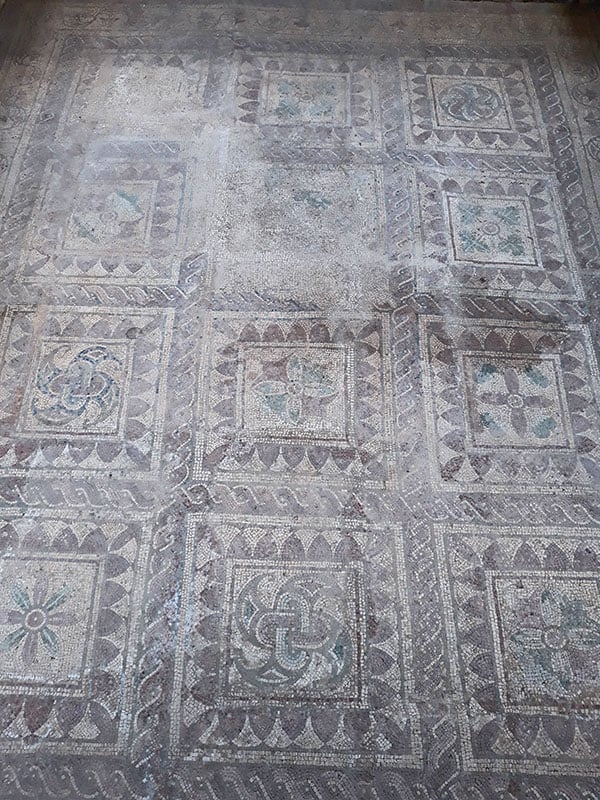
At Miriste, inland from the Petrovac waterfront, a late antique mosaic survives: a decorated floor made from small stone cubes. Its rectangular surface is divided into twelve panels with geometric and plant motifs, making the way the design is built up through repeated small pieces particularly interesting. An interwoven band separates the panels, and a stylized vine follows the border.
The surviving floor belongs to the site of an ancient building. It is not a complete villa with tall walls still standing. Some of the decoration is damaged, so the motifs cannot be made out in every panel. The institutional description presents a fourth-century date for the floor as a hypothesis.
A fragment showing three fish sharing one head, discovered in 1902, has not survived. The floor found in 1941 is a separate discovery, and it is this floor that the description of twelve decorated panels refers to. The distinction matters when comparing what can be seen today with old drawings and accounts of the Petrovac mosaics.
Visit: Before coming, check with Museums and Galleries of Budva whether the surviving floor is accessible to visitors. Regular opening hours and an admission price have not been published. The map marker identifies the site and does not provide instructions for entering across surrounding plots of land.
Petrovac late antique mosaicCrvena komuna and the Marko Krstov Gregovic Gallery
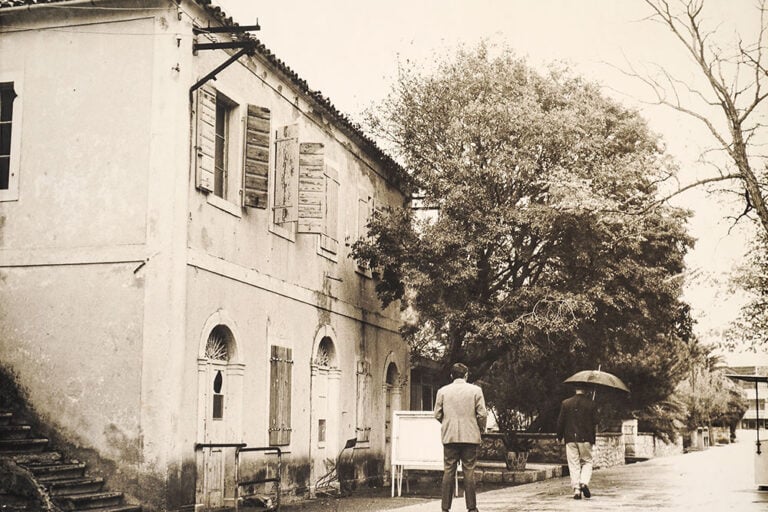
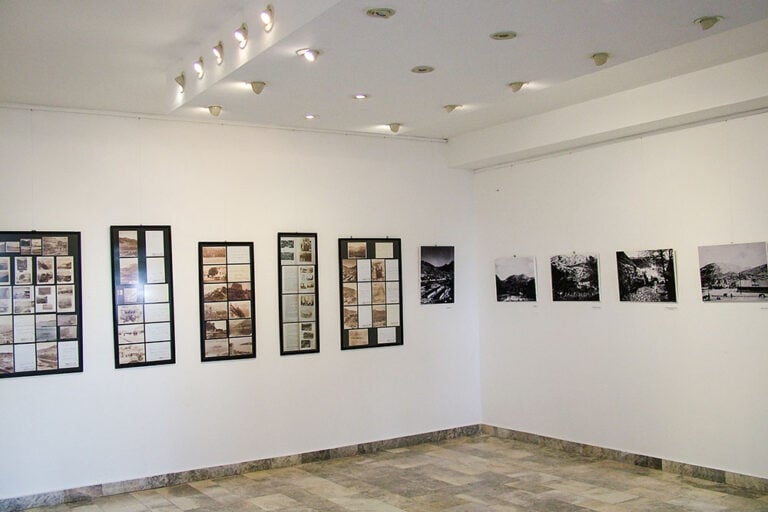
Crvena komuna Memorial House is a cultural building on the Petrovac waterfront, with a memorial room and the Marko Krstov Gregovic Gallery. Documents and photographs in one introduce local history, while the other hosts a changing selection of art exhibitions.
The memorial room presents the commune of 1920 through copies of archival documents, correspondence and newspaper material. Photographs of old Petrovac and its residents show both the appearance of the town and the people who lived there. The material on display consists of copies, so this is a documentary exhibition rather than a reading room for the original archive.
The gallery is named after the Petrovac painter Marko Krstov Gregovic, who studied at the academy of fine arts in Vienna. It presents artists from the country and abroad. The works vary with each exhibition, so the gallery name does not indicate a permanent collection of Gregovic paintings. Screenings and performances in the cinema hall and the event space beside the building are announced separately.
Museum visit: The institution lists free admission: Tuesday-Friday 8-20, Saturday and Sunday 10-14. There are no regular visits on Mondays. Before coming, check the current exhibition and whether the published timetable applies to your chosen visit. The notice does not specify a season.
Visit usPetrovac waterfront and town beach
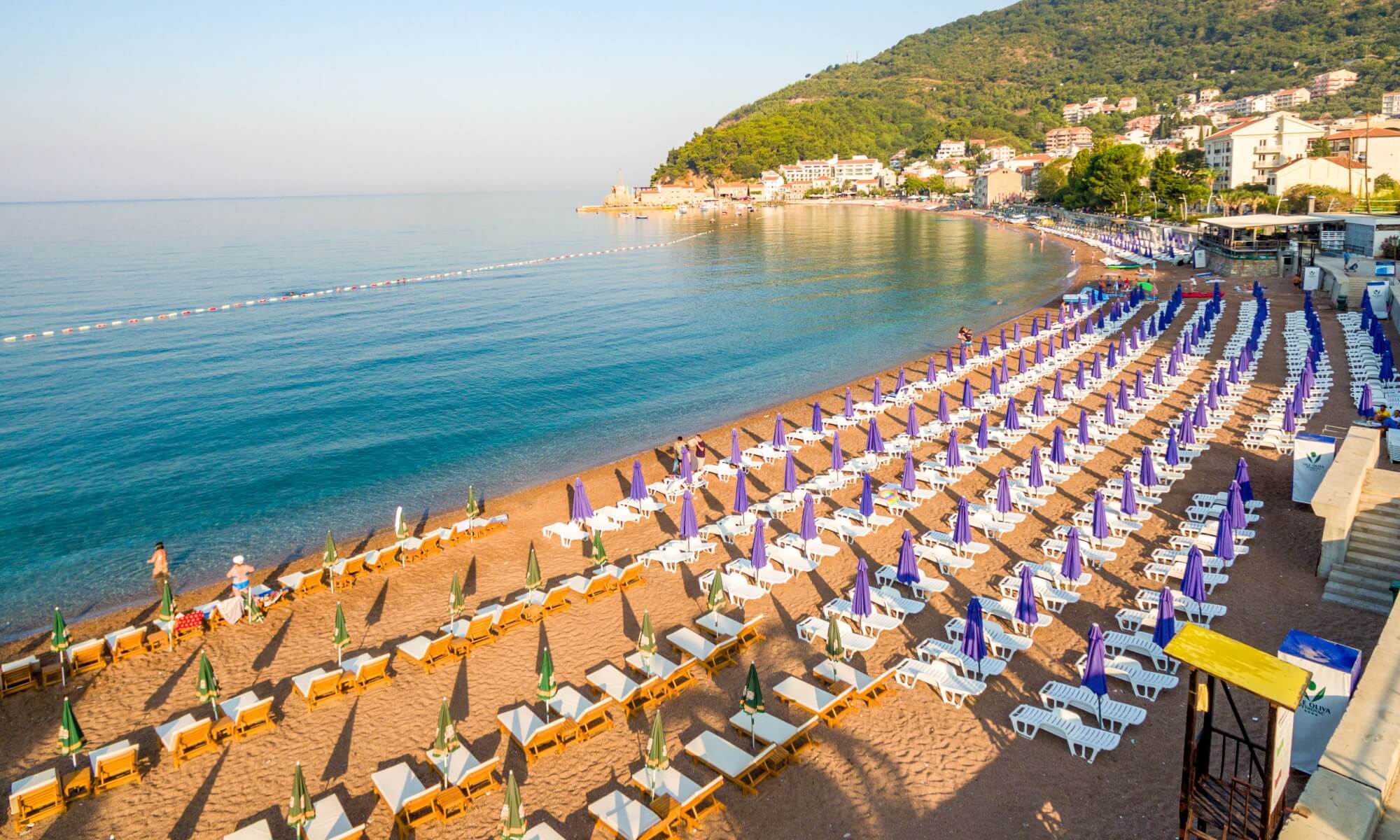
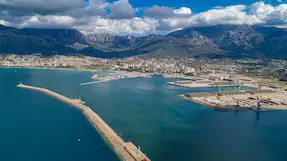
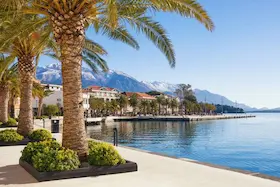
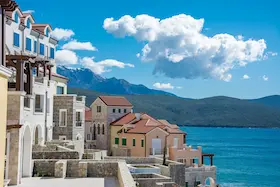
The Petrovac waterfront is a developed stretch of coast beside the town beach, with houses facing the bay. Accommodation, cafes and restaurants line it, while the small harbor and boats are beside the rocky headland. The beach and the buildings of the town can therefore be seen together, with the fortification at one end of the shore. The stone walls beside the harbor differ from the house facades, and two islands are visible off the bay.
Lucice
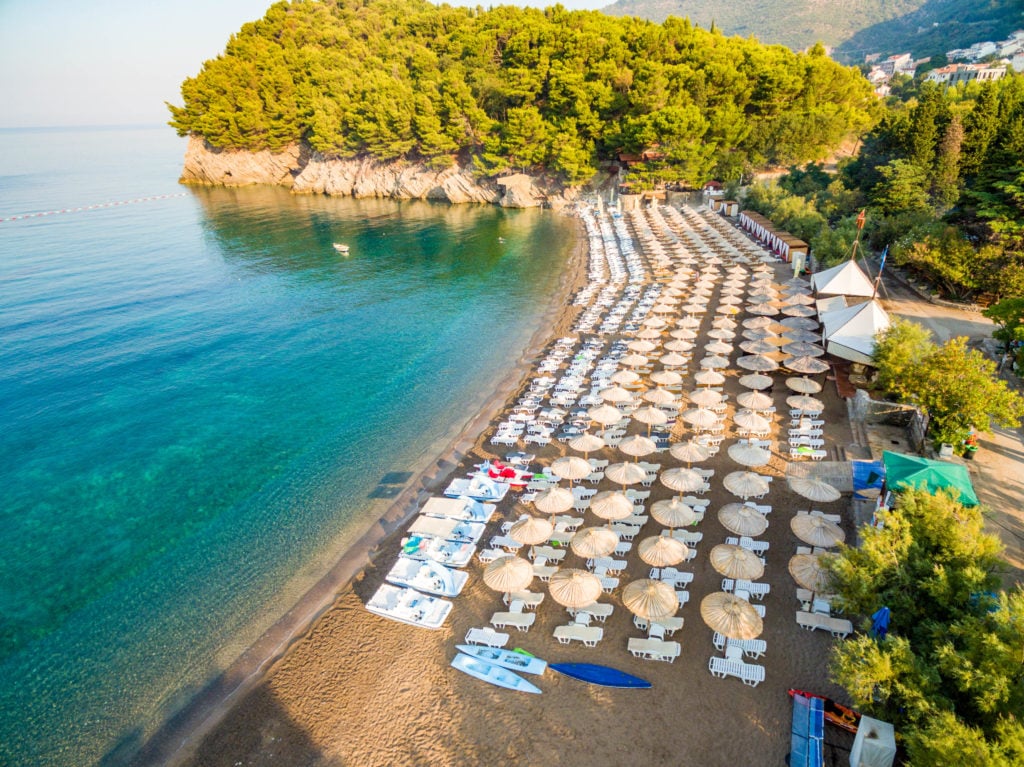
Lucice is a bay beside Petrovac, between two headlands, with pine and cypress trees behind the beach. The rocky ends and woodland frame the view out to sea, unlike the town beach lined by houses and other buildings. The wooded part of the coast provides shade in some places beside the beach.
02Islands and attractions outside town
Katic and Sveta Nedjelja
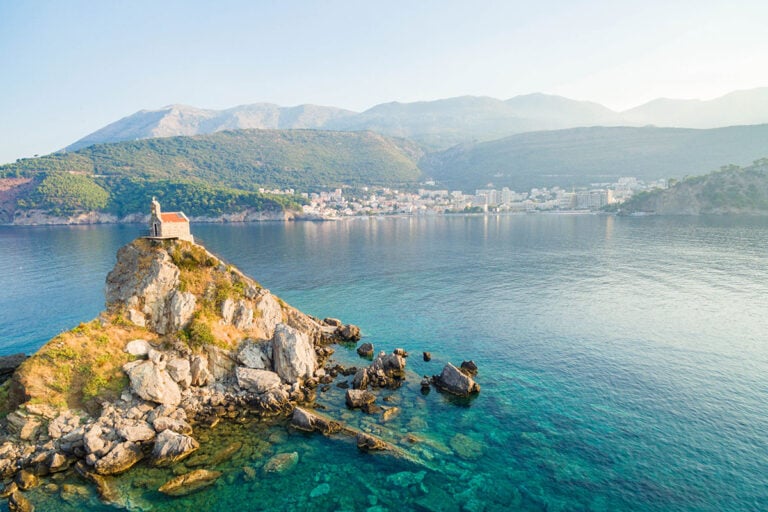
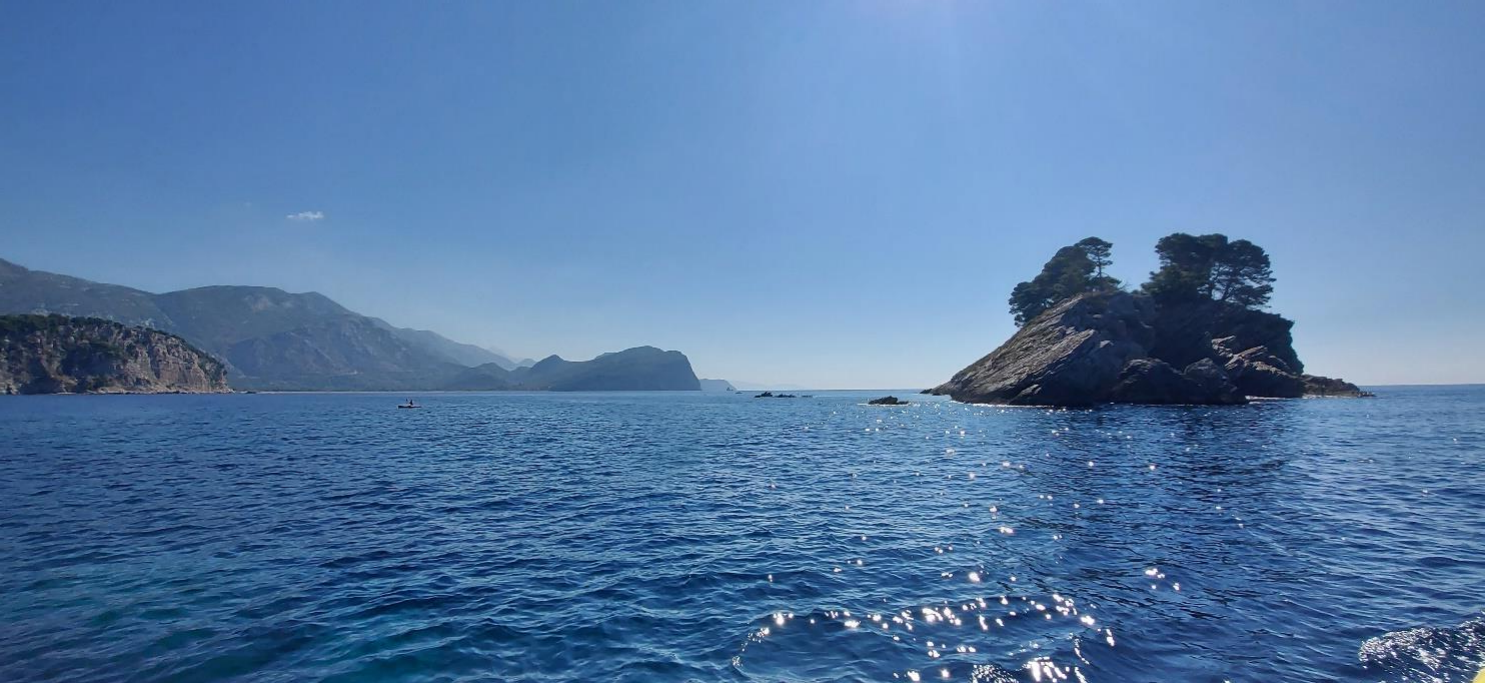
Katic and Sveta Nedjelja are two islands off Petrovac Bay, with a small church standing above the rocky shore of Sveta Nedjelja. The church distinguishes this island from Katic, where the official description of natural habitats records coastal pine trees.
From land, you can see their rocks and their position off the bay, while approaching by boat gives a closer view of the shore. Both islands belong to the protected area of Katic Nature Park. Sailing alongside an island should be distinguished from landing and entering the church, as these possibilities depend on the agreed trip and the conditions of access.
Visit: For a boat trip, check the price, departure and whether the offer includes landing on either island. A trip around them and going ashore are different visits. The published park plan does not determine what an individual excursion includes.
Katic Nature Park management planBuljarica
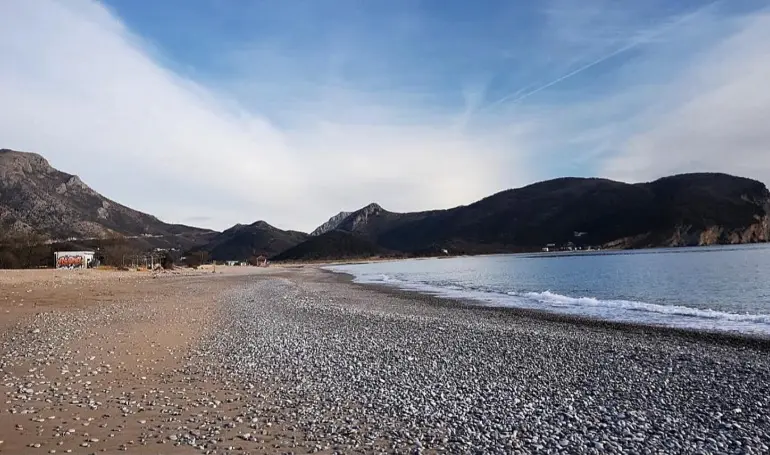
Buljarica is a broad bay outside Petrovac, toward Bar, with a long, curved shore and flatter land behind the beach. The view here takes in a more open stretch of sea and a larger area on land than at the town beach or Lucice.
The tourism organization describes the western part of the shore as sandier and most of the beach as pebbly and rocky. The same name therefore covers stretches of coast with different appearances. Behind the beach is a wetland that forms part of the land around the bay. Access to it should be considered separately from reaching the bathing area.
Visit: The bathing area and the wetland behind it are not the same place to visit. An established path for exploring the wetland has not been confirmed. Do not plan to walk through it based on the beach marker on the map.
BuljaricaGradiste Monastery
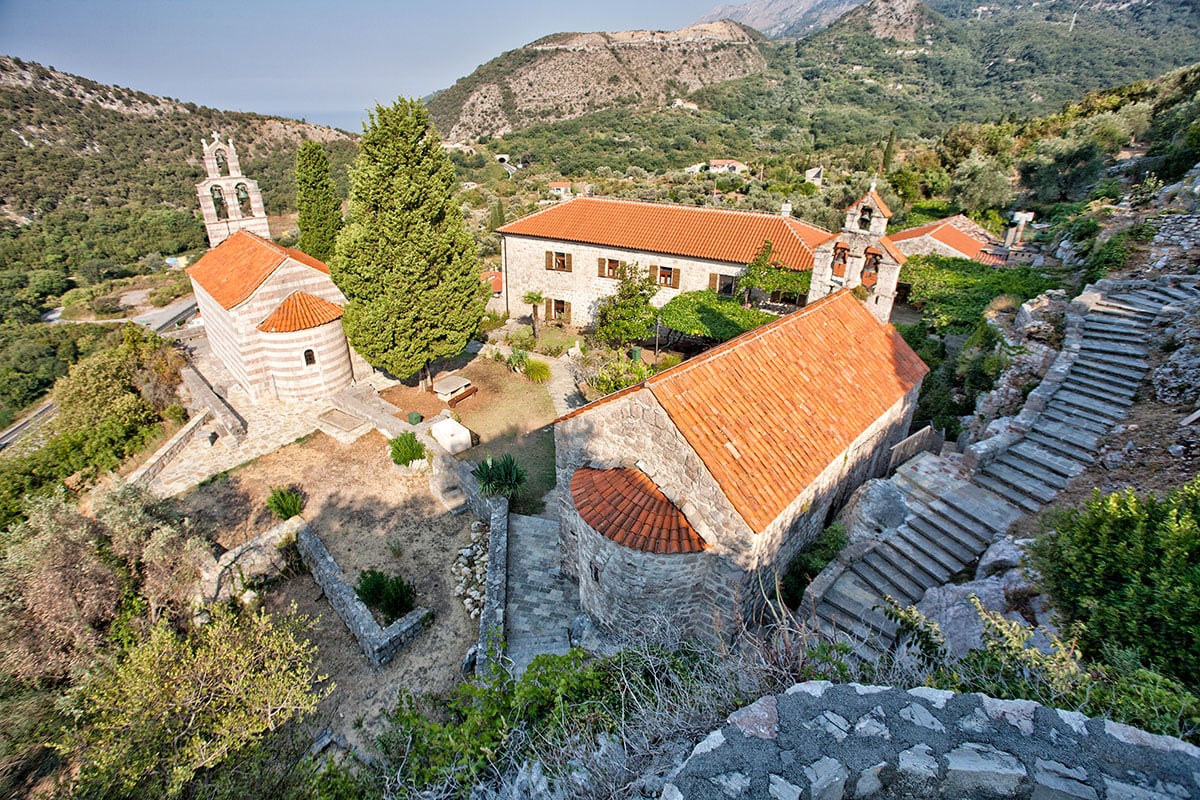
Gradiste Monastery stands on a rise above Buljarica, with three churches and a residential building where the monastic community lives. The stone buildings are arranged across the hill, and their interiors preserve paintings worth setting aside time to see when the churches are open.
The main church is dedicated to Saint Nicholas, and the other two to Saint Sava and the Dormition of the Mother of God. The walls of Saint Nicholas Church are covered with frescoes by the priest Strahinja from Budimlje, dating from 1620. From outside you can see the arrangement of the monastery buildings, while the paintings can only be viewed by entering the relevant church.
Visit: Before coming, check whether the complex is accessible and which church can be opened for viewing. Regular opening hours and admission charges have not been published, and access to the courtyard does not ensure entry to the churches.
Gradiste MonasteryRezevici Monastery and Rezevici Memorial House
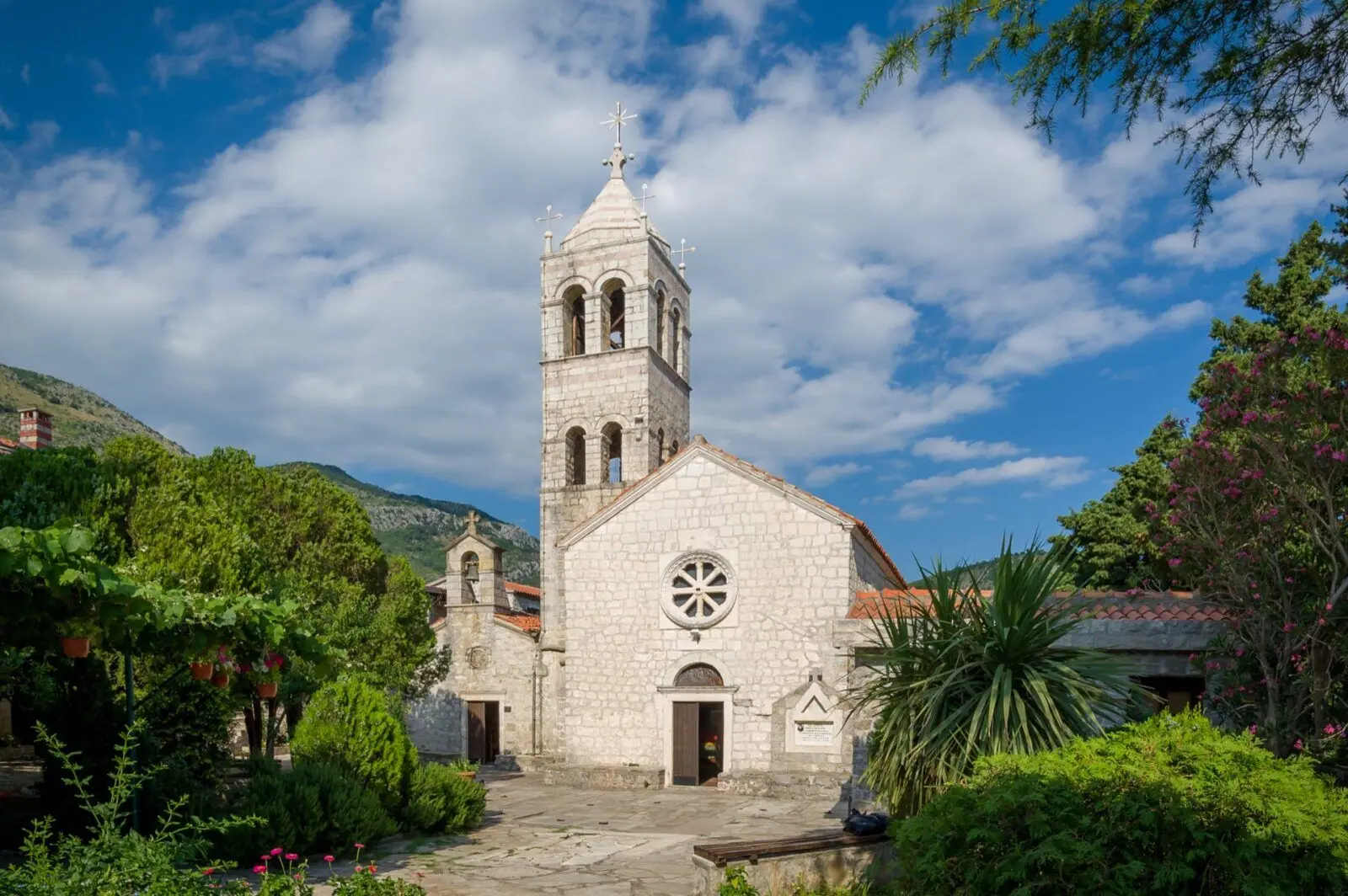
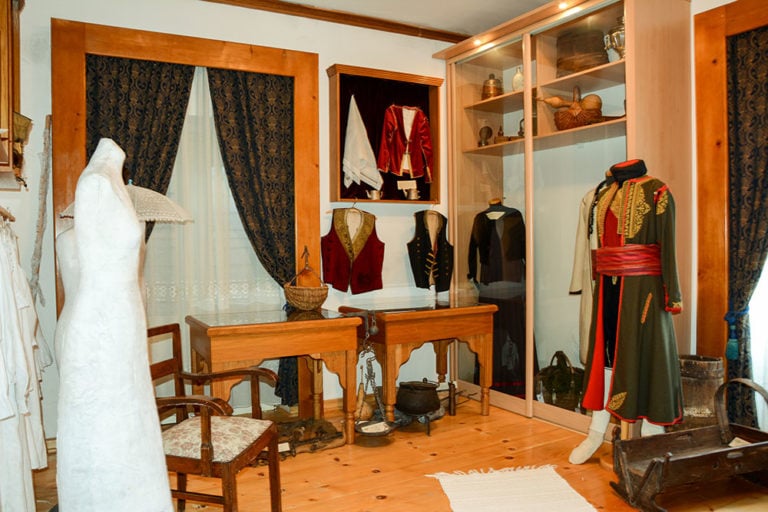
Rezevici Monastery, between Petrovac and Budva, has two surviving churches, the remains of a third and a monastic residential building. Nearby is Rezevici Memorial House, a separate cultural space in a former school. Visiting these places brings together church buildings and a display about the life and clothing of the Pastrovici.
The smaller church is dedicated to the Dormition of the Mother of God, while Holy Trinity Church is distinguished by a tall bell tower beside the stone building. The institutional description attributes its iconostasis to Marko Gregovic and the nineteenth century. Only archaeological remains survive from Saint Stephen Church, making it different today from the two standing church buildings.
The memorial house in the former school has a gallery and an ethnographic room with Pastrovici clothing. Gallery exhibitions change with the institution's program. The school building and the monastery are separate places, so their availability must be checked separately.
Two spaces: The memorial house has the same published museum timetable as Crvena komuna. It does not apply to the monastery churches, whose opening must be checked separately. Also ask the institution which memorial house display will be available during your stay.
Visit us, Rezevici Memorial HouseCrvena komuna has a published visitor timetable, and the gallery lets you see the exhibition on display at the time. The Miriste mosaic is an archaeological site without published regular opening arrangements. For a rainy day, you can first check the gallery exhibition. Visiting the ancient floor requires separate confirmation that it is accessible.
If you want to see religious paintings, entering the church is essential to the visit. An open courtyard at Gradiste or Rezevici does not mean you can view the frescoes and iconostases. The museum rooms in the former school near Rezevici have their own timetable, independent of the monastery.
On the Petrovac waterfront, houses, the harbor and a stone fortification stand beside the sea. Lucice is a bay between wooded headlands, while Buljarica opens out much more toward the sea and the flat land behind it. For a view of buildings beside the coast, stay on the waterfront. For a landscape with green headlands, choose Lucice, and for a long sweep of beach, Buljarica.
Three clarifications for finding the right place
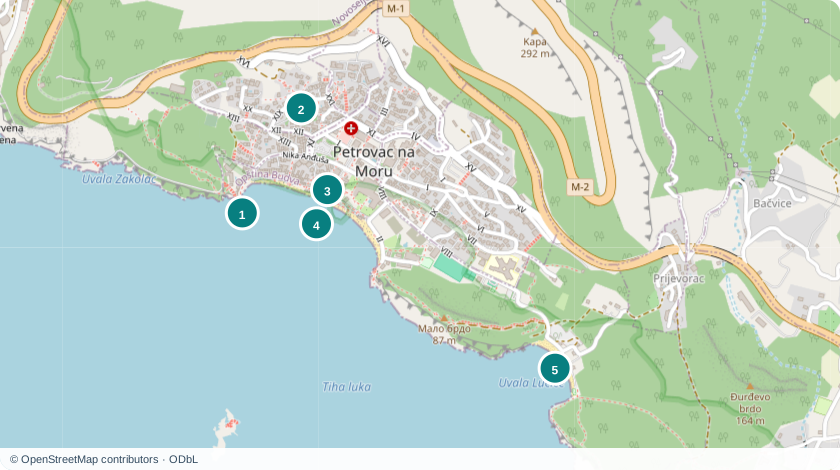
The name Kastel Lastva in the tourism description refers to the Venetian fortification known in Petrovac as Kastio. These are names for the same destination beside the small harbor, rather than two fortresses requiring separate visits.
The island is a single destination at sea. The nature park of the same name covers a much wider marine and coastal area between Skocidevojka and Maljevik. A general point or boundary of the park on a map therefore does not identify the island's landing place or an entrance.
The Marko Krstov Gregovic Gallery is in Crvena komuna, at Obala 111 in Petrovac. The Jovo Ivanovic Modern Gallery is in Budva Old Town, at 19 Cara Dusana Street. The shared name Museums and Galleries of Budva on the institution's website does not mean that the two galleries have the same address.
Stone, an icon and reconstructed clothing
Six shades of stone cubes have been recorded in the mosaic. The black-gray stone comes from Spic, the green from Becici Beach and the pink from Boka. The different shades of the ornaments were created by arranging these cubes, so the surviving floor connects the decoration of an ancient house with stone from coastal areas.
An icon of Saint Christopher with an animal head stands out on the iconostasis of Saint Nicholas Church. The iconostasis was carved and painted by Vasilije Rafailovic, a member of the Boka Kotorska school of painting. The icon belongs to the screen in front of the altar area, which should be distinguished from the frescoes on the walls.
The description of the ethnographic room lists four reconstructions of women's Pastrovici clothing, for ceremonial, wedding and everyday use. Comparing the outfits shows how clothing varied according to the occasion for which it was intended. Which outfits are available during a visit depends on the display.