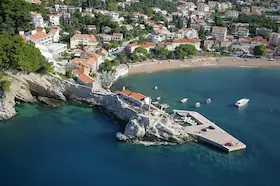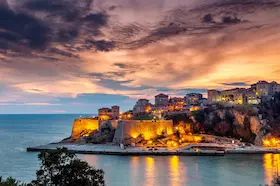
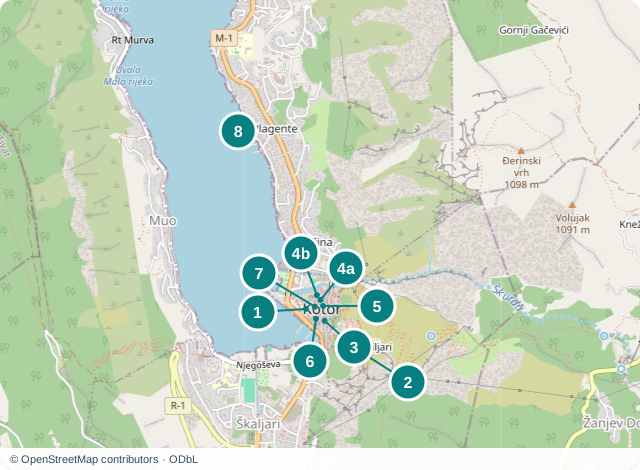
01Old Town, hillside and DobrotaChurches and museum rooms are in the old town, the fortifications climb the hillside, and the scientific marine exhibition is beside Dobrota's waterfront.
Churches and museum rooms are in the old town, the fortifications climb the hillside, and the scientific marine exhibition is beside Dobrota's waterfront.
Old Town and the Square of Arms
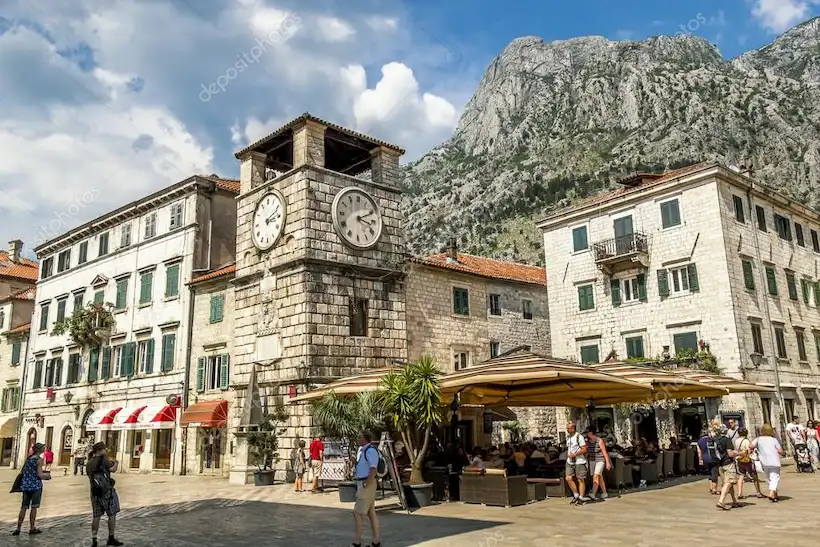
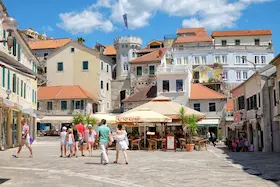
The Old Town is a network of stone streets and squares within the walls, and the Square of Arms opens up immediately beyond the Sea Gate. The clock tower and facades around the square overlook a public space that narrows into passages between houses. This alternation between squares and narrow streets makes a visit interesting even if you do not enter individual buildings.
The Sea Gate's present architectural form dates from the 16th century. Beyond it, different periods of construction can be recognized in doorways, balconies and church facades. You can view the square and surrounding streets as a connected architectural whole. Museum rooms and church interiors have separate visiting conditions. The layout of Kotor's squares and streets explains how the old town took shape.
What you can see: The streets and squares are outdoor sights in their own right. Museum rooms and church interiors have individual admission conditions.
Kotor's monumentsTown walls and St. John's Fortress
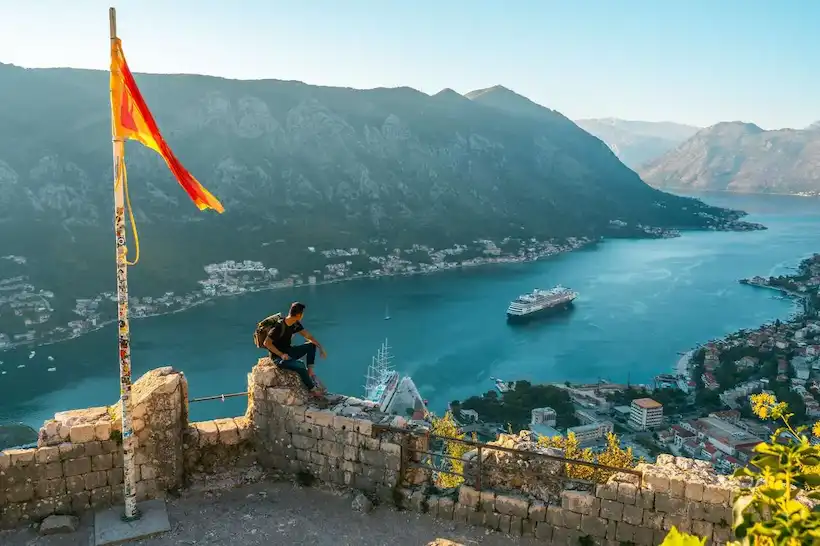
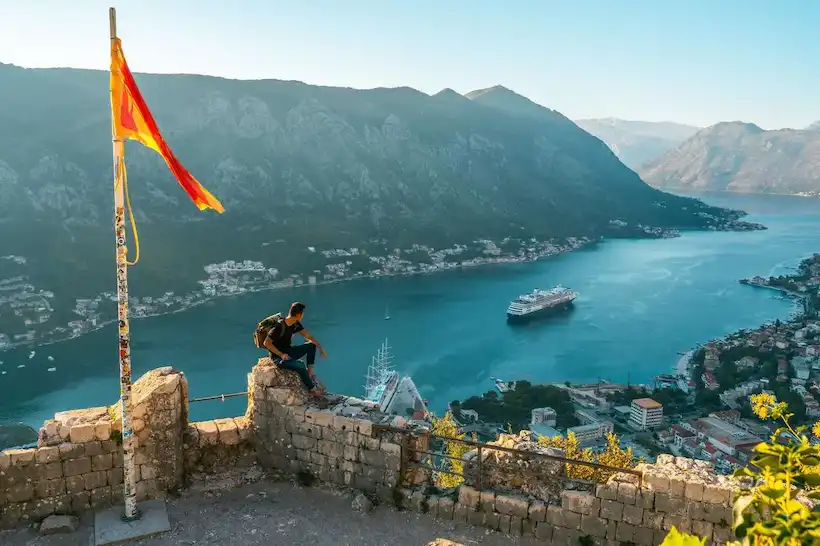
The town walls follow the hillside above the roofs and connect Kotor with St. John's Fortress. Views from the higher sections take in the compact old town, harbor and bay, showing how little space lies between the water and the steep land behind it. You reach those views by stone steps that form part of the fortifications.
The fortifications were extended over several centuries. The fortress stands approximately 260 meters above sea level, and the Church of Our Lady of Health lies along the approach.
Controlled access: The municipal notice lists access at Parilo and Skaljarska pjaca. Confirm the current fee, hours and eligibility for exemption with the town service before climbing.
Notice about entry to the town wallsSt. Tryphon's Cathedral
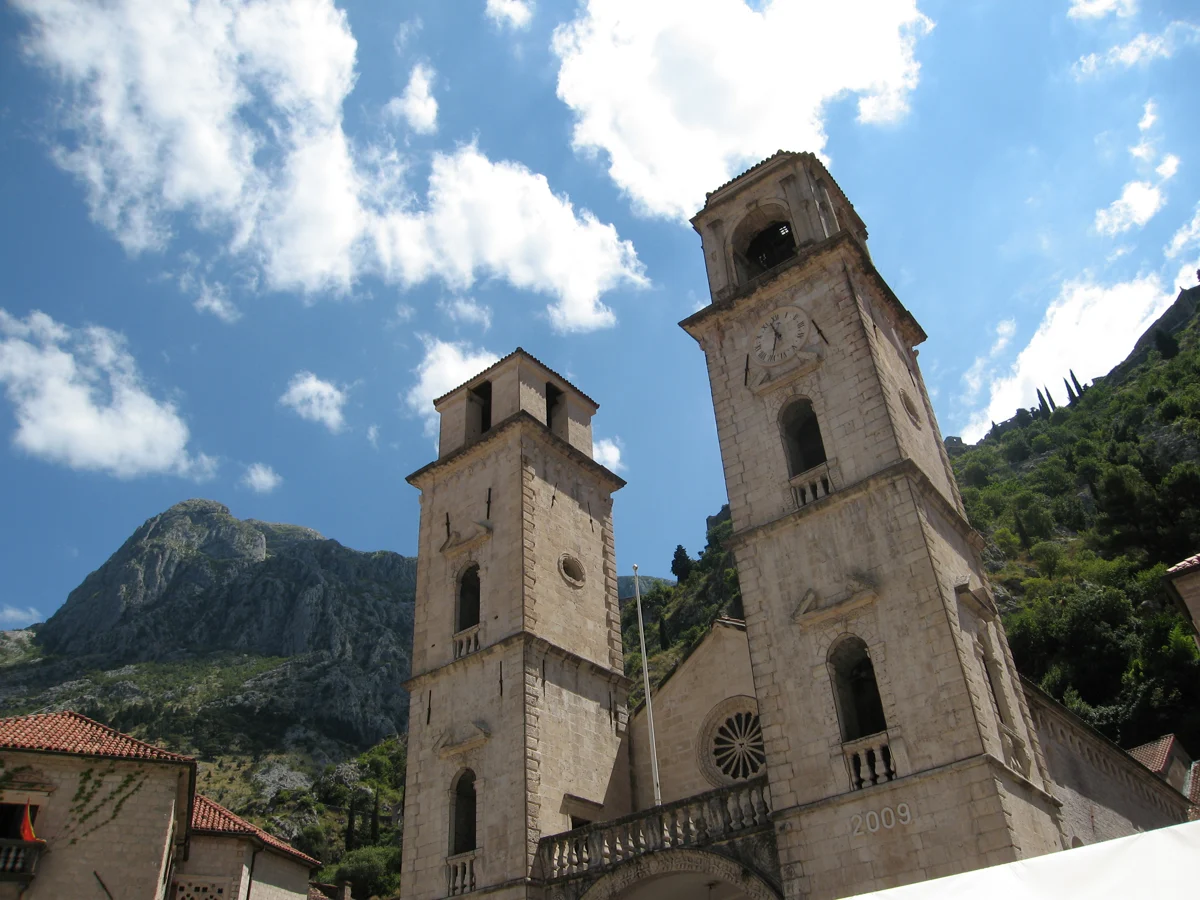
St. Tryphon's Cathedral faces the square of the same name with two bell towers and a rose window between them. Inside, the stone ciborium, a canopy over the altar, draws the eye. Its carving shows how different the church's interior is from the facade seen from the square.
The cathedral was consecrated in 1166, and its present appearance includes later restorations. The ciborium dates from the 14th century. The treasury holds reliquaries, objects made to contain saints' relics, and other examples of sacred art.
Church and treasury: Confirm tourist admission and treasury access for your chosen time, including the price and what the ticket covers. The facade on the square does not establish that the indoor spaces are open.
St. Tryphon's CathedralThe churches of St. Luke and St. Nicholas
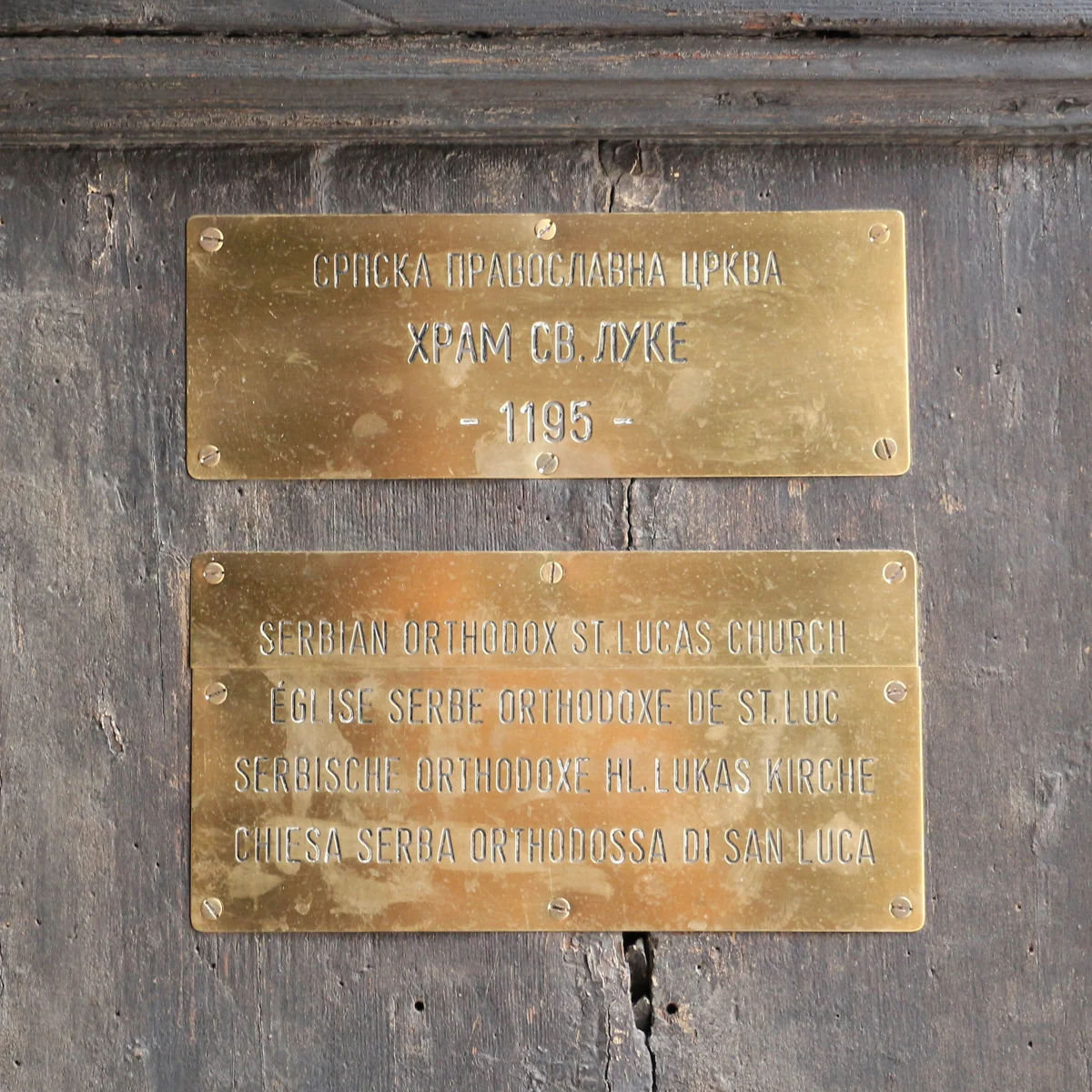
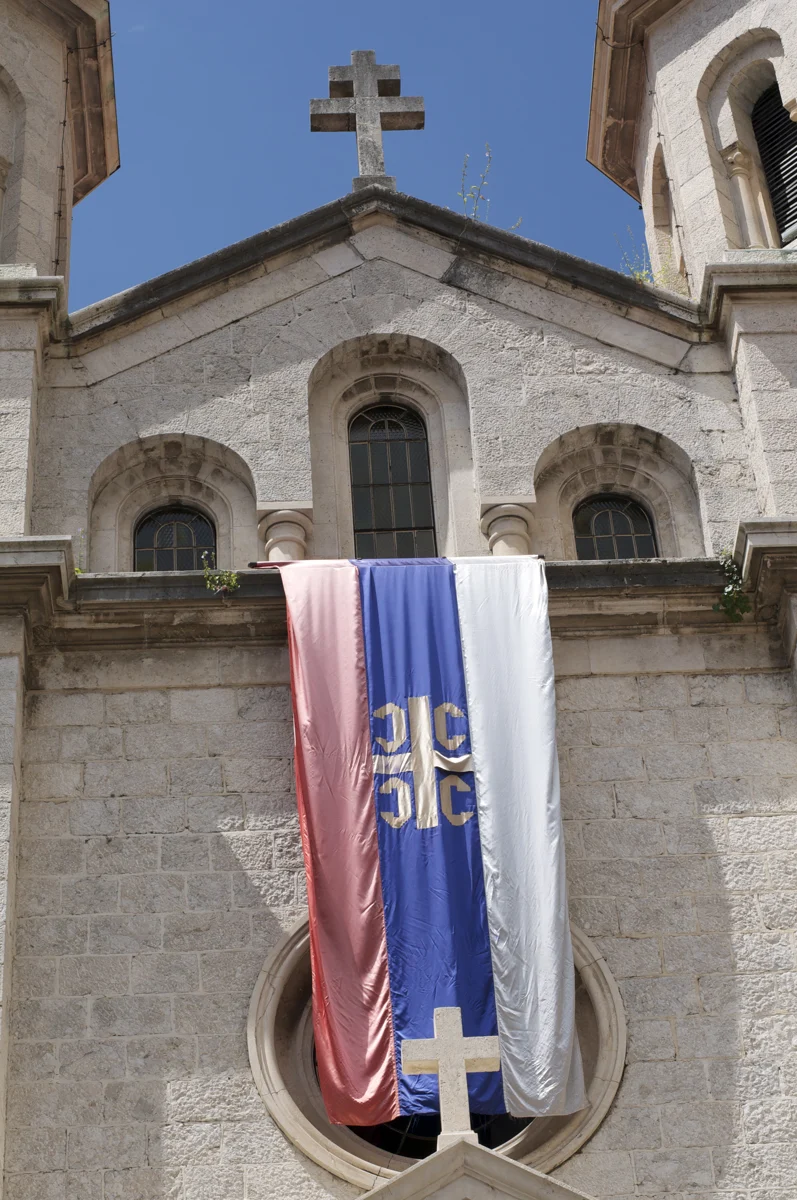
St. Luke's Church is a small stone building, while the larger St. Nicholas' Church nearby stands out with its two bell towers. Their different sizes and forms let you compare two churches from different periods of construction. In St. Nicholas', the iconostasis, a screen bearing icons between the main church space and the altar, is a particular feature when the interior is open to visitors.
St. Luke's dates from 1195, while St. Nicholas' was completed in 1909. The medieval church and the more recent building therefore bring different proportions and interior arrangements to the same small area of the town.
Two churches: Each church's own instructions apply to interior visits and photography. One being open does not establish tourist admission to the other.
Churches in the Old TownGrgurina Palace and the Maritime Museum
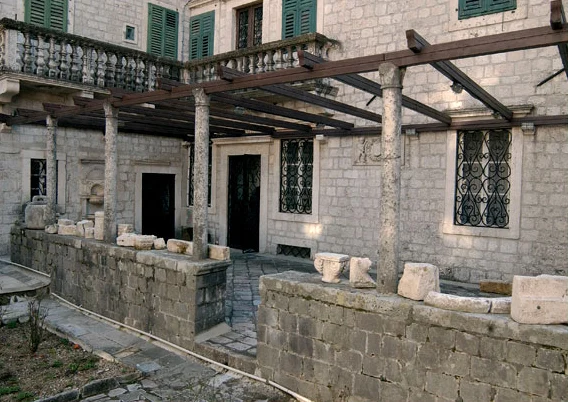
The Maritime Museum of Montenegro occupies Grgurina Palace, a stone building with a balcony. Family drawing rooms, ethnographic objects and maritime displays reveal how seafaring and domestic life are connected in Boka. A visit inside therefore offers something that cannot be understood from the facade alone. Among its distinctive spaces are the drawing-room interiors of the Ivelic family from Risan and the Visin-Florio family from Prcanj.
In this 18th-century palace, maritime heritage is presented through several themes. Material relating to the Boka Navy, maritime education and steam shipping tells the story of organized life and knowledge connected with the sea, while the drawing rooms and ethnographic objects bring family life closer. This choice suits visitors who are as interested in people and ways of life as in ships. For the role of this heritage beyond the museum rooms, see Kotor's maritime heritage and cultural life.
Museum visit: The museum publishes separate seasonal hours. Confirm the current opening hours and price with the institution, especially for Sunday. Photography and filming require its permission.
Maritime Museum informationPima Palace and the Solidarity Gallery
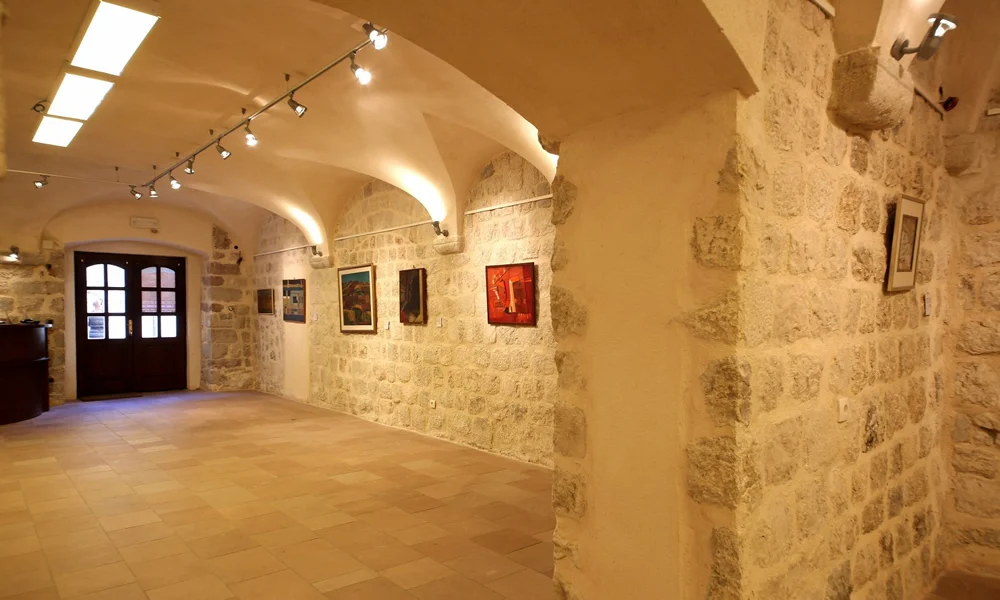
Pima Palace is distinguished by its long stone balcony with a metal railing and the coat of arms above the doorway. The Solidarity Gallery is on the ground floor, so alongside the architecture of a former family home, you can also choose to visit an art exhibition.
The gallery has used the space in Pima Palace since 2011 and has three exhibition rooms. They present a selection of artworks and an exhibition program whose content depends on the current display.
Gallery rooms: The current exhibition and its opening hours matter for a visit. The winter schedule on the tickets page is ambiguous for Monday, so confirm that day with the gallery.
Gallery tickets and opening hoursThe Lapidarium in St. Michael's Church
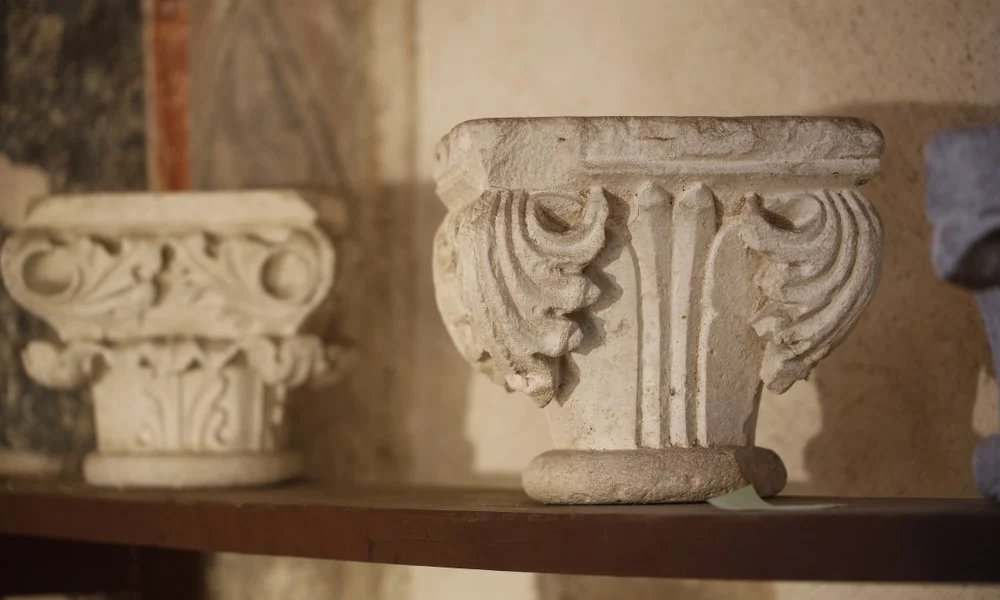
The Lapidarium is a collection of stone objects housed in St. Michael's Church on Pjaca od kina. Capitals, coats of arms and a portrait of the Roman emperor Domitian let you compare architectural decoration, family emblems and Roman portrait carving in a small space. A capital is the carved top of a column, while the coats of arms point to families and authorities associated with older buildings.
The displayed collection covers several periods of Kotor's heritage. The church itself also preserves traces of earlier building phases beneath the present structure, so its space is both something to examine and a setting for an exhibition. Its seasonal opening arrangements are particularly important when you choose this space for an independent visit.
Seasonal opening: Visits by prior arrangement are published for October 15 to May 15. From May 15 to October 15, the listed hours are Tuesday-Sunday, 10-16, subject to the published closures.
Lapidarium visiting conditionsBoka Aquarium
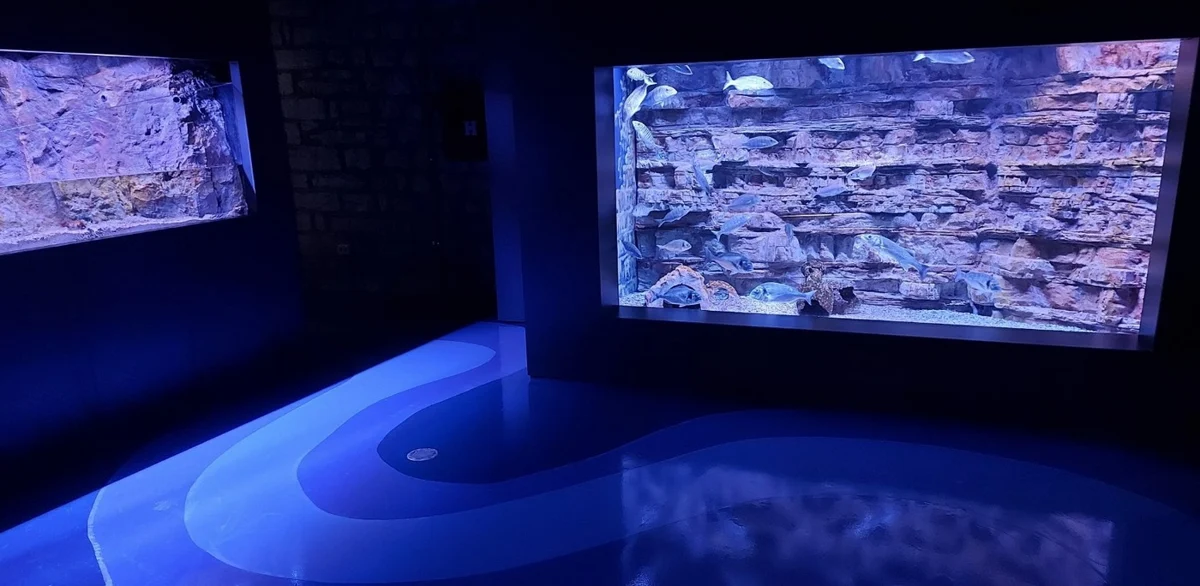
Boka Aquarium presents marine life in themed tanks at the University of Montenegro's Institute of Marine Biology in Dobrota. Organisms can be observed up close, and the exhibition connects marine life with its habitats and with marine conservation.
Four themed sections cover the Mediterranean, the Adriatic, Boka and tropical seas. Their arrangement lets you compare displays of different marine environments during the same visit. The aquarium is outside the town walls, beside the waterfront in Dobrota.
Aquarium visit: The published hours are Wednesday-Sunday, 10-17. Monday and Tuesday are closed. The regular adult ticket is 10 €, while special categories and cards have their own conditions.
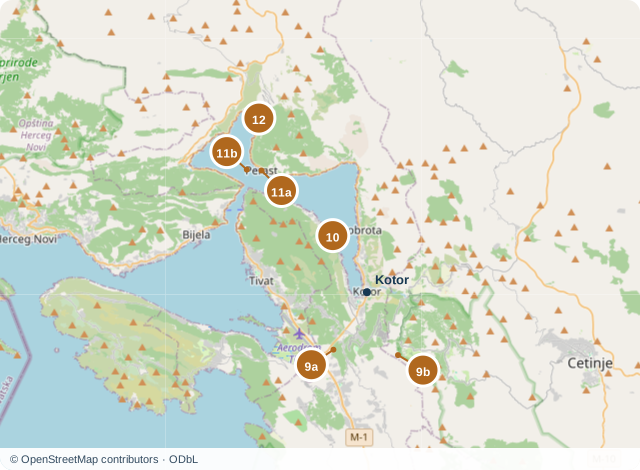
Boka Aquarium tickets02Separate visits around the bay and on the mountainThe ride to Kuk, the church in Prcanj, Perast with its island and the Roman site in Risan require separate journeys. Their locations and entrances are not part of a single town tour.
The ride to Kuk, the church in Prcanj, Perast with its island and the Roman site in Risan require separate journeys. Their locations and entrances are not part of a single town tour.
Kotor-Lovcen Cable Car
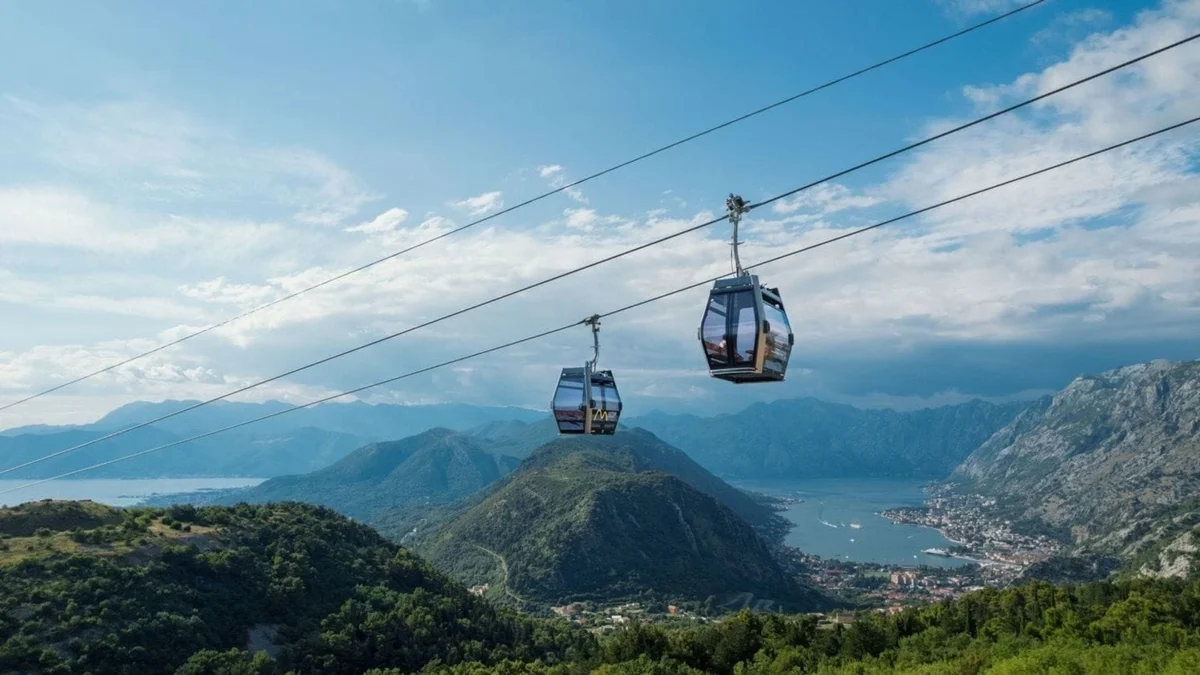
The Kotor-Lovcen Cable Car connects the lower station at Dub with the upper station at Kuk, above the coastal part of Boka. Views from the cabin and the area at the top reveal a broader picture of the bay and mountain slopes than can be seen from the town streets. The cabin ride and viewpoint are therefore the main attractions of the visit, with a separate journey to the station outside the Old Town.
The lower station at Dub is reached from the Kotor side, while the upper station at Kuk is reached by road from the direction of Cetinje and Lovcen. Njegos' Mausoleum is a separate destination that requires onward travel from Kuk.
Ticket and return: The post-season adult ticket costs 20 € return or 12 € one way. Before riding, check the current program and last return with the operator. Separate Funivia excursions are not included in a standard ticket.
Cable car tickets and hoursChurch of the Nativity of the Virgin Mary in Prcanj
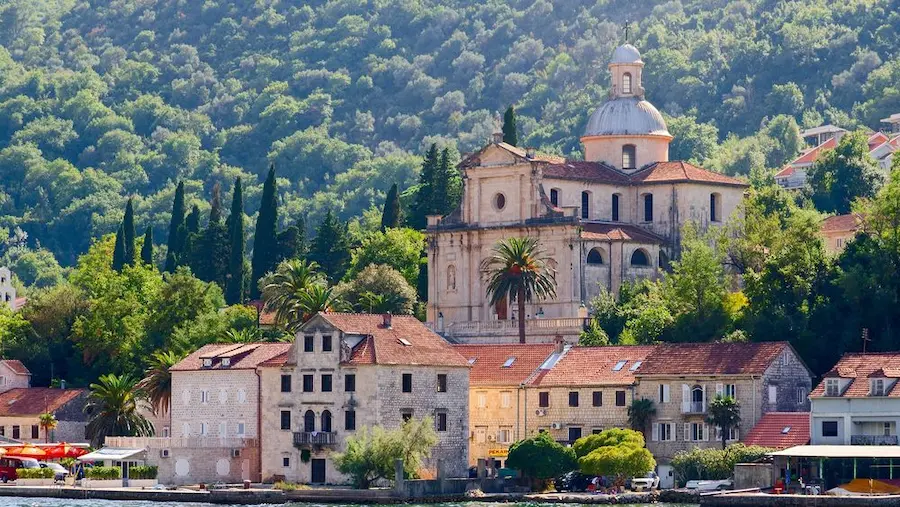
The Church of the Nativity of the Virgin Mary is a large stone church above Prcanj's waterfront. Its dome and broad facade rise above a row of waterfront houses, making its scale clear from the water and the opposite side of the bay. Construction lasted from 1789 to 1909. For visitors interested in church architecture and the appearance of Boka's settlements, the relationship between the monumental church and the small stone houses is particularly striking. Prcanj lies on the western shore of the bay, separate from Kotor's squares.
Church access: Confirm tourist visiting hours and the possibility of seeing the interior with the church. The waterfront approach and exterior view remain separate from admission.
Church of the Nativity of the Virgin Mary in PrcanjPerast and Our Lady of the Rocks
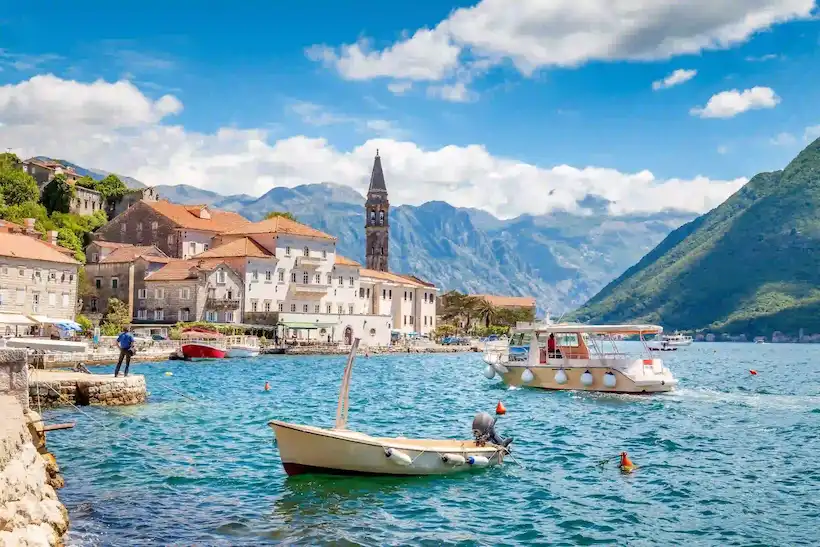
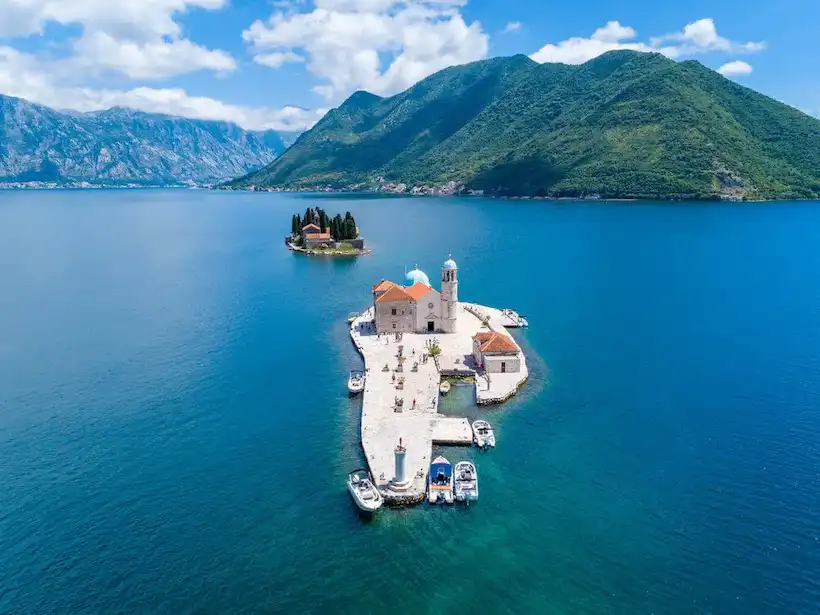
Perast is a settlement of stone houses and Baroque palaces along the waterfront, with the island church of Our Lady of the Rocks offshore. The waterfront architecture and the church on an artificially created island offer two different perspectives on the bay's maritime heritage. In Perast, the buildings are viewed from land, while reaching Our Lady of the Rocks involves crossing the water.
The church's interior paintings are associated with Tripo Kokolja, a painter from Perast. The island visit can therefore also be interesting for its sacred art, as well as the building's position on the water. Access to the interior and the exhibits depends on the church's own conditions, while the waterfront settlement remains a separate area to explore.
Crossing to the island: Confirm transport, the return journey and church admission separately. The boat fare does not automatically include a church or museum ticket.
Official information about boat visitsRoman mosaics in Risan
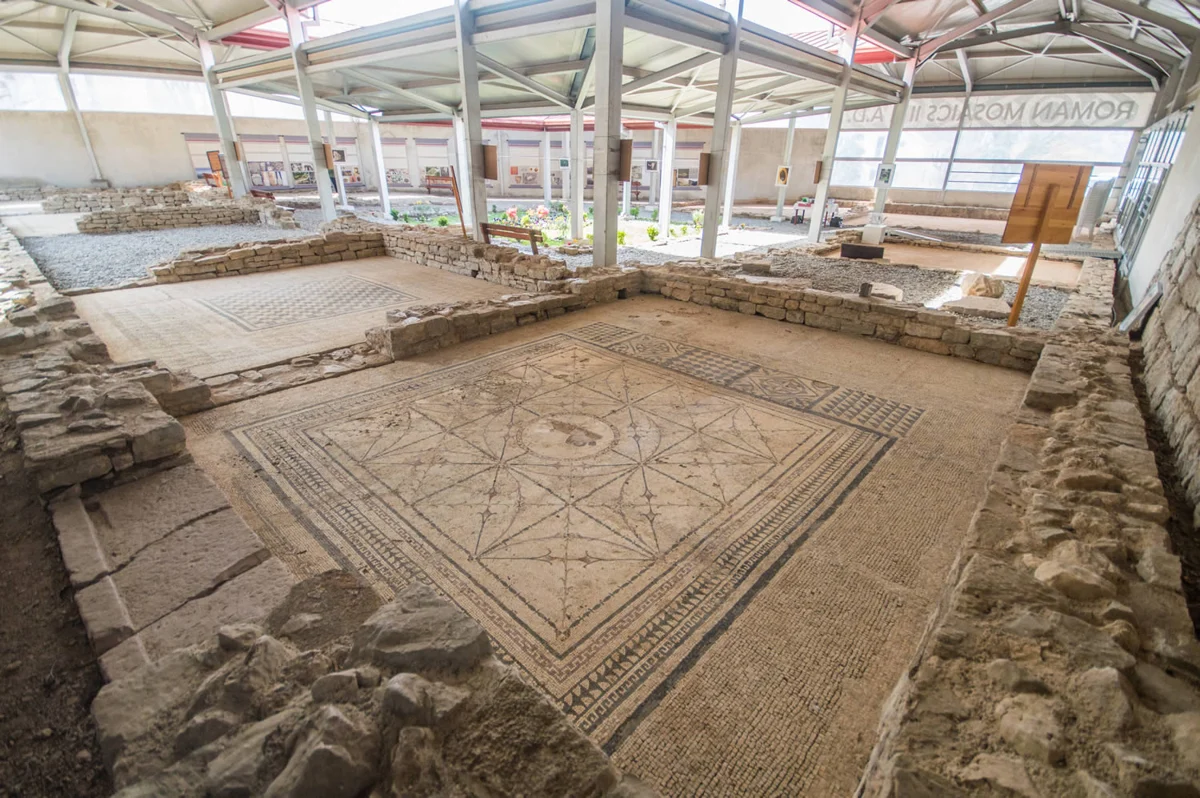
The Roman mosaics in Risan are the surviving floors of a former town villa, with areas of geometric and plant decoration. A figure of Hypnos with wings behind his shoulders in the central medallion distinguishes one room from the others, letting visitors compare a figurative image with repeated ornament. The visit focuses on the floors and the surviving layout of the rooms.
The villa dates from the 2nd century AD. Its rooms were arranged around a central area and connected by a corridor. The surviving floors show different treatments of their surfaces. The site is in Risan, separate from Kotor's town museums, and has its own seasonal visiting schedule.
Archaeological site: The published individual ticket is 6 €. Hours are Tuesday-Sunday, 8-20 from April 15 to October 15, and 10-16 in the winter schedule. The operator lists closures on Mondays, during January and on certain holidays.
Roman mosaic tickets and scheduleFor a view from above, you can choose between the steps on the town walls and a cable car cabin from Dub. The palaces offer another choice: viewing a stone facade or entering drawing rooms and exhibition spaces. Stone finds in a museum and mosaics on the floors of a Roman villa differ in what has survived and how you see it.
From the town walls, you look down on Kotor from a hillside reached by steps. The cable car takes visitors from Dub toward Kuk and a broader mountain panorama. Both offer views of the bay, but climbing on foot and reaching the cable car station involve different arrangements for a visit.
Pima's balcony and Grgurina's facade can be viewed from a town square. If you want to see an art exhibition or family drawing rooms, the visit moves inside an institution. Your choice to enter therefore depends on the rooms and collections that interest you, with separate museum admission conditions.
In the Lapidarium, capitals, coats of arms and stone fragments can be compared in a single exhibition room. In Risan, the mosaics are seen as the floors of rooms in a former villa. If you are interested in the relationship between decoration and the layout of a house, Risan provides that spatial context. For different kinds of stone finds and the way they were carved, the Lapidarium is the choice.
Galleries, museums and two islands
Similar names for cultural institutions do not always refer to the same space. For the islands off Perast, the destination's full name matters, while in town a building and its institution may have two labels.
The Solidarity Gallery is on the ground floor of Pima Palace and belongs to OJU Muzeji Kotor. The City Gallery is a separate space of the Nikola Djurkovic Cultural Center, in a former Franciscan convent. An exhibition announced for one does not establish that the other has the same program. For a broader overview of their different roles, see Kotor's cultural institutions.
On the Muzeji Kotor tickets page, the names Kotor Lapidarium and Kotor History Museum are associated with St. Michael's Church. Both labels refer to the same space in the church, with its seasonal opening arrangements. When arranging a visit, the building's name clarifies the location even when a different institutional label appears in the offer.
The combined ticket for three spaces in the Old Town covers the Solidarity Gallery, the Lapidarium in St. Michael's and St. Paul's Church. The Maritime Museum of Montenegro is a different institution. Its admission, like admission to the cathedral or aquarium, is not listed as part of that town museum group.
Our Lady of the Rocks is an artificially created island with a church, while St. George is another island off Perast. The names do not refer to two sides of the same site. For a visit to the island church, the destination is Our Lady of the Rocks. Access to it does not establish that you may land on St. George.
The collection's origins and traces in stone
The Solidarity Gallery takes its name from donations after the earthquake, the displayed stone finds come from different buildings, and a church floor preserves gravestones. These details explain the origins of the objects you see.
Donations of art received after the 1979 earthquake became the foundation of the Solidarity Gallery. The gallery's name therefore refers to support for rebuilding the town through artworks.
The stone finds in the Lapidarium come from several places in Kotor. Their present exhibition room therefore does not identify the building to which they originally belonged. Information about their origins links a capital, coat of arms or fragment of church furnishings to its original use, rather than attributing it to the fittings of St. Michael's.
The floor of St. Luke's Church is made up of gravestones associated with communal tombs of the townspeople. Burials inside the church continued until the 19th century. When the interior is accessible, the slabs show that the floor also preserves traces of burial, alongside the church's present use for worship.