01Squares and town fortresses
Old Town, Clock Tower and Belavista
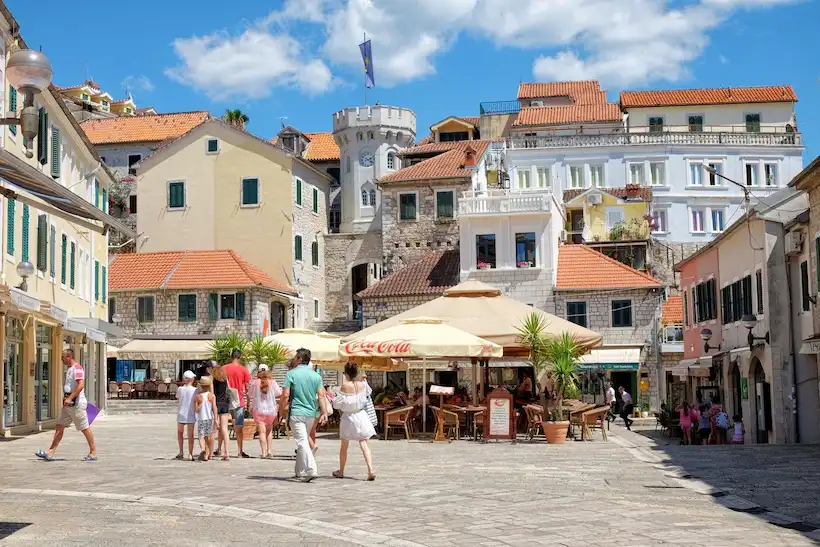
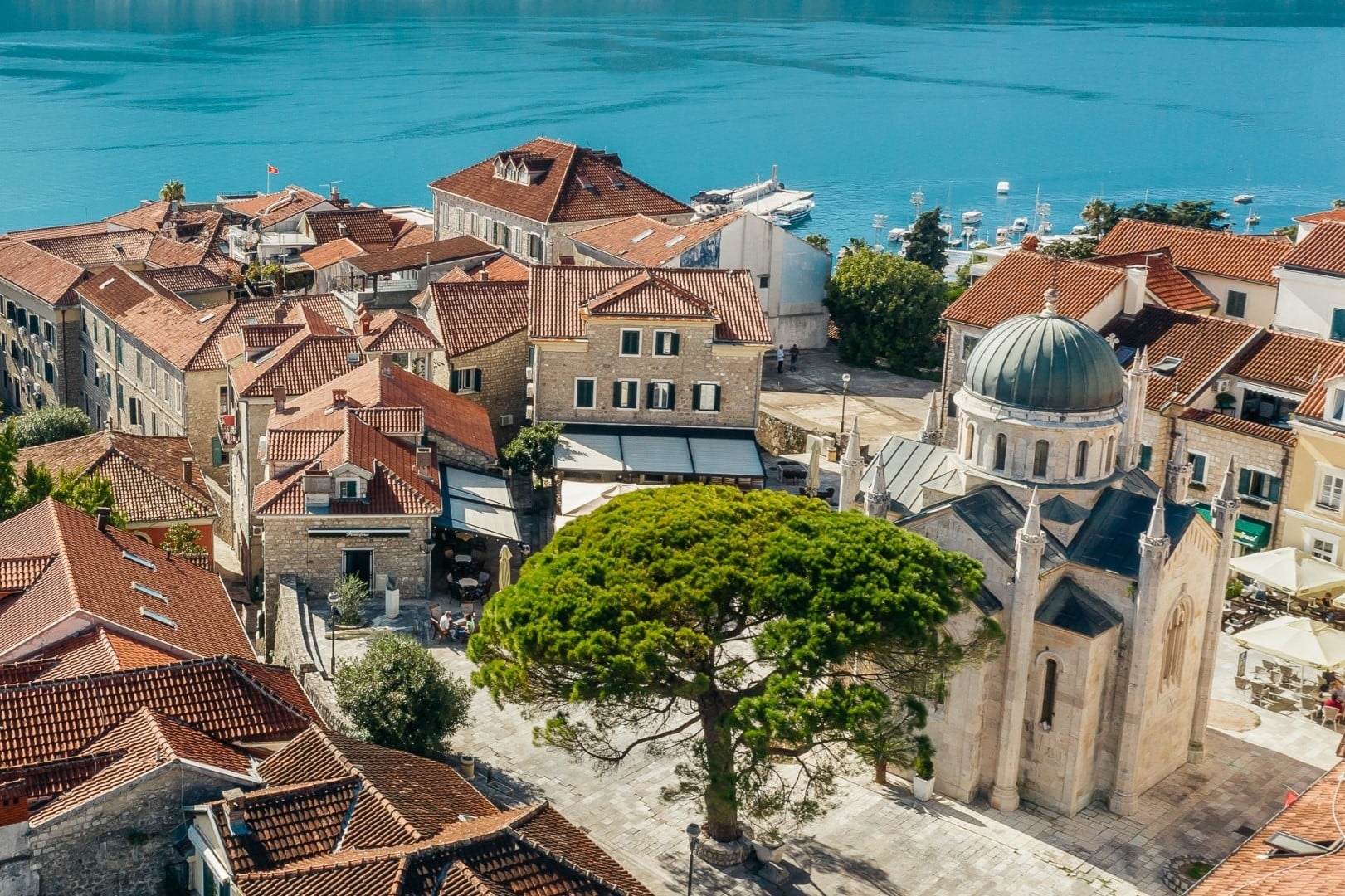
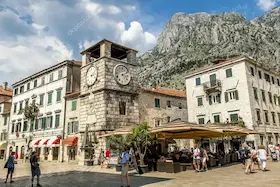
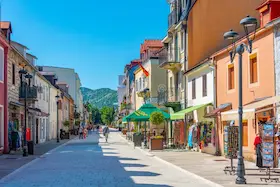
The Clock Tower above a stone passage and the Church of St. Michael the Archangel on Belavista mark two levels of the Old Town. Nikola Djurkovic Square lies below the tower, while on the higher Herceg Stjepan Square, known as Belavista, the church and fountain stand among stone houses. The stairs between the squares explain why these nearby places do not share a flat pedestrian area at the same level.
On the lower square, the clock and the opening of the town gate draw the eye. On Belavista, the church occupies the middle of a smaller space. You can see its dome, bell tower and carved stone facade from the square without entering the interior. Streets branching off around it continue between old houses, so you are exploring a preserved townscape here, as well as an individual monument.
Visiting: Explore the squares separately from the church interior. The connection between the lower square, Clock Tower and upper square includes steps. Follow the instructions at the church itself.
Town squares and stairwaysForte Mare fortress
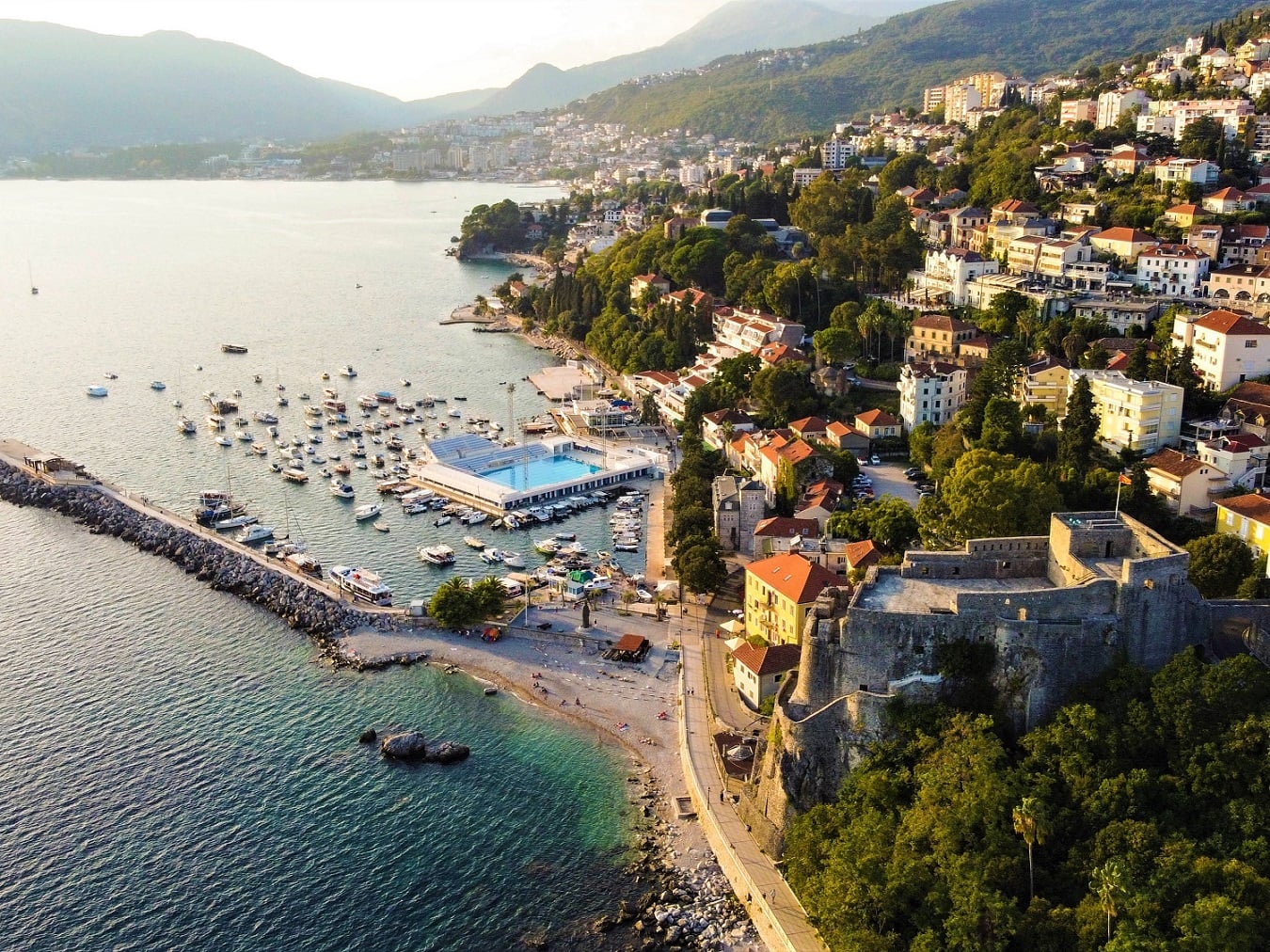
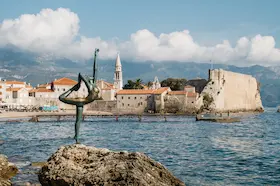
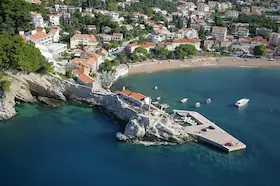
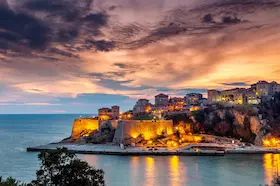
Forte Mare stands on a rock immediately above the sea, with high stone walls over the town's waterfront. The harbor and the entrance to the bay are visible from the fortress, while the promenade below shows clearly how the rock and ramparts together protect the seaward approach to the Old Town. The walls beside the water and the view from their top are the main reasons for this visit.
The fortress was extended under different rulers, so its present appearance is not the work of one builder or one period. Its former defensive role can be understood from its position above the shore. The space for audiences reveals its later purpose. In 1952 it was adapted for open-air screenings, and film and other cultural events still use its walls. Exploring the fortress and attending an evening screening therefore offer two different experiences of the same place, with separate times and admission conditions.
Visiting: For the summer schedule, the operator published ordinary visiting hours of 09-21, an individual ticket price of 4 € and a rate of 3 € per person for groups of at least ten visitors. Confirm the current hours and price before coming. Tickets for screenings or concerts have their own conditions.
Operator's announcement on fortress visitsKanli kula fortress
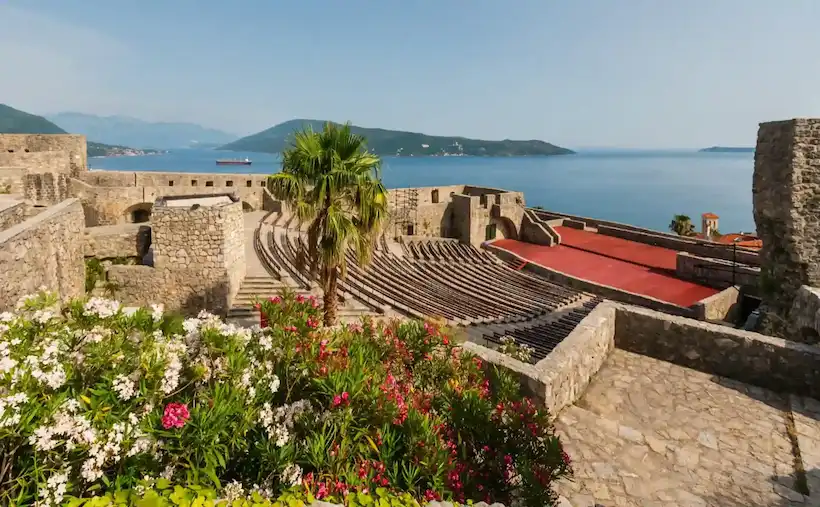
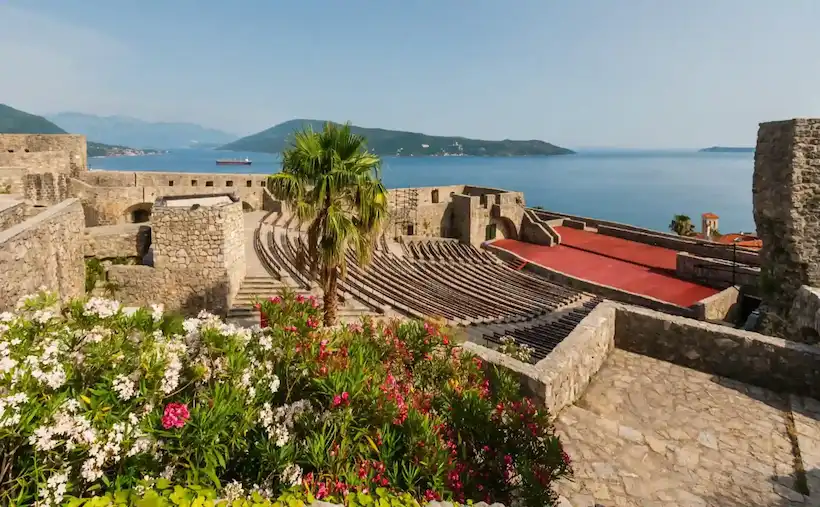
Kanli kula is a fortress on the higher, northern edge of the Old Town, with an open-air stage and rows of audience seating within its walls. From here, you look across the town's rooftops toward the bay, from a greater height than at the waterfront fortress. Inside the fortress, the auditorium layout also draws attention: stone walls surround the space where audiences gather.
Before it hosted cultural events, Kanli kula served in the town's defense and as a prison. Its massive walls and enclosed courtyard therefore have a history different from the stage you find today. Turning the fortification into a performance venue did not remove its basic structure, so while visiting you can compare the fortress with its later layout for events.
Visiting: For the summer schedule, the operator lists 09-21 and an ordinary admission price of 4 €, or 3 € per person for groups of ten or more. Check the current arrangements and availability of the space when an event is being prepared. An event ticket applies to its own scheduled time.
Operator's announcement on fortress visits02Displays, gardens, monastery and harbor
Mirko Komnenovic City Museum
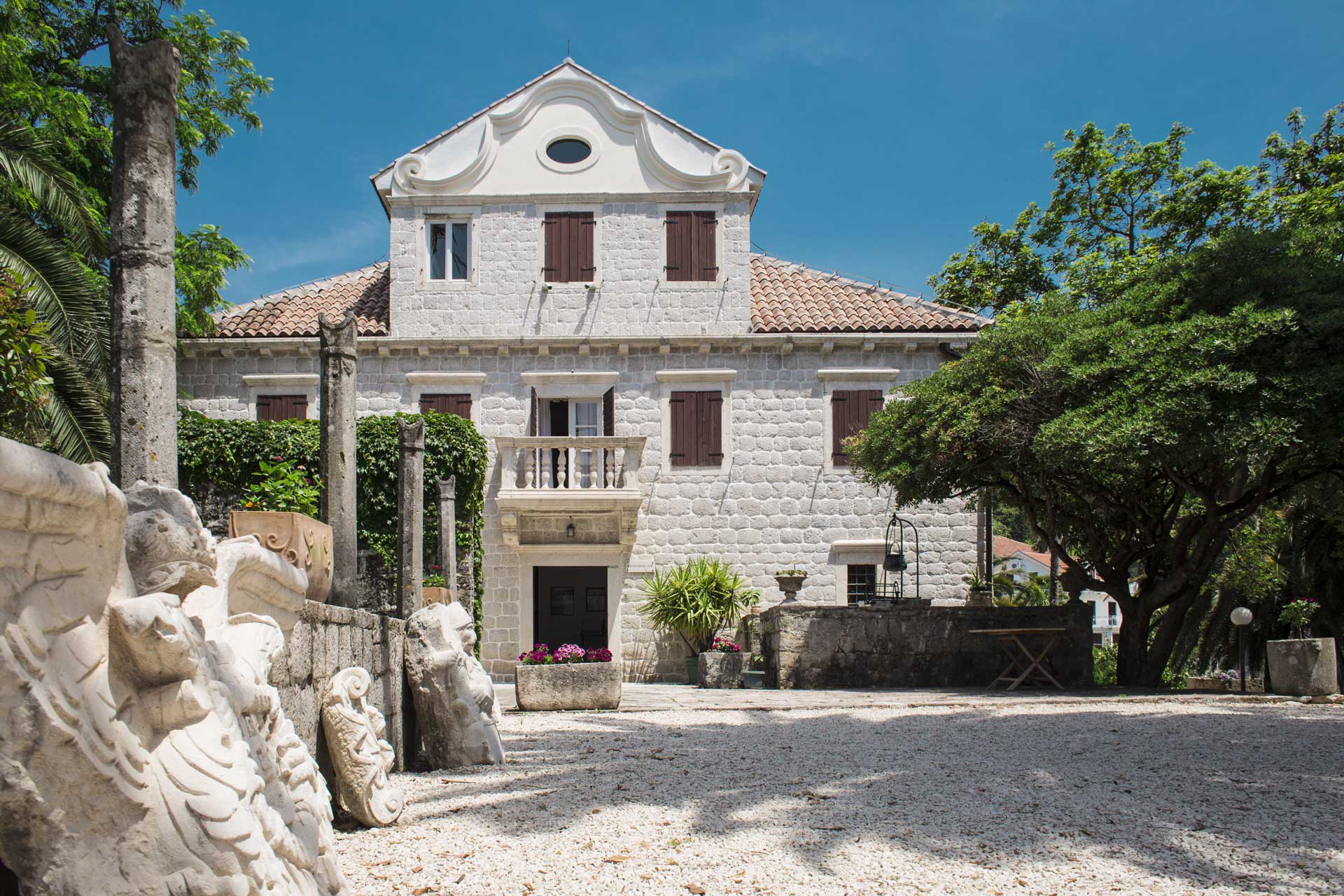
The Mirko Komnenovic City Museum occupies a stone house with a garden in Topla. Its collections include amphorae (large ceramic vessels) and other archaeological finds, icons from the Bay of Kotor, historical documents, and objects from life in the town and surrounding villages. A visit is especially interesting if you want to look beyond the view of the bay and see what has been found or preserved along its shores.
Amphorae and items from ships' cargoes tell of trade across the Mediterranean, while stone fragments retain traces of earlier buildings. The icon collection includes work by the Dimitrijevic-Rafailovic icon-painting school of the Bay of Kotor, linking Risan with the wider bay area. Ethnological material brings you closer to how objects were used in the home and in everyday life, while maritime connections also appear in gifts that people brought from other parts of the world. The museum opened to the public in 1953. The available rooms and displayed selection should be distinguished from the institution's total holdings.
Visiting: The museum house is at 9 Mirka Komnenovica in Topla. The institution publishes the museum telephone number +382 31 340 265. Confirm opening hours, admission and available rooms with the institution. The shared contact for the gallery in the center refers to a different space.
Museum and gallery: separate spaces and contactsHouse of Nobel laureate Ivo Andric
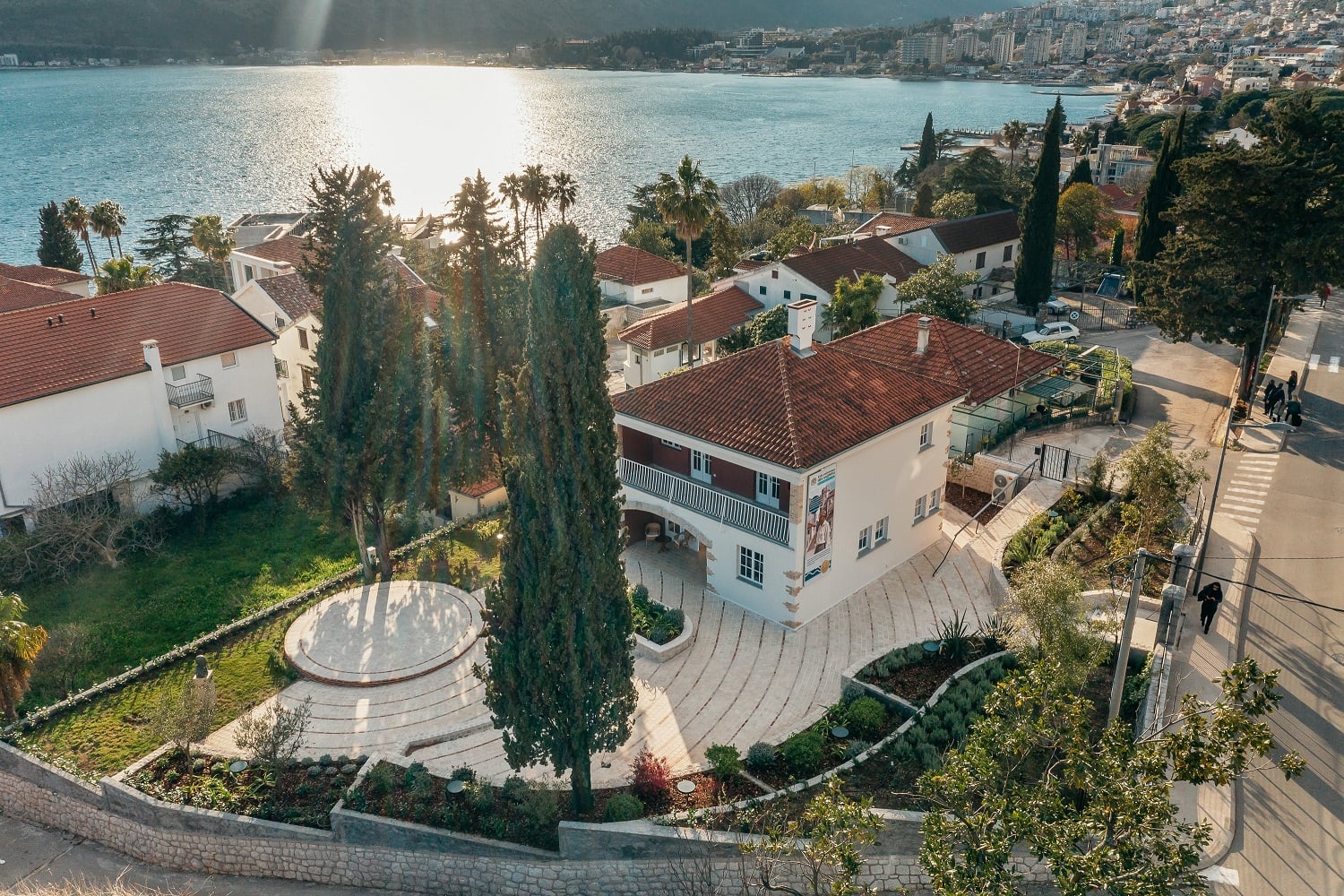
At the house of Nobel laureate Ivo Andric, photographs show the writer on the terrace, in the garden, on the town's waterfront and during excursions around the bay. The exhibition in the Topla house thus connects a well-known literary figure with the places where he spent time in Herceg Novi. It is particularly interesting to compare the photographed scenes with the house and garden before you.
Andric lived here with his wife, Milica Babic, from 1963 to 1968. The permanent ground-floor exhibition, 'Andriceve novske staze, lica, predjeli', presents that stay, while the upstairs photographs cover his literary work, Nobel Prize and diplomatic years. Today's rooms have been arranged for an exhibition, so they should not be imagined as the untouched interior of his former home. In the restored garden, plants were selected according to a list Andric left, and the courtyard also hosts cultural events.
Visiting: The house is at 79 Njegoseva. The operator's summer announcement lists daily visiting hours of 09-22, a price of 4 € and 3 € per person for groups of at least ten. Confirm visiting arrangements and admission for your chosen time, and check any announced garden event separately.
Operator's announcement for the Nobel laureate's houseJosip Bepo Benkovic Gallery
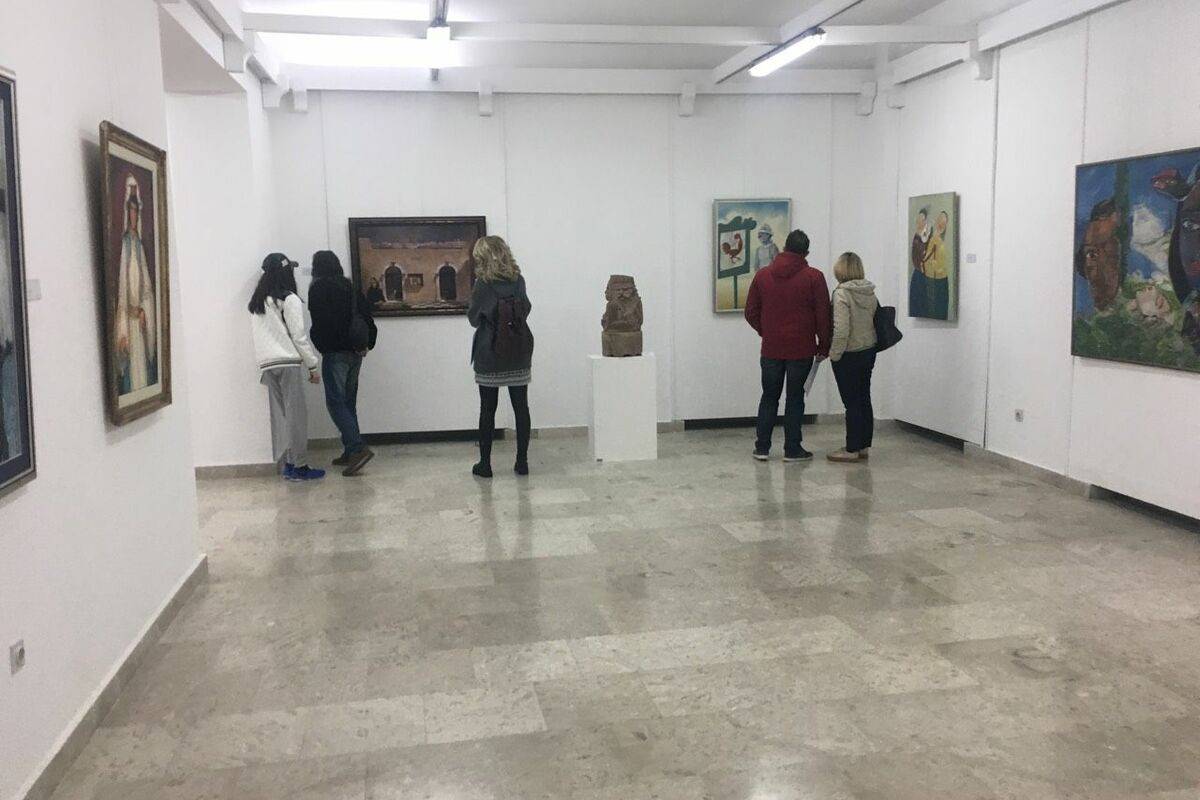
The Josip Bepo Benkovic Gallery in the Old Town is named after the Herceg Novi painter whose paintings and drawings it holds in its collection. The institution was established after the Art School closed, continuing the town's artistic tradition. Artists represented in the collection also include Ivan Lucev, Milena Sotra and Anton Lukateli.
A visit does not mean you will see every work in the collection. Exhibitions change in the gallery rooms, so look for the artist and theme of the display announced for your arrival date. This sets it apart from the City Museum run by the same institution: objects in the museum house in Topla tell of regional heritage, while the gallery in the center focuses on visual art from a selected exhibition program.
Visiting: The gallery is at 4 Marka Vojnovica Street. The institution lists the telephone number +382 31 340 318. Check the current exhibition, opening hours and access while displays are being changed. The opening time of one event does not represent a whole day of ordinary visits.
Gallery and institution contact detailsBoka Park
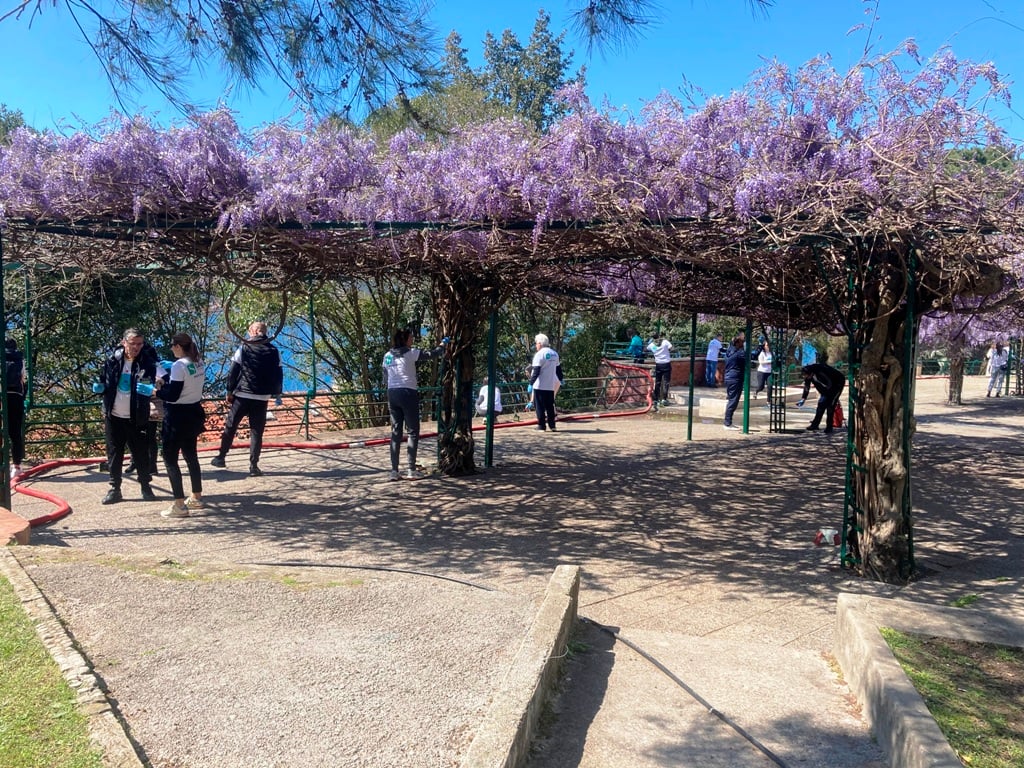
Boka Park is a terraced park in the center of Herceg Novi, with tall palms, a wisteria-covered arbor and a fountain featuring a sculpture of the goddess of hunting. Plantings and stone park features are arranged on a slope, opening views toward the bay from different levels. Its distinctive feature is the combination of a garden of exotic plants and small terraces within the built-up town.
The park was laid out beside the former Boka Hotel, hence its older name, 'Boka Hotel Park'. The hotel was damaged in the earthquake, and the park remains recognizable by its terraces and planted greenery. The arbor in its center provides shelter, and the fountain contains a sculpture of the goddess of hunting by Petar Palavicini. The stone sculpture and landscaped garden recall the former hotel grounds, although the hotel building is no longer there.
Visiting: The park is on steep, terraced ground. Any equipment installed for a holiday or festival belongs to the announced event. Check its particular period of availability.
Boka Park in the municipal park overviewSavina Monastery
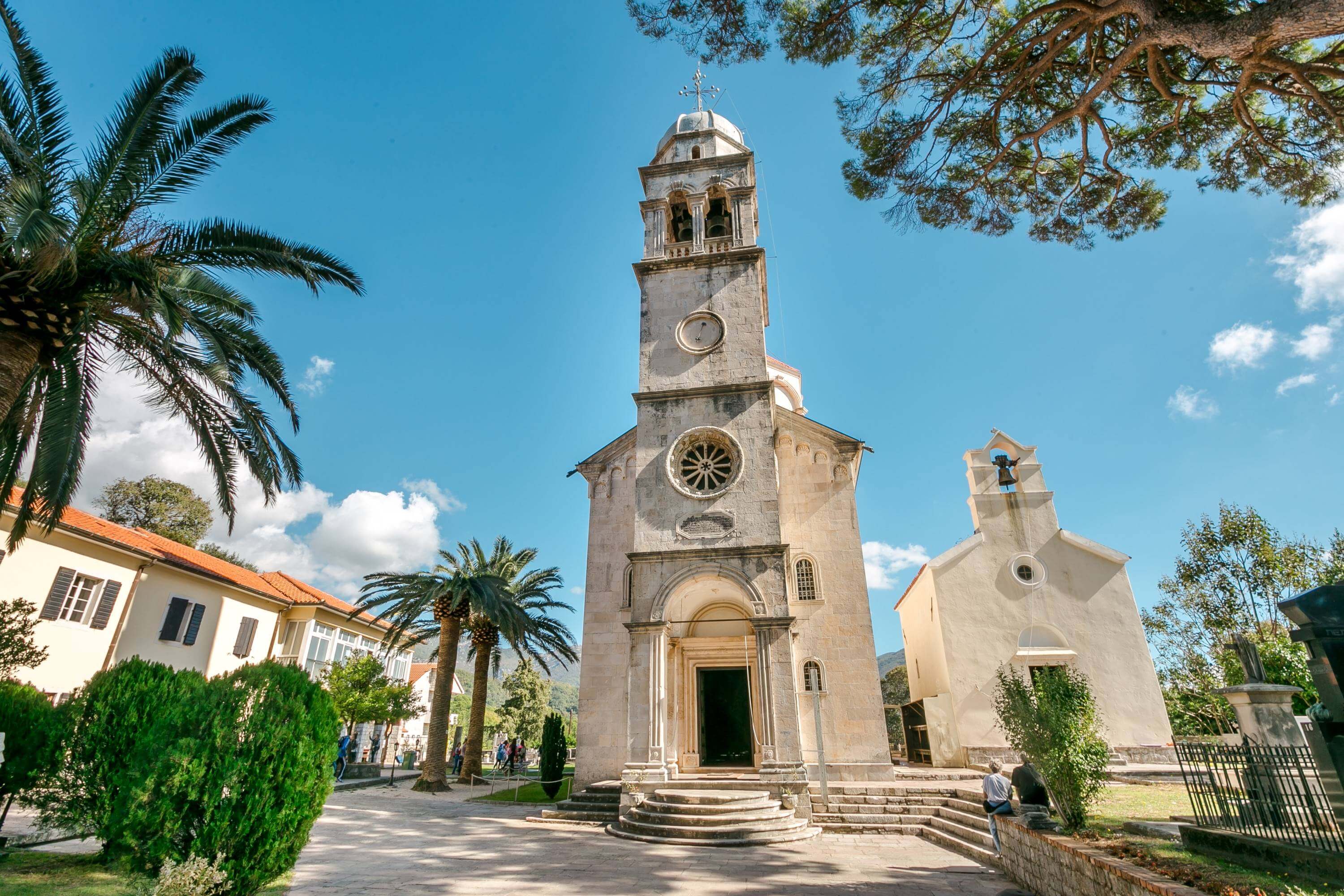
Savina Monastery brings together two neighboring churches of the Dormition of the Mother of God and the monastery residence among tall trees east of the center of Herceg Novi. The large church with its bell tower and the smaller building beside it differ in scale and appearance. Iconostases and wall paintings survive behind their stone facades. The visit is interesting for both architecture and church art when viewing the interiors is permitted.
The large church was built in the second half of the eighteenth century. Its iconostasis, a screen bearing icons, was made by Simeon Lazovic and his son Aleksije, combining traditional depictions with Baroque design. Several layers of frescoes have been uncovered in the small church, while its iconostasis consists of parts from different periods. The two neighboring buildings therefore do not represent the same period or the same artistic work.
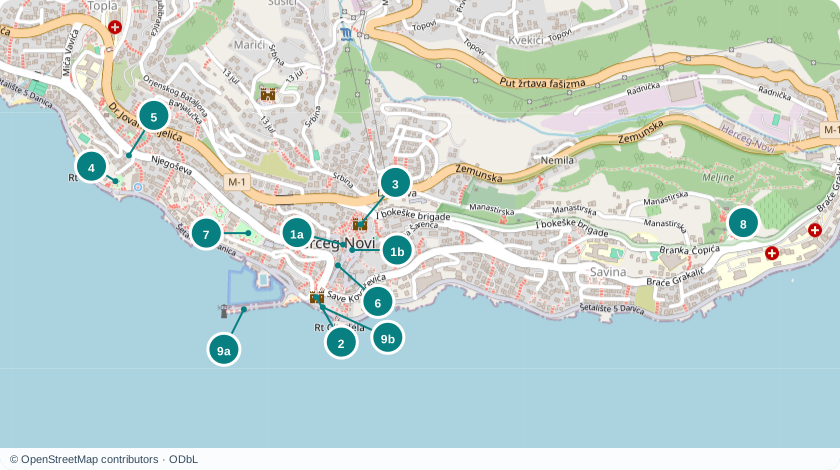
Visiting: Savina is an active monastery. Ask the hosts about entering the churches, access to the treasury and library, and photography. An accessible courtyard does not confirm access to every space. The map marker identifies the monastery complex.
Savina monastery complexSkver and Pet Danica Promenade
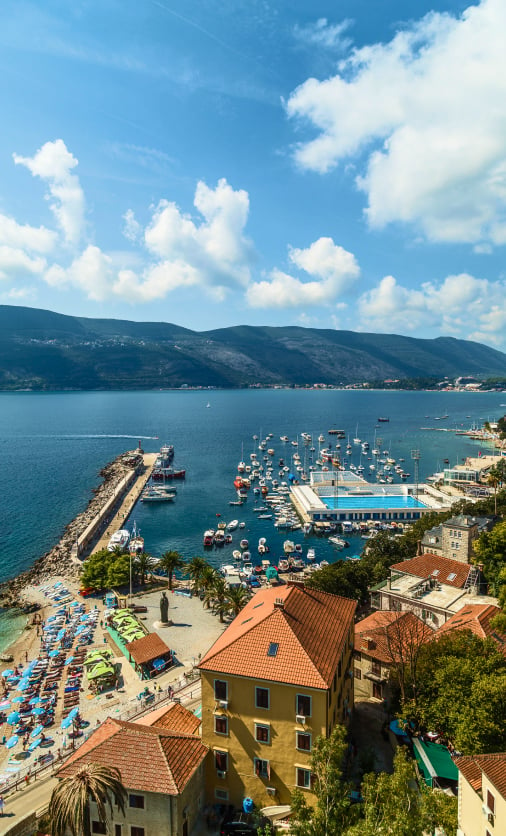
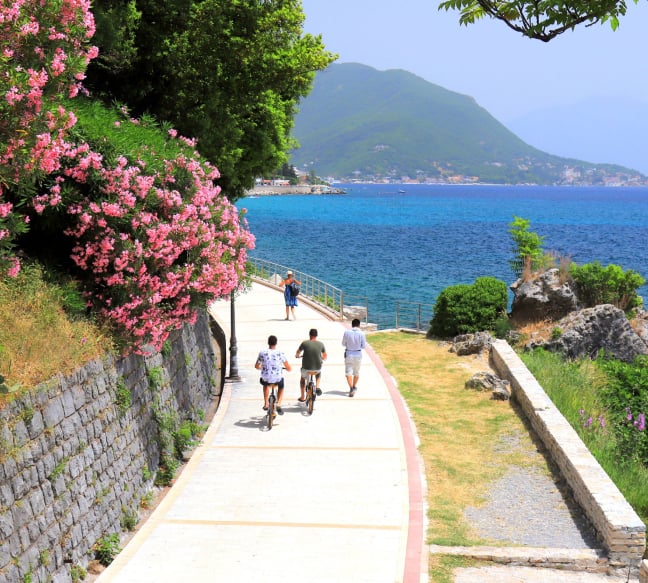
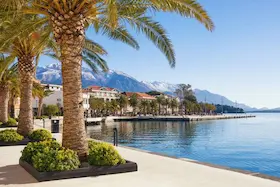
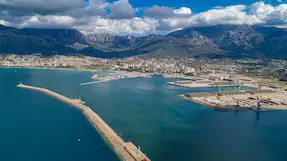
Skver is the town harbor below the Old Town, with vessels, berths and a view of houses rising above the waterfront. Pet Danica Promenade passes the harbor and continues along the sea, so here you see Herceg Novi from water level. The sight of boats at the foot of the stone townscape differs from the views down from the fortresses.
Sightseeing in the harbor overlaps with the waterfront's working use: some space serves passersby, while the piers and individual berths serve vessels. The promenade therefore gives you an overview of the harbor without implying that you can approach every boat or board it. For boat trips, reservations and other things to do at sea, see activities in Herceg Novi.
Visiting: The promenade and harbor serve different purposes: distinguish the public waterfront passage from the working harbor areas and individual berths. The harbor marker represents its location. To board a vessel, look for a confirmed departure and meeting point from your service provider.
Official town harbor locationChoose Forte Mare for a view that brings together the rock, the seafront and the harbor. Kanli kula offers a higher view across the town's rooftops, while its auditorium is an important part of the scene inside. If you are coming to explore the building, distinguish ordinary sightseeing visits from scheduled cultural events before buying a ticket.
The museum is the choice for objects connecting the Bay of Kotor with different historical periods. Andric's house focuses on one writer through photographs and the place where he stayed. Choose the gallery according to the exhibition announced for your visit. Its changing program matters more than an expectation of the same permanent display.
The City Museum and Andric's house are in Topla, west of the center. Savina Monastery is on the eastern side. If you are choosing one cultural visit outside the Old Town, first decide whether you are interested in museum displays or church architecture. These places are not grouped around the same town square.
A square, building and exhibition may have different names
Belavista is another name for Herceg Stjepan Square, beside the Church of St. Michael the Archangel. Nikola Djurkovic Square is below the Clock Tower. When arranging a meeting or looking for an event announcement, the square's full name makes clear whether it refers to the lower or upper space.
The institution explicitly lists the museum in Topla at 9 Mirka Komnenovica Street and the gallery at 4 Marka Vojnovica Street. The address in a shared contact listing is not enough to identify which building to visit. Look for the name of the space hosting what you want to see.
Boka Park is a terraced town park. Dvorana Park is a cultural venue that Herceg Fest lists on Njegoseva Street. The hall's name in an announcement for a screening or performance does not mean that the event takes place outdoors in the park.
Savina refers both to the town area east of the center and to the monastery within it. When looking for the church complex, use the full name Savina Monastery and the address 21 Manastirska, listed by the Tourist Organization. A general label for the area may direct you to a much wider space.
Understanding memorial and cultural spaces
The Nobel diploma and medal in Andric's house are replicas, while the period mirror is a surviving original from his home. The photographs document the writer's life, the replicas represent the award he received, and the mirror is an object that actually belonged to the house. Recognizing those distinctions helps you view the display as a documentary exhibition, without expecting a completely preserved historic interior.
The museum house and garden come from the endowment of Mirko and Olga Komnenovic. Their wish to open their private home to the town explains why the museum collections are housed in a home with a garden, rather than a purpose-built exhibition building. The garden is therefore part of the museum's origins, as well as a place to pause today.
The Herceg Novi Winter Salon is a distinct gallery exhibition program featuring artists from the town and the wider region. Its name does not cover every exhibition the gallery organizes. If you want to see the Salon's particular selection of works, look for its announcement and dates. At other times of year, you may find a very different display.