
Podgorica's Neighborhoods and Their Character
Old lanes, pedestrian streets lined with cafes, and large residential areas show how much Podgorica's neighborhoods differ. Local stories also shape their character, from the old tradition of strolling through the city to the satirical “Republic of Zabjelo.”
Podgorica by neighborhood
- Old city streets
- Stara Varos and the center
- Residential architecture
- Preko Morace, Blok 5, and City kvart
- Neighborhood identity
- Zabjelo and its “Republic”
Get to know Podgorica through its neighborhoods
Stara Varos and Nova Varos grew around two different urban centers: the older one beside the Ribnica River and the newer one around today's Trg nezavisnosti (Independence Square). The large residential neighborhoods of Preko Morace developed later, with boulevards, parkland, and multistory apartment buildings. The name Preko Morace covers a wider part of the city, which also includes Blok 5 and City kvart.
01Stara Varos
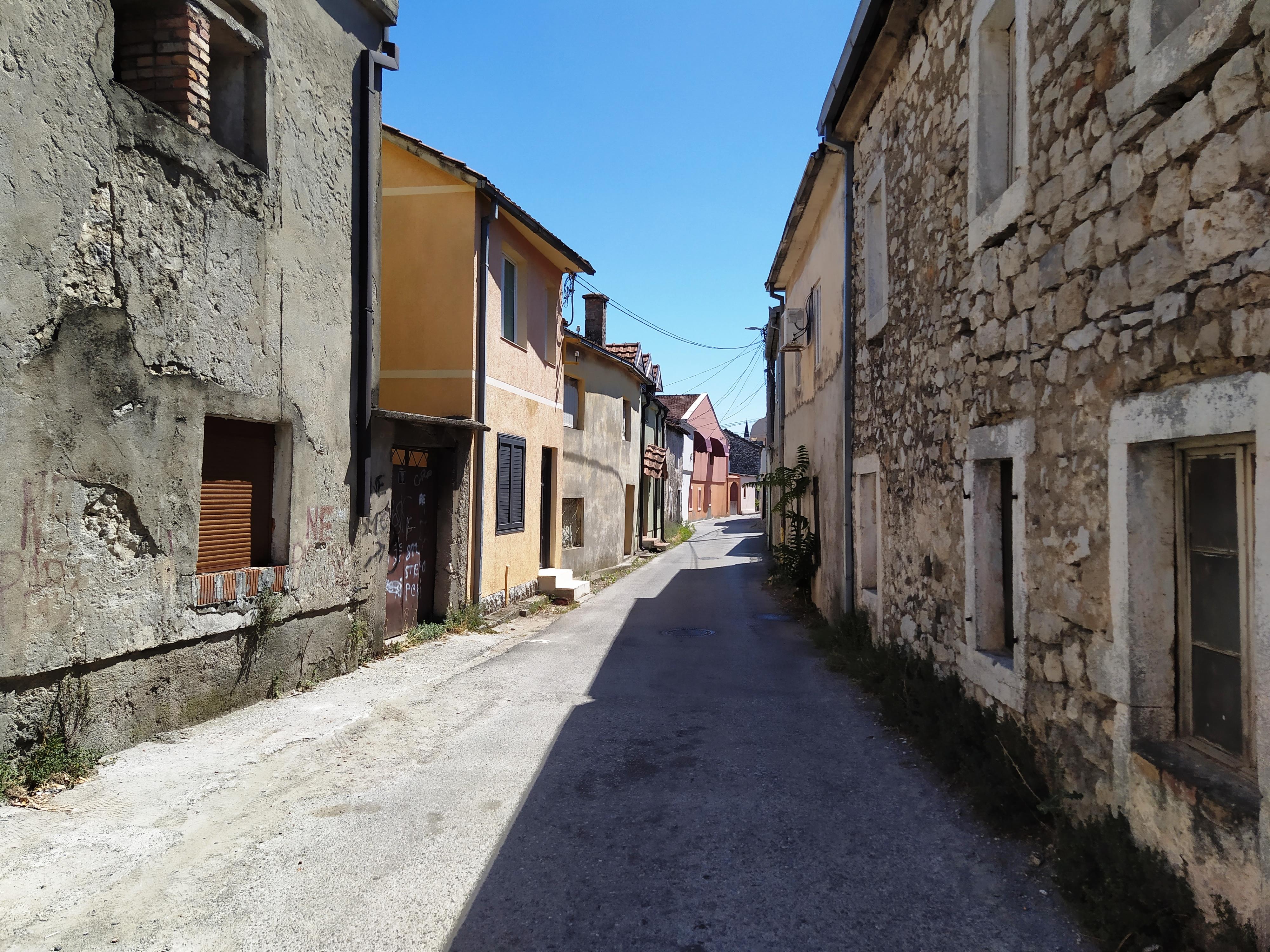
The lanes of Stara Varos pass between low houses and high walls with gates. Behind the walls are avlije, the houses' courtyards, screened from street view. Houses were grouped into mahale, smaller sections of the neighborhood, and courtyard boundaries determined the course of the narrow, winding streets.
This layout dates from Ottoman rule, when Stara Varos was the city's core. While the courtyards provided privacy, people traded and worked beside the Ribnica. Beside Tabacki most, the bridge over the Ribnica, stood mills, shops, and craft workshops, including leatherworking shops.
New buildings, including multistory ones, have risen among the older houses, while some streets have been restored and Gojka Radonjica Street has been paved with cobblestones. Traces of the old neighborhood survive in fragments: in passages between walls, the arrangement of courtyards, and minarets above the lower rooftops. The Sahat-kula clock tower, a symbol of Stara Varos, is described in more detail in the attractions guide.
02Nova Varos and the center
In the pedestrian sections of Njegoseva and Hercegovacka streets, shops alternate with cafes and restaurants. Bokeska Street is particularly recognizable for its row of cafes and bars, where people also go for an evening out. Outdoor cafe seating extends onto the pedestrian sections of the streets, alongside walkways and storefronts.
Social life in the center has an older story, too: people once went to Slobode Street for the korzo, a promenade in small groups, walking down one side and back along the other. Read more about today's cafes and social customs in Everyday Life in Podgorica.
The name Nova Varos, meaning “New Town,” recalls the time when today's center was a new extension of Podgorica. Unlike the lanes of Stara Varos, the streets here were planned in straight lines, with right-angled intersections and a square at the center. The site of today's Trg nezavisnosti was a marketplace, with trade, crafts, and public services developing around it.
After World War II, many old houses in the center were replaced by multistory apartment buildings. Among them, two high-rises beside the square on Balsica Street stand out, known as “Pidzame” (“Pajamas”). Designed by architect Stanko Fabris, the towers regained their original yellow, orange-red, and dark blue color scheme when their facades were restored.
03Preko Morace
The older neighborhoods of Preko Morace are recognizable for their wide boulevards and large apartment buildings set among trees. The name refers to the part of the city across the Moraca River, as seen from the old center.
Around Ivana Vujosevica Street, long buildings with simple facades stand beside pedestrian walkways and parkland. This layout dates from Podgorica's major postwar expansion, when residential areas were planned with open space between buildings and rows of trees along the boulevards. Cars and new construction later took over some of these spaces.
Cafes and restaurants are particularly concentrated around Rimski trg (Roman Square) and Svetog Petra Cetinjskog Boulevard. Capital Plaza, a newer business complex, has two office towers with a hotel between them, while its ground level has a pedestrian area with shops and businesses.
04Blok 5
Blok 5 stands out for its concrete buildings with large terraces, projecting upper floors, and deeply recessed sections. Some look as though they were assembled from blocks shifted out of alignment. Exposed concrete and bold forms are features of the brutalist architecture for which the neighborhood is known. Architect Mileta Bojovic designed the buildings to differ from one another, avoiding uniform rows of apartment blocks.
Vukota Tupa Vukotic's urban plan went beyond housing: it also included a school, a preschool, stores, and healthcare facilities.
Today, mature trees stand between the large buildings, beside footpaths and playgrounds. The lower buildings house stores and other businesses, and there are neighborhood cafes too.
Later additions and enclosed terraces are visible on the buildings themselves. Some of the large shared terraces, originally intended for neighbors to gather, have been turned into private rooms.
05City kvart
City kvart is recognizable for the rows of cafes and restaurants on the ground floors of multistory apartment buildings. Their outdoor seating runs along the sidewalks and beside building entrances.
The neighborhood was built on land formerly belonging to the “Radoje Dakic” machinery factory, in a part of Podgorica where housing development grew alongside large shopping centers. Today's BIG FASHION shopping center is in the neighboring area. City kvart is thus part of a new shopping and dining hub in Podgorica, outside its old center.
The streets and spaces between buildings have plenty of asphalt, concrete, and parked cars, with few trees or green spaces. Older apartment blocks around Ivana Vujosevica Street have considerably more green space between the buildings.
A selection of restaurants by type of food and part of the city is available in the Where to Eat in Podgorica guide.
06Zabjelo
Zabjelo is a large residential neighborhood where family homes alternate with rows of apartment buildings and newer multistory blocks. In the area around 27. marta Street, multistory apartment buildings were later built alongside houses with their own yards. Dense new construction is especially noticeable around Ljubovic, the pine-covered hill that Zabjelo surrounds on three sides.
Walking and cycling paths have been laid out on Ljubovic, with no motor traffic. A more detailed description of the paths is available in the guide to Podgorica's lesser-known places.
Buildings and the surrounding hills also found a place in the neighborhood's unusual symbol: the flag of the “Republic of Zabjelo.” Gray represented the apartment buildings, while green stood for the meadows that existed then, Ljubovic, and Dajbabe hill. The “Republic” is an imaginary state proclaimed by a group of young people during the breakup of Yugoslavia as a satirical response to nationalism and the wartime atmosphere.
The movement's creators also invented their state's past, complete with dynasties and a conflict between the Biceps and Triceps tribes. The stories parodied grand national narratives, and local slang and neighborhood anecdotes later made their way onto radio and television.
More city stories from Podgorica?
Keep exploring the city through local stories and guides to Podgorica and the surrounding area.
For the rest of your stay, choose a guide to arrival, accommodations, food, sights, or trips from Podgorica.
Guides to nearby cities
Cetinje
Open the city guide
Petrovac
Open the city guide
Budva
Open the city guide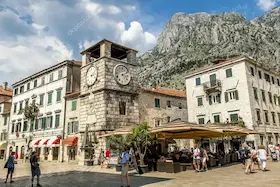
Kotor
Open the city guide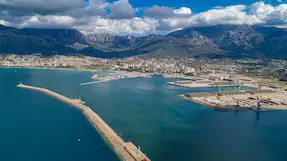
Bar
Open the city guide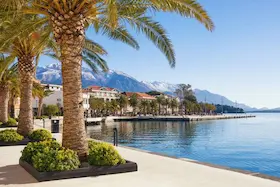
Tivat
Open the city guide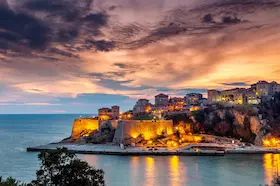
Ulcinj
Open the city guide
Herceg Novi
Open the city guide
Igalo
Open the city guide
Zabljak
Open the city guideStories from other cities
Plan travel beyond Podgorica with information on Montenegro's coast, mountains, airports, and practical details for the rest of the country.
