
Cavtat and Konavle by car from Igalo, via Sokol Fortress and the Ljuta River
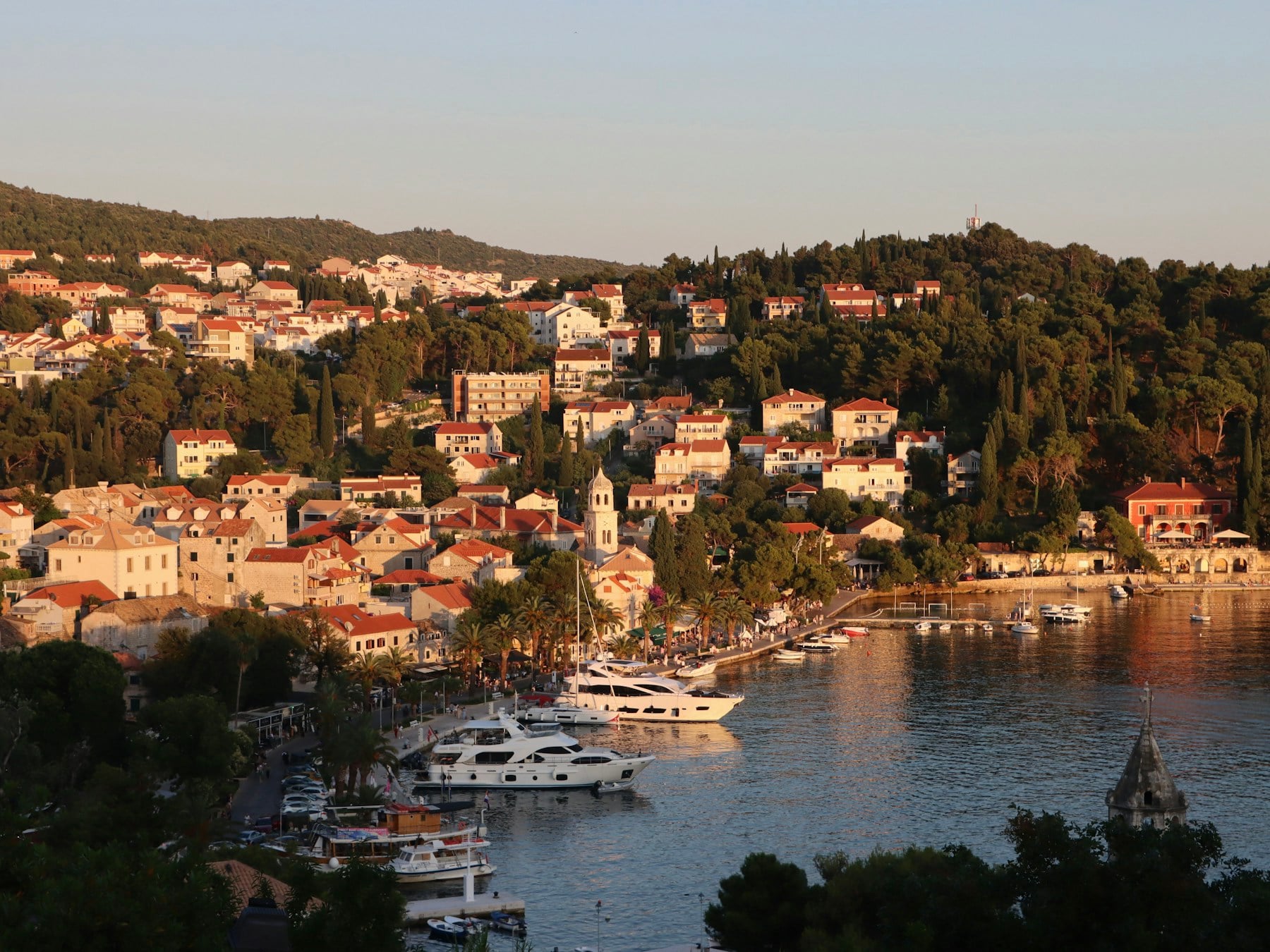
Cavtat preserves the birthplace of painter Vlaho Bukovac beside its harbor, while Meštrović’s Račić family mausoleum stands at the top of the Rat peninsula. Streets climbing from the waterfront lead to the painter’s studio and the stone memorial overlooking the sea. Two major artists give you a reason to explore the town’s interiors as well as its shore.
Trip overview
- Trip duration
- 11-12 hours
- Places and breaks
- 5
- Route length
- About 75 km
Why set aside a day for this trip
A day out from Igalo takes you into the region that supplied the Republic of Dubrovnik with food, defended its land border and connected it to the maritime world. Those roles are still visible in the places themselves, from the fortress above the fields to the watermills and the port town’s artistic heritage. Short drives between them leave time to enter the historic sites and have a meal beside the river. A car makes this combination possible by opening up rural Konavle, while Cavtat is explored on foot, with time for both museums and the waterfront.
Trip and costs at a glance
| Trip duration | About 11-12 hours |
|---|---|
| Transport | Car required · rental offers |
| Sights on this trip | |
| Fuel consumption | Estimated 6-9 l |
| Tolls | No charge |
| Admission costs | Sokol Fortress €10 · Račić Mausoleum €4 · Bukovac House €7 per adult |
| Navigation | Open the prepared navigation route |
Map and navigation

Route, visits and breaks
For all museum interiors: May through October, Monday - Saturday, excluding public holidays. Both border crossings are included in the duration.
01Leaving Igalo and visiting Sokol Fortress
40 min driving · 1 h for the border · 1 h 20 min for parking, the approach and visit
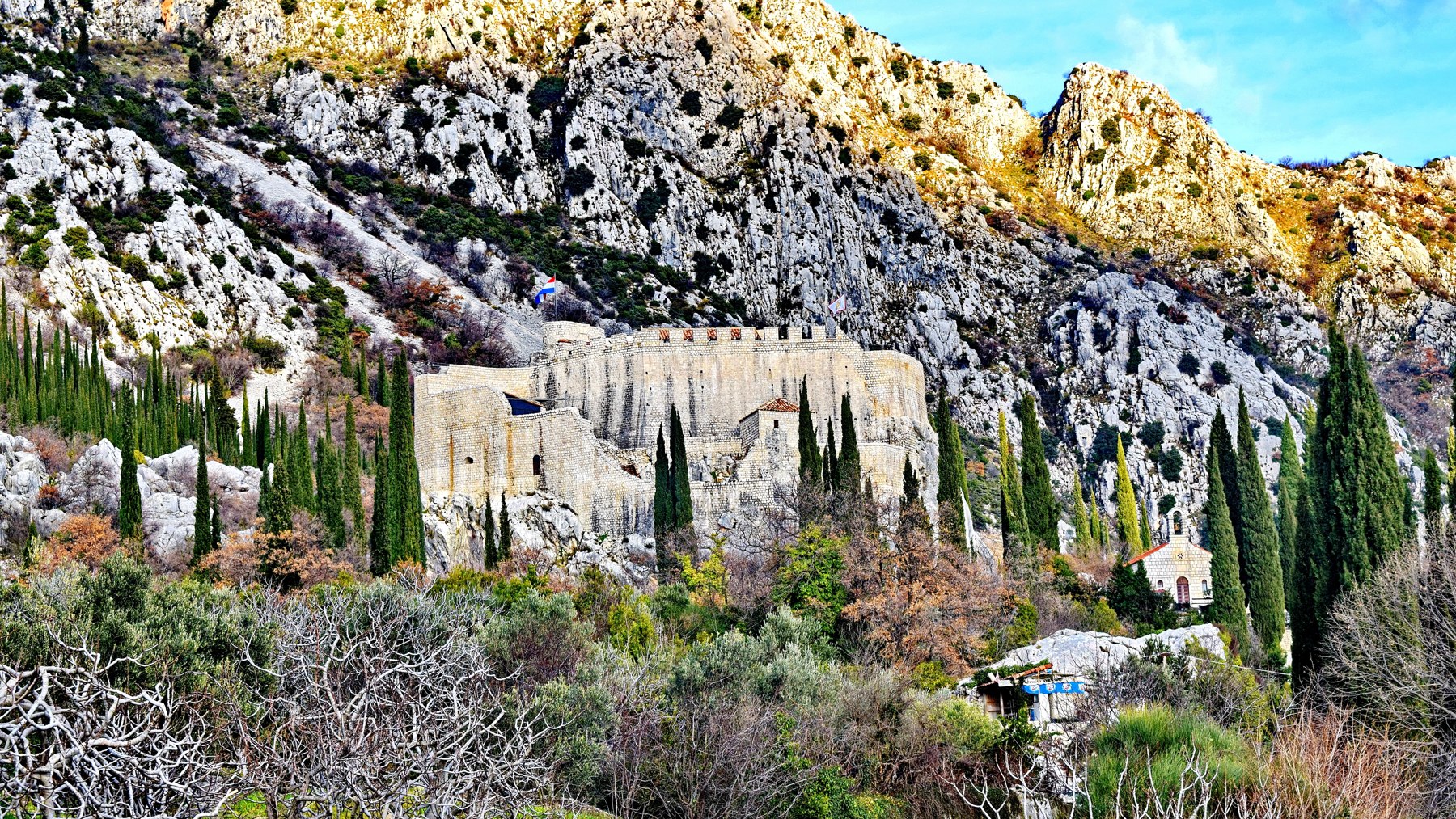
Leave Igalo in the morning, crossing at Debeli Brijeg and Karasovići. After the border, your first destination is Sokol Fortress in Dunave. Open the prepared navigation route: it links the approach to the fortress, Konavoski dvori beside the Ljuta and the town parking lot in Cavtat, then returns to Igalo. Allow about 40 minutes for this first drive, separately from border checks. The plan sets aside another hour for those checks.
Leave the car in the marked parking area below the fortress. Allow about 15 minutes for parking and the walk there and back, followed by an hour and five minutes inside. The climb continues up steps through the fort’s different levels. Visit the spaces used for stores and the garrison, then spend time at the top for the view across the Konavle plain.
Adult admission is €10. Before setting out, check ticket availability for your visit date.
Check Croatia’s entry requirements for each traveler’s nationality and travel documents. Staying in Montenegro does not by itself give you the right to enter Croatia. Also check the requirements for re-entering Montenegro, particularly if your stay depends on a visa with a limited number of entries.
If you are renting a car, ask the provider before booking for written permission to enter Croatia, the necessary vehicle documents and confirmation of the territorial coverage of insurance and roadside assistance. Any cross-border fee depends on the particular offer. It is separate from the road tolls and admissions in the table.
02The Ljuta: a riverside walk and lunch at Konavoski dvori
15 min driving · 1 h 40 min for parking, the river and lunch
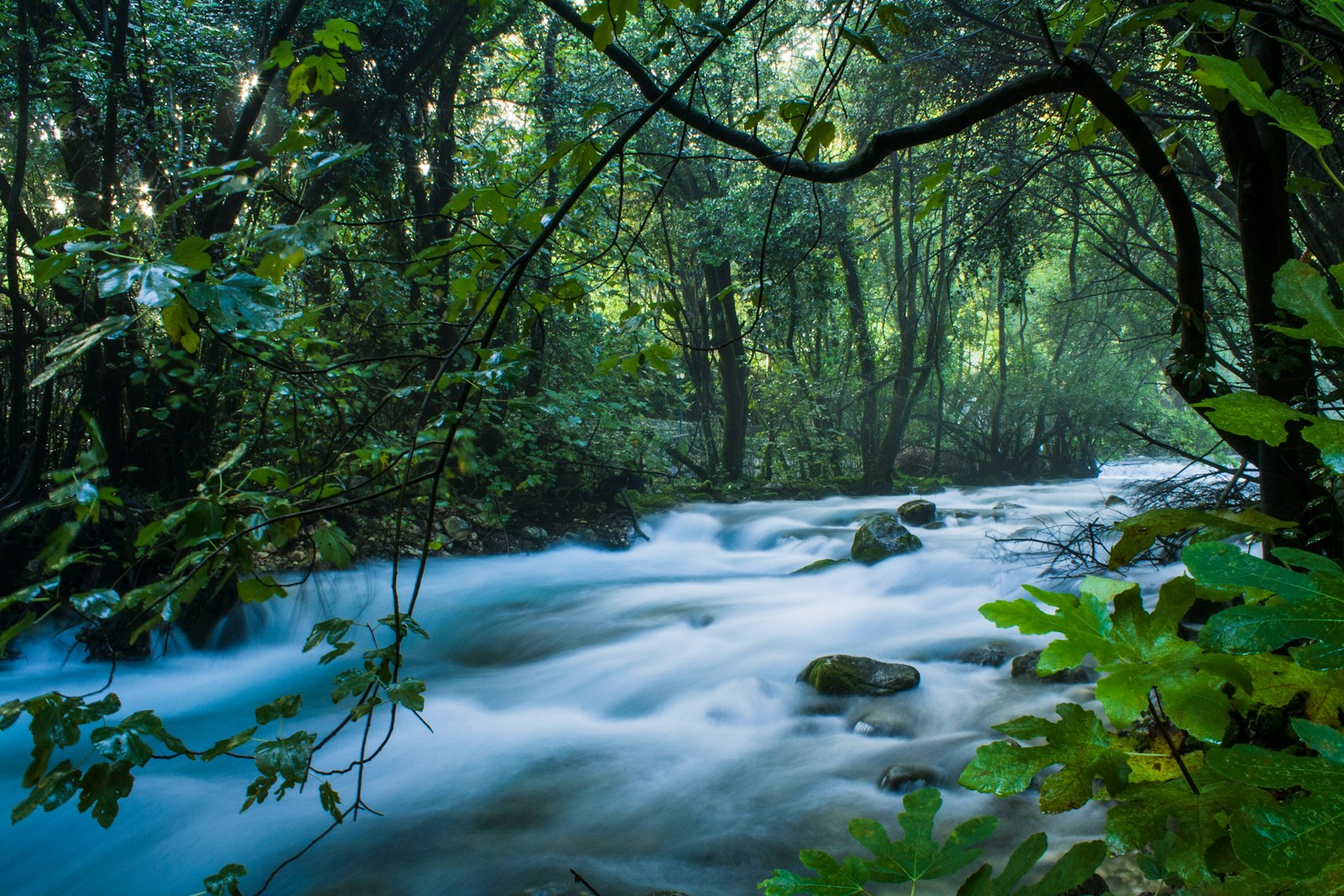
The drive from Sokol Fortress to the approach to Konavoski dvori restaurant takes about 15 minutes. This stop pairs a short walk beside the Ljuta with the day’s main meal break. Allow five minutes to park, about 20 minutes to explore the riverside and roughly an hour and 15 minutes for lunch.
The restaurant stands beside the river among the old mills. Its published opening hours are Monday to Saturday, 11 a.m. to 10 p.m. Check table availability on the restaurant’s website.
Mill demonstrations and tastings require a separate advance arrangement. They are not included in this visit.
After lunch, return to the car and continue to Cavtat. Avoid extending the break into the late afternoon if you want to enter the mausoleum, which closes earlier than the Bukovac House.
03Arriving in Cavtat and climbing to the Račić Mausoleum
30 min driving · 1 h 15 min for parking, the climb and mausoleum
Allow about half an hour to drive from the Ljuta to Cavtat. Navigation ends at the town parking lot behind the historic center. The car stays here until all your Cavtat visits are finished. Set aside 15 minutes to park. Parking is charged separately at the tariff displayed at the entrance. The parking operator publishes the conditions of use.
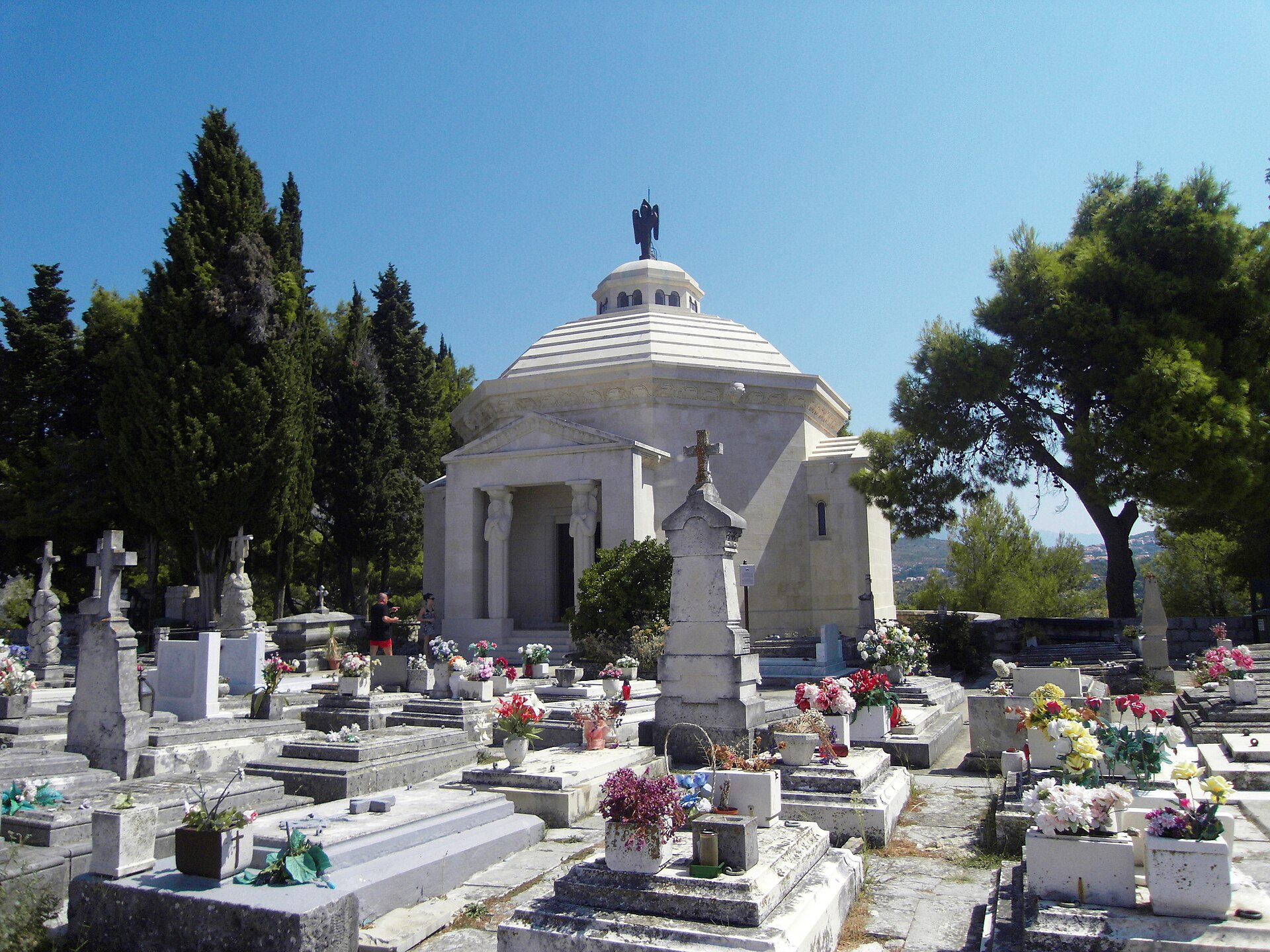
First head toward St. Roch’s cemetery and the Račić family mausoleum. The approach via Prijeko Street climbs uphill and includes steps. Allow about 20 minutes to walk from the parking lot, then 40 minutes for the mausoleum, its sculptures and the view from this part of Rat. Adult admission is €4, including an audio guide in Croatian and English.
The full itinerary with all interiors is intended for regular opening days from May through October, Monday to Saturday, excluding public holidays. The mausoleum publishes opening hours of 9 a.m. to 4 p.m. in this period, with a break from noon to 12:30 p.m. Reach Cavtat at least an hour and a half before the mausoleum closes, leaving time to park, climb and visit the interior. Check the museum schedule and latest museum notices for your travel date.
04From the mausoleum to the Bukovac House
10 min walking · 55 min in the museum
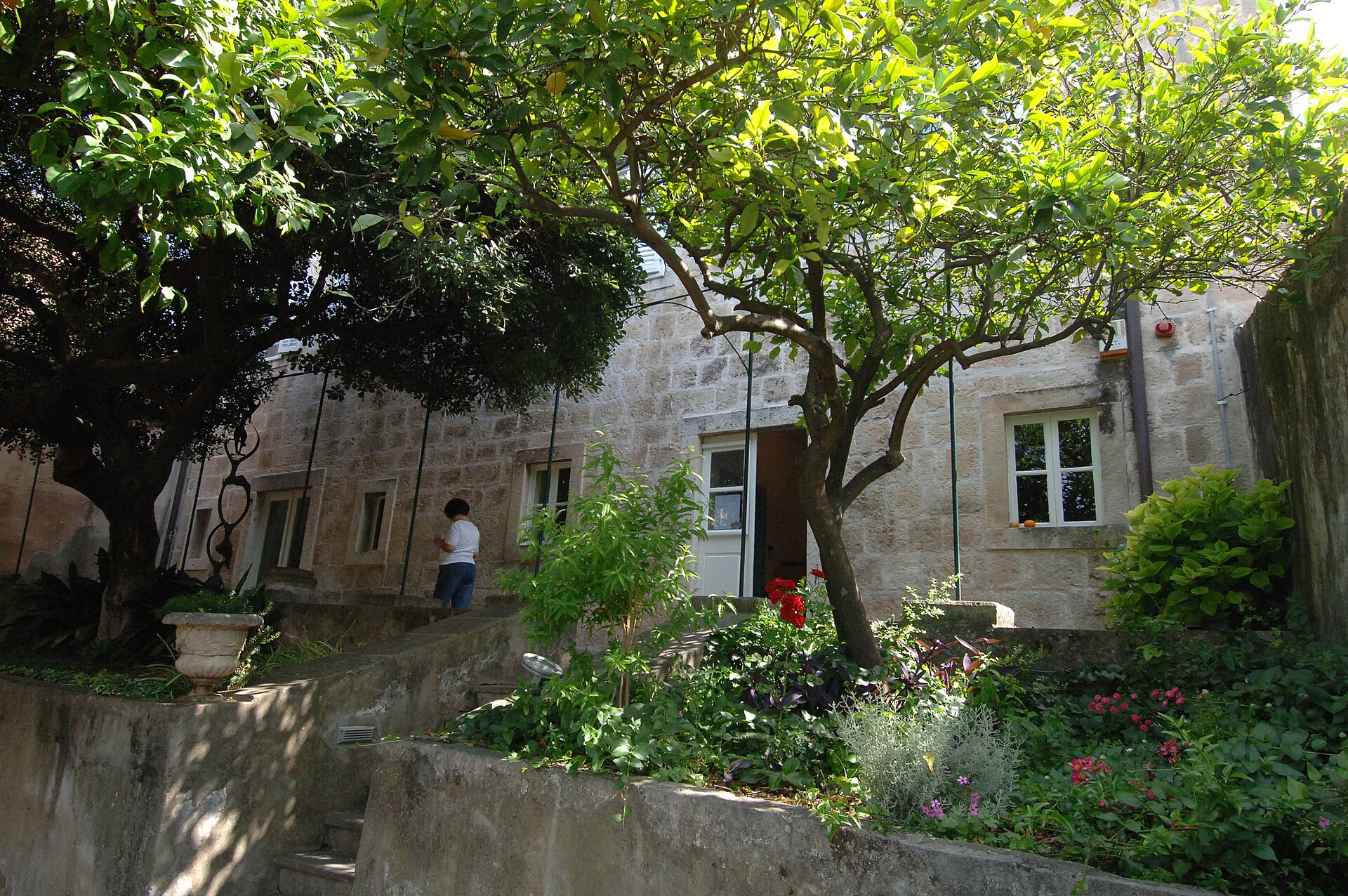
Walk down from the cemetery toward Prijeko Street and the Bukovac House on Bukovčeva Street. Allow around ten minutes for this walk. Spend approximately 55 minutes in the museum, visiting the rooms with preserved wall paintings, the family portraits and the studio.
Adult admission is €7, including an audio guide in Croatian and English. From May through October, the museum opens Monday to Saturday from 10 a.m. to 6 p.m., which is why it follows the mausoleum. The Bukovac House also publishes different Sunday and winter hours, so this sequence should not be applied to every date without checking.
05Cavtat’s waterfront and the walk back to the car
About 1 h 5 min for walking, a break and collecting the car
After the Bukovac House, walk down to the waterfront. It takes about ten minutes to get there. Allow another half hour to stroll beside the harbor and rest by the sea, then about 25 minutes to finish the walk, return to the parking lot and collect the car.
Cavtat was once the Republic of Dubrovnik’s second port, a center of trade and administration. The stone houses of the historic center follow the shore, while the streets between them climb toward Rat.
The complete prepared walk through Cavtat is approximately two kilometers long, with additional walking inside the museums. The climb to the mausoleum and its steps are already included in the earlier stages.
06Returning from Cavtat to Igalo
50 min driving · 1 h border reserve
From the town parking lot, return to the D8 road and the Karasovići - Debeli Brijeg crossing, then continue to Igalo. The plan allows about 50 minutes of driving without stops, plus another hour of reserve for the return border crossing.
The overall estimate of 11 to 12 hours includes both border crossings, the museums, the climb, lunch and a further 20 minutes of general reserve. The two hours for border checks are a planning allowance, not a figure for typical waiting times. Actual delays may extend the trip beyond 12 hours.
Trip highlights
01Sokol Fortress: built to withstand a siege
Sokol Fortress rises on a rocky outcrop above the village of Dunave, its walls following the shape of the rock. Much of its present appearance comes from additions made under Dubrovnik in the 15th century. The Republic of Dubrovnik administered Konavle from the Rector’s Palace in Pridvorje. Sokol had a different task: defending the region and sheltering people in danger. Its spaces reveal both military and everyday life behind the walls.
The fort’s three levels served different purposes. On the lowest level, called Kamen, people from the surrounding area could take shelter. The outer defenses protected the main entrance and garrison quarters, while the best-protected upper level held the cistern, food and weapon stores, and the commander’s residence. As you move between the levels, look especially for the water supply and storage spaces: the fortress depended on being able to support people when the road to the village was cut off.
Today’s visitor route is the result of lengthy conservation and partial reconstruction. The restored Sokol opened to visitors in 2013. Steps and passages let you see how the fort was organized at close quarters, while the view from the upper level connects its defensive position with the plain below.
02The Ljuta and its mills: water that powered Konavle
Along the upper Ljuta, a network of water-powered mills and fulling works for processing cloth supported the economy of Konavle and the Republic of Dubrovnik. The tourist board describes a complex of eight flour mills, two oil mills and three fulling mills.
The lower mills, which survive today, were built after the mid-16th century. Channels carried water to the machinery, and three aqueducts also supplied individual mills. Most of the buildings stood on the western bank, while the Đivanović fulling mill was on the eastern bank.
The source and upper reaches of the Ljuta belong to a protected natural area, while the mills are protected cultural heritage.
03The Račić Mausoleum: Meštrović’s architecture above Cavtat
At St. Roch’s cemetery above Cavtat’s historic center stands the votive burial church of Our Lady of the Angels, known as the Račić family mausoleum. Ivan Meštrović built it for the shipowning family after Ivo Račić and his two children died of Spanish flu. Marija Račić, Ivo’s widow, commissioned the mausoleum. The museum states that the building was completed in 1922 and was Meštrović’s first realized architectural work.
Its plan centers on an octagonal space with projecting chapels arranged as a Greek cross. The Virgin and Child, angels playing instruments, St. Roch and figures of family members are placed throughout this space. The shape of the interior and the sculpture were conceived as a single work.
Meštrović received the Grand Prix for the mausoleum at the Paris exhibition of modern industrial and decorative arts in 1925.
04The Bukovac House: painting within a family home
Vlaho Bukovac was born in Cavtat, and his house preserves traces of both his early talent and his later life between European centers of art. The stone house and gardens grew through additions made by several generations. Bukovac also established a studio here, which his daughters opened to visitors after his death. That family continuity keeps the objects and paintings connected to the spaces in which they were used and created.
A distinctive feature is the wall painting Bukovac produced as a sixteen-year-old. Animals, landscapes, flowers and decorative motifs were later covered over, then uncovered and restored during the museum’s renovation. They let you see the artist’s beginnings on the walls of his home before encountering the mature works in the collection.
Upstairs is the family sitting room, the tinel, with portraits and intimate scenes, while the studio presents important stages of his career, from Paris and Zagreb to Cavtat and Prague. Furniture, personal possessions and a selection from the archive complement the paintings. Notice the difference between the youthful wall scenes and the later portraits: it reveals the artist’s development rather than simply a succession of separate works.
Questions before a Cavtat and Konavle day trip
Can I make this trip on a Sunday or in winter?
For the complete itinerary with all three interior visits, choose a regular weekday or Saturday from May through October. The Račić Mausoleum is closed on Sundays and public holidays, and does not publish the same regular schedule for winter. The Bukovac House has separate Sunday and winter hours. Cavtat’s waterfront can be visited outside that window, but that is no longer the same museum day with all the admissions listed here.
Is the whole route suitable for someone who has difficulty with steps?
Not in this complete form. Visiting Sokol involves moving through the fortress’s levels, while the mausoleum requires a climb onto Rat. The museums explicitly state that the mausoleum and the Bukovac House do not have access for people with disabilities. The prepared town walk is approximately two kilometers long, in addition to moving around inside the buildings. The flat waterfront should therefore not be taken as a measure of the whole day’s physical demands.
Should we add Dubrovnik’s Old Town on the same day?
Plan a separate day for a full visit to Dubrovnik. This day already allows 11 to 12 hours for three cultural interiors, the Ljuta, lunch, Cavtat and the border. More driving, another parking stop and a visit to Dubrovnik’s walls would take time away from those visits. For a separate itinerary, see Dubrovnik’s Old Town and city walls. That article starts in Herceg Novi, while navigation starting in Igalo is available among the day trips from Igalo.
More day trips from Igalo
Luštica by car from Igalo, with Rose, Žanjice and Luštica Bay
Rose’s old harbor, a swim at Žanjice, lunch and sandy Pržna before a final walk through Luštica Bay. A full day from Igalo with ferries, costs and prepared navigation.Dubrovnik by car from Herceg Novi: the Old Town and city walls
A full-day trip via Debeli Brijeg and Karasovići, with a complete circuit of the walls, Dubrovnik's streets and harbor, Lovrijenac and a final view from Srđ.Orjen and stone villages by car from Herceg Novi
A day in the hills behind Herceg Novi: views from Tajno Brdo, stone roofs in Žlijebi and the beech forest at Vrbanj, with a meal arranged in advance and a return drive.Trebinje by car from Herceg Novi, with Tvrdoš and Hercegovačka Gračanica
A day trip via Sitnica and Zupci: Tvrdoš, Trebinje's Old Town, lunch by the Trebišnjica, a walk to Arslanagića Bridge and the view from Crkvina.Risan, Perast and Kotor by car from Herceg Novi
A day along the northern shore of the Bay of Kotor, visiting Roman mosaics, Perast palaces and Kotor. Museums, a waterfront lunch and the climb to Saint John's Fortress, with prepared navigation.Guides to day trips and stays in nearby cities
Herceg Novi
Open city guide
Tivat
Open city guide
Kotor
Open city guide
Budva
Open city guide
Cetinje
Open city guide
Petrovac
Open city guide
Podgorica
Open city guide
Bar
Open city guide
Ulcinj
Open city guide
Zabljak
Open city guideDrives and day trips from nearby destinations
For the wider plan after this city: coastal towns, mountain roads, airports, parking notes and practical country-level advice.
