
Dubrovnik by car from Herceg Novi: the Old Town and city walls
Dubrovnik's Old Town preserves streets and palaces behind stone walls, with the Old Port along their eastern edge and towers rising above the city's rooftops and the sea. From Herceg Novi, you can devote a day to exploring the city from the walls and at street level, then viewing its coastal setting from Srđ.
Trip overview
- Trip duration
- 13-14 hours
- Places and breaks
- 5
- Route length
- About 105 km
Why set aside a day for this trip
Dubrovnik's walls offer a view of an entire fortified city, from rooftops and bell towers to the harbor and open sea. Walking through the streets inside the same ring afterward makes it easier to understand how the maritime republic lived in that confined space. This relationship between the city, harbor and defenses is worth a day: almost five hours are set aside for the sights themselves, while walking, lunch and the border crossings have separate allowances.
Trip and costs at a glance
| Trip duration | About 13-14 hours |
|---|---|
| Transport | A car is needed · rental offers |
| Sights on this trip | |
| Fuel consumption | Estimated 9-13 l |
| Tolls | No charge |
| Admission costs | Admission to the city walls: €40 per adult · Lovrijenac included |
| Navigation | Open the prepared route for navigation |
Map and navigation

Route, visits and breaks
Both border crossings and lunch are included in the duration. The city visit includes steps and an uphill return to the garage.
01Via Debeli Brijeg and Karasovići to the Dubrovnik garage
1 h 20 min driving · 1 h for the border · 15 min for parking · 20 min walking
Leave Herceg Novi in the morning, passing through Igalo to the Debeli Brijeg - Karasovići crossing. After entering Croatia, continue along the coastal D8 road to the Ilijina glavica garage on Zagrebačka Street. About an hour and 20 minutes are set aside for driving, with another hour for border checks and possible waiting. That buffer does not guarantee passage without a longer delay.
Enter the Ilijina glavica garage as your destination, rather than parking at Pile. The operator states that the garage is before the restricted traffic zone and that reaching it does not require a permit for that zone. The operator's price list gives €7 per hour or part of an hour, or €40 for 24 hours. Buy the day ticket within the first 15 minutes after entry, at the office on level 0. Your car stays here until you finish visiting the Old Town and Lovrijenac.
Fifteen minutes are set aside for parking and buying the ticket. From the garage, walk downhill toward Pile Gate, allowing another 20 minutes or so. Before traveling, check the entry requirements for Croatia, reentry requirements for Montenegro and written permission from your rental car provider.
02Complete circuit of the city walls
10 min for entry · 2 h for the full circuit
Enter the Old Town at Pile Gate and go to the main entrance to the walls beside the Church of the Holy Savior. Ten minutes are set aside for buying or checking the ticket, and two hours for the full circuit with stops. The route is about 1.94 km and includes steps, climbs onto towers and exposed sections above the city.
Follow the marked direction around the circuit until you return to the start, rather than leaving the walls for lunch and trying to resume afterward. The ticket allows one visit, with no reentry once you leave. The same ticket also includes your later visit to Lovrijenac.
Opening hours change during the year, so check the entry times for the walls and Lovrijenac for your visit date. You reach the fortress after exploring the city and having lunch, so its hours must also allow that later visit. Admission to the city walls costs €40 per adult, including Lovrijenac. Children aged 7 to 18 pay €15, and there is no charge for children aged six and under. Allow a full two hours before closing to complete the circuit. In summer, the exposed sections of the walls offer little shelter from the sun, which is why this part of the trip comes before the longer walk through the streets and lunch.
03Stradun, squares and the Old Port
20 min walking · 1 h 30 min for sightseeing
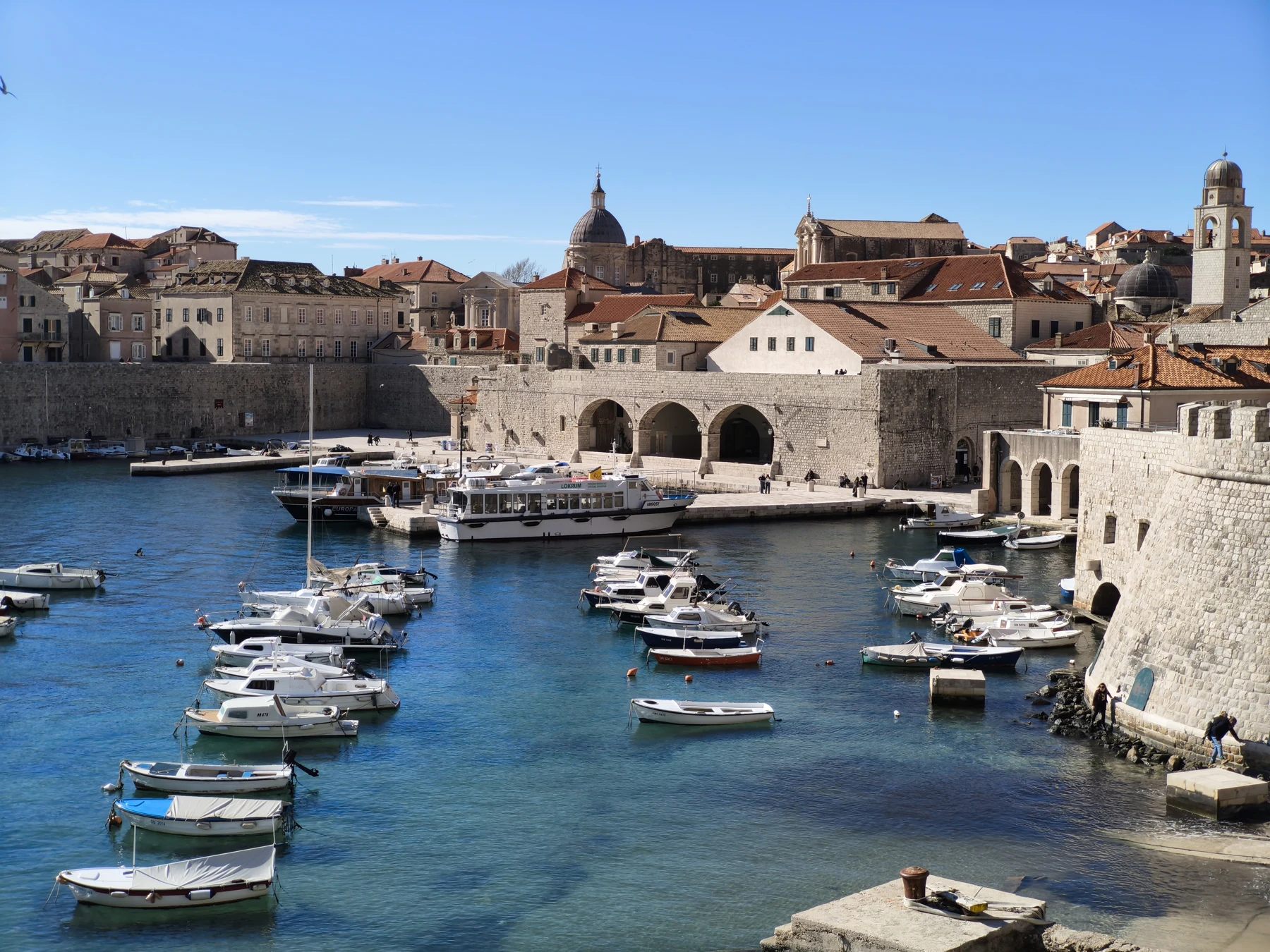
After coming down from the walls, walk along Stradun to Luža, then past Sponza Palace and the Rector's Palace to the cathedral and Gundulićeva Poljana. On this itinerary, you view the palaces and cathedral from outside.
Continue to the Old Port and pause by the water, looking toward the city walls and St John's Fortress. An hour and a half is set aside for sightseeing, with another 20 minutes or so for walking between these parts of the city. You explore the streets on foot while your car stays in the garage.
From the port, return along Stradun toward Cafe Festival for the next break.
04Lunch break on Stradun
5 min walking · 1 h 15 min for the meal
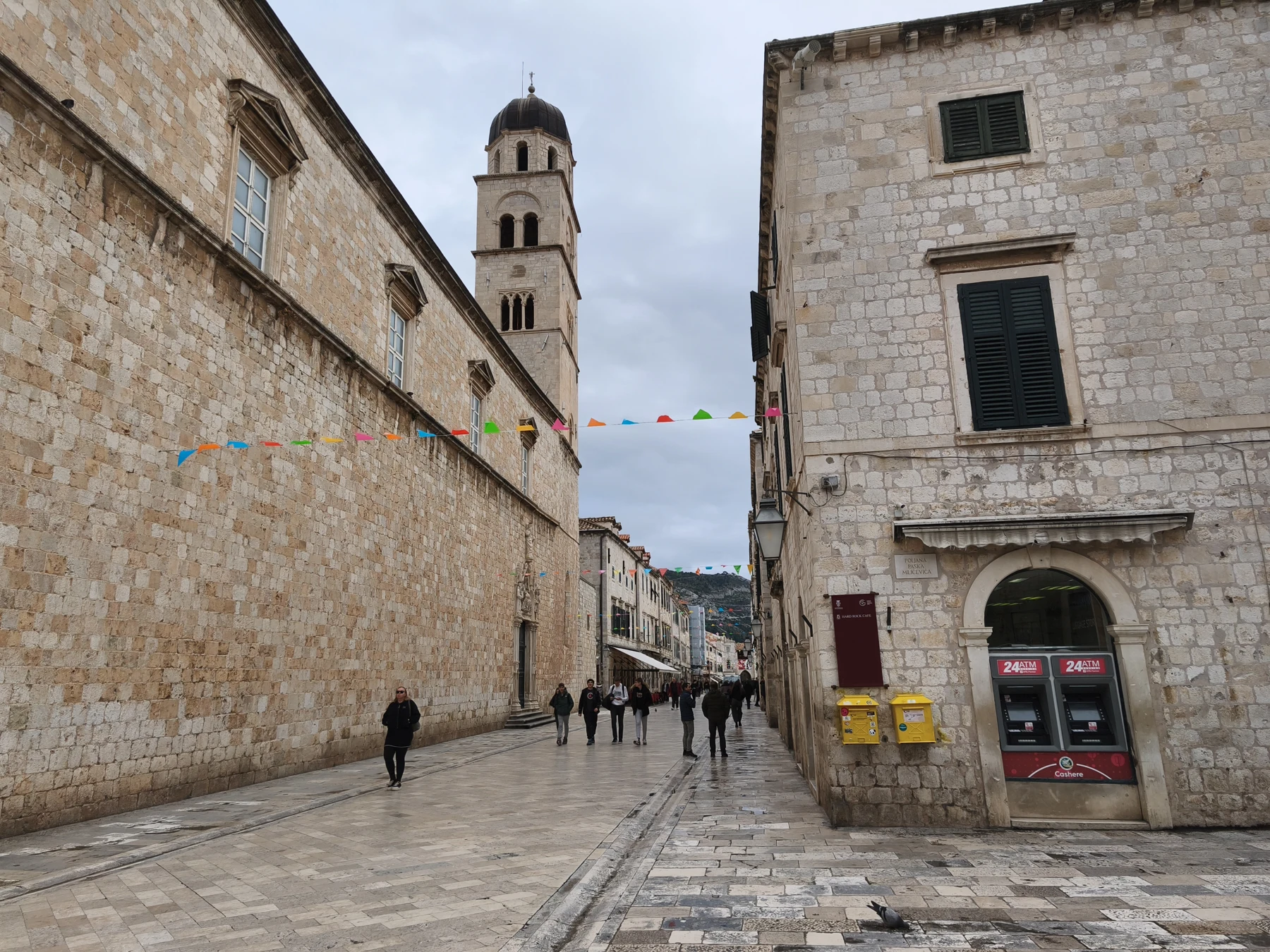
Cafe Festival is near the start of Stradun, beside the Franciscan church and bell tower. It is a cafe-bar and restaurant. This part of Stradun is approximately 420 meters from the Old Port.
Allow about five minutes to get there, then an hour and 15 minutes for lunch and a rest before climbing to Lovrijenac and returning to the garage. Before traveling, check whether the restaurant will be serving lunch at the time you arrive.
05Lovrijenac and the return to your car
25 min for the approach and return to your car · 45 min for the fortress
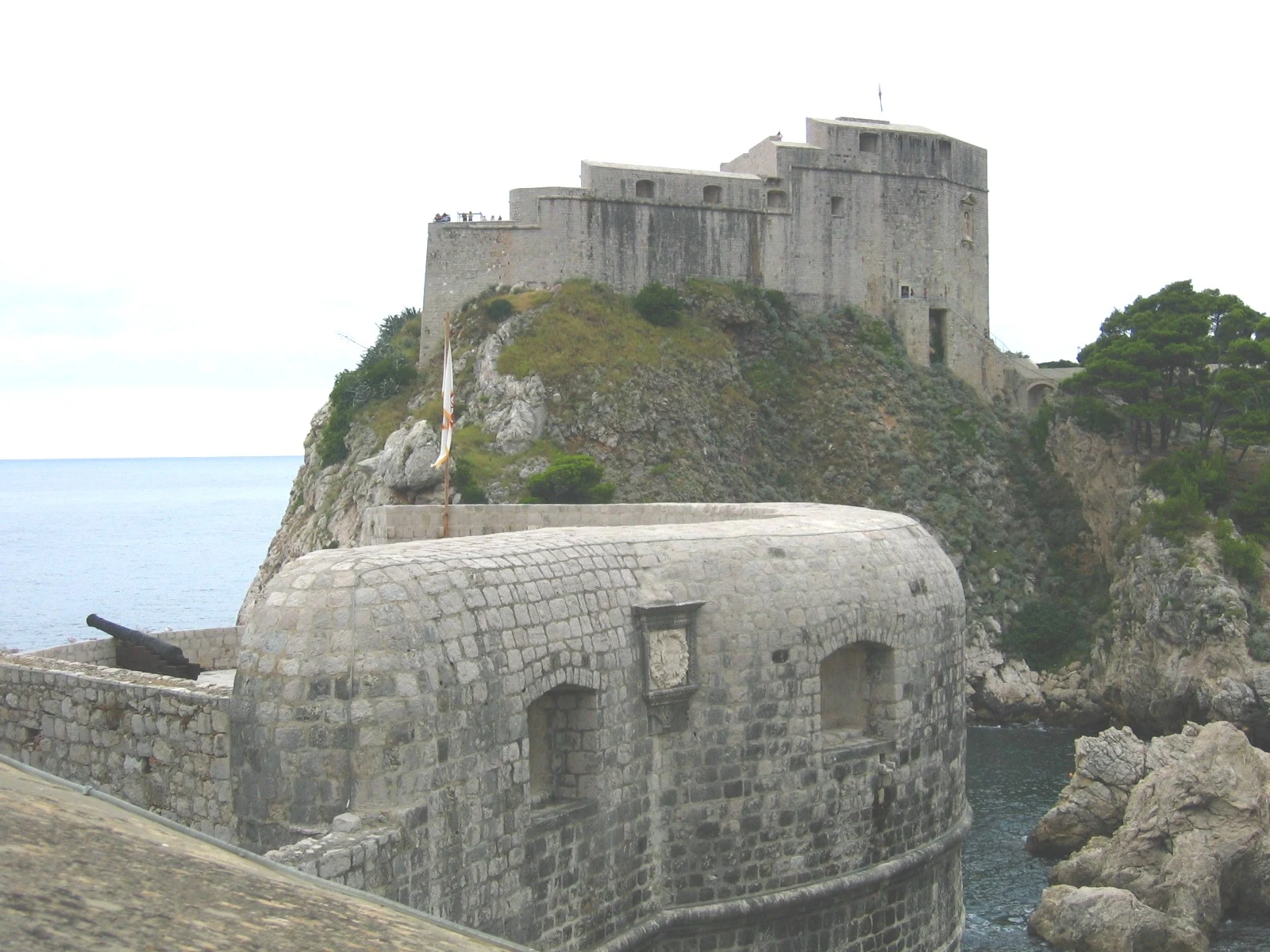
Leave Stradun through Pile Gate and continue toward the cove below Lovrijenac. It is approximately 440 meters from the restaurant to the approach to the fortress. Climb the steps to the entrance and use your saved walls ticket for the included visit.
Forty-five minutes are set aside for the fortress and its levels. After your visit, descend to the same approach and return to the Ilijina glavica garage. The walking route from the foot of the fortress to the garage is about 610 meters and includes an uphill climb. Together, the approach to the fortress and return to your car have a 25-minute allowance.
The full city walking route, including the restaurant, Lovrijenac and the return to the garage, is approximately 2.8 km. With the separate walls circuit, you walk about 4.8 km in the city, including steps and movement inside the fortress.
06By car via Bosanka to the view from Srđ
25 min driving · 15 min for parking and the approach · 40 min for the view
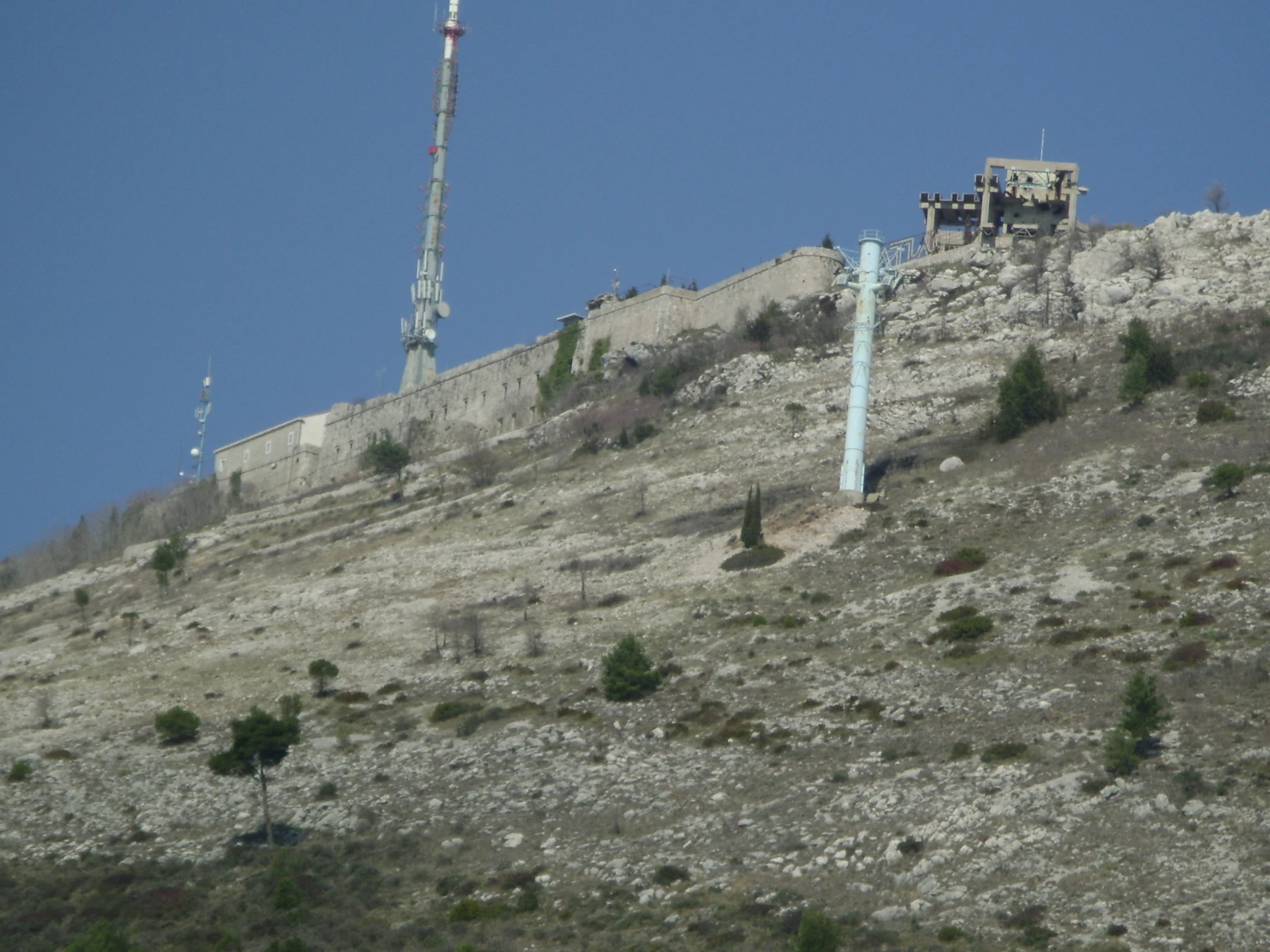
After returning to the garage, drive toward Bosanka and Srđ. It is about seven kilometers from the garage to the parking lot on Srđ. Twenty-five minutes are allowed for this leg, as you leave city traffic for a narrower road in the hills.
Leave the car in the surface parking lot by Fort Imperial and continue to the viewpoint on foot. The walk there and back is approximately 310 meters, partly along a rocky, uneven path. About 15 minutes are set aside for parking, the approach and return to your car, with another 40 minutes for the view and time there. The visit does not include the museum in the fortress, a cable car ride or a required visit to a restaurant terrace.
Srđ is the final stop in daylight. From there, you can see the outlines of the fortified city, the coast and islands together, adding to the earlier view from the walls, which focused on the city itself.
07Return via Karasovići and Debeli Brijeg
1 h 20 min driving · 1 h for the border
From Srđ, return via Bosanka to the D8 and continue toward Karasovići and Debeli Brijeg. About an hour and 20 minutes are set aside for the return drive to Herceg Novi, with a separate hour for the border crossing in this direction.
The full day, including city visits, lunch, walks to the sights and back to your car, both border crossings and an extra half-hour buffer, takes about 13-14 hours. This estimate is intended for longer days in the warmer part of the year. A longer border wait or earlier closing of the walls requires adjusting the itinerary, and a view from Srđ is not promised after dark.
Trip highlights
01Dubrovnik between Stradun and the Old Port
Dubrovnik developed as a maritime city, with palaces, churches and squares protected by a defensive ring. The Old Town is on UNESCO's World Heritage List for its preserved historic center, where Gothic, Renaissance and Baroque layers remain visible. The earthquake of 1667 severely damaged the city, and buildings from different periods survive in its historic core.
Stradun, also called Placa, divides the northern and southern parts of the Old Town. The Large Onofrio Fountain stands at its beginning, while its eastern end opens onto Luža beside the city bell tower and Sponza Palace.
Sponza served as a customs house, and the Rector's Palace as the seat of government. Farther south are the cathedral, Bunićeva Poljana and Gundulićeva Poljana, where the main corridor gives way to more open squares.
The Old Port lies along the eastern side of the fortified center. St John's Fortress stands at its southeastern corner and protected the entrance to the harbor. The harbor entrance was once closed with a chain operated by a winch in the fortress.
02The city walls and Minčeta Fortress
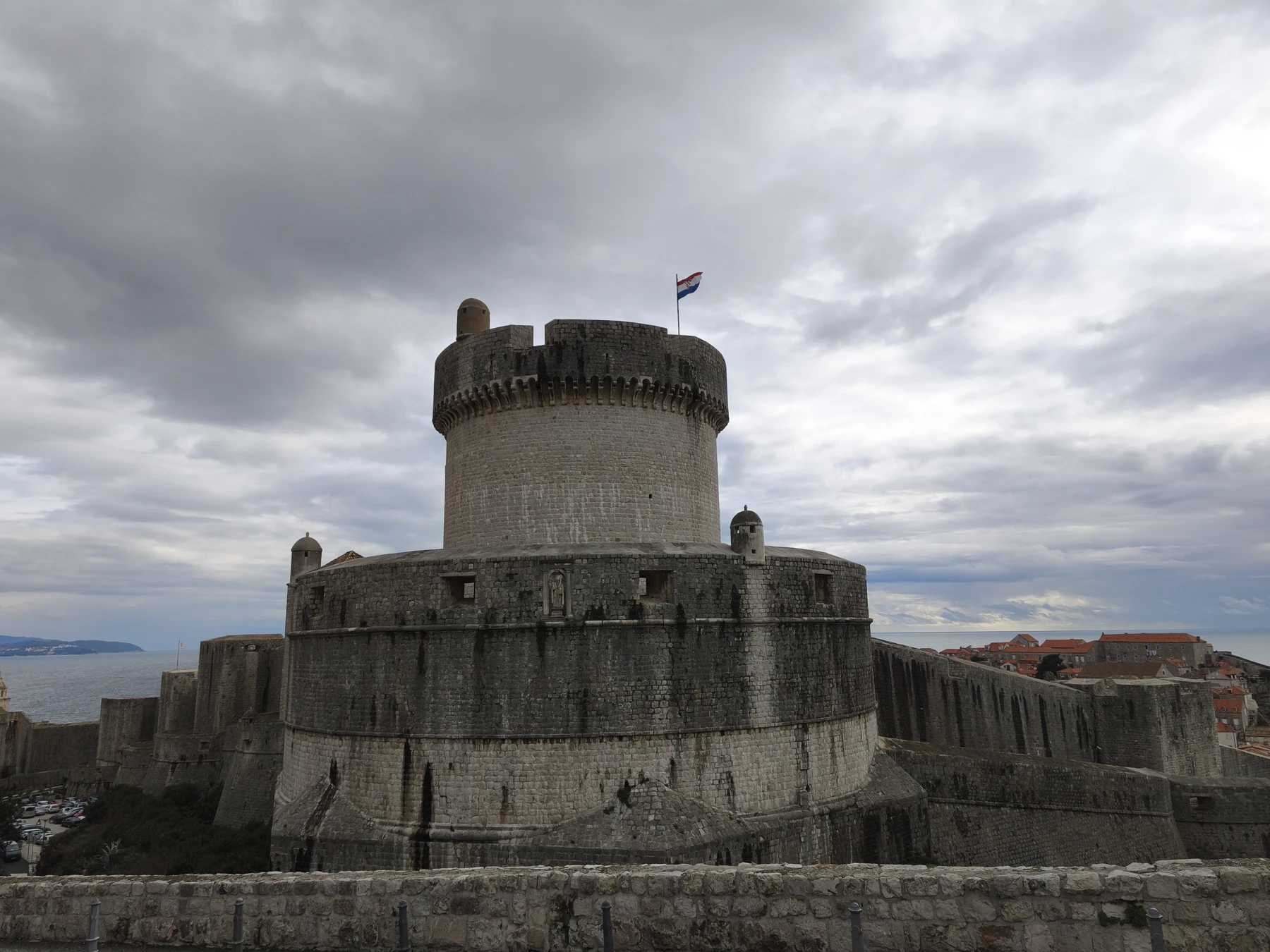
Dubrovnik's walls form an almost continuous stone ring about 1.94 km long. Their present extent took shape in the 13th century, with later additions and adaptations continuing until the 17th century. The system includes towers, fortresses and bastions, so narrow sections of wall alternate with broader defensive platforms along the walk.
The main city walls are 4-6 meters thick on the landward side and 1.5-3 meters thick on the seaward side. The development of firearms required stronger defenses, lower towers and wider spaces for cannon.
Minčeta is a large circular fortress where the western and northern sections of the walls meet. Its prominent upper ring with stone corbels is visible from outside, while the fortress itself opens up a view over the historic center.
On the seaward side of the circuit, you can see the relationship between the walls and coastal rocks, and, looking inward, the arrangement of roofs, bell towers and streets. Steps beside the Church of the Holy Savior lead to the main entrance, while differences in height along the system explain why this visit involves more climbing than a walk along Stradun.
03Lovrijenac outside the city's defensive ring
Lovrijenac stands on a rock 37 meters above the sea, outside the city's main defensive ring. Its position by Pile gives a view of the western approach to the city and the sea between the rock and the walls.
At the center of the fortress is an atrium, surrounded by rooms that housed the garrison, commander and weapons. Above the ground floor are three further levels, mostly with open platforms and battlements. The outer walls to the north and west were strengthened and doubled, reaching a thickness of 12 meters in places.
The Latin inscription Non bene pro toto libertas venditur auro survives above the entrance, expressing that liberty is not sold even for all the gold. It connects the building's defensive role with the political ideal of the Dubrovnik Republic. Lovrijenac later gained a cultural role as a stage for the Dubrovnik Summer Festival and performances of Hamlet.
04Srđ and the wider Dubrovnik coast
Srđ rises behind Dubrovnik, with a view over the fortified Old Town, surrounding neighborhoods, sea and islands. From above, you can see how compact the historic core is compared with the city that continued to develop beyond the walls.
Fort Imperial stands beside the viewpoint area and was built in 1810 during the Napoleonic occupation. The French controlled the sea and Dubrovnik's hinterland from this position. The fortress's location also shows how the city's defenses extended beyond its walls.
Questions before a day trip to Dubrovnik
How much time should I allow for the border, and can a rental car enter Croatia?
The schedule sets aside an hour for the outward crossing at Debeli Brijeg - Karasovići and an hour for the return crossing, two hours in total. This is a planning buffer, not a measured or guaranteed waiting time. Border checks can take longer, particularly when travelers go through registration in the EES system. For a rental vehicle, check the provider's written permission for Croatia, the required vehicle documents, the territorial coverage of insurance and any cross-border fee. Check the right to enter Croatia and return to Montenegro against each traveler's citizenship and documents. Staying in Montenegro does not in itself give you the right to enter Croatia, and a Montenegrin visa must allow reentry when used for the return.
Where should I leave the car, and how far will I walk before returning to the garage?
The plan uses the Ilijina glavica garage, which the operator places before the restricted traffic zone. It is about 630 meters from there to the entrance at Pile, while the return from Lovrijenac is about 610 meters from the foot of the fortress and leads uphill. The city loop through the streets, port, restaurant and approach to Lovrijenac is approximately 2.8 km. With the walls, that is about 4.8 km, including steps and movement inside the fortress. The garage costs €7 per hour or part of an hour, or €40 for 24 hours, and the day ticket must be bought within the first 15 minutes after entry.
Can I leave the walls for a break and continue later with the same ticket?
No. The ticket is valid for one circuit of the walls, with no reentry after you leave. That is why the complete circuit comes before lunch. Keep the ticket for your later visit to Lovrijenac, which is included in admission to the walls. For your travel date, check the current entry times and price with the operator. Two hours are planned for the full circuit, so the last permitted entry time alone is not a sufficient reason to arrive just before closing.
More day trips from Herceg Novi
Orjen and stone villages by car from Herceg Novi
A day in the hills behind Herceg Novi: views from Tajno Brdo, stone roofs in Žlijebi and the beech forest at Vrbanj, with a meal arranged in advance and a return drive.Trebinje by car from Herceg Novi, with Tvrdoš and Hercegovačka Gračanica
A day trip via Sitnica and Zupci: Tvrdoš, Trebinje's Old Town, lunch by the Trebišnjica, a walk to Arslanagića Bridge and the view from Crkvina.Risan, Perast and Kotor by car from Herceg Novi
A day along the northern shore of the Bay of Kotor, visiting Roman mosaics, Perast palaces and Kotor. Museums, a waterfront lunch and the climb to Saint John's Fortress, with prepared navigation.Guides to day trips and stays in nearby cities
Igalo
Open city guide
Tivat
Open city guide
Kotor
Open city guide
Budva
Open city guide
Cetinje
Open city guide
Petrovac
Open city guide
Podgorica
Open city guide
Bar
Open city guide
Ulcinj
Open city guide
Zabljak
Open city guideDrives and day trips from nearby destinations
Continue with guides to Montenegrin towns, airports, parking, lodging, food, attractions and day trips.
