
On the Montenegrin coast and in its hinterland, a short distance can mean a large change in elevation. Choose a place with its final approach in mind, as well as its distance on the map.
Where to go in Montenegro
In the stone towns around the Bay of Kotor, you can see the water between palaces and from high ramparts. Farther south, the coast opens into coves and, around Ulcinj, broad sandy beaches. Inland, the choice shifts from museum rooms in Cetinje to lake inlets and valleys beneath mountain cliffs.
Which region matches your interests?
The areas in this table bring together nearby places or places with a shared theme. The groupings are not administrative divisions, and the table does not suggest an order of travel. Each reason to visit is paired with a limitation that may affect your choice.
| Region | Reason to visit | Featured places | Important limitation |
|---|---|---|---|
| Bay of Kotor | Stone towns and waterfront palaces | Kotor, Perast, Herceg Novi | The climb onto Kotor’s ramparts and the steps in Herceg Novi differ from a flatter waterfront walk. |
| Budva Riviera | Old towns and coastal scenery | Budva, Sveti Stefan and Milocer, Petrovac | A view of Sveti Stefan does not include entry to the hotel island. |
| Bar and Ulcinj | Old town ruins and a broad sandy coast | Stari Bar, coastal Bar, Ulcinj, Velika Plaza, Ada Bojana | Stari Bar is inland. The old town of Ulcinj, the long beach and Ada are separate destinations. |
| Lake Skadar | Lake inlets, fortresses and river scenery | Virpazar and Besac, Rijeka Crnojevica, Pavlova Strana | For views of Grmozur and birdwatching from the water, check the boat trip’s route and what it includes. |
| Cetinje and Lovcen | Museum objects, a memorial and a mountain village | Cetinje, Lovcen, Njegusi | Njegos’s Mausoleum on Lovcen involves stairs, and its panorama depends on good visibility. |
| Podgorica and Ostrog | Urban rivers and a shrine in the rock | Podgorica, Ostrog | Ostrog is an active monastery with rules for religious visits. |
| Durmitor, Tara and Piva | Lake and forest, rocky peaks and canyon views | Black Lake, Sedlo, Bobotov Kuk, Djurdjevica Tara Bridge, Lake Piva | Climbing Bobotov Kuk requires physical preparation and appropriate hiking gear. Because of reconstruction, check access and crossing arrangements at Djurdjevica Tara Bridge. |
| Bjelasica and Biogradska Gora | Old-growth forest and mountain pastures | Biogradsko Lake and Goles katun, with Kolasin as a starting point | Arrange a meal with the host at the Goles rural household before setting out. |
| Plav, Gusinje and Prokletije | A lake basin and valleys beneath high cliffs | Lake Plav, Grebaje, Ropojana, Ropojana Lake and the springs near Gusinje | Ropojana Lake can dry up. If you want to see the lake filled, check its condition with Prokletije National Park. |
Where the places are
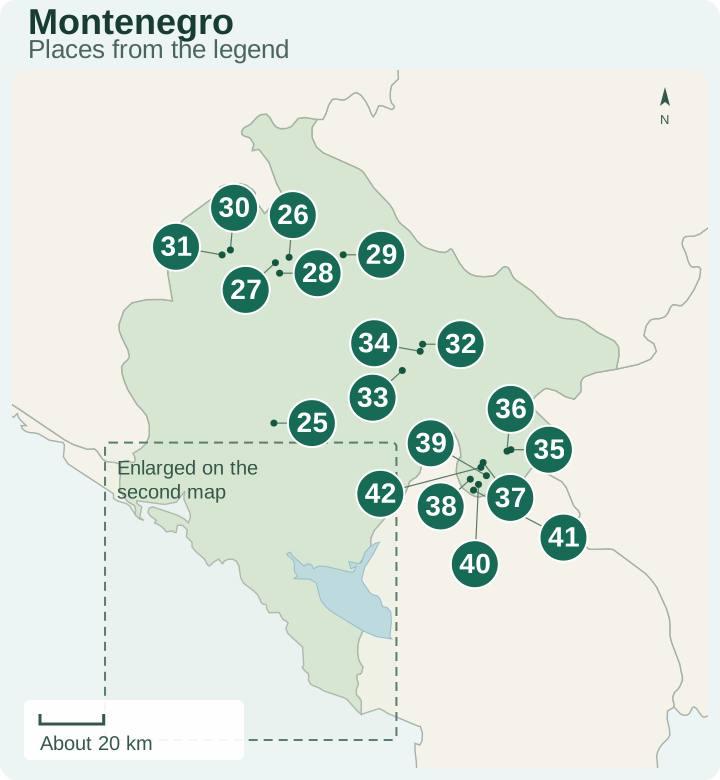
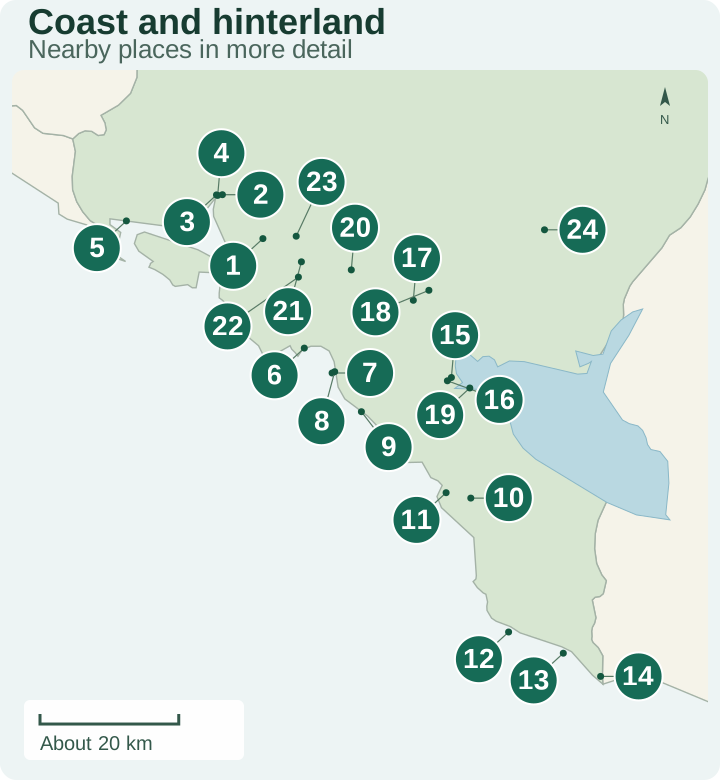
The coast and its hinterland are enlarged on the second map, with places numbered 1 to 24. The first map shows where this area lies in Montenegro and separately marks inland places from 25 to 42. Both maps use the same legend, and the numbers are not a visiting order. Settlement and landscape points are for orientation. Individual buildings within towns have their own Maps links in the descriptions.
- KotorMaps ↗
- PerastMaps ↗
- Our Lady of the RocksMaps ↗
- Saint George IslandMaps ↗
- Herceg NoviMaps ↗
- BudvaMaps ↗
- Sveti StefanMaps ↗
- MilocerMaps ↗
- PetrovacMaps ↗
- Stari BarMaps ↗
- Bar, coastal areaMaps ↗
- UlcinjMaps ↗
- Velika PlazaMaps ↗
- Ada BojanaMaps ↗
- VirpazarMaps ↗
- Besac FortressMaps ↗
- Rijeka CrnojevicaMaps ↗
- Pavlova StranaMaps ↗
- Grmozur IslandMaps ↗
- CetinjeMaps ↗
- Njegos’s Mausoleum on LovcenMaps ↗
- Ivanova KoritaMaps ↗
- NjegusiMaps ↗
- PodgoricaMaps ↗
- Ostrog MonasteryMaps ↗
- Black LakeMaps ↗
- Bobotov KukMaps ↗
- Sedlo PassMaps ↗
- Djurdjevica Tara BridgeMaps ↗
- Lake PivaMaps ↗
- PluzineMaps ↗
- Biogradsko LakeMaps ↗
- Kolasin, starting point for BjelasicaMaps ↗
- Goles katunMaps ↗
- PlavMaps ↗
- Lake PlavMaps ↗
- GusinjeMaps ↗
- GrebajeMaps ↗
- VusanjeMaps ↗
- RopojanaMaps ↗
- Ropojana LakeMaps ↗
- Ali Pasha’s SpringsMaps ↗
01Bay of Kotor
Fortified Kotor, waterfront palaces in Perast and hillside squares in Herceg Novi.
Bay of Kotor
Fortified Kotor, waterfront palaces in Perast and hillside squares in Herceg Novi.
Kotor and the ramparts above the Old Town
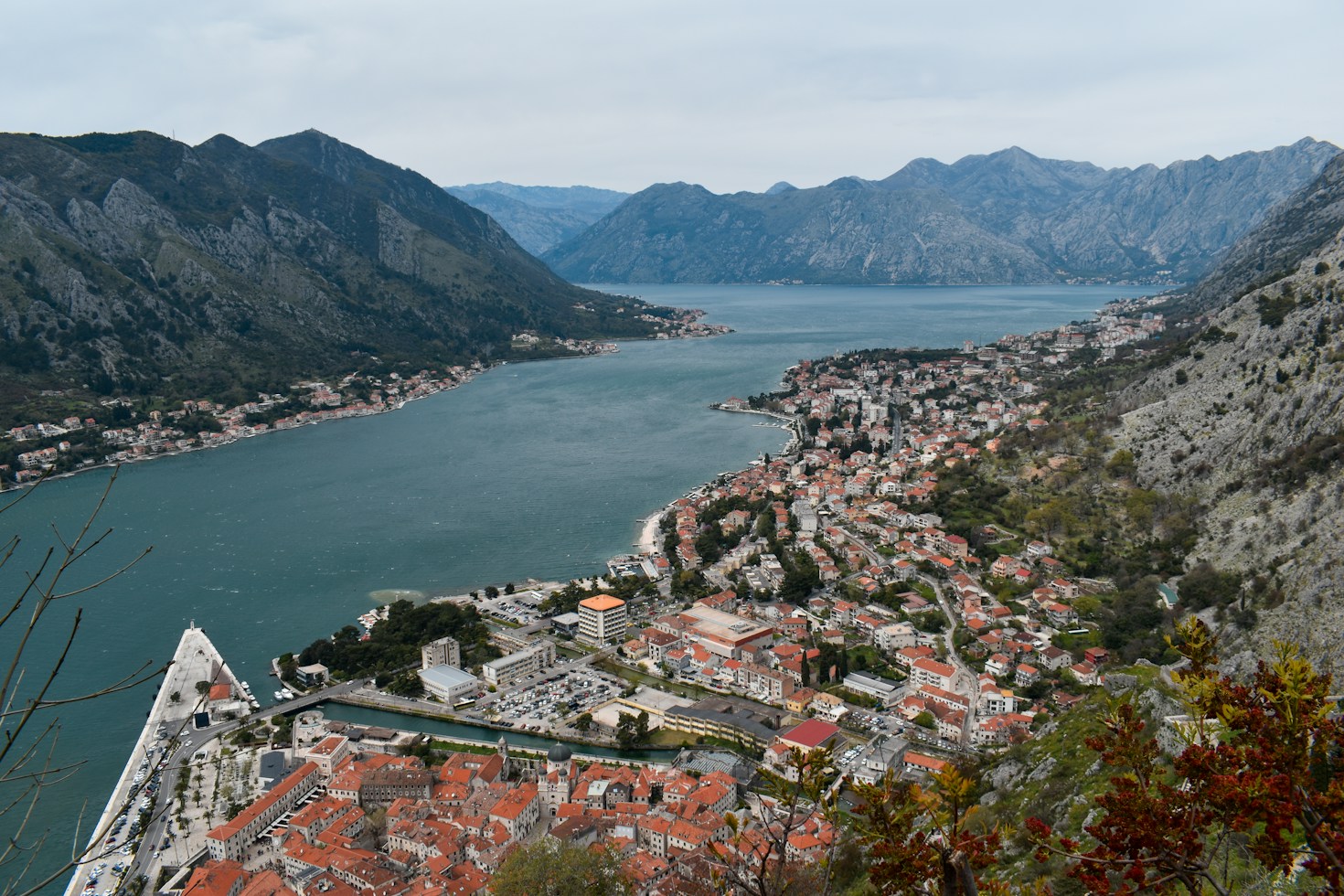
Choose Kotor for its stone town squeezed between the bay and a steep mountain. Inside the walls, narrow passages open onto squares with church facades and palaces. The streets reveal the town at close quarters, while the higher ramparts show its full outline, the harbour and settlements along the water.
The Cathedral of Saint Tryphon has two bell towers and surviving sections of medieval frescoes inside. The Maritime Museum holds ship models and instruments that sailors used to establish their position at sea. The climb towards Saint John’s Fortress is a different visit, with many stone steps and exposed stretches of hillside.
Perast and the view towards the islands
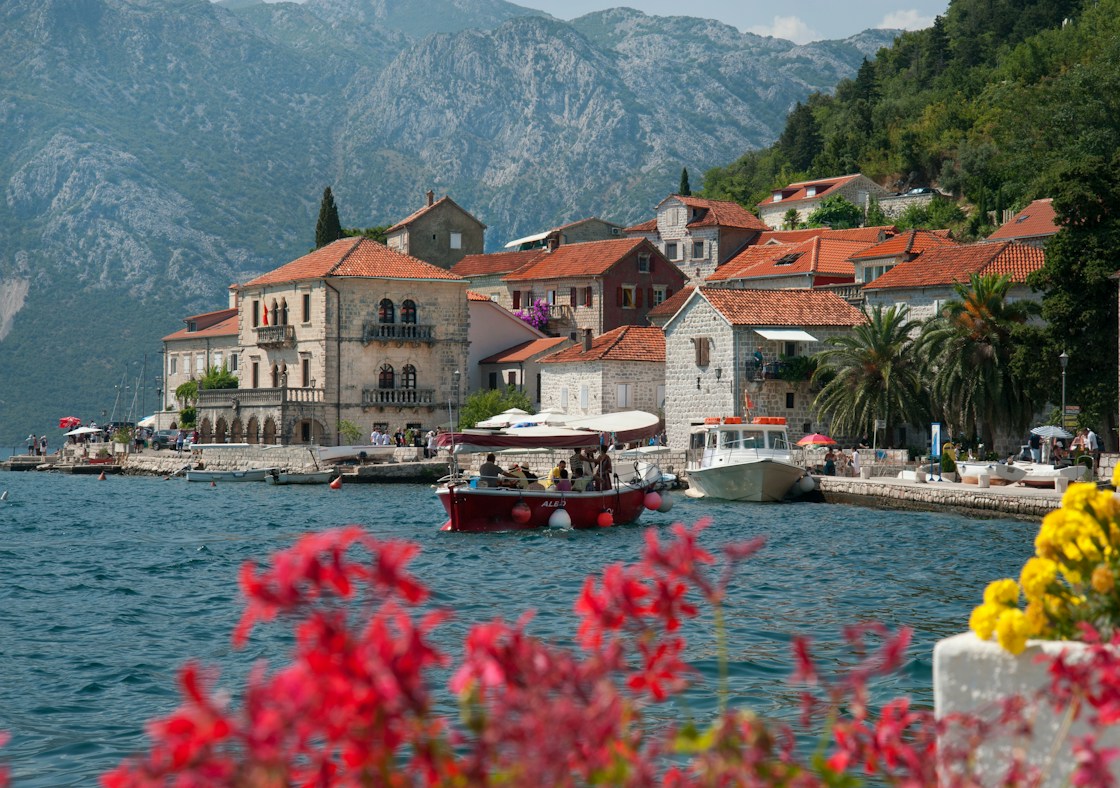
Perast is recognisable by its stone palaces and the bell tower of Saint Nicholas’ Church along a narrow waterfront beneath the hillside. From the quay, the facades are seen together with the bay, with Saint George and Our Lady of the Rocks lying offshore. On Saint George, the monastery’s stone walls appear between tall cypress trees.
Baroque paintings by Tripo Kokolja decorate the church on Our Lady of the Rocks. Its votive gifts include silver plaques depicting ships, left by sailors in gratitude for rescue at sea. If you want to see the interior, check whether your chosen boat trip includes landing and a church visit.
Herceg Novi between fortresses and the sea
In Herceg Novi, squares and stone houses follow the hillside above the entrance to the bay. Stairways between the waterfront and the Old Town keep changing your view of the roofs and sea.
Kanli Kula stands high in the old town, with an open-air stage and audience seating inside its walls. Forte Mare stands on a rock directly above the shore. The seafront promenade offers a flatter walk, while reaching the old town squares involves a climb.
02Budva Riviera
An old town beside the sea, Sveti Stefan seen from shore and the bay of Petrovac.
Budva Riviera
An old town beside the sea, Sveti Stefan seen from shore and the bay of Petrovac.
Budva and its compact walled centre
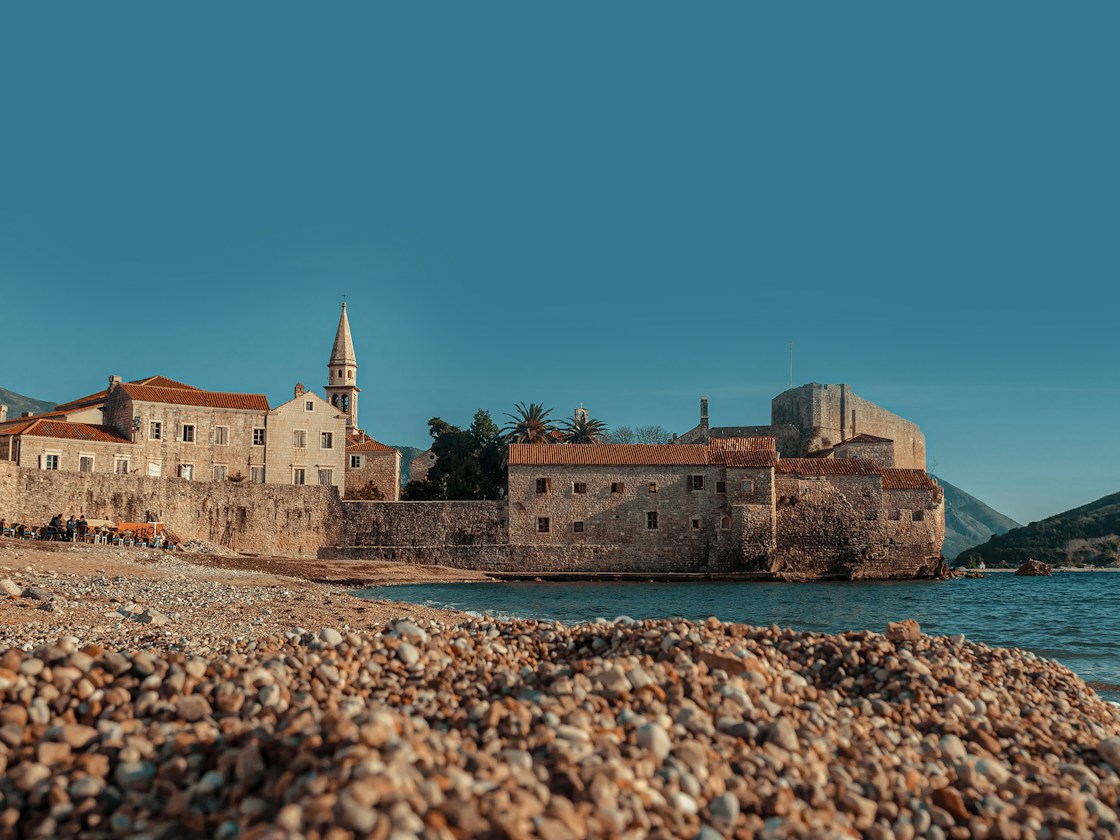
Budva’s Old Town brings stone houses, churches and the Citadel together on a small peninsula beside the sea. From elevated sections of the ramparts, you can see red roofs and the coast beyond the walls.
The Citadel is a fortification at the southern end of the old centre, with high walls facing the sea. The town museum holds archaeological finds, including vessels and jewellery from earlier periods in the town’s history. In summer, the old centre is a busy part of the resort.
Sveti Stefan and Milocer from the mainland
Choose Sveti Stefan for the view of a stone settlement with red roofs, joined to the coast by a narrow strip of land. Its shape is best understood from outside, with the houses, sea and beaches on either side of the approach visible together.
The former settlement is a hotel complex, so access inside depends on the property’s conditions. In nearby Milocer, a park surrounds the former royal residence beside the sea. Lebanese cedars, eucalyptus trees and mimosas grow among the Mediterranean vegetation. When planning your visit, distinguish a walk on the mainland from entry to the hotel grounds or individual beach areas.
Petrovac and the rocky headland of Kastio
Petrovac offers a smaller coastal scene, where a row of houses along the town beach ends at a small harbour and the rocky headland of Kastio. The islets of Katic and Sveta Nedjelja are visible from the shore.
Walls from Kastio Fortress and the neighbouring Lazaret survive beside the harbour. Soldiers were based in the fortress, while its warehouses stored wine and other goods for export by ship. The Lazaret housed patients in quarantine during epidemics.
03Bar and Ulcinj
The archaeological site of Stari Bar, the inhabited old town of Ulcinj and an open sandy coast.
Bar and Ulcinj
The archaeological site of Stari Bar, the inhabited old town of Ulcinj and an open sandy coast.
Stari Bar and the palace museum by the coast
Stari Bar is explored among the remains of a fortified settlement below Mount Rumija. House walls and former streets trace the shape of a town whose residents moved away. The surviving aqueduct, a structure that carried water, also shows how the settlement was supplied.
In coastal Bar, King Nikola’s Palace at Topolica houses the local heritage museum. Its collections include archaeological finds from the municipality of Bar, old weapons and traditional clothing, as well as objects that belonged to the palace. Check whether the museum is open before planning an interior visit. This palace is a different building from King Nikola’s Palace in Cetinje.
Ulcinj and the Old Town above Mala Plaza
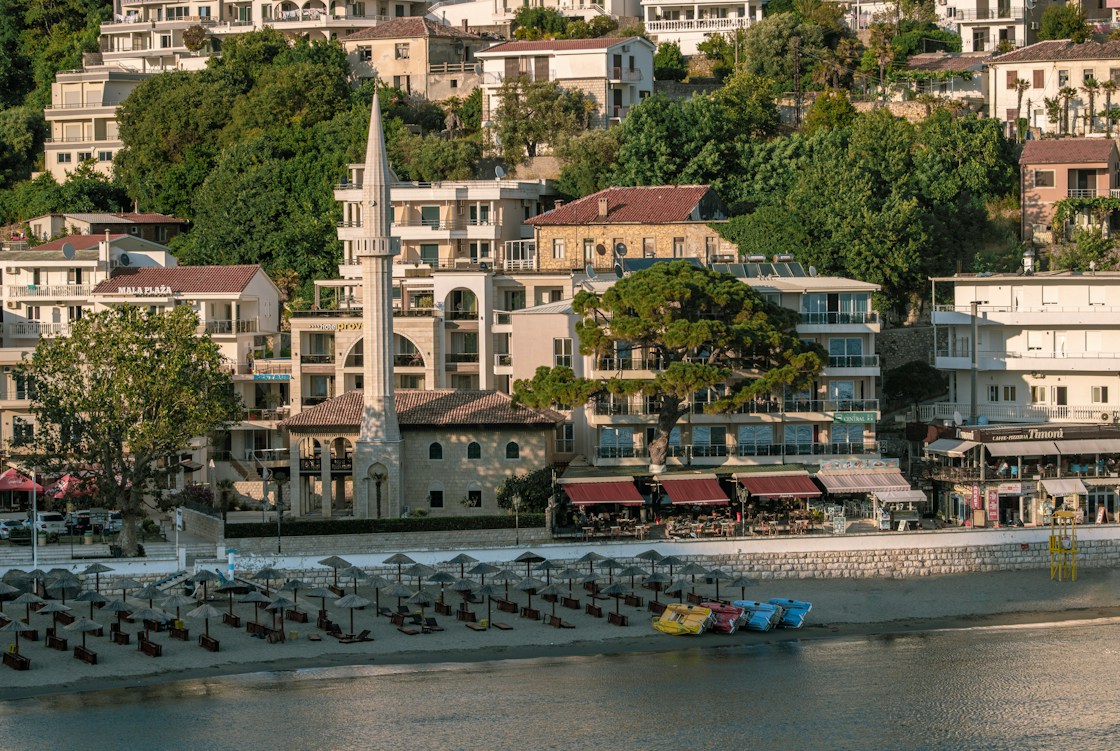
Ulcinj’s Old Town stands on a rock above the sea, with houses and narrow passages inside the walls. People still live in this old centre. The waterfront view shows the fortress as a whole, while a walk inside reveals small squares and stone facades.
Mala Plaza is a town cove beside waterfront buildings, giving it a very different appearance from the broad Velika Plaza outside the centre. If your main aim is a long sandy beach, plan the onward journey to Velika Plaza as a separate trip.
Velika Plaza and Ada Bojana
Velika Plaza has a long sandy shore and a broad hinterland with dunes. Consider this part of the south if you value space, sand and an open horizon rather than exploring town ramparts.
Ada is an island at the mouth of the Bojana, between two branches of the river and the sea. For swimming and facilities, choose a specific part of Velika Plaza or Ada, since the entire shore is not one single bathing area.
04Lake Skadar
Virpazar and Besac, the river bend below Pavlova Strana and the island fortress of Grmozur.
Lake Skadar
Virpazar and Besac, the river bend below Pavlova Strana and the island fortress of Grmozur.
Virpazar and Besac Fortress
Virpazar is a small waterside settlement and one of the starting points for trips onto Lake Skadar. Besac Fortress stands above it on a separate rise in the Crmnica plain.
The panoramic terrace at Besac overlooks Lake Skadar. The restored fortress now has a restaurant that also serves wine. Before visiting, check which parts of the fortress are open for sightseeing and whether your chosen service requires a reservation.
Rijeka Crnojevica and the bend below Pavlova Strana
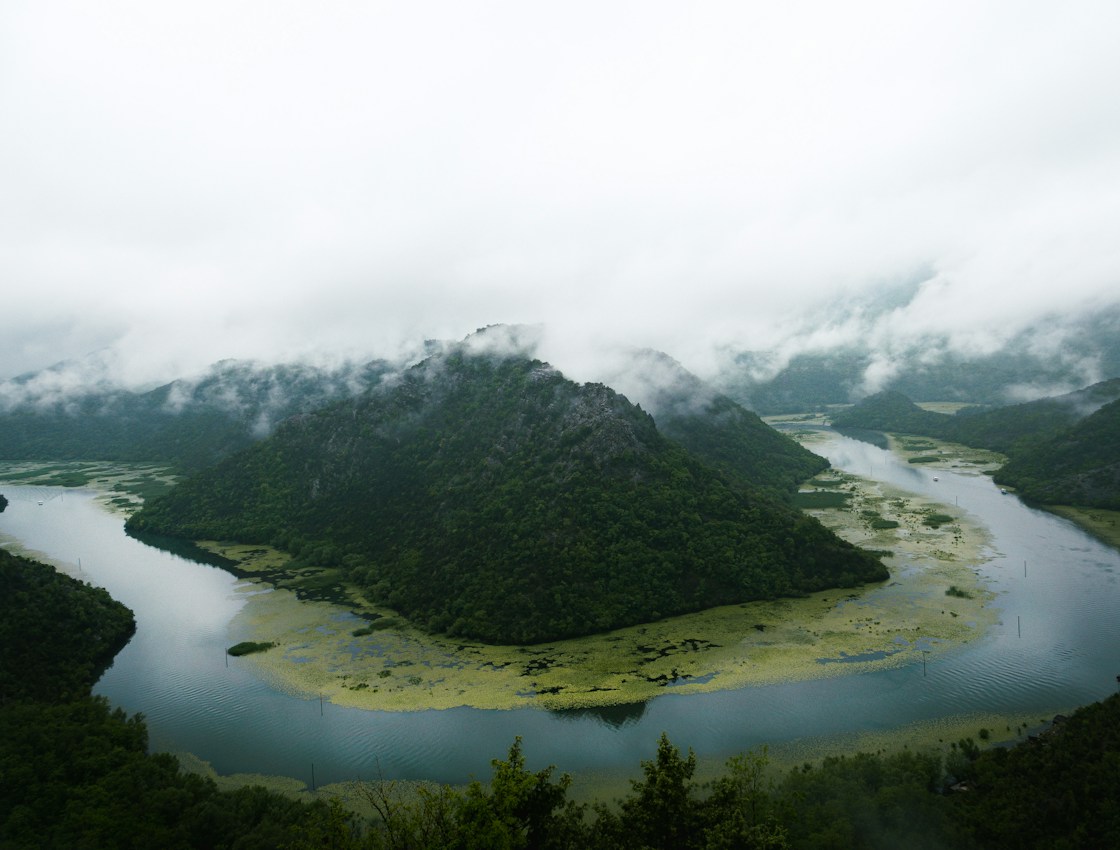
In Rijeka Crnojevica, stone houses and a bridge stand beside the river, while the water continues between green hillsides.
From Pavlova Strana, the river bend is seen from above. A hill sits at the centre of the arc of water, and the view takes in much more landscape than the view from the bridge in the settlement. The viewpoint is a separate destination from a waterside walk among the houses of Rijeka Crnojevica.
Grmozur and watching lake birds
On Grmozur island, fortress remains stand surrounded by the lake. The fortress was later used as a prison. Choose a boat route that passes close to the island if you want to see the ruins against the lake and surrounding slopes.
Grmozur is also one of the lake’s birdwatching areas. Pelicans and cormorants live on Lake Skadar, while sightings of a particular species depend on the season and the birds’ movements. To watch from the water, arrange time near suitable habitats with your guide and check what the tour covers.
05Cetinje and Lovcen
Museum collections in the old royal capital, a mountain mausoleum and the village of Njegusi.
Cetinje and Lovcen
Museum collections in the old royal capital, a mountain mausoleum and the village of Njegusi.
Inside Cetinje’s palaces and museums
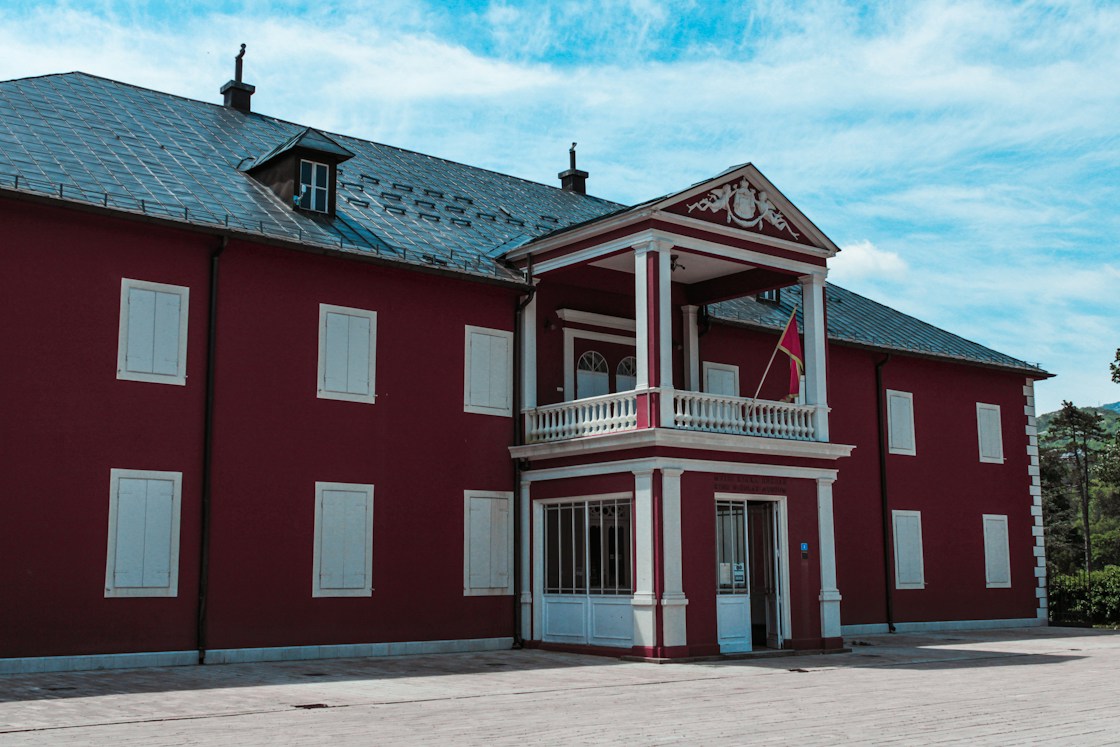
Cetinje brings together museums in former state and royal buildings. In King Nikola’s Palace, salon furniture, portraits and personal objects bring the royal family closer. Stone and painted facades in the centre remain part of a town walk, while the museum lets you enter the setting of former court life.
Biljarda was the residence of Njegos, a Montenegrin ruler and writer. It now houses a museum with his personal objects, books and manuscripts. Biljarda and Njegos’s mausoleum on Lovcen are separate buildings. Check the museum’s visiting conditions before going.
Lovcen between the mausoleum and Ivanova Korita
Inside Njegos’s mausoleum on Jezerski Vrh, mosaics made of gilded tiles cover the vaulted ceilings. The memorial also contains a marble sarcophagus. From the summit, you can see across the surrounding rocky landscape when visibility is good. The final approach to the mausoleum involves a long stairway.
Ivanova Korita is a wooded plateau where you can spend time on Lovcen without going to the summit. Between the visitor centre and the Lovcen-Becici holiday centre is a barefoot trail with sections made of different natural materials. Check its condition before using it and follow the instructions on site.
Njegusi and the flavours of the mountain hinterland
The stone village of Njegusi lies behind Lovcen and is associated with its cured ham and cheese. The ham is traditionally smoked over beechwood.
In the hamlet of Erakovici stands Njegos’s birthplace, now a memorial museum. Ethnographic objects and weapons show the domestic setting and material culture of a wealthier family in the early nineteenth century. Check whether the house is open before planning a museum visit.
06Podgorica and Ostrog
Urban rivers and different layers of architecture, followed by a monastery in the rock.
Podgorica and Ostrog
Urban rivers and different layers of architecture, followed by a monastery in the rock.
Podgorica beside the Moraca and Stara Varos
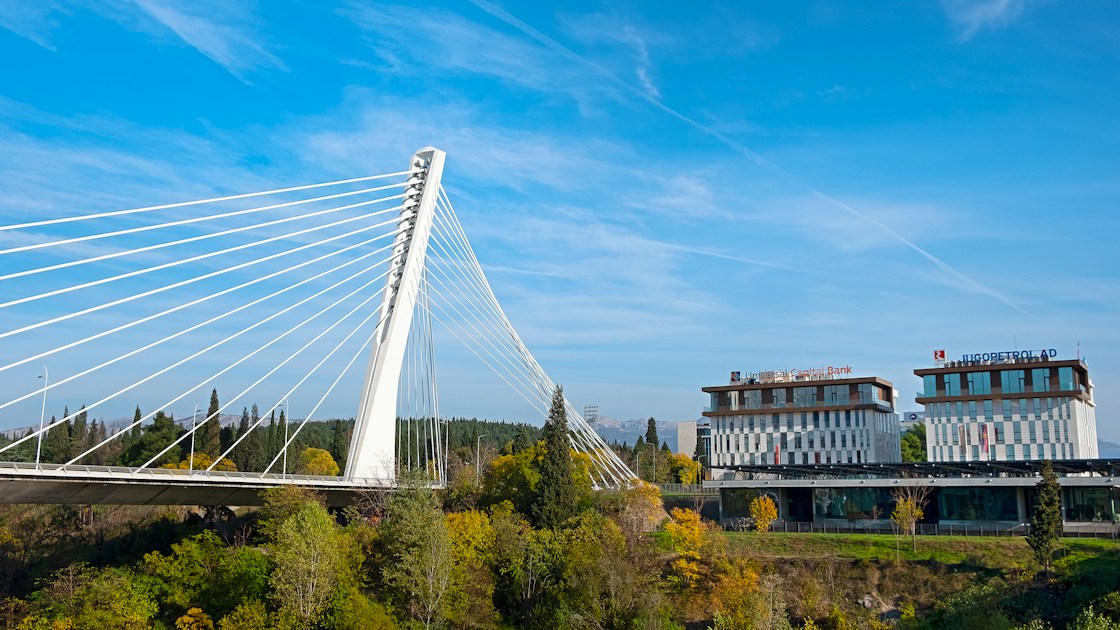
Podgorica is interesting if you want to see how rivers cut through a modern city and reveal its older layers. At Sastavci, the Ribnica flows into the Moraca below the surrounding streets. A small stone bridge and fortress remains stand beside the riverbeds, and you walk down from the surrounding streets to explore them.
In Stara Varos, the Clock Tower and older lanes show the Ottoman heritage among today’s residential buildings. The Millennium Bridge over the Moraca has a tall tower with cables slanting down to the roadway.
Ostrog and the monastery buildings beneath the cliff
The Upper Monastery at Ostrog is recognisable by its white facade against the high cliff above the valley. Its cave church of the Presentation of Mary holds the relics of Saint Basil of Ostrog.
Ostrog is an active monastery. Follow the monastery’s instructions on dress, conduct and entry during your visit.
07Durmitor, Tara and Piva
A forest lake, a high limestone massif, a deep canyon and the Piva reservoir.
Durmitor, Tara and Piva
A forest lake, a high limestone massif, a deep canyon and the Piva reservoir.
Black Lake below Medjed
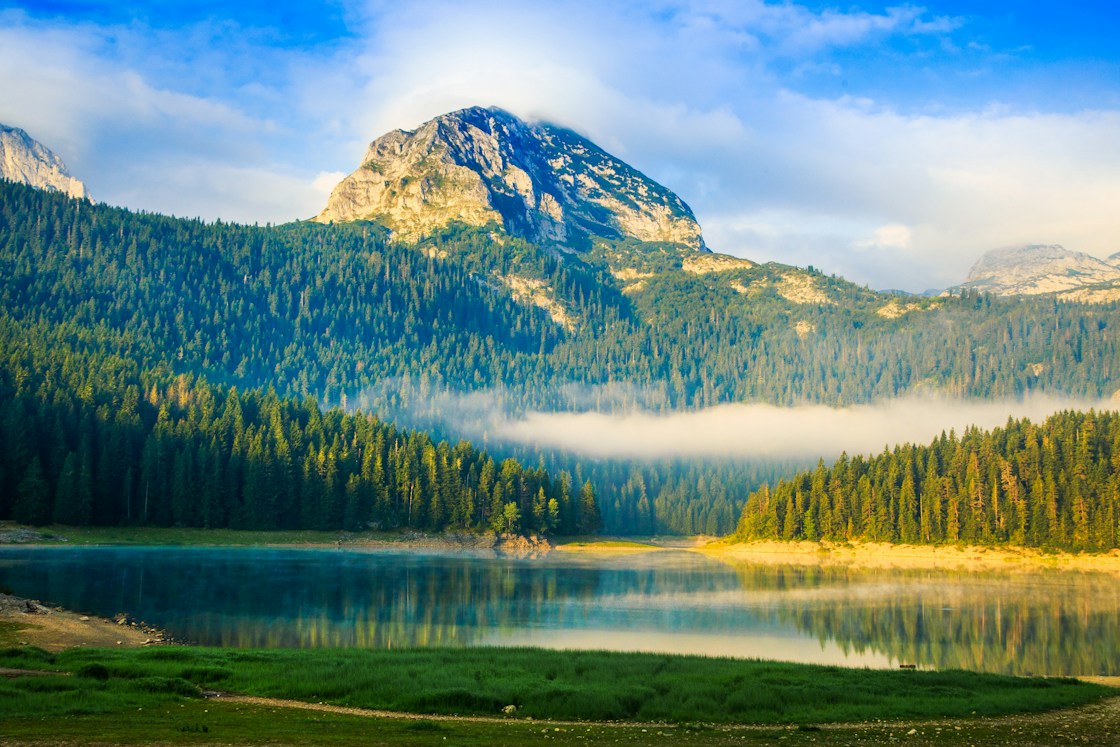
At Black Lake, the rocky slopes of Medjed rise above the water and conifer forest. You can discover this landscape from the lakeshore without climbing one of the high peaks.
The Large and Small Lakes are connected by a natural strait that can dry out when the water level is low. The lake lies outside central Zabljak and belongs to the national park.
High Durmitor and the landscapes around Sedlo
The area around Sedlo reveals high Durmitor through open pastures, rocky slopes and pronounced ridges. Bobotov Kuk is Durmitor’s highest peak. From its rocky summit in clear weather, you can see Prutas, Medjed and valleys in the centre of the massif.
Sedlo is a mountain pass and a starting point for hikes. Climbing Bobotov Kuk requires physical preparation and appropriate hiking gear. Choose your route and check current mountain conditions. Snow and weather can change both the approach and the possibility of visiting the high areas.
Djurdjevica Tara Bridge and the view into the canyon
At Djurdjevica Tara Bridge, large concrete arches draw the eye above a deep river valley. Because of reconstruction work, check current approach and crossing arrangements with the Automobile and Motorcycle Association of Montenegro (AMSCG) before travelling.
Rafting and other canyon activities have different starting points and cover particular areas, so the name Tara in an offer does not mean that you will visit the same stretch of river.
Lake Piva and Pluzine
Lake Piva stretches through a long valley between steep sides, beside Pluzine. It is a reservoir formed by damming the Piva.
Pluzine is a lakeside settlement and one of the starting points for boat trips. For such a visit, check the actual departure point and the boat’s route.
08Bjelasica and Biogradska Gora
Old-growth forest beside a lake and open mountain landscapes above Kolasin.
Bjelasica and Biogradska Gora
Old-growth forest beside a lake and open mountain landscapes above Kolasin.
Biogradsko Lake and its old-growth forest
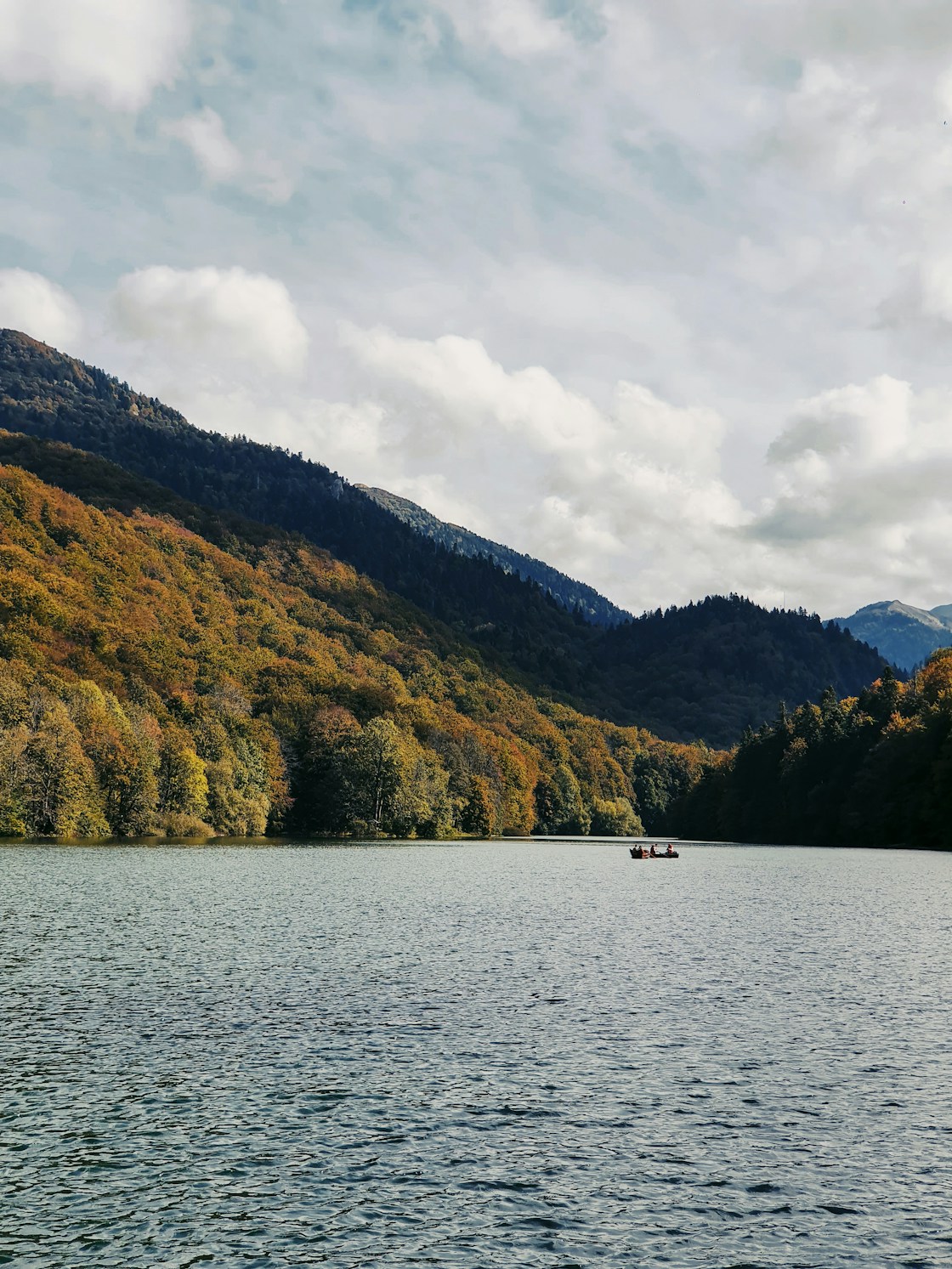
Biogradsko Lake is surrounded by dense forest that grows right down to the shore. A path around the lake lets you explore this woodland beside the water.
Biogradska Gora National Park protects an old-growth forest reserve with trees more than 40 metres tall, some of them several centuries old. Check the condition of the path and approach in relation to the weather and season.
Goles katun on Bjelasica
Bjelasica above Kolasin offers open slopes and katuns, seasonal settlements associated with herders’ stays in the mountains. Kolasin is a starting point for visiting this mountain area. Goles katun is on the edge of Biogradska Gora National Park.
The Goles rural household offers kacamak, a thick porridge, and cicvara, a rich dish made with cream and flour. It also serves layered cheese and homemade juices made from wild berries. Arrange your visit and meal with the host before setting out, then check how to reach this destination outside Kolasin.
09Plav, Gusinje and Prokletije
A lake basin, the Grebaje valley and the area around Vusanje beneath sharp peaks.
Plav, Gusinje and Prokletije
A lake basin, the Grebaje valley and the area around Vusanje beneath sharp peaks.
Lake Plav beneath high mountains
Lake Plav lies in a broad basin between Prokletije and Visitor. Its low, gently indented shore and grassy waterside areas give it a more open appearance than the wooded shores of Black Lake and Biogradsko Lake. On the southwestern side, near the mouth of the Ljuca, small peninsulas extend between coves.
Plav stands beside the lake, while Gusinje is closer to the approaches to the Grebaje and Ropojana valleys.
Grebaje beneath the Karanfili peaks
In the Grebaje valley, south of Gusinje, the steep cliffs of Karanfili rise directly above the green valley floor.
Vusanje, Ropojana and Ali Pasha’s Springs
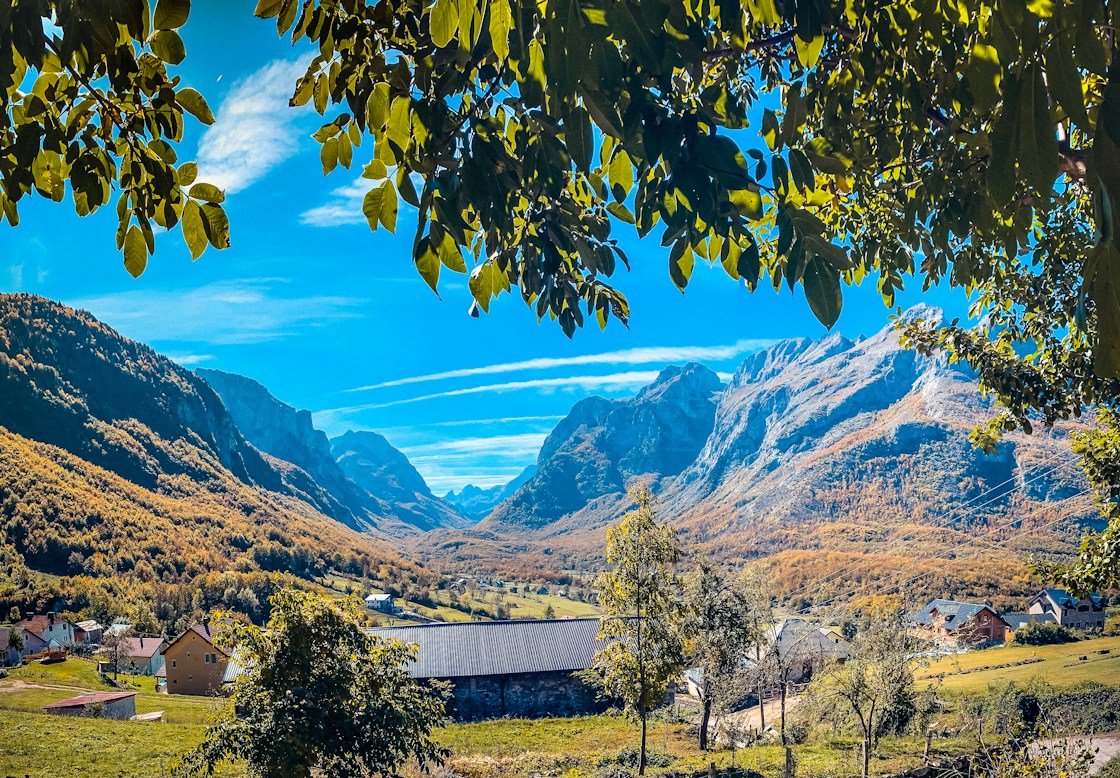
The village of Vusanje provides access to Ropojana, a glacial valley extending towards the Albanian border. Its elongated floor draws the eye between high mountain slopes, while the Bjelic massif rises above the valley.
Ropojana Lake lies at the end of the valley, with water levels dependent on snow cover and the season. In a dry period, you may find a mountain meadow in its place. If you specifically want to see the lake, check conditions with Prokletije National Park before making the longer journey through the valley.
Ali Pasha’s Springs lie near Gusinje, at the foot of Mount Vezirova Brada. Water emerges across a broad strip and flows towards the Vruja River. In spring, the flow is greater and the water spreads more widely around the springs.
Questions when choosing a destination
Where can you go without renting a car?
For sightseeing without extra travel, choose places within the settlement itself. In Kotor, Budva and Cetinje, you can walk between several buildings or museums, while Herceg Novi involves stairways. Choose your exact destination first, then check both the outward and return journeys in the getting-around guide.
Which landscape should you choose for autumn colours?
For autumn colours, choose the forest around Biogradsko Lake. Deciduous trees also change the view across the water, so the attraction is the combination of the colourful shore and its reflection in the lake. Before setting out, check Biogradska Gora National Park notices about visits and approach conditions.
What should you choose when the weather is not right for beaches or mountain views?
Museum visits offer something to see without relying on a distant panorama. In Cetinje, choose King Nikola’s Palace for royal interiors or Biljarda for Njegos’s life and work. In Kotor, consider the Maritime Museum. Before going, check whether your chosen museum is open.
Plan travel to your chosen places
If you want a car to visit your chosen places, compare options in Montenegro by pick-up and return location. For further planning, the country guide covers transport, accommodation and other practical aspects of your trip.
