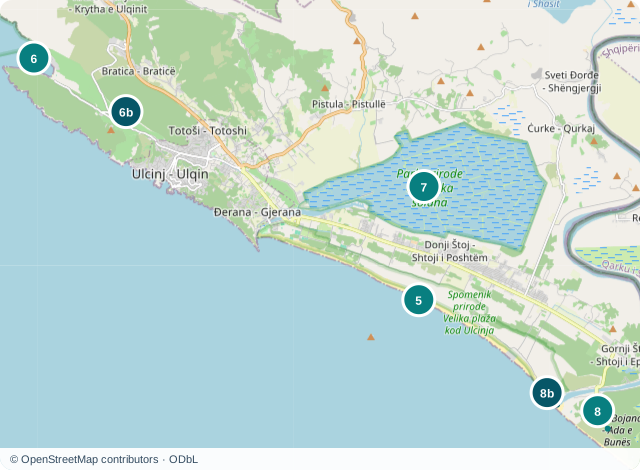
01In the town centre
Ulcinj Old Town
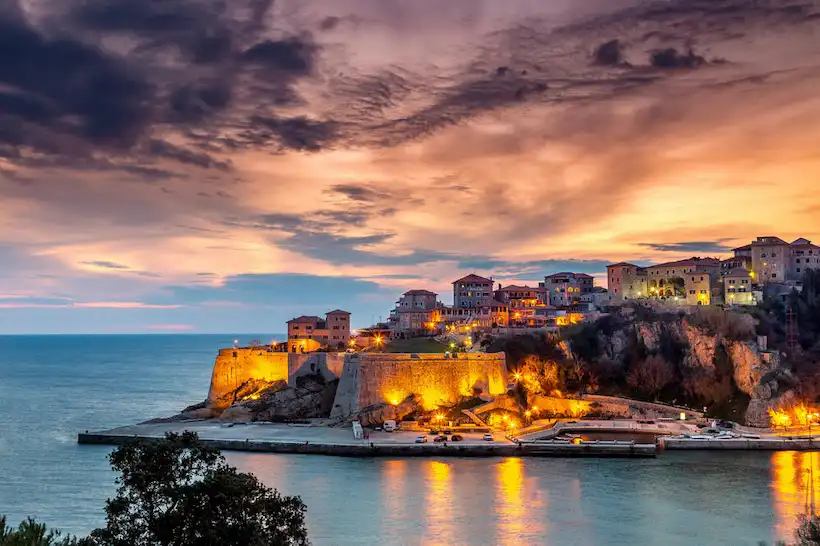
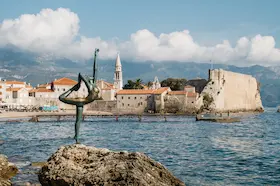
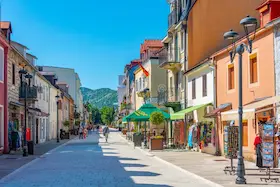
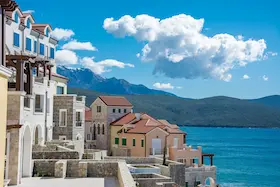
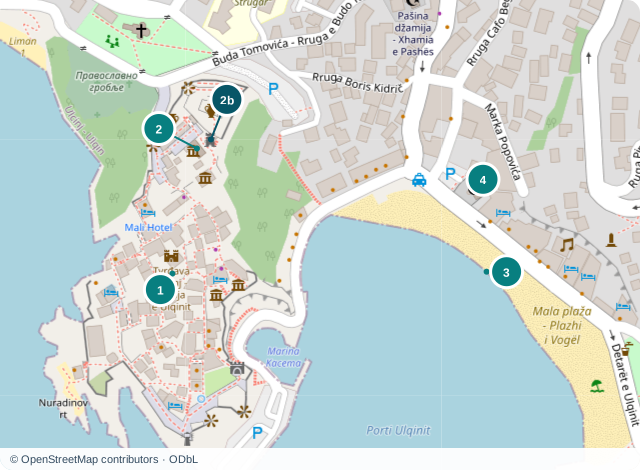
Ulcinj Old Town consists of stone houses and narrow, winding streets within walls on a rock above the sea. Two- and three-storey houses stand close together, with small squares and passages between them. From the coast, you can see the whole fortress, while the streets inside offer a closer look at the facades and details of the houses.
The upper plateau with the citadel differs from the lower, inhabited part. The tower and museum buildings are grouped on the upper ground, while below are houses and former palaces that are also used for accommodation today. Exploring the town streets and visiting the museum offer different experiences: the streets reveal an inhabited centre, while the museum presents objects preserved in its buildings.
Visiting conditions: Exploring the streets does not include entry to museums or accommodation buildings. Walking along the entire perimeter wall has not been confirmed.
Old TownLocal History Museum and Balsic Tower
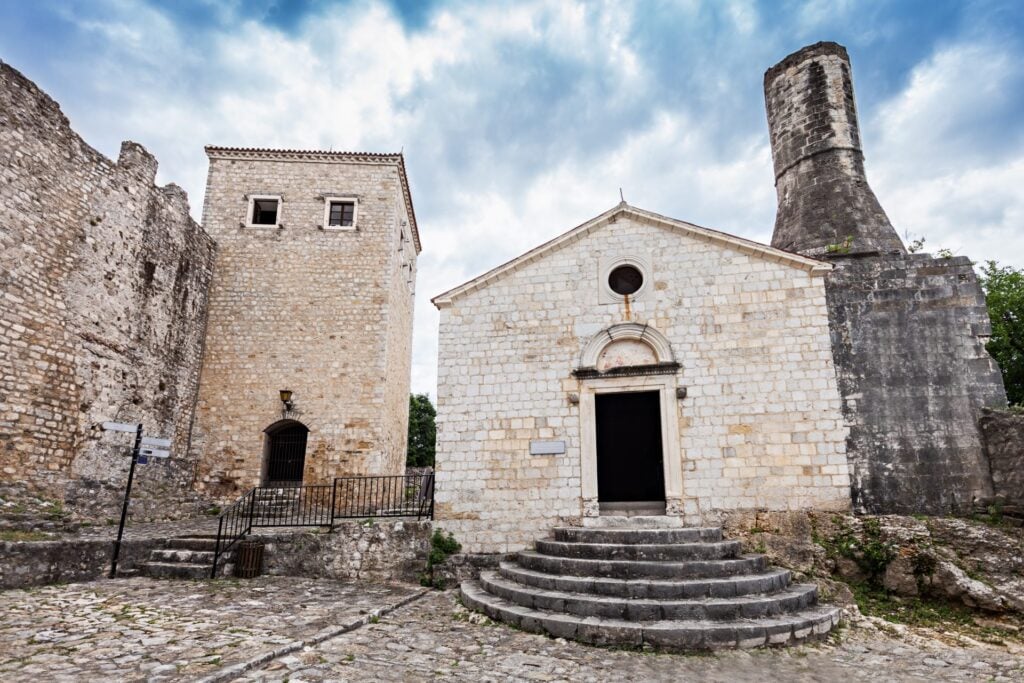
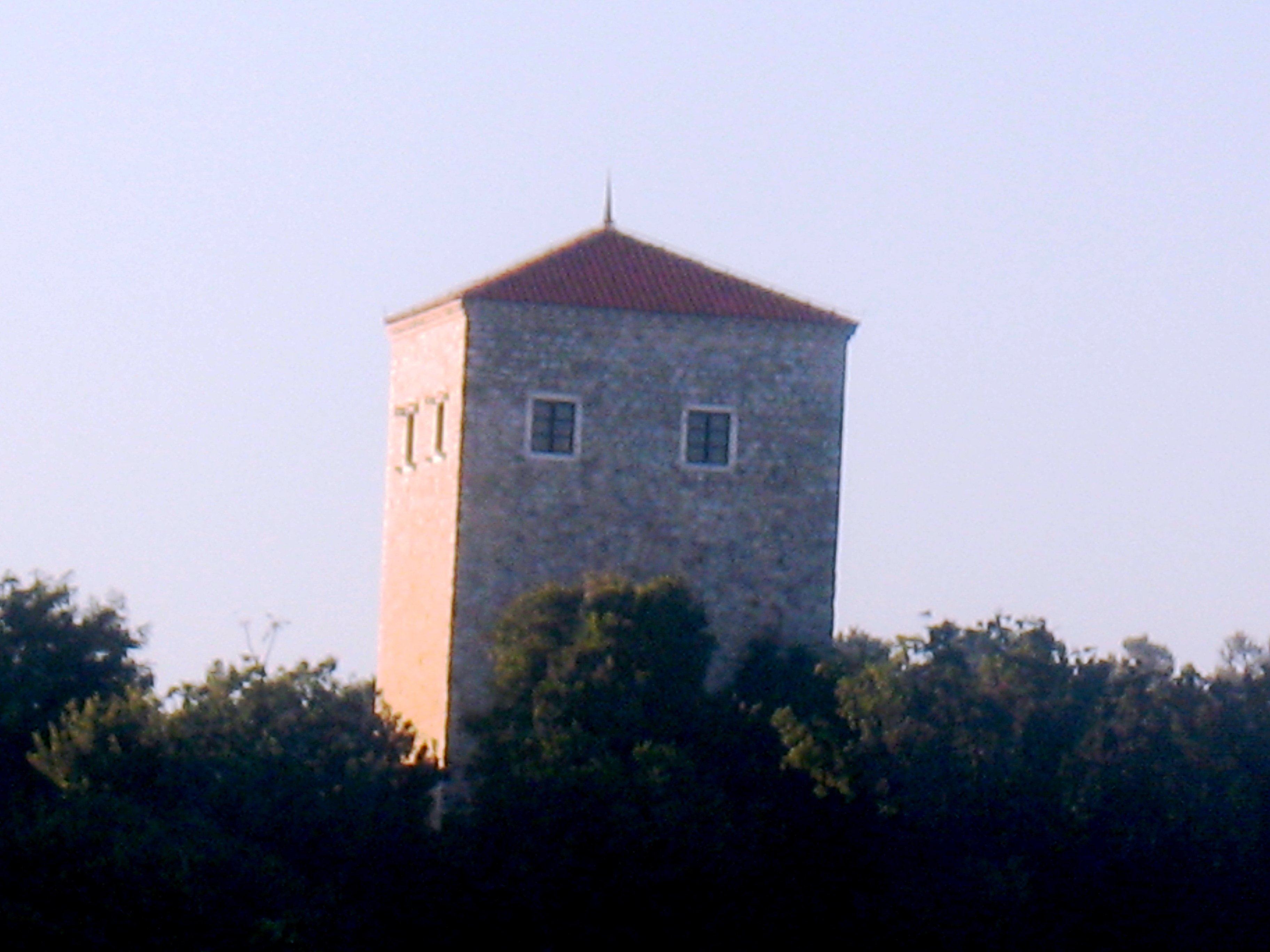
The Local History Museum in Ulcinj introduces archaeological finds and ethnographic material from the area. The complex is in the upper part of the Old Town. The archaeological collection is associated with the former church-mosque, while Balsic Tower is a separate building used as a gallery.
Objects highlighted by the tourist organisation include an ancient cameo depicting Athena wearing a helmet and two axes from the Bronze Age. The cameo is a small carved object with the image of the goddess. The lapidarium, a collection of stone monuments and parts of buildings, also contains an Ionic capital. The collection thus includes both objects that were worn or used and fragments of former buildings.
The museum buildings themselves also deserve a look. The church-mosque retains traces of its different religious uses, while the stone Balsic Tower rises beside it on the upper plateau. This description of the collections is not a list of everything currently on display: the selection of objects and access to the gallery depend on which rooms are open and the programme.
Visiting conditions: Current opening hours, the ticket price and which museum buildings are open have not been confirmed. For an exhibition in Balsic Tower, also check the gallery programme.
Museum complexPristan and Mala Plaza
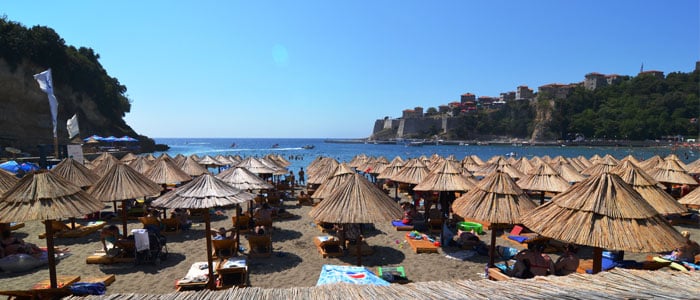
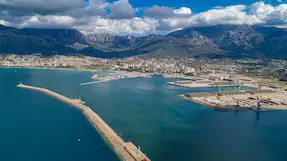
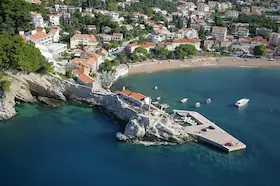
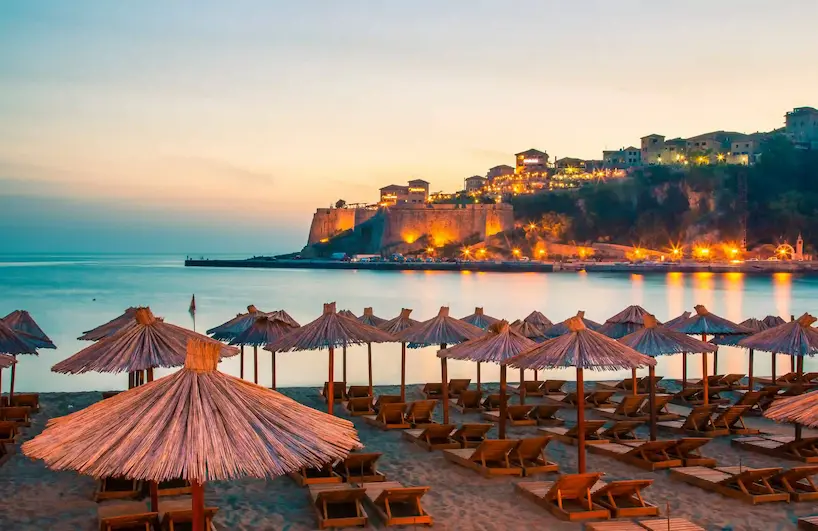
Pristan and Mala Plaza lie in the town bay below the Old Town. The sandy beach stretches in front of the town houses, with a small harbour beside the rock and walls. From here, the height of the fortified town above the water is clear, a perspective that is harder to grasp while walking between its houses.
The sand is very fine and continues across the seabed in the shallows. Restaurants and cafes stand behind the beach, and the houses climb the slope from the bay towards the interior of town.
Visiting conditions: Viewing the bay and harbour does not give you access to beach equipment or every berth. Conditions for these have not been confirmed in this description.
Mala Plaza and the harbourSailors' Mosque
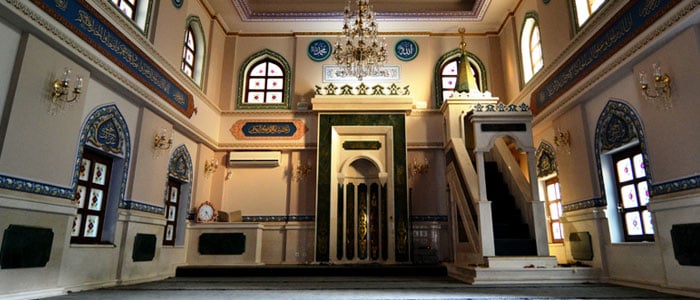
The Sailors' Mosque stands on Pristan, right beside the town bay. Its minaret rises among the surrounding buildings and is easy to recognise from the waterfront. Its name reflects the earlier mosque's dedication to Ulcinj's sailors.
The original mosque was demolished in 1931. The rebuilt building reopened on 1 June 2012, so the present facade and minaret belong to that reconstruction. It is an active place of worship, making a visit to the prayer room different from viewing the building from outside.
Visiting conditions: A public schedule for tourist visits inside has not been confirmed. Ask at the mosque beforehand about entry and photography.
Sailors' Mosque02Natural areas nearby
Velika Plaza and the dunes
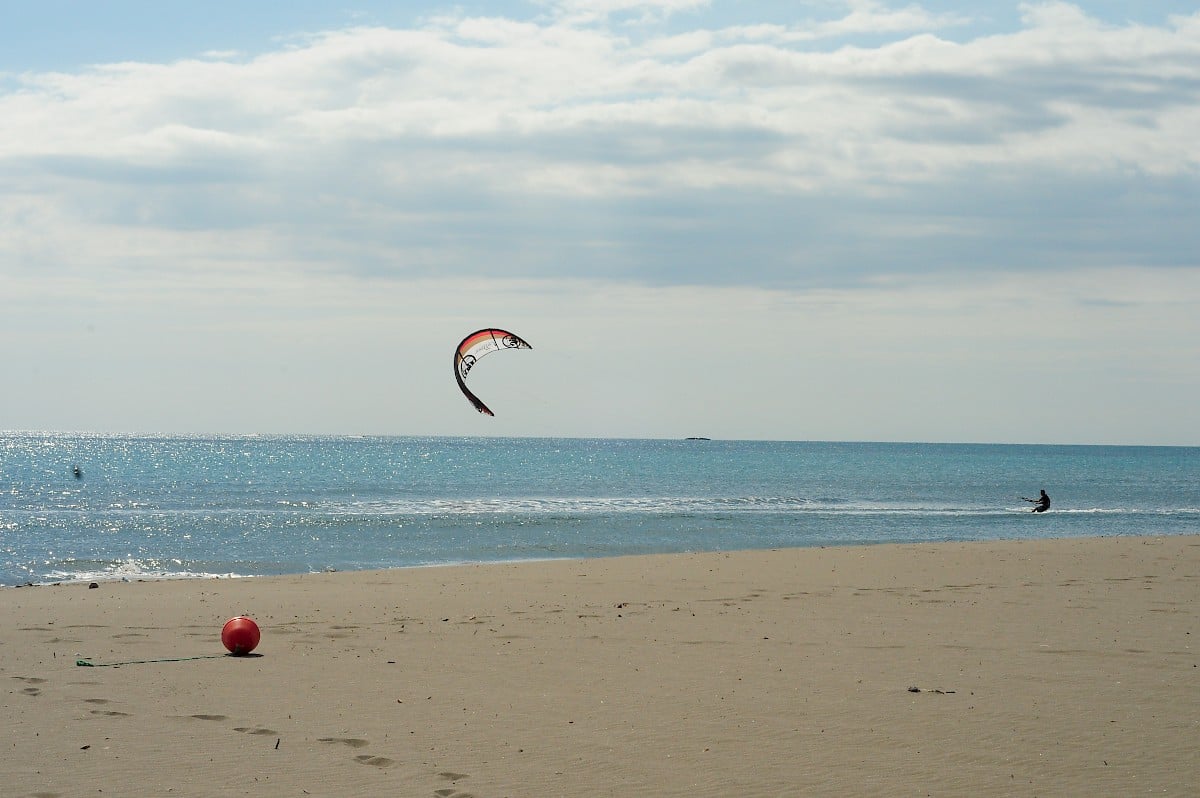
Velika Plaza stretches between Port Milena and the Bojana as a broad sandy strip beside the open sea. Unlike Mala Plaza below the town houses, here the view opens along the coast and towards the flat land behind it.
Landward of the shoreline lie dunes, low sandy rises with vegetation adapted to the loose ground. The beach beside the sea is mostly bare sand, while farther back, patches of coastal plants grow in the sand.
Visiting conditions: Use an existing approach to the part of the shore you want to visit. Do not walk across dune vegetation to reach the shore. Check beach and parking conditions with the specific operator.
Dune habitatsValdanos and its olive groves
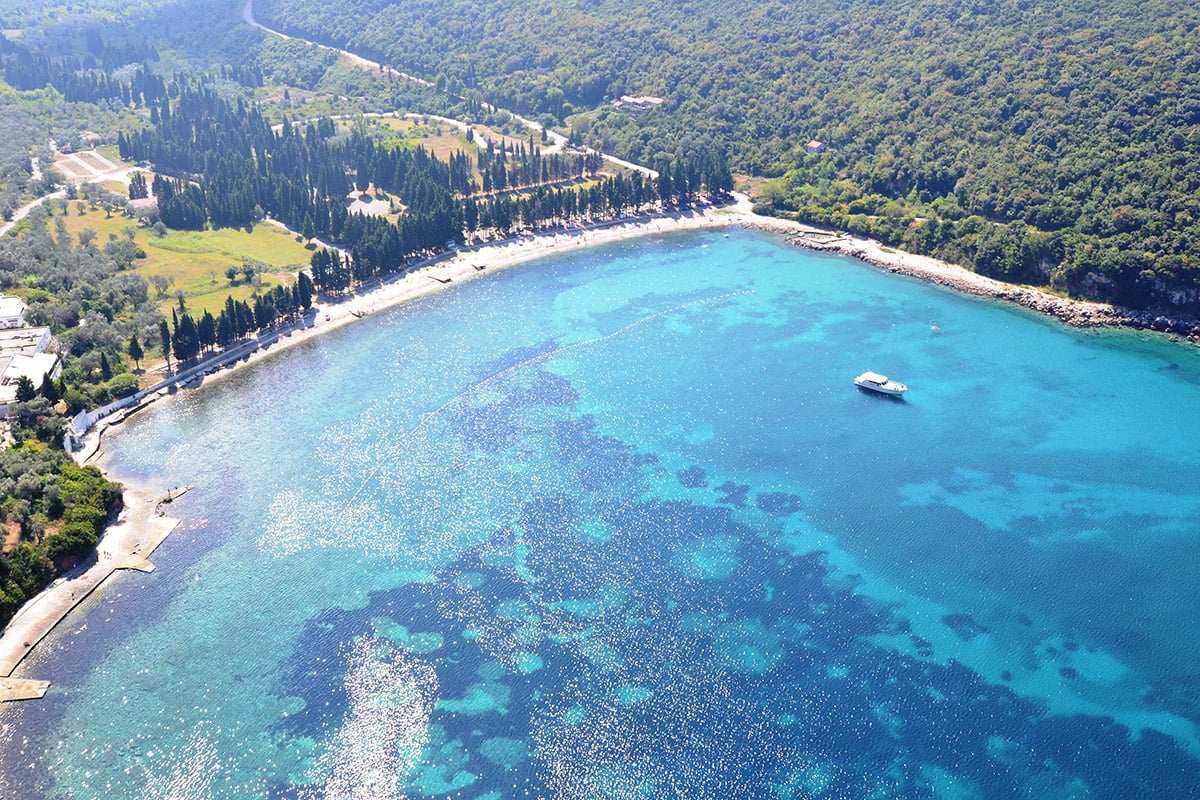
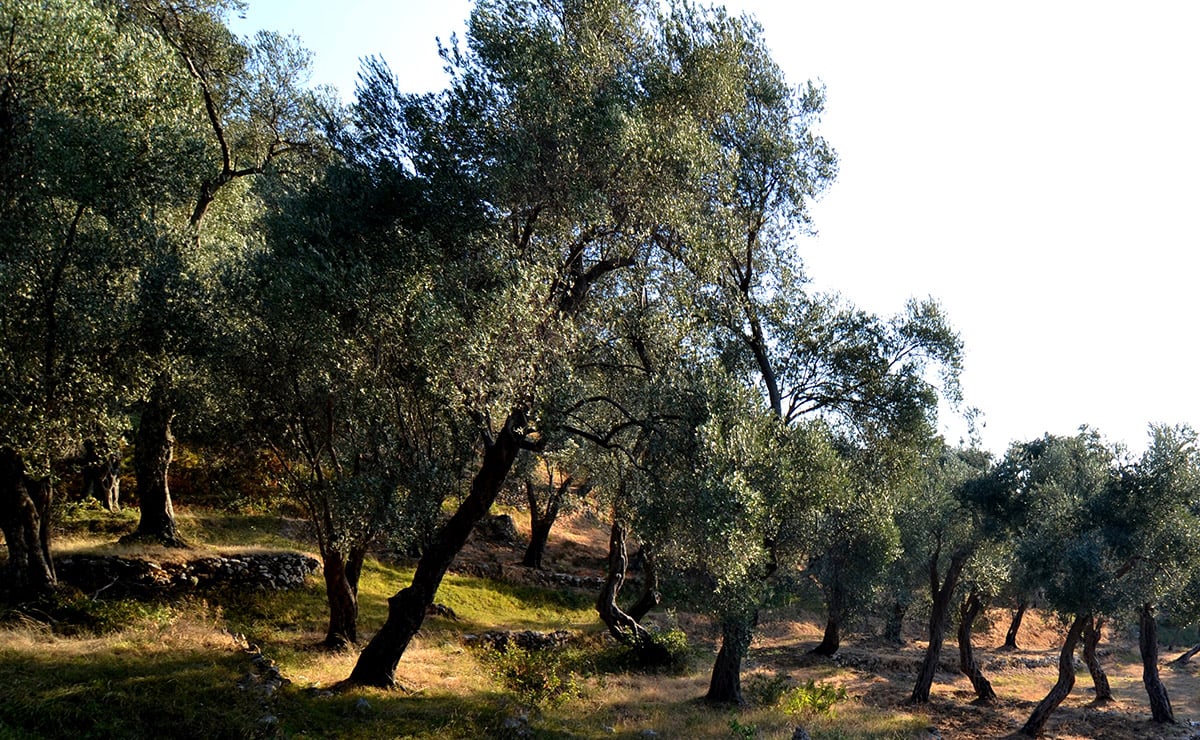
Valdanos cove has a horseshoe shape and a pebble shore between Mavrijan and Mendra. Hillsides enclose the bay, with olive groves along the approaches and behind it. A view from above shows the contrast between the narrow strip of beach and the green slopes surrounding it.
Olive trees are spread across the slope, with spaces between their crowns and exposed ground around their trunks. Their irregularly branching crowns distinguish this landscape from the forest on the surrounding hills. The groves form part of the agricultural land behind the cove. A public approach to the cove does not mean that every olive grove is open to visitors.
Visiting conditions: Access to individual olive groves has not been confirmed. Ask the owner before entering a plot or building. A marker for the olive-growing area does not mark a public trail.
Olive-growing landscapeUlcinj Salina
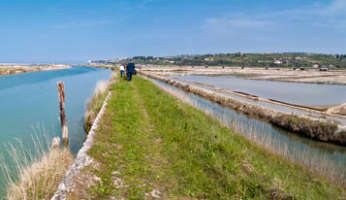
Ulcinj Salina is a system of shallow basins divided by embankments. The straight lines of the embankments and the regular arrangement of the water basins reflect their original purpose: salt production.
During production, seawater was directed from one basin to the next. As it evaporated, it became saltier, until salt separated out in the shallowest basins. This process explains the channels, embankments and differences between the basins visible in the landscape.
Production stopped in 2013, and the Salina is now a nature park and Ramsar site. Birds use its shallow waters for feeding, nesting and resting during migration. Which species you see depends on the season and conditions. When visiting, stay on permitted paths, as approaching colonies can disturb the birds.
Visiting conditions: Regular opening hours, the price and permitted entrances have not been confirmed. Check visiting arrangements with CZIP before coming. The programme for a special event does not automatically apply to an ordinary visit.
CZIP visitor programmeThe Bojana river mouth and Ada Bojana
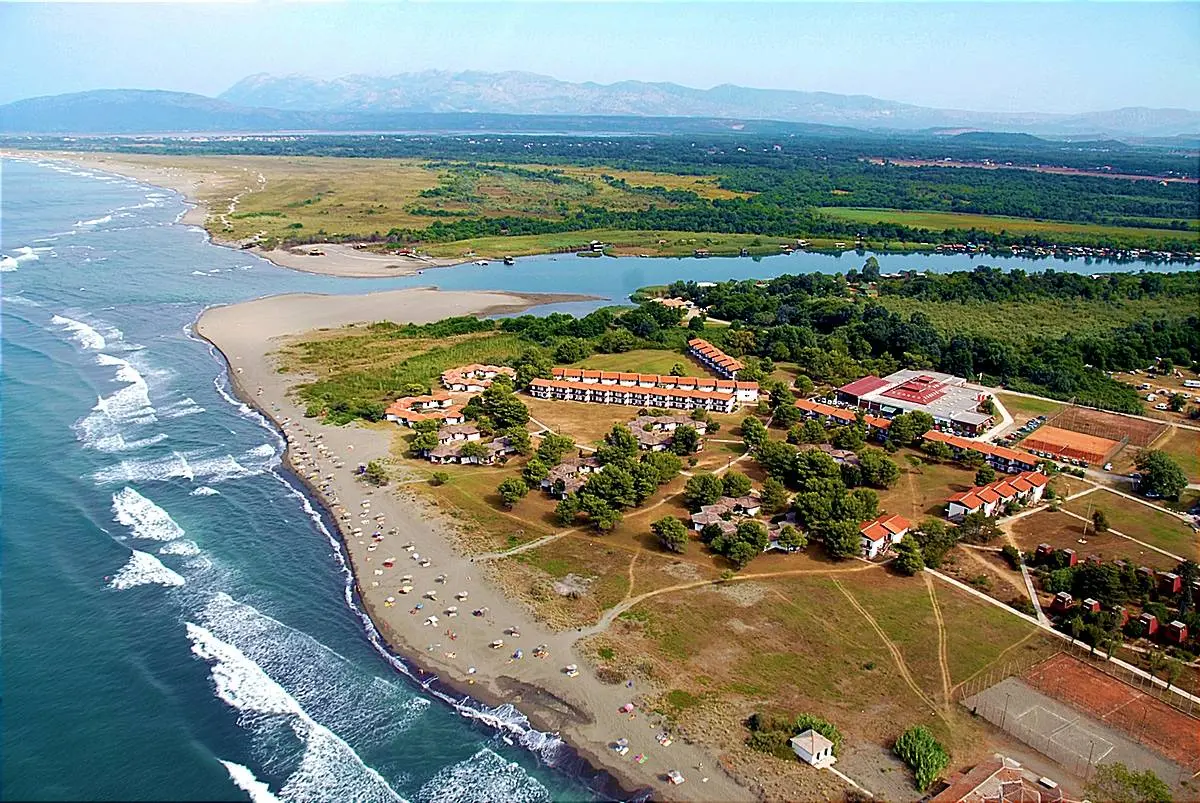
Ada Bojana is a triangular river island between two branches of the Bojana and the Adriatic Sea. At the river mouths, the water flows out towards the seashore, while a sandy beach occupies the side of the island facing the Adriatic. The photograph of the island shows a river branch, the beach and the flat landscape between them.
The Ada Bojana tourist resort occupies only part of the island and offers naturist accommodation and camping. When visiting, it is therefore important to distinguish the geographical island from the resort grounds, where the operator sets the conditions for a stay.
Visiting conditions: Check day entry, parking and the rules for individual zones with the resort operator. A published accommodation offer does not confirm these conditions for visitors who are not staying overnight.
Ada Bojana operatorChoose the museum collection for archaeological finds and an explanation of how they were used. Walking the streets of the Old Town lets you explore the houses and fortifications from outside, so that visit does not depend on which museum rooms are open.
From Pristan, you can see the fortifications above the bay together with the beach and landing place. In the Old Town streets, the view is of individual facades and passages. The waterfront is better for the full silhouette, while the streets inside the walls reveal architectural details.
Choose the Salina if you are interested in the basins of the former salt works and bird habitats, after checking entry arrangements. Valdanos and the Bojana river mouth reveal the shape of a cove and a river meeting the sea. Each offers a different subject to explore, so one landscape does not replace the other.
Similar names can refer to different places
Balsic Tower stands on the upper plateau and is used as a gallery. Dvori Balsica is a different building on the southern plateau, used for accommodation. If you are looking for the tower or an exhibition, the hotel name Dvori Balsica will not lead you to the same building.
The church-mosque is a historic building housing the archaeological museum in the Old Town. The Sailors' Mosque stands on Pristan and is a place of worship. The word mosque in both names does not mean that they offer the same kind of visit or have the same entry rules.
The Local History Museum concerns the cultural heritage of the Old Town. The Museum of Birds and Salt is at the Salina, where a relief model and exhibits explain the basins and birds. A special programme at the Salina does not establish the opening schedule of the town museum or confirm a shared ticket.
What objects and landscapes reveal
Among the museum finds is an ancient base bearing a dedication to the goddess Artemis, erected by a community of stonecutters. The inscription links belief with a specific urban craft. If the object is on display, its interpretation provides local context that the shape of the stone alone cannot reveal.
The sea daffodil, Pancratium maritimum, and Cakile maritima have been recorded in the dune habitats of Velika Plaza. The daffodil has large white flowers, while Cakile can be recognised by its fleshy grey-green leaves and smaller white or pale lilac flowers. Its long root anchors the plant in the sand and helps stabilise the ground. These are characteristics of the species, rather than a promise that both will be flowering during your visit.
During salt production, the salt was gathered into heaps and carried in special wagons to the hall for collection and packing. The embankments and spaces between the basins can therefore be understood as parts of a working system. This explains the history of production without promising that every surviving structure can be visited today.