01Attractions in town
King Nikola's Palace
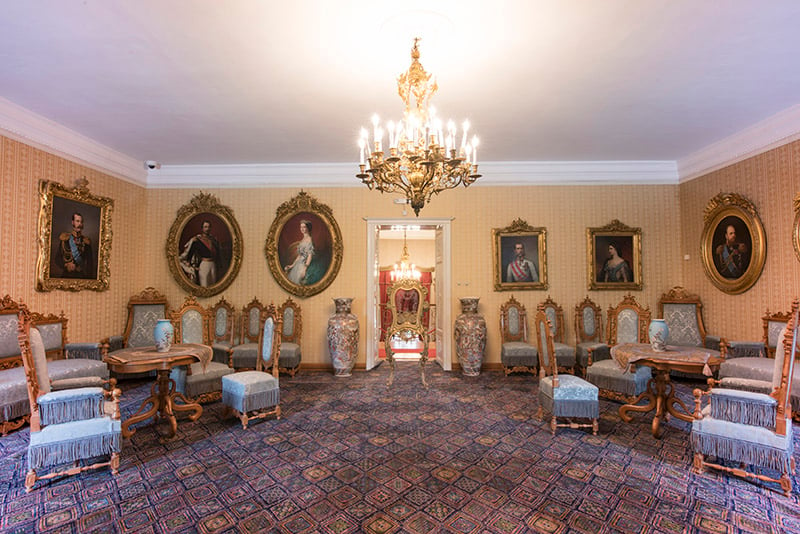
At King Nikola's Palace, you can see salon furniture, portraits and the royal family's personal belongings. The furnishings and portraits show the rooms as a royal residence, while personal objects give a more individual picture of the family.
The palace was built in 1867 and opened as a museum in 1926. The collection also contains objects from other royal residences. Today's display therefore brings together the wider heritage of the Petrovic Njegos family, rather than an entirely untouched arrangement of one home.
Visiting: The published museum price list gives 8 € for adults. Before entering the rooms, check seasonal opening hours and any special museum notices.
National Museum price listBiljarda and the Montenegro Relief Map
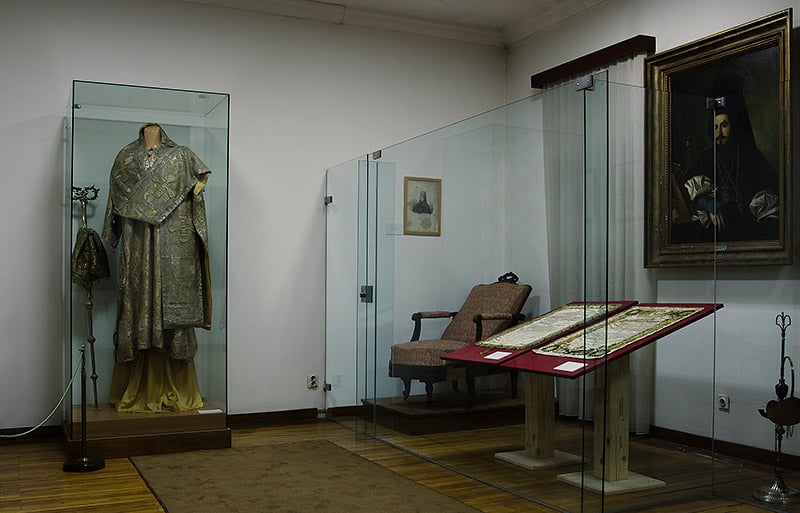
At Biljarda, you can see Njegos' personal belongings, books, artworks and manuscript material. The collection connects his former residence with his literary work and interests, making this a choice for visitors who want to know the person behind the later monumental memorial. The stone building was constructed in 1838, and the Njegos Museum opened there in 1951.
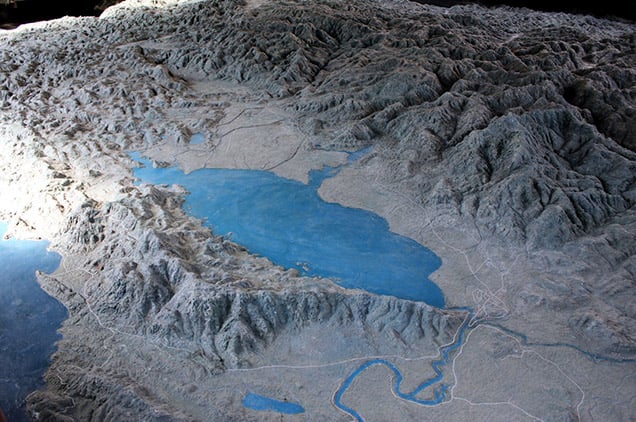
The courtyard contains the Montenegro Relief Map, a large three-dimensional map made of concrete on a stone base. Mountain elevations and valleys are shaped at a scale of 1:10,000, allowing the terrain to be viewed from different sides. The Relief Map is a separate exhibition site beside Biljarda, with its own visiting arrangements.
Visiting: The price list gives 5 € for adults alongside Biljarda and the Relief Map. The Relief Map's own page states a winter closure, while the general timetable groups it with Biljarda, which opens on weekdays in winter. Confirm separate access to the Relief Map with the museum.
National Museum opening hoursEthnographic Museum
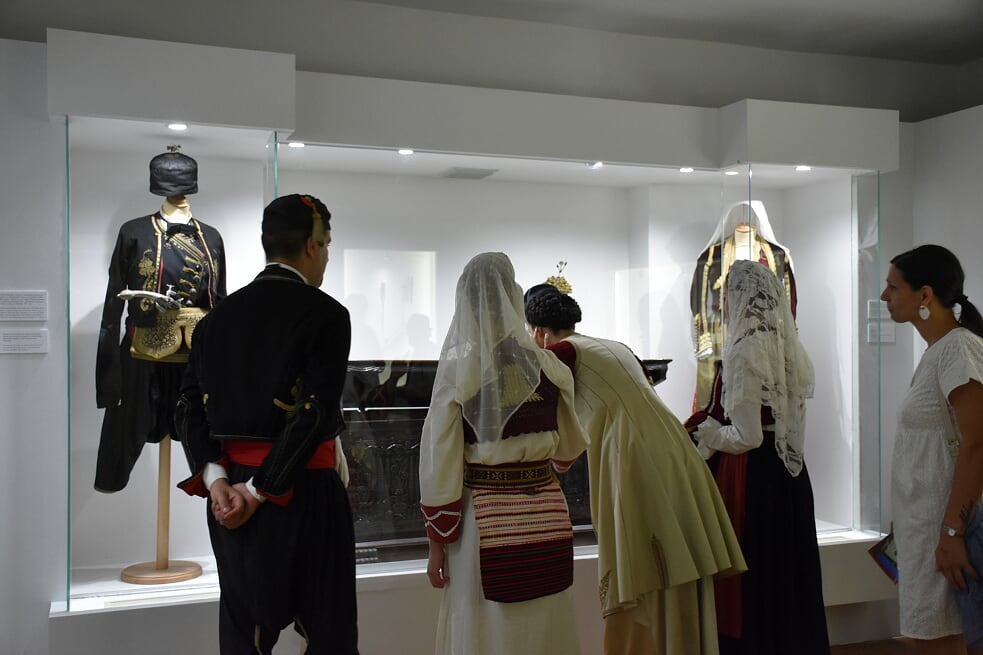
Traditional costumes, objects used for work and domestic furnishings at the Ethnographic Museum bring life beyond the palace rooms into view. Clothing is displayed alongside work and household objects, linking how people dressed with their everyday surroundings.
In 2002, the museum moved into the former Serbian Legation building. The description of the permanent display presented in 2018 places work, ways of earning a living and domestic interiors on the ground floor, with traditional costumes upstairs.
Visiting: The published price list gives 4 € for adults. For a particular floor or object, check which parts of the display are open, as well as the general museum hours.
National Museum price listVladin Dom
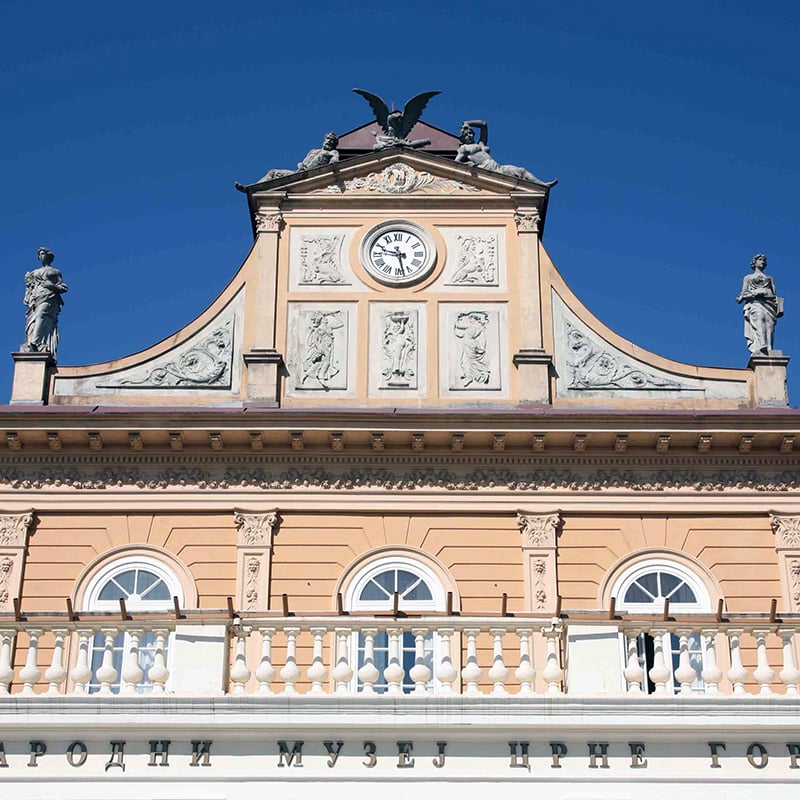
Vladin Dom, or Government House, stands out for its large Neo-Renaissance facade, clock and the sculptures above it. The decorated upper facade and balconies give the building a more ceremonial appearance than the town's smaller residences.
Built in 1910, Vladin Dom is now associated with the Historical and Art museums of the National Museum of Montenegro. The Art Museum holds collections from the 19th to the 21st centuries. Its architecture is the focus when viewing the building from outside, while an exhibition visit depends on whether the specific museum is open.
Visiting: The Historical Museum is marked as closed in the published timetable. For the Art Museum, there is a notice of temporary closure of the permanent display, with no reopening date stated. Before travelling for an exhibition, check whether the specific museum is open.
Art Museum closure noticeCetinje Monastery
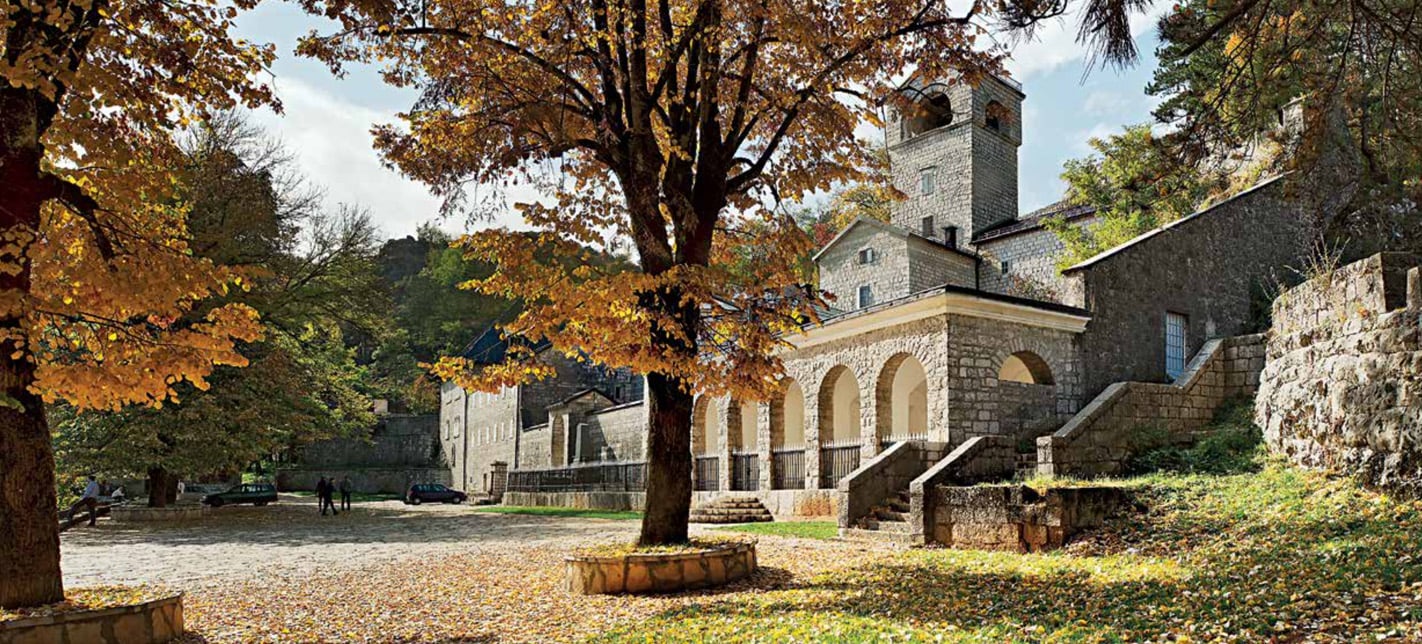
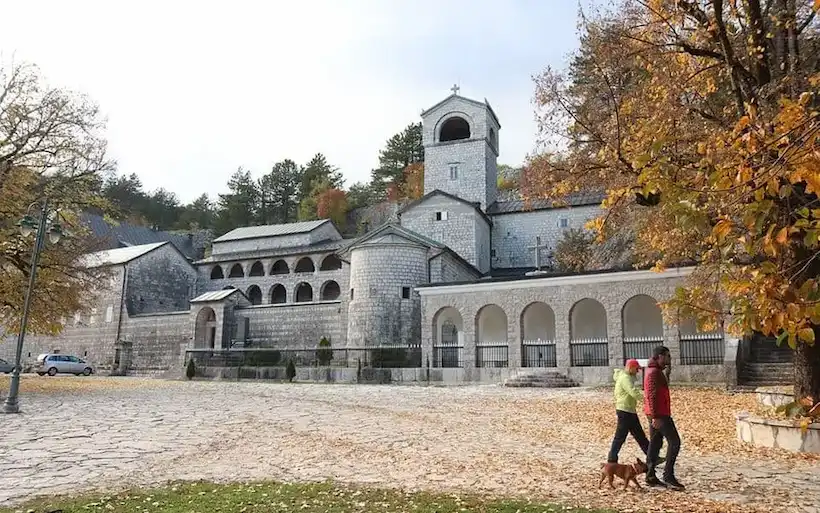
Stone arcades and a bell tower mark Cetinje Monastery. The church sits within a wider group of monastic buildings, whose arrangement can be seen from outside.
The present complex took shape during the 18th and 19th centuries. Inside the church is an iconostasis by Greek craftsmen from the 19th century, giving the monastery particular interest for visitors drawn to religious art. Interior viewing should be arranged in accordance with the monastery's visiting rules.
Visiting: For entry to the church, access to sacred objects and viewing individual parts of the complex, check the permitted scope of a visit with the monastery. An architectural description does not confirm that every interior is accessible.
Cetinje Tourist Organisation on the monasteryCourt Church at Cipur
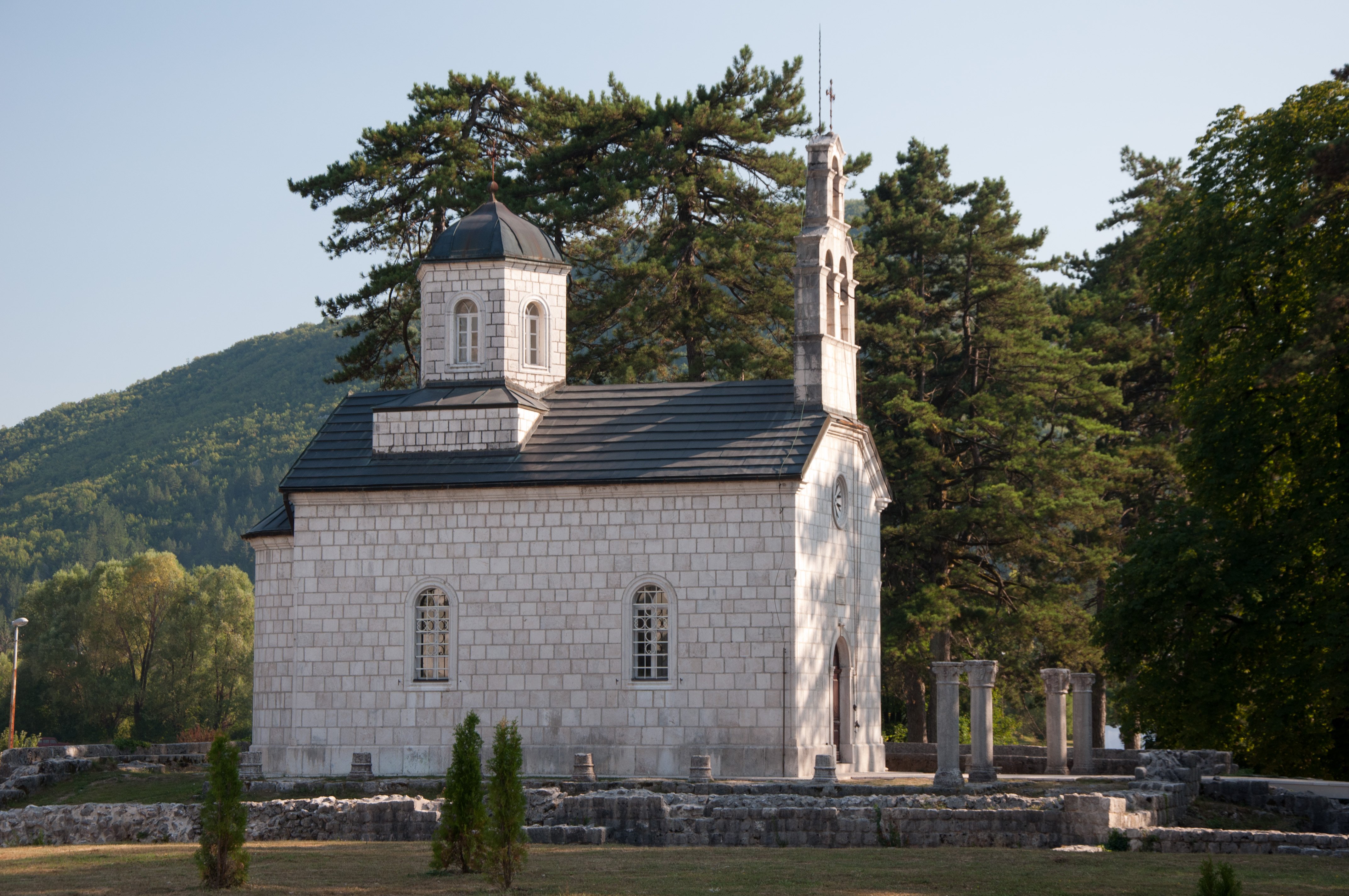
The Court Church at Cipur has a six-sided dome and a stone bell gable with three openings for bells. Remains of the earlier monastery survive around it, placing the small church within the setting of a much older religious building.
It was built at the end of the 19th century on the site of Ivan Crnojevic's monastery. Large dressed stone blocks and a clearly defined dome belong to the present church, while the surrounding remains belong to the earlier building.
Inside are an iconostasis by Russian craftsmen and the marble tombs of King Nikola and Queen Milena along the side walls. Viewing the interior depends on permitted entry.
Visiting: The iconostasis and marble tombs are inside the church. Their existence does not confirm open doors, a charge or permission to take photographs during a visit.
CANU description of the Court ChurchVlaska Church
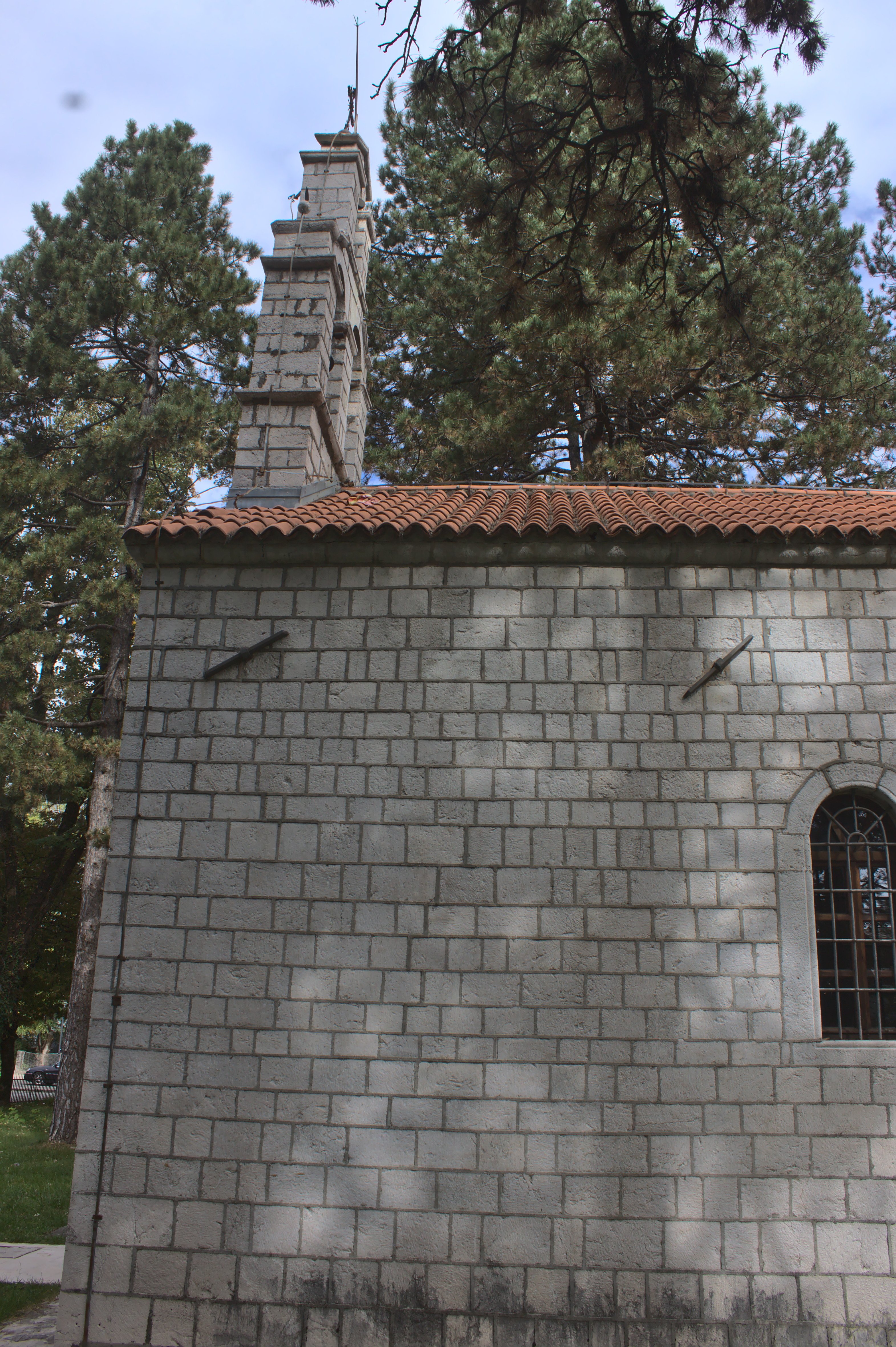
Vlaska Church is a separate stone church with a simple roof and a bell gable. Its outline is readily seen as a single building, unlike the multiple buildings of Cetinje Monastery.
It is dedicated to the Nativity of the Virgin, and the history of this religious site reaches back to the middle of the 15th century. It took its present form in 1864, so the church you see belongs to a later rebuilding of an older religious site. Inside is an iconostasis that can be viewed when entry is permitted.
Visiting: Confirm interior access to this church separately. No regular schedule, price or continuously open courtyard has been confirmed for tourist visits.
Vlaska Church in the Royal Capital's documentOrlov Krs and Danilo's Mausoleum
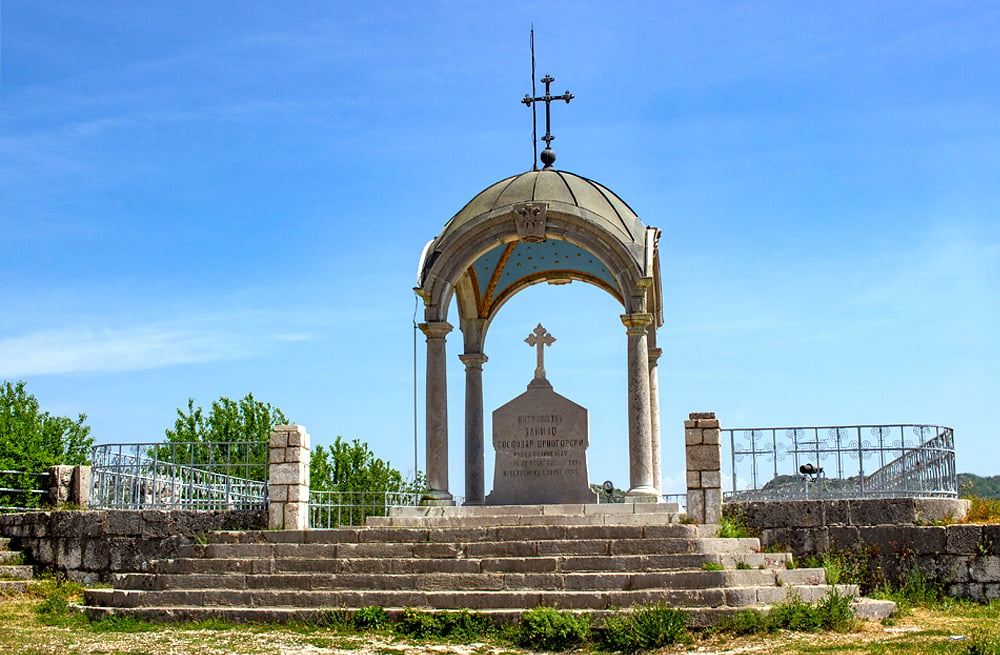
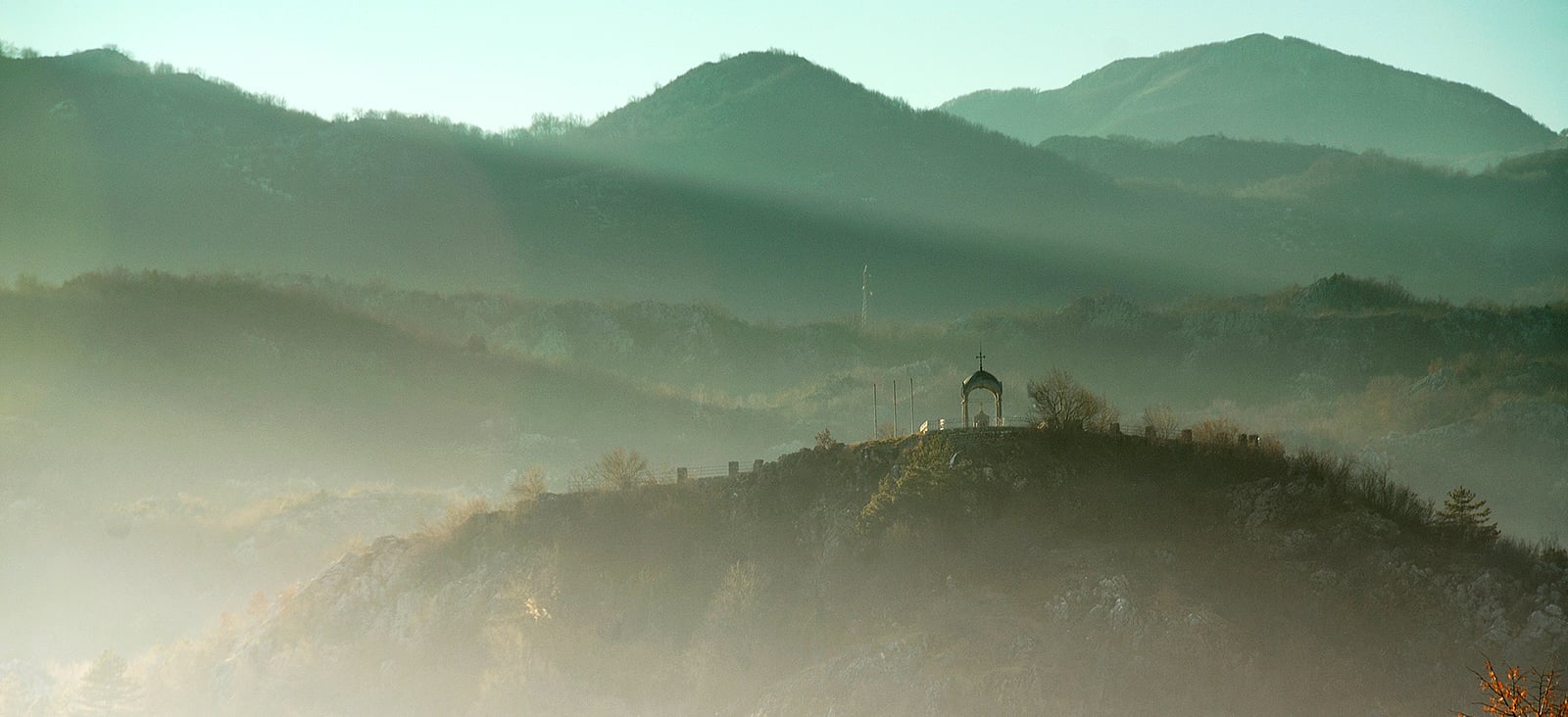
Danilo's Mausoleum on Orlov Krs has a stone sarcophagus beneath a vault supported by four columns. The open memorial stands on a level area of the hill above the Cetinje plain, separate from the buildings in town.
It was erected in 1896 in honour of Bishop Danilo, founder of the Petrovic Njegos dynasty. Orlov Krs rises on the southwestern side of the plain, close to Cetinje Monastery.
Visiting: Before ascending, check the permitted approach to the mausoleum and the condition of the path. The official description does not provide confirmed hours, a fee or an assessment of how easy the approach is.
Cetinje Tourist Organisation on Orlov KrsBlue Palace
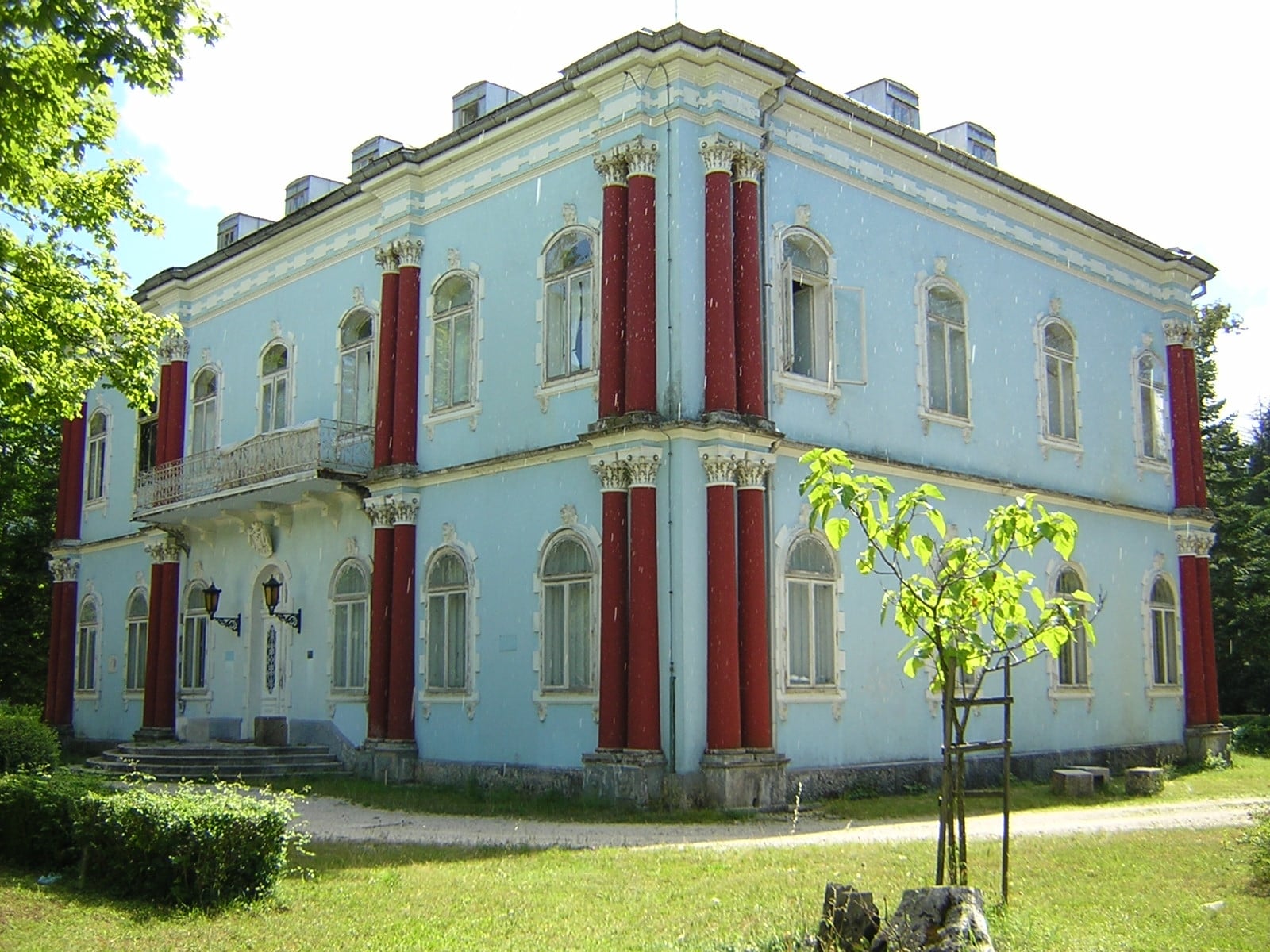
Red pilasters break up the Blue Palace's blue facade. These narrow decorative elements resemble columns attached to the wall. Together with the balcony, the contrast makes the building recognisable from outside.
The palace was built in 1894 and 1895 for Crown Prince Danilo, with Empire-style influence in the design of its facade. It now serves as a presidential residence. For tourist visits, its main interest is the exterior. The former residence has not become a museum with regular entry to its rooms.
Visiting: View the exterior from a permitted place. A special organised visit is not a regular entry programme for the presidential residence, and the approach to the building depends on the residence's access rules.
CANU description of the Blue Palace02Attractions outside town
Njegos' Mausoleum on Lovcen
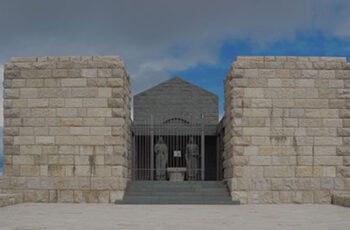
Njegos' mausoleum on Jezerski Vrh has two monumental female figures at the entrance and a seated sculpture of Njegos with a book beneath a gilded vault. These figures and the burial space give the visit the character of an artistic memorial, very different from seeing his personal belongings at Biljarda.
The mausoleum opened in 1974 and is the work of Ivan Mestrovic. The burial area contains a stone coffin. The sculptures present a later, monumental representation of Njegos.
The approach includes 461 steps and a tunnel. Reaching this place requires a separate trip to Lovcen, outside the town centre, so the ascent to the building itself remains part of the visit even when you arrive at the approach by vehicle.
Visiting: The published museum timetable lists opening from 15 April to 15 November, from 9.00 to 18.00, and closure in winter. Confirm that the site is open and check the conditions for reaching it on your chosen day.
National Museum opening hoursLipa Cave
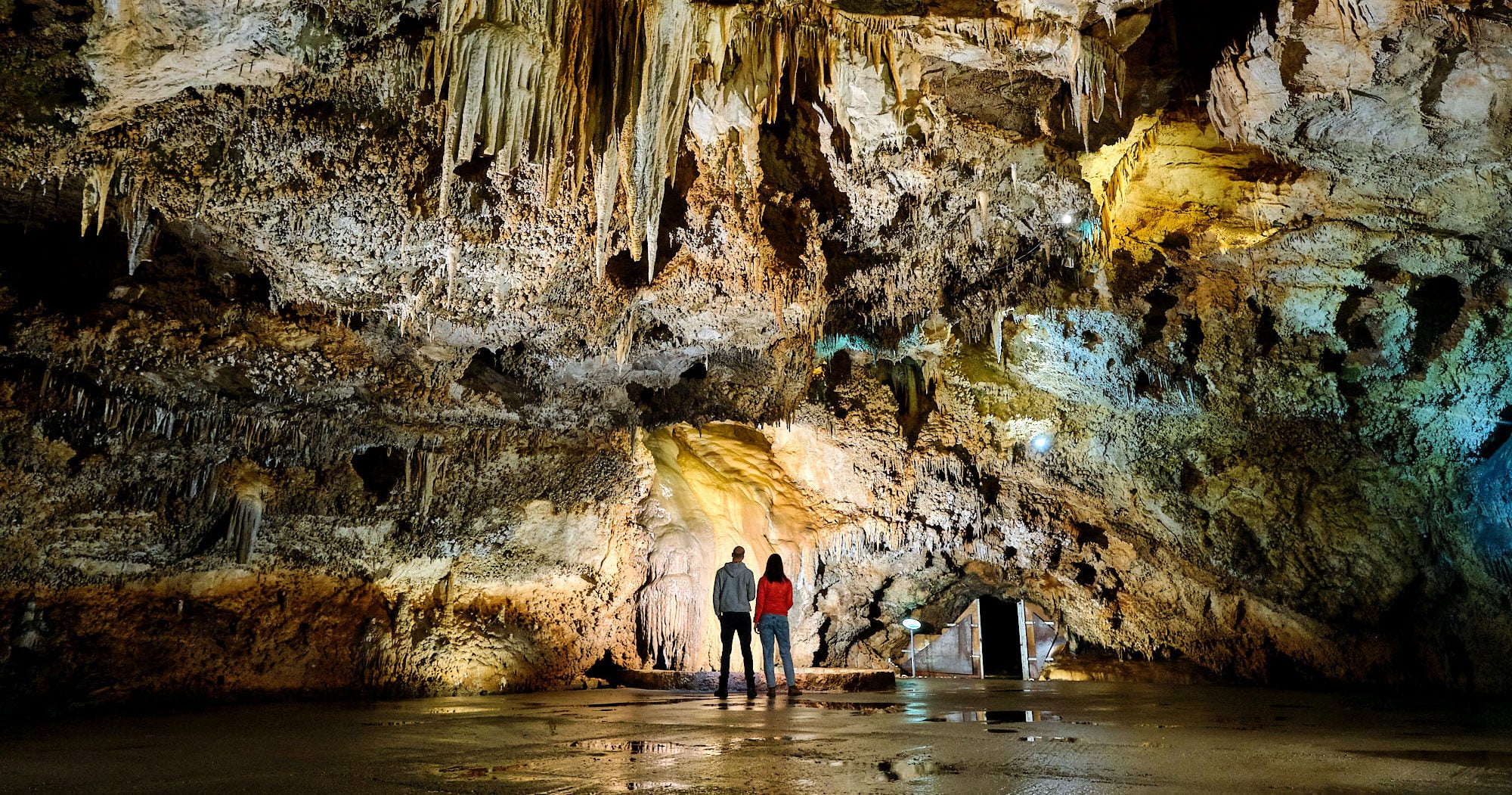
Lipa Cave has underground chambers with rock formations and a prepared visitor path. As the route passes from the main passage into larger galleries, the space changes in width and shape. The guided tour lets visitors see the formations up close.
The Cave Tour covers a selected part of the system, with the operator highlighting Njegos Hall and the Grad gallery among its spaces. The visit does not extend through every cave passage. The cave is outside town, and visits are organised for a specific departure with a guide, without independent entry.
Visiting: The tour is guided. The operator's description gives a temperature of 10 to 12 °C and recommends warmer clothing. Confirm a specific departure, because office opening hours are not a cave-tour timetable.
Lipa Cave tourIn a palace room, objects relate to the royal family's life and the presentation of its status. At the Ethnographic Museum, housing, work and dress are compared across wider society. If one residence interests you, choose the palace. If you want to explore the same theme of domestic life beyond the court's daily routine, choose the ethnographic display.
Biljarda brings you closer to the person through objects and evidence of his work. The mausoleum shows how Njegos was later represented in monumental art. Choose the museum for a biographical view, or a trip to the summit for a memorial and sculptural interpretation, with access confirmed separately.
The Blue Palace may appeal for the architecture visible from outside, within the limits of a permitted approach. A regular tourist entry programme has not been confirmed for the presidential building. In the cave, the underground space is explored on an organised tour. That choice therefore requires a confirmed departure with the operator and a guided visit.
Which building and person a name refers to
The remains of Ivan Crnojevic's monastery are at Cipur, beside the present Court Church. Today's Cetinje Monastery is another complex, beneath Orlov Krs. The church at the earlier site and the present monastery therefore occupy two different locations on the map.
Vladin Dom is the building associated with the Historical and Art museums. The Blue Palace is a presidential residence. Their former public and royal roles do not mean that they offer the same kind of visit. For an exhibition, look for the relevant museum unit in Vladin Dom.
The memorial on Orlov Krs is dedicated to Bishop Danilo, the founder of the dynasty. The Blue Palace was built for the much later Crown Prince Danilo. The name Danilo connects both places to the dynasty, but not to the same person or the same period.
What to notice on site
The relief map also includes parts of neighbouring countries. Mountain elevations and valleys continue across today's national borders, so the model depicts a wider area than Montenegro alone.
Above Bishop Danilo's sarcophagus, the vault is painted blue and decorated with gold stars. This decoration can be seen in the upper part of the open memorial, while a distant view of the hill mainly shows its dome.
The Vlaska Church iconostasis is associated with the workshop of the Dinovski brothers. If entry is permitted, you can see their work inside the church.