01Njeguški pršut and cheese
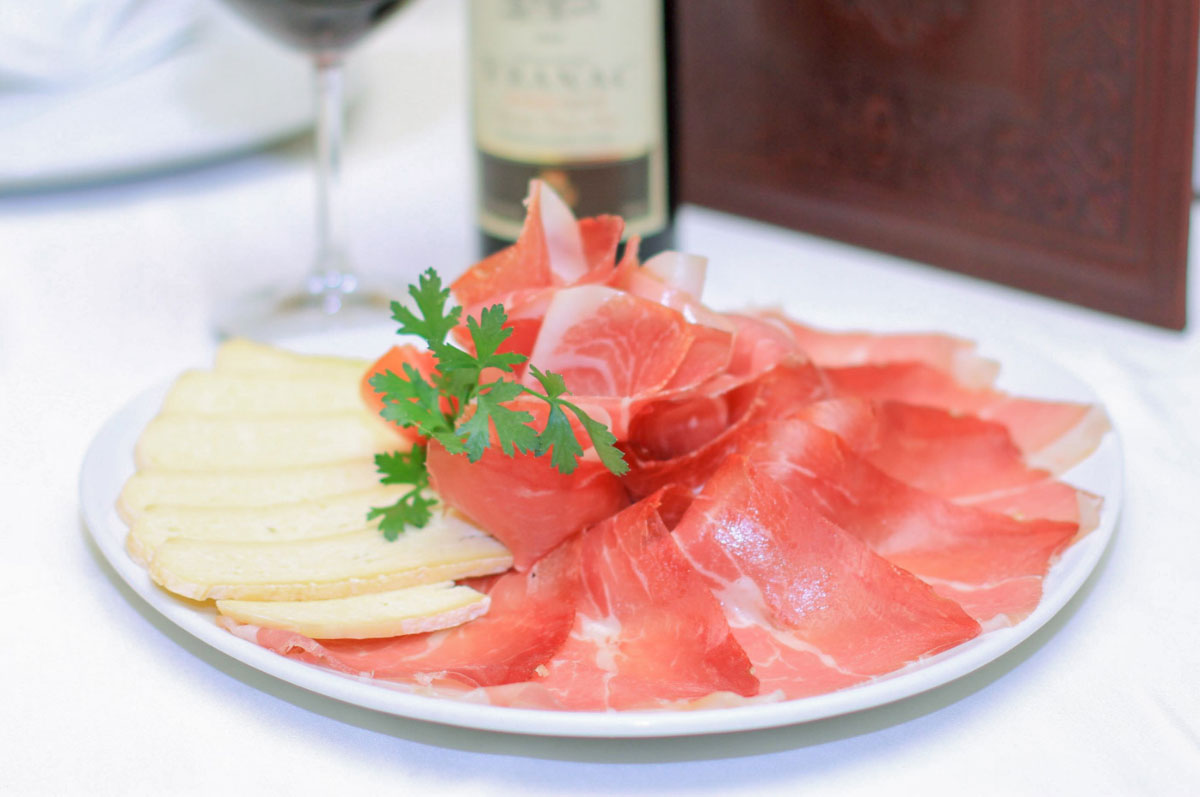
Protected pršut and mature cheese provide the clearest introduction to the food of the Cetinje area.
Njeguški pršut and cheese
Protected pršut and mature cheese provide the clearest introduction to the food of the Cetinje area.
Why Njeguški pršut has its characteristic flavour
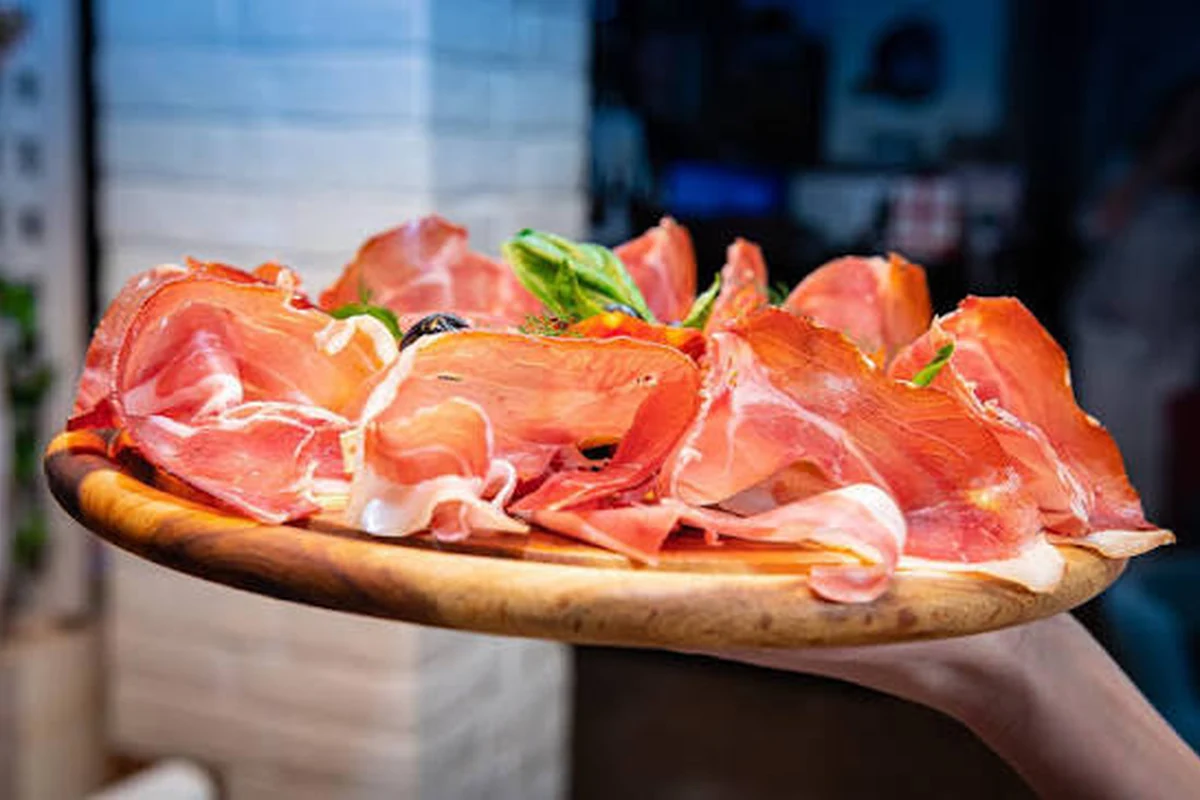
Njeguški pršut holds protected geographical status and can only be produced in the designated Njeguši area. The pork leg is rubbed with sea salt, smoked gradually over dry beechwood and left to mature for no less than nine months. Served in thin slices, it is distinctly salty with a gentle smoky note. Njeguški cheese is a full-fat semi-hard or hard cheese matured in a cool, airy place. Together they make the most recognisable cold starter from the Cetinje area.
02Njeguška kobasica, košet and kastradina
The meat, seasoning and serving method make these three cured products quite different from one another.
Njeguška kobasica, košet and kastradina
The meat, seasoning and serving method make these three cured products quite different from one another.
Njeguška kobasica, košet and kastradina explained
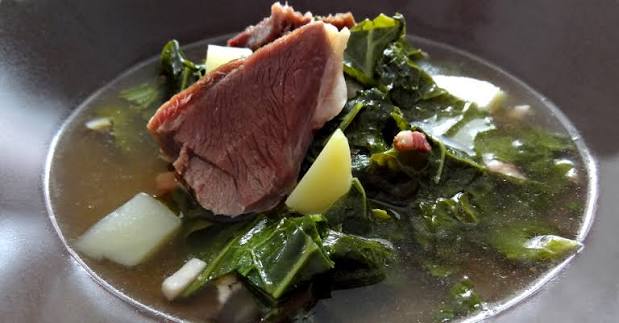
Njeguška kobasica combines pork and firm back fat with salt, pepper, garlic and paprika, so its seasoning is more pronounced than that of pršut. Košet is a dried mutton leg, usually sliced thinly or fried briefly. Kastradina is dried mutton cooked most often with white cabbage and served hot. Order kobasica or košet when you want a cold plate, and kastradina when you prefer a cooked, strongly flavoured main dish.
03Lamb in milk and meat cooked under a sač
Milk keeps lamb mild and tender, whereas a sač slowly roasts the meat together with potatoes.
Lamb in milk and meat cooked under a sač
Milk keeps lamb mild and tender, whereas a sač slowly roasts the meat together with potatoes.
Lamb in milk and lamb roasted under a sač
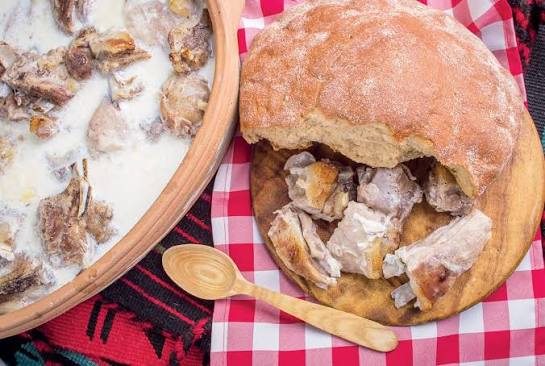
Two markedly different lamb dishes appear on Cetinje menus. Slow cooking in milk keeps the meat tender and gives it a mild taste. Under a sač, lamb or veal cooks beneath a metal lid covered with embers, usually alongside potatoes, until both develop a browned surface. Lamb in milk makes the gentler lunch, while meat under a sač is the richer and more filling choice.
04Fish from Lake Skadar
Carp, eel and bleak reflect the part of Cetinje's territory that reaches towards Lake Skadar.
Fish from Lake Skadar
Carp, eel and bleak reflect the part of Cetinje's territory that reaches towards Lake Skadar.
How Lake Skadar fish reaches Cetinje menus
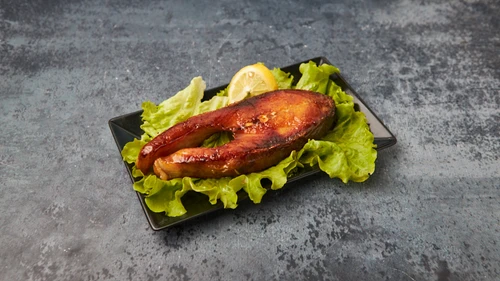
Rijeka Crnojevića and the lakeside settlements within the Old Royal Capital link Cetinje directly with Lake Skadar cooking. Carp may be roasted, marinated or cooked with onions, and some recipes add dried fruit. Eel is richer and stronger in flavour, while small bleak are commonly fried, dried or marinated. Choose roasted carp or eel as the main course, or begin with marinated carp or bleak.
05Kačamak, cicvara and raštan
Dairy products define kačamak and cicvara, while raštan is generally simmered with potatoes and cured meat.
Kačamak, cicvara and raštan
Dairy products define kačamak and cicvara, while raštan is generally simmered with potatoes and cured meat.
Kačamak, cicvara and raštan are not the same dish
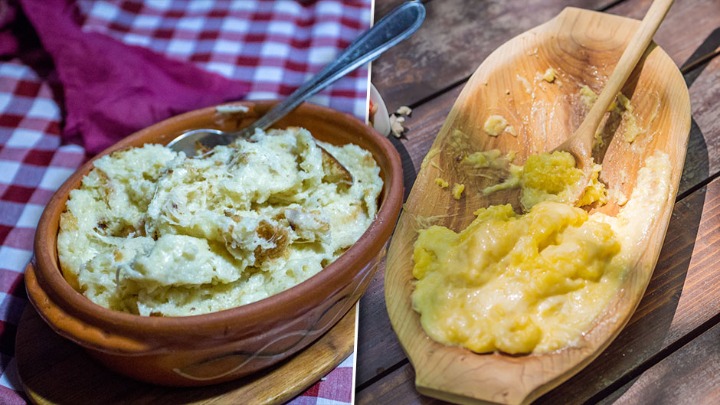
Although kačamak and cicvara are easy to find in Cetinje, both belong to Montenegro's broader mountain tradition. Smočani kačamak mixes potato or cornmeal with cheese and kajmak. Cicvara is softer, richer and based even more heavily on cheese, butter and other dairy products. Neither contains meat in its basic form, but neither is vegan. Raštan is different again and is usually simmered with potatoes and cured meat.
06Priganice, pogača and honey
Warm fried dough, homemade bread and local honey form a simple traditional breakfast.
Priganice, pogača and honey
Warm fried dough, homemade bread and local honey form a simple traditional breakfast.
Priganice, pogača and honey at breakfast
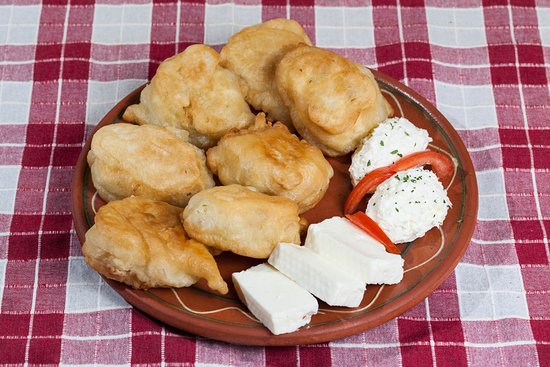
Priganice are bite-sized pieces of fried dough brought to the table warm. Cheese or kajmak turns them into a savoury breakfast, while honey or jam makes them sweet. Homemade pogača is bread served with cured meats, cheese and cooked dishes. Forest and meadow honey from the Cetinje area is particularly well suited to a plate of warm priganice.
07Wine, rakija and traditional coffee
Vranac and Krstač accompany different foods, while rakija and coffee arrive at different stages of the meal.
Wine, rakija and traditional coffee
Vranac and Krstač accompany different foods, while rakija and coffee arrive at different stages of the meal.
Wine, rakija and coffee with a Cetinje meal
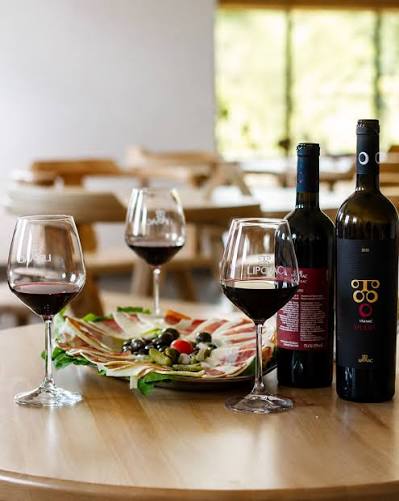
Full-bodied Vranac works well with pršut, kastradina and richer meat dishes. The fresher white Krstač is a better match for Lake Skadar fish and milder starters. Grape rakija arrives in a small glass before or after food, while traditional coffee is unfiltered and leaves grounds in the cup. These are Montenegrin rather than exclusively Cetinje drinks, but they complete the local meal naturally.
08Cetinje market and seasonal shopping
Balšića Pazar brings local products and the season's fruit and vegetables into one compact market.
Cetinje market and seasonal shopping
Balšića Pazar brings local products and the season's fruit and vegetables into one compact market.
Buying local produce at Balšića Pazar
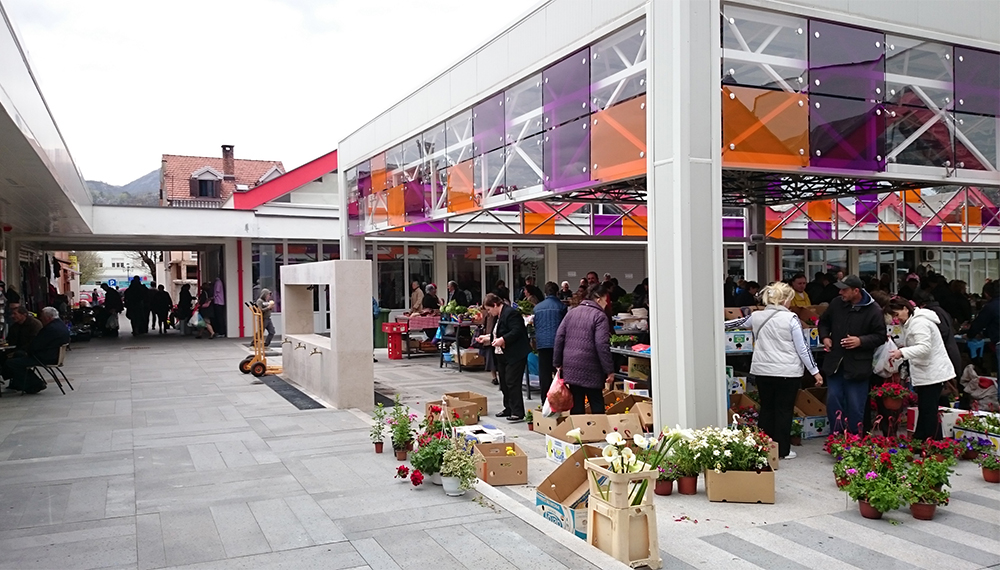
Cetinje's green market at Balšića Pazar gathers sellers of homemade cheese, honey, cured meat and seasonal fruit and vegetables. During the warmer months, fresh produce occupies more of the stalls, while cheese, honey and cured products are worth looking for among regular vendors throughout the year. If you are taking dairy or meat away, ask how it should be packed and kept during the journey.
Before booking, compare the hire price, deposit terms, luggage space and exact collection location.
Njeguši pršut is a protected product, kastradina an old cooked dish of dried mutton, and kačamak and cicvara substantial dishes built around dairy ingredients.
The name applies to pršut produced in the Njeguši area according to the prescribed curing and maturing method.
It is usually cooked with white cabbage and becomes a warming, robust meal for the colder part of the year.
Cheese, kajmak and butter provide most of the flavour, so these dishes are not suitable for a vegan diet.
A sensible order for a Cetinje meal
A cold plate from Njeguši can lead into a mountain or Lake Skadar main course and finish with priganice or traditional coffee.
The cold starter introduces the flavours of nearby Njeguši without making the main course feel excessive.
Kastradina is simmered with cabbage and tastes distinctly salty, whereas meat under a sač is roasted slowly with potatoes.
Carp, eel and bleak differ in richness and preparation, giving a choice between roasted, marinated and fried fish.
Honey turns warm priganice into dessert, while traditional coffee provides a shorter, unsweetened finish in a small cup.
Typical food prices in Cetinje
The size of a cold platter and the choice between fish and meat have the greatest effect on the bill. The examples below give a realistic per-person guide without turning the section into a menu.
Priganice with cheese and honey are about €4.40. A breakfast with eggs, cheese, pršut or sausage generally ranges from €5.50 to €8.
A portion of local pršut is around €10. A mixed Montenegrin platter with pršut, cheese and kajmak is closer to €15.
Marinated carp is approximately €15, while a stuffed meat main course with pršut, cheese and kajmak is roughly €16.50.
Pancakes are about €4.50. A slice of house cake or krempita is usually nearer €5.50.