01Durmitor products and mountain dishes
Protected skorup belongs to the Durmitor area, while kačamak and cicvara show how the same dairy products are used across the wider north.
Durmitor products and mountain dishes
Protected skorup belongs to the Durmitor area, while kačamak and cicvara show how the same dairy products are used across the wider north.
What truly comes from Durmitor and what belongs to the wider north
Durmitor skorup is a protected product from the area of Žabljak, Plužine, and Šavnik and provides the clearest culinary link with this region. Lamb under the sač is particularly associated with Žabljak and Šavnik. Kačamak, cicvara, priganice, broths, and cured meats appear locally but belong to the wider cooking of northern Montenegro or the country as a whole. In Žabljak, local skorup, cheese, sour milk, lamb, and potatoes give them their regional character.
Durmitor skorup, cheese, and sour milk
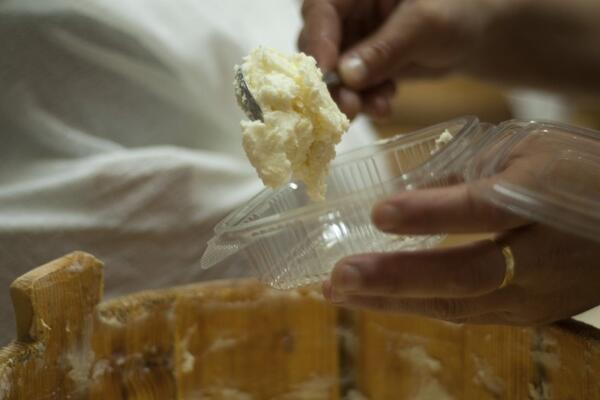
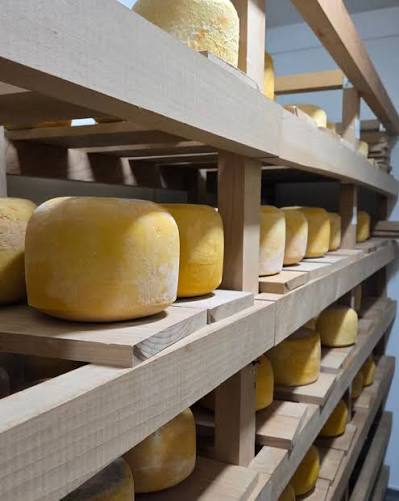
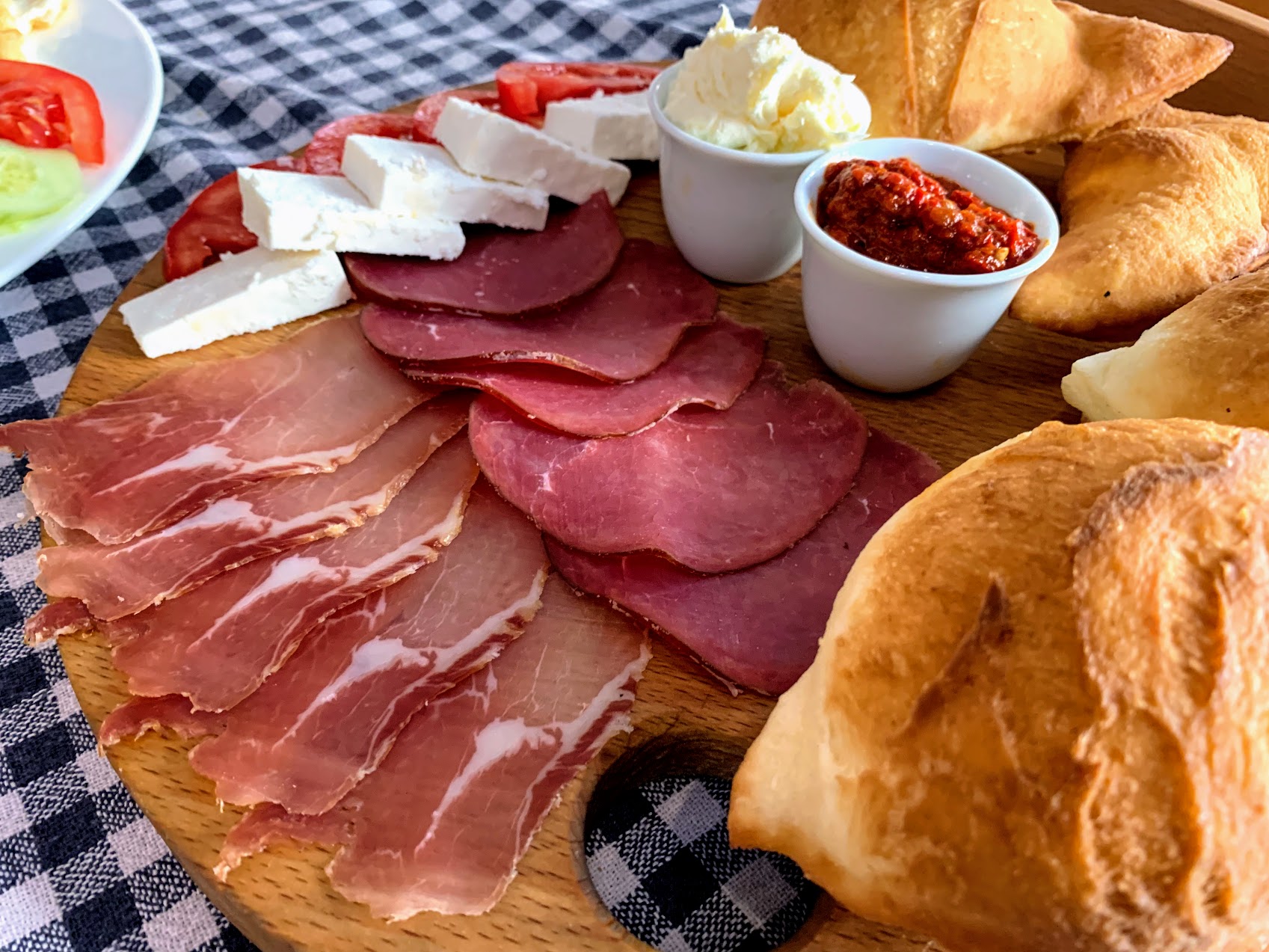
Skorup is made from the rich layer that forms on heated milk. The layers are collected, salted, and left to mature. Young skorup is milder and more spreadable, while mature skorup aged in a tub or skin has a stronger aroma, saltier flavour, and firmer body. The name Durmitor skorup applies only to a product from Žabljak, Plužine, and Šavnik. Try it with warm bread, local cheese, or kačamak; sour milk pairs well with the richer flavours.
Kačamak and cicvara
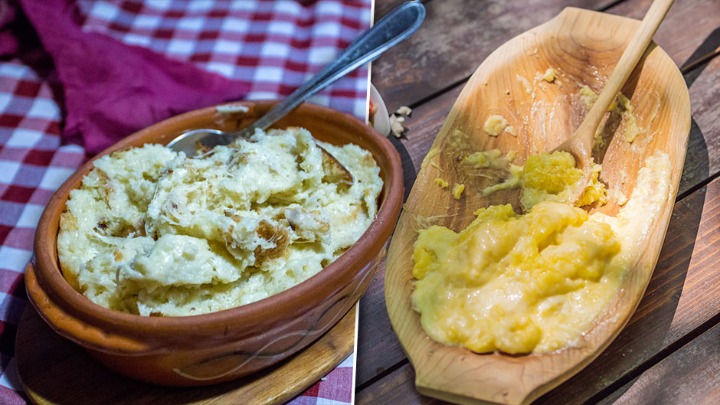
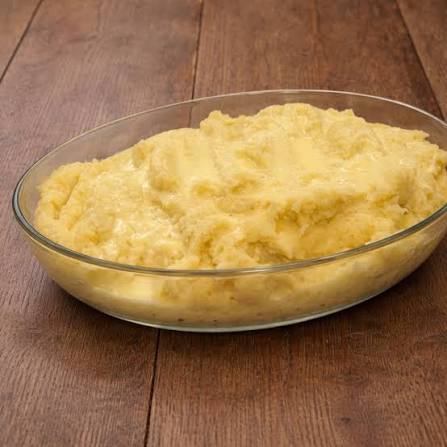
Smočani kačamak in northern Montenegro usually combines potato and cornmeal before cheese and skorup are worked through it, producing a dense and very filling dish. Cicvara begins with melted cheese and skorup to which flour is added, so it is softer, richer, and more strongly dairy-flavoured. Either can serve as a full meal and both commonly come with sour milk. In Žabljak, local cheese and Durmitor skorup give both dishes a flavour characteristic of the area.
02Lamb, mountain breakfast, and warm dishes
Lamb is the most substantial meal in this group, while priganice, pie, veal broth, and trout suit breakfast or a lighter lunch.
Lamb, mountain breakfast, and warm dishes
Lamb is the most substantial meal in this group, while priganice, pie, veal broth, and trout suit breakfast or a lighter lunch.
Lamb under the sač and lamb cooked in milk
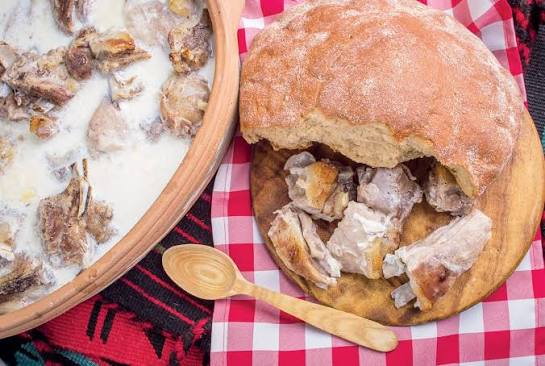
Lamb under the sač is roasted with potatoes beneath a metal lid covered with hot embers. Slow cooking tenderises the meat while the potatoes absorb its juices, making this a substantial lunch or dinner. Lamb cooked in milk is a different mountain preparation: the meat becomes exceptionally tender, the flavour is milder, and there is no roasted crust. These are not two versions of the same plate, so choose between roasted meat with potatoes and gentler lamb in a milky sauce.
Priganice, pies, and buckwheat or rye bread
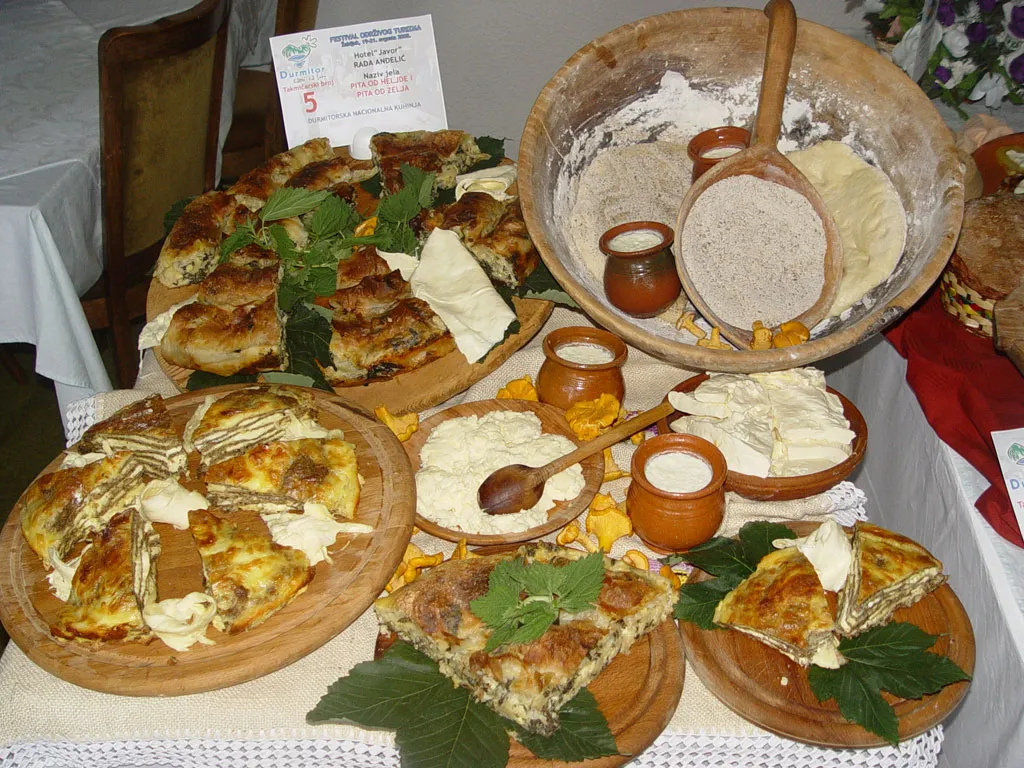
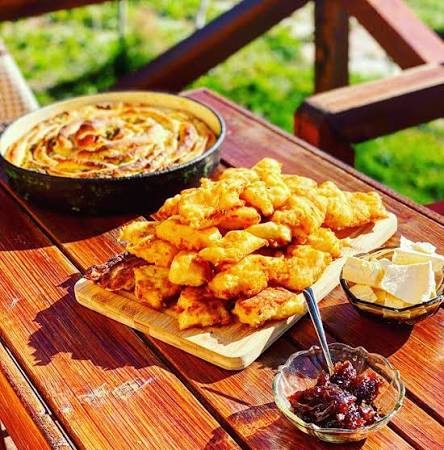
Priganice arrive warm and can be eaten with cheese and skorup or with honey and jam. Cheese pie makes a more substantial breakfast, while buckwheat pie and darker breads made with rye or mixed grains show how local grains are used around Durmitor. Buckwheat, rye, and barley are traditionally grown in the area, although their exact share in bread and pie varies by kitchen. Before a long day outdoors, priganice or pie with cheese, skorup, and sour milk make a filling breakfast.
Veal broth, veal, and trout
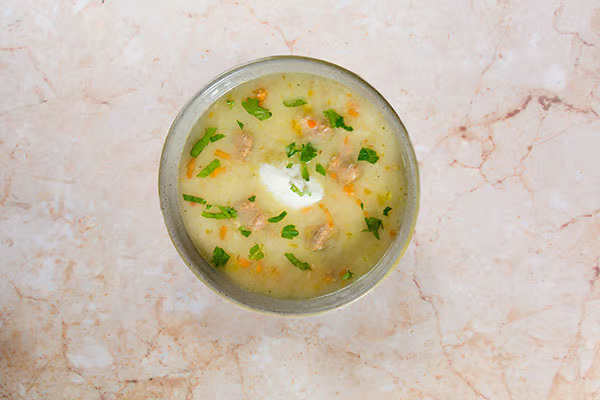
Veal broth is a simple warming start, especially after a cold or windy day. Veal may be boiled, roasted, or cooked under the sač and makes a larger main course than broth. Trout with potatoes or vegetables is a lighter alternative when you do not want a dish based on cheese, skorup, or a large serving of meat. Trout belongs to the wider mountain menu, while Durmitor skorup and local dairy products have a more direct connection with this area.
03Seasonal produce and meat-free dishes
Potatoes are an everyday staple, mushrooms and wild fruit are seasonal, and most meat-free mountain dishes still contain dairy.
Seasonal produce and meat-free dishes
Potatoes are an everyday staple, mushrooms and wild fruit are seasonal, and most meat-free mountain dishes still contain dairy.
Potatoes, mushrooms, honey, and wild fruit in season
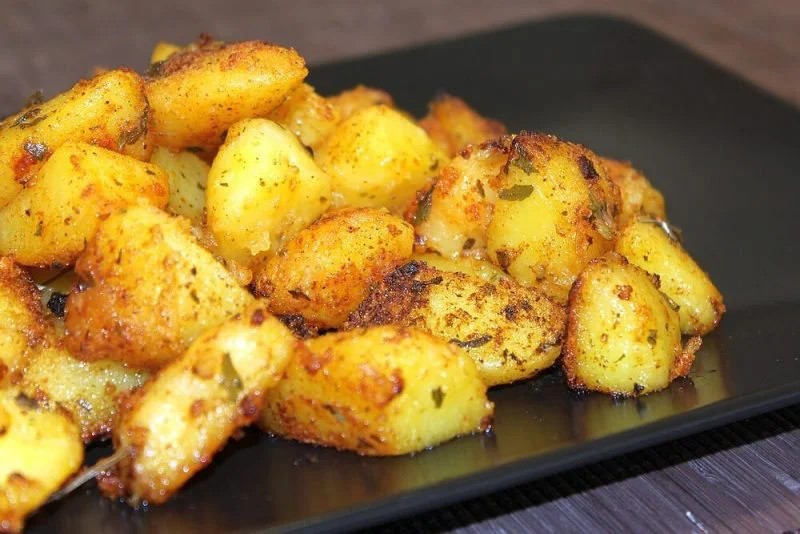
Potatoes are a constant in Durmitor cooking: they accompany dishes under the sač, appear as a side, and form part of kačamak. Mushrooms, blueberries, raspberries, cornelian cherries, and mountain honey depend on the season and are not equally available all year. When fresh produce is available, it is served as a side or used for juice, jam, and pie; winter cooking relies more on preserves, pickled vegetables, grains, and cured meat. Jam, juice, and honey are available for more of the year than fresh wild fruit and mushrooms.
Meat-free dishes and dairy ingredients
Kačamak and cicvara are prepared without meat, but they contain cheese, skorup, and often sour milk. Cheese pie, priganice with honey, mushrooms, potatoes, meat-free beans, and cabbage salads add more choice. They are not necessarily vegan: dough may contain milk or eggs, and vegetables or beans may be cooked with animal fat or meat stock. If you avoid dairy or any contact with meat, check the exact ingredients before ordering.
04Food prices in Žabljak
Priganice and sour milk make the least expensive meal, kačamak sits in the middle, and trout, veal or lamb are usually the costliest main courses.
Food prices in Žabljak
Priganice and sour milk make the least expensive meal, kačamak sits in the middle, and trout, veal or lamb are usually the costliest main courses.
How much food costs in Žabljak
Priganice generally cost about €5 to €7 and a serving of sour milk roughly €2 to €3. Kačamak is about €8 to €11, depending on portion size and the amount of dairy served with it. One hundred grams of local cheese costs approximately €3.50 to €7, while the same amount of skorup is around €5.50 to €6.50. For trout, veal, or lamb, a realistic budget is roughly €13 to €20 for a main dish, with the final price reflecting the cut, cooking method, and portion size.
Before booking, compare the hire price, deposit terms, luggage space and exact collection location.
Skorup carries the protected origin of the Durmitor region, kačamak and cicvara differ in their base, and lamb changes character with the cooking method.
The protected name belongs to a product from Žabljak, Plužine and Šavnik, and ageing gives it a firmer texture and more pronounced taste.
Kačamak usually combines potato and flour with cheese, while cicvara relies on cheese, skorup and a smaller amount of flour.
Under sač the meat roasts with potatoes, while cooking in milk keeps it softer and without a roasted crust.
What is often wrongly attributed to Žabljak
The key is to separate a protected Durmitor product from dishes that belong to the wider cooking of northern Montenegro.
Kačamak is eaten across northern Montenegro. In Žabljak, local cheese, skorup, and sour milk make the difference.
Kačamak is thicker and usually contains potato, while cicvara is softer and depends more heavily on cheese and skorup.
Durmitor skorup must come from the defined area of Žabljak, Plužine, and Šavnik.
Kačamak, cicvara, cheese pie, and skorup can be meat-free, but they are not vegan.
How much to allow for a Durmitor meal
Breakfast, dairy products, and main dishes have different prices. Separate ranges show how much to allow for each type of meal.
Allow about €5 to €7 for priganice and another €2 to €3 for sour milk.
A serving of kačamak is roughly €8 to €11, with differences in weight, cheese, skorup, and sour milk.
One hundred grams of local cheese is about €3.50 to €7, while the same amount of skorup is around €5.50 to €6.50.
Allow roughly €13 to €20 for a fish or meat main course, depending on the cooking method and portion size.