01Dishes linking Budva with Paštrovići
Makaruli, pašticada and ruštule give the Budva Riviera a local culinary identity beyond the usual seaside menu.
Dishes linking Budva with Paštrovići
Makaruli, pašticada and ruštule give the Budva Riviera a local culinary identity beyond the usual seaside menu.
What genuinely belongs to Budva
The strongest local connection is Paštrovići, the historic part of the Budva Riviera between Bečići and Buljarica. Paštrovski makaruli, the local form of pašticada and ruštule belong to that cooking tradition. Fish, shellfish, black risotto and octopus salad come from the wider Montenegrin and Adriatic coast. Njeguši prosciutto, kačamak and meat cooked beneath a sač appear frequently in Budva but originate elsewhere in Montenegro. Burek is everyday Balkan food rather than a Budva speciality.
Paštrovski makaruli
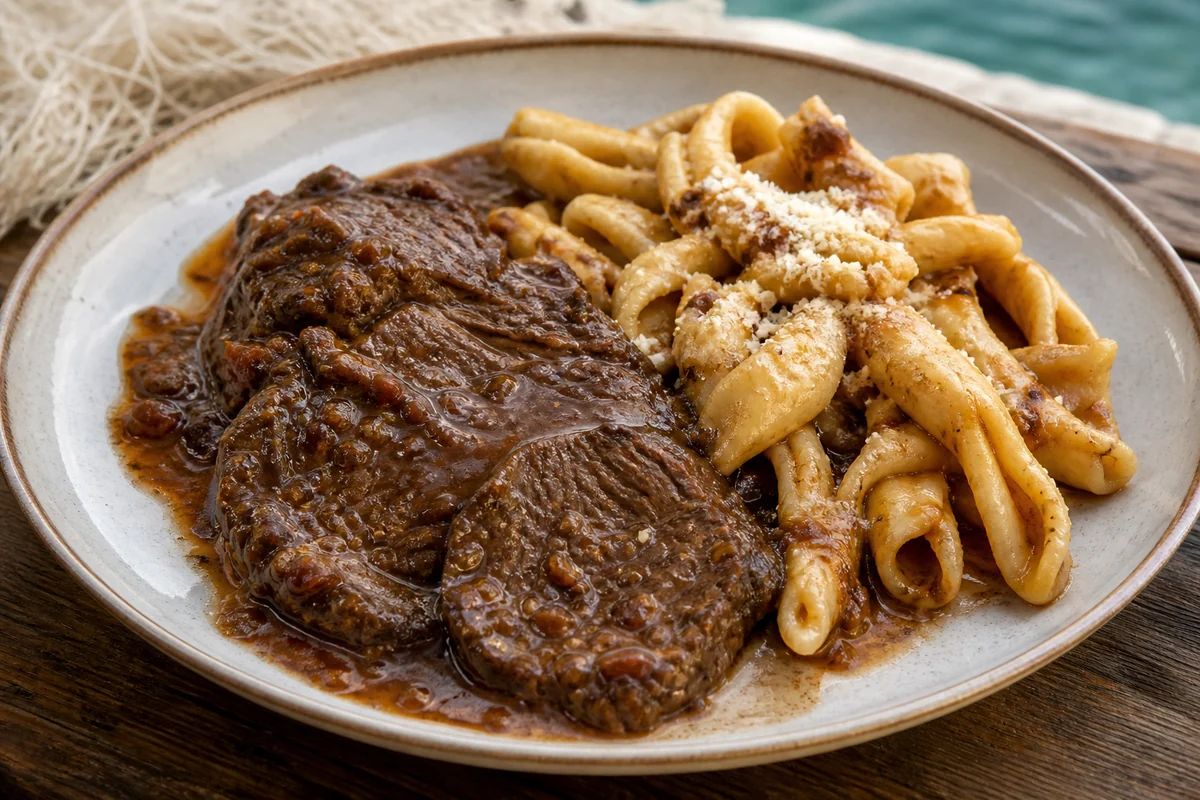
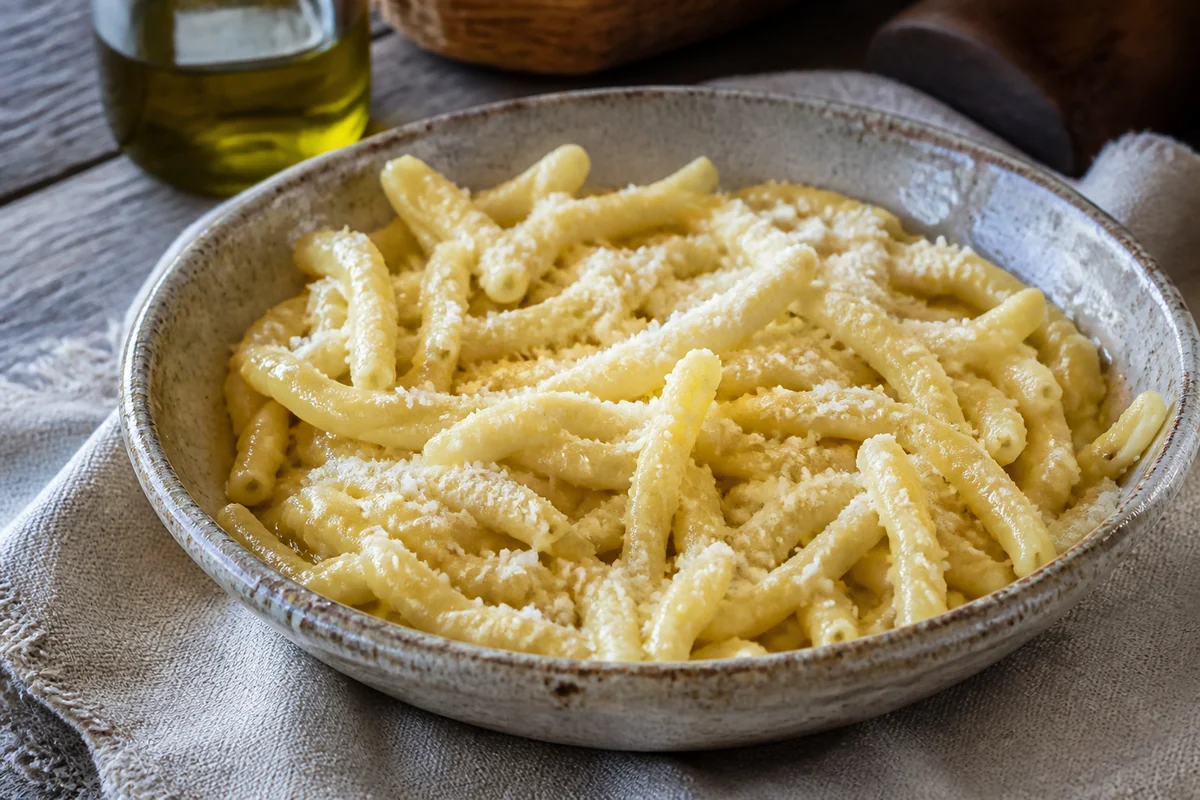
Paštrovski makaruli are pieces of hand-shaped pasta traditionally made with flour, water and salt. They can be served simply with cheese and olive oil, or beside pašticada where they absorb the dark meat sauce. Their value lies not in a complicated recipe but in their direct link to the villages above the Budva Riviera. For a dish that specifically represents this area, makaruli tell you far more than an ordinary seafood pasta.
Paštrovska pašticada with makaruli
Pašticada is beef cooked slowly in a dark, sweet-and-sour sauce of wine, vegetables and seasoning. In Paštrovići the local version is served with makaruli. It is neither a quick lunch nor something every kitchen makes each day. The beef should be tender and the sauce thick enough to cling to the pasta. If it appears on the menu, ask whether Paštrovski makaruli are included and whether the dish needs advance notice.
02Fish, shellfish and coastal starters
Adriatic fish, black risotto, buzara and olive oil represent the broader food tradition of the Montenegrin coast.
Fish, shellfish and coastal starters
Adriatic fish, black risotto, buzara and olive oil represent the broader food tradition of the Montenegrin coast.
Adriatic fish and how to order it
Sea bream, sea bass, dentex and other Adriatic fish are the clearest expression of Budva's coastal cooking. Grilling keeps the flavour clean, with Swiss chard and potatoes, vegetables or salad usually served alongside. A fillet comes as a fixed portion, whereas a whole fish is commonly chosen by weight. Before it is cooked, see the fish, its weight and the price per kilogram. You will then know both the likely portion and the final cost.
Black risotto, buzara and octopus salad
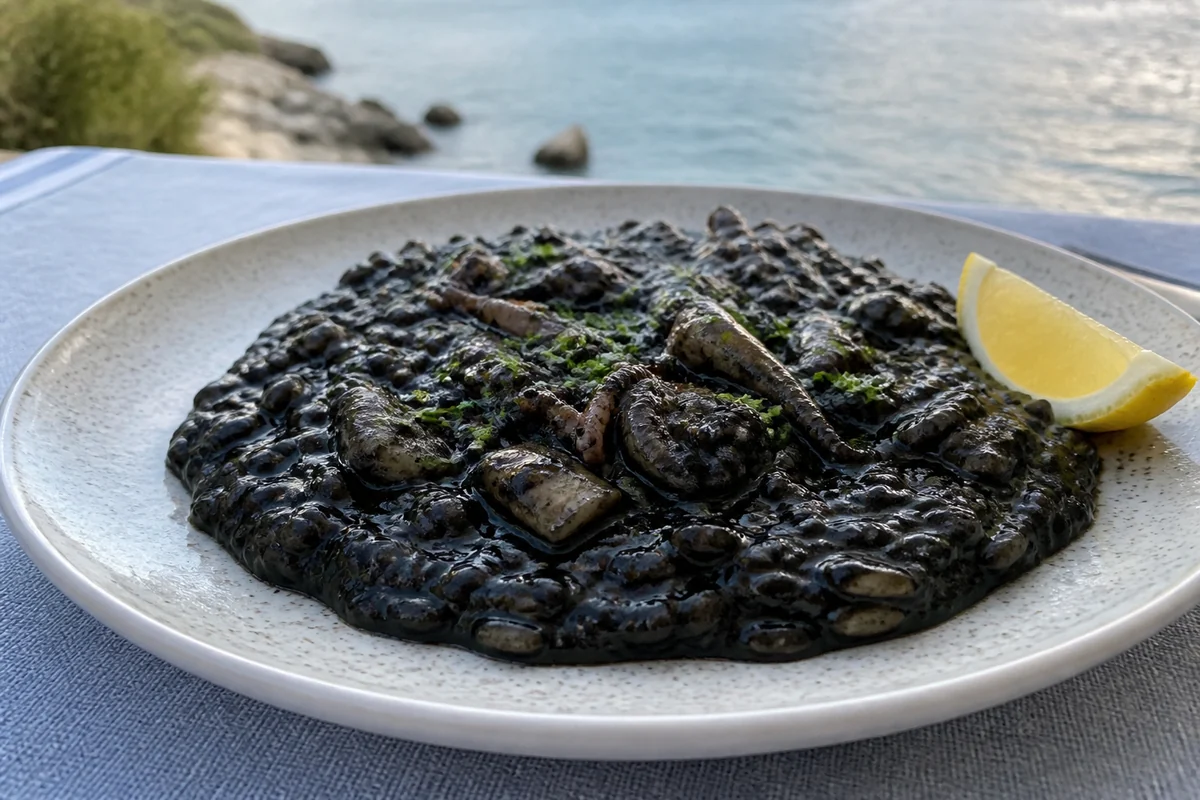
Cuttlefish ink gives black risotto its colour and deep savoury flavour. Shellfish buzara is cooked with white wine, garlic, parsley and olive oil, whilst octopus salad is a cooler, lighter starter with potato, onion or herbs. They should not be treated as interchangeable seafood dishes. Risotto is a substantial main course, buzara is eaten slowly with bread for the sauce and octopus salad suits the start of a meal or a shared table.
Cheese in oil, olives and prosciutto
Cheese preserved in olive oil, olives, prosciutto and seasonal vegetables often share a cold starter. Olives and olive oil belong to the coastal landscape, but Njeguši prosciutto comes from the Lovćen hinterland and is not a Budva product. This plate is best shared before fish or pašticada. If several starters are ordered, choose two or three contrasting flavours rather than another large platter of cured meat.
03Drinks, sweets and seasonal produce
Vranac and Krstač complement a coastal meal, ruštule preserves a Paštrovići tradition and the city market shows what people in Budva buy through the seasons.
Drinks, sweets and seasonal produce
Vranac and Krstač complement a coastal meal, ruštule preserves a Paštrovići tradition and the city market shows what people in Budva buy through the seasons.
Vranac, Krstač and rakija with a meal
Krstač is a dry Montenegrin white wine that naturally suits fish, buzara and octopus salad. Full-bodied red Vranac is better with pašticada, prosciutto and stronger meat dishes. Grape or fruit rakija arrives in a small glass before or after the meal and should be sipped. These are Montenegrin rather than specifically Budva drinks, but they complement both the local and coastal dishes.
Ruštule, figs and coastal sweets
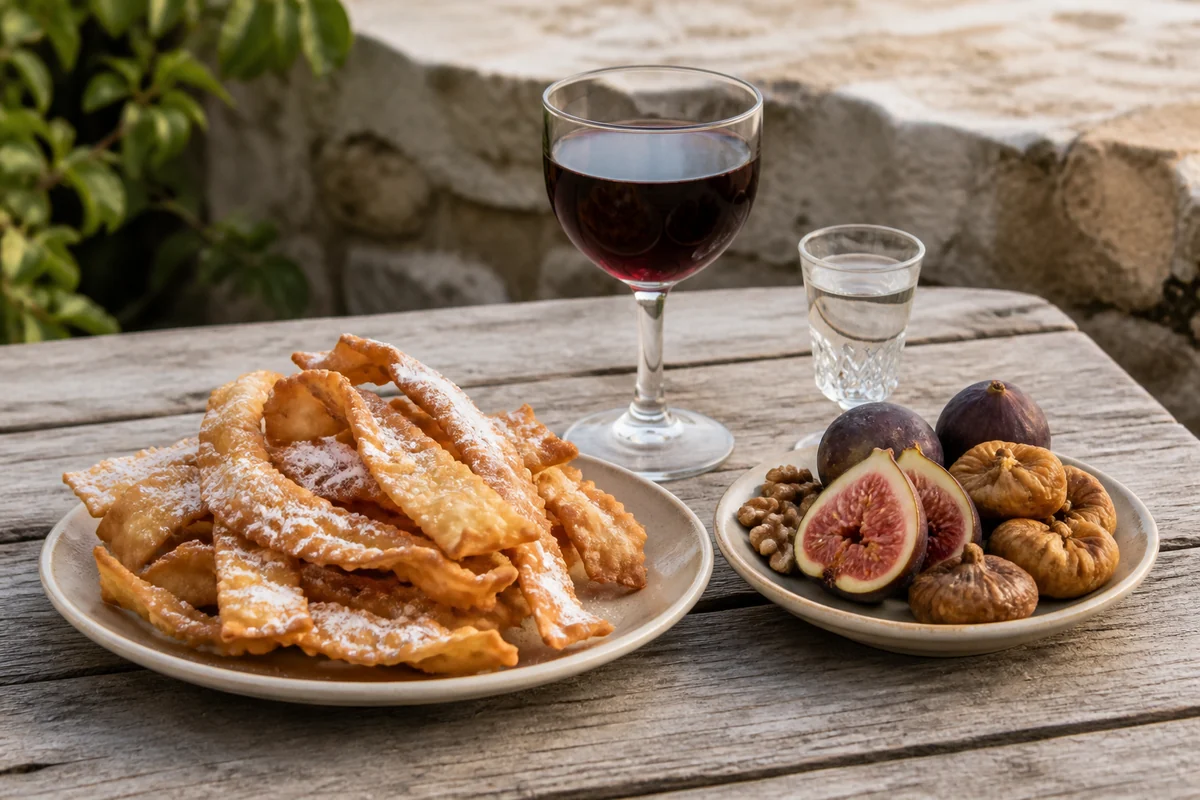
Ruštule are narrow strips of dough, twisted before frying and dusted with sugar. In Paštrovići they are associated with holidays and family gatherings, giving them a more precise local story than the baklava or pancakes found on many menus. Dried figs are another fitting coastal finish, sometimes accompanied by walnuts, honey or rakija. Choose ruštule for a dessert tied to the Budva Riviera and figs for something lighter after lunch.
Seasonal produce and Budva's city market
Tomatoes, peppers, figs, grapes, watermelon and other produce from the Montenegrin coast and hinterland are at their best in summer. Cooked dishes, cured meats and stronger cheeses are more appealing in the cooler months. The city market at 6 Filipa Kovačevića Street sells fruit, vegetables, dairy produce, cured meat, olive oil, rakija and liqueurs. It is a market for everyday shopping rather than a visitor attraction arranged for sightseeing.
04Meat-free choices and everyday meals
Local pasta, vegetables and cheese broaden the vegetarian choice, whilst burek and grilled meat remain practical Balkan food without a Budva origin.
Meat-free choices and everyday meals
Local pasta, vegetables and cheese broaden the vegetarian choice, whilst burek and grilled meat remain practical Balkan food without a Budva origin.
Vegetarian choices with a local connection
Paštrovski makaruli with cheese and olive oil can be vegetarian, as can Swiss chard with potatoes, grilled vegetables, salads, cheese in oil and priganice. Black risotto contains cuttlefish and its ink. Vegetable risotto is suitable only when it is made without fish or meat stock. Anyone avoiding all contact with animal products should also ask about cheese, butter, stock and the cooking method.
Burek and everyday food
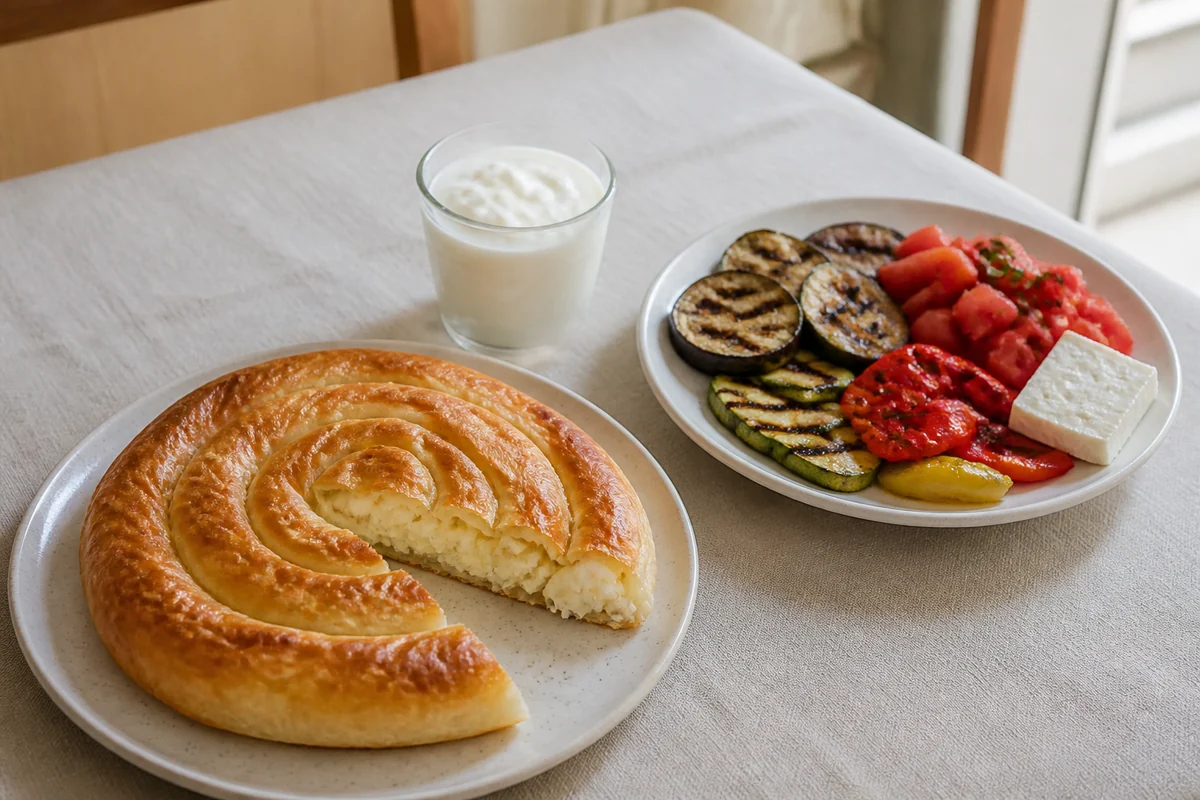
Burek with yoghurt is a quick and inexpensive breakfast before the beach or an early departure, but it is not a Budva speciality. The same is true of ćevapi, pljeskavica and much of the grill selection. These dishes are useful examples of everyday Balkan food when you want a simple meal. For one dinner centred on local cooking, makaruli with pašticada or carefully prepared Adriatic fish are the stronger choices.
Before booking, compare the hire price, deposit terms, luggage space and exact collection location.
Makaruli and pašticada connect the meal with Paštrovići, fish and shellfish represent the Adriatic, and ruštule provide the most distinctive local finish.
Makaruli with cheese and olive oil keep the pasta in focus, while pašticada adds tender meat and a thick sweet-and-sour sauce.
Grilled fish stays simple with chard and potatoes, while shellfish buzara brings wine, garlic and olive oil into an aromatic sauce.
Thin fried ribbons of dough dusted with sugar have a clearer local connection than standard pancakes or ice cream.
How much food costs in Budva
A bakery breakfast, a market shop, a simple lunch and a fish dinner sit in very different price ranges. Use these figures for planning because the season, location and daily catch all affect the final bill.
Burek or another pastry with yoghurt usually costs about €2 to €4. Adding coffee in a café generally brings the morning total to roughly €4 to €7.
Seasonal fruit and vegetables often cost around €2 to €5 per kilogram, whilst local cheeses may be roughly €9 to €18 per kilogram. The product and season make a considerable difference.
Allow about €10 to €18 per person for pasta, risotto, grilled meat or a similar main course. A salad and drink usually bring the bill to around €15 to €25.
Fish soup and simpler starters may begin near €6, whilst risotto, shellfish and main courses are often €12 to €30. The final cost of a whole fish depends on its weight and the price per kilogram.