01Žućenica and the foundations of Boka Bay cuisine
Žućenica is the food most closely associated with Tivat, while vegetables, legumes, olive oil and herbs reveal the foundations of traditional Boka Bay cooking.
Žućenica and the foundations of Boka Bay cuisine
Žućenica is the food most closely associated with Tivat, while vegetables, legumes, olive oil and herbs reveal the foundations of traditional Boka Bay cooking.
What is specific to Tivat and what belongs to the wider region
Žućenica has the strongest direct association with Tivat. Fish from the bay, buzara, brodet, black risotto, chard, olives and homemade pasta belong to Boka Bay as a whole. Luštica prosciutto, cheese in oil and figs come from the immediate surroundings. Njeguši prosciutto, kačamak, cicvara and meat cooked under a sač represent other parts of Montenegro, while burek and ćevapi are everyday Balkan food. For a meal that genuinely reflects the destination, begin with žućenica, fish or shellfish before adding a mountain speciality.
Žućenica as Tivat’s signature green
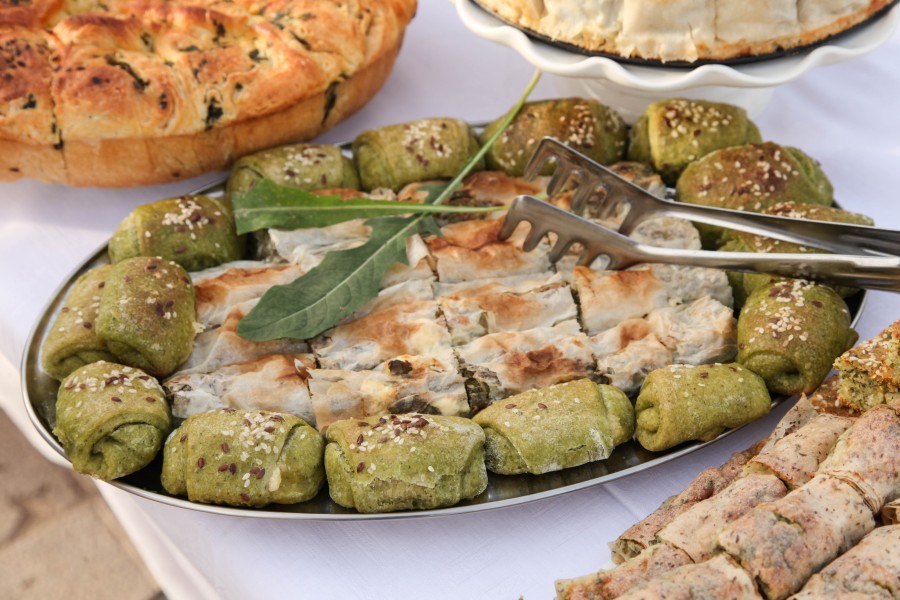
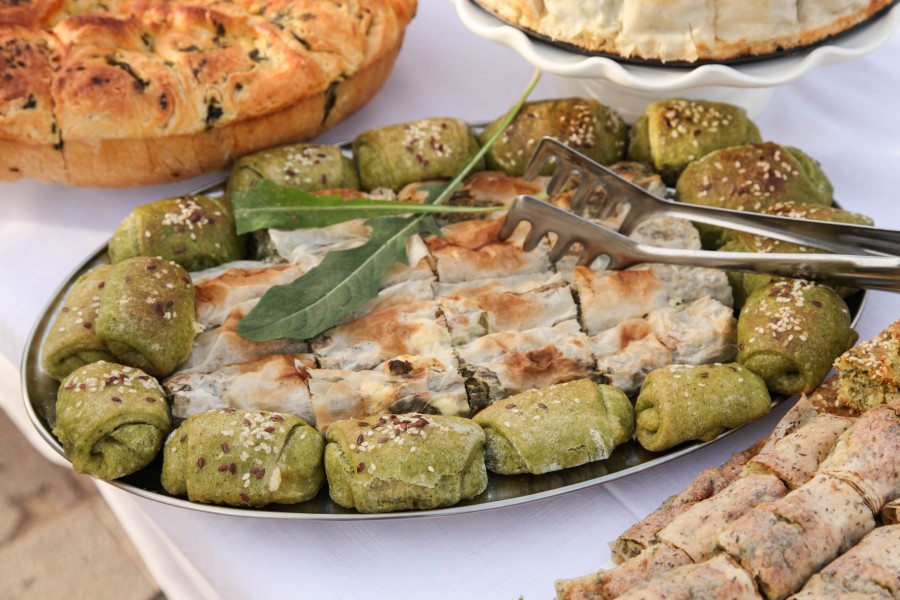
Žućenica is wild coastal chicory with a pleasantly bitter flavour. In its simplest form it is briefly boiled, drained and dressed with olive oil and garlic, often with potatoes. It may also appear in pies, pasta, spreads or egg dishes, although those versions depend on the kitchen and season. Tivat has a gastronomy festival dedicated to the plant, giving it a stronger local connection than most dishes on the town’s menus. Try it as a salad or side dish, where its flavour remains easiest to recognise.
Vegetables, legumes and Boka Bay herbs
Older Boka cooking did not begin with a large piece of meat. Chard with potatoes, broad beans, kidney beans, chickpeas, cabbage, aubergine, courgette and seasonal salads dressed with olive oil and garlic formed much of the table. Parsley, basil, rosemary, bay leaf, sage, thyme and oregano added flavour to simple food. This matters today because it explains why chard and potatoes are the standard partner for fish. For a light local meal, combine žućenica or chard with vegetables, olives, cheese and bread.
02Fish and seafood from the bay
The daily catch determines which fish goes on the grill, while brodet, buzara and black risotto show different ways of cooking fish and shellfish.
Fish and seafood from the bay
The daily catch determines which fish goes on the grill, while brodet, buzara and black risotto show different ways of cooking fish and shellfish.
Grilled or poached daily catch
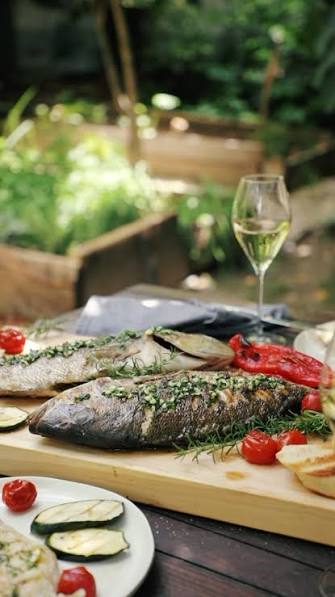
Sea bass, sea bream, red mullet, sardines or another fish from the day’s catch may be grilled with olive oil, garlic, parsley and lemon. The local lešo preparation is gentler because the fish is poached with vegetables and retains more of its juices. Look at the daily selection before choosing because species and weight change from one catch to the next. Whole fish is often charged by the kilogram. Confirm its weight and final price before cooking, then choose the grill for a roasted flavour or lešo for softer flesh.
Brodet, fish soup and small oily fish
Brodet slowly cooks fish with onion, wine, tomato and olive oil and normally comes with polenta. Fish soup is lighter and works as the first course, while sardines and other small oily fish may be fried, grilled or stewed. Small fish has a stronger taste and is usually less expensive than large white fish. For a substantial but manageable lunch, pair fish soup with a serving of small fish. Choose brodet when it was made that day and you want a thicker sauce with polenta.
Mussels, octopus, cuttlefish and black risotto
White buzara cooks mussels with wine, garlic, parsley and olive oil, while the red version adds tomato. Octopus most often appears in a chilled potato salad or as a slowly cooked main course. Cuttlefish contributes the ink, colour and deep seafood flavour to black risotto. None of these dishes belongs only to Tivat, but together they are central to Boka Bay and Adriatic cooking. Choose mussels for sharing, octopus salad as a cold starter, or black risotto when you want a more intense seafood dish.
03Pasta and food from Luštica
Homemade pasta carries the Mediterranean influence, while prosciutto, cheese in oil, olives and figs connect Tivat with Luštica.
Pasta and food from Luštica
Homemade pasta carries the Mediterranean influence, while prosciutto, cheese in oil, olives and figs connect Tivat with Luštica.
Homemade pasta, gnocchi and tomato salsa
The Venetian influence on Boka Bay is clearest in pasta, gnocchi and slow-cooked sauces. Homemade pasta may come with fish, shellfish, vegetables or a simple salsa made with ripe Grbalj tomatoes. Gnocchi can accompany a meat sauce, pašticada or lighter coastal ingredients. If handmade pasta matters to you, ask whether the kitchen makes it and which sauce was prepared that day. For a more local choice, favour a simple tomato, olive oil and herb sauce or seafood from the bay.
Luštica prosciutto, cheese in oil, olives and figs
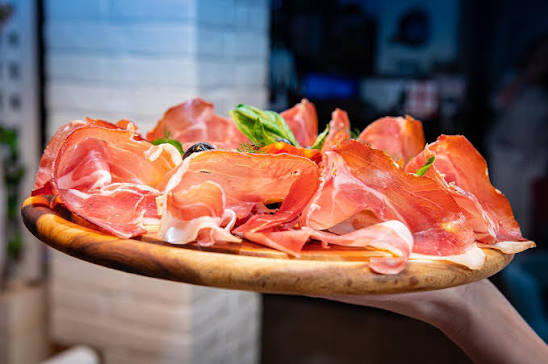
Luštica sits across Tivat Bay and supplies some of the surrounding area’s most recognisable foods. Luštica prosciutto is served in thin slices, cheese matures in olive oil, and olives, rustic bread and dried figs complete the cold plate. These products are best shared as a starter rather than ordered as a full meal. Check whether the menu names Luštica as the source of its prosciutto or cheese. A small plate with olives and bread is enough for two before a main course.
04Traditional sweets, markets and local drinks
Seasonal produce from Tivat’s markets, traditional sweets and local drinks complete the meal, while žućenica, chard, legumes and cheese provide useful meat-free choices.
Traditional sweets, markets and local drinks
Seasonal produce from Tivat’s markets, traditional sweets and local drinks complete the meal, while žućenica, chard, legumes and cheese provide useful meat-free choices.
Fritule, hroštule and traditional Boka Bay sweets
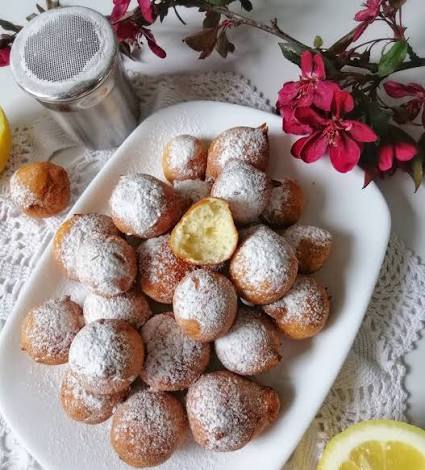
Fritule are soft balls of fried dough. Hroštule are thinner, crisp and dusted with sugar. Boka Bay also has Pinca or Fugaca, sponge cake, cherry and apple pies, almond cake and sweets made from dried figs. Some are linked with holidays and are not available every day. Choose fritule for soft dough and hroštule with coffee when you prefer a light, crisp dessert. Almond cake and dried-fig sweets are best when the kitchen identifies them as house-made.
Tivat markets, seasonality and meat-free food
The fish market is at Trg magnolija and the green market is in Seljanovo. Fish depends on the catch, while fruit and vegetables follow the season. Tomatoes, peppers, courgettes, cucumbers, grapes, peaches and watermelon are common in summer, but wild greens and žućenica do not have the same availability throughout the year. Build a meat-free meal around chard or žućenica with potatoes, legumes, grilled vegetables, olives and cheese. If you avoid fish, ask whether risotto or pasta contains fish stock.
Wine, bevanda, rakija and coffee
Dry white wines, including Krstač, suit fish, buzara and black risotto, while Vranac works better with prosciutto and meat. Bevanda is wine diluted with water and traditionally accompanies a simple meal. Grape rakija comes in a small glass, and Boka Bay also produces walnut, sour cherry, lemon and myrtle liqueurs. Domestic coffee is unfiltered, with grounds left at the bottom of the cup. Choose a dry white for your first seafood meal and leave a sweet liqueur for fritule, hroštule or almond cake.
Before booking, compare the hire price, deposit terms, luggage space and exact collection location.
Žućenica has the strongest tie to Tivat, fish and shellfish represent Boka Bay, and pršut, cheese in oil, olives and figs connect the city with Luštica.
Its clearest form is boiled with potato, olive oil and garlic, while pies and pasta offer a more contemporary interpretation.
Grilled fish has a seared surface and olive-oil aroma, while poached fish remains softer and milder.
The combination balances salty cheese and cured ham with olives and shows Tivat’s culinary link with the nearby peninsula.
How much food costs in Tivat
Prices differ sharply between the market, a bakery, an ordinary restaurant and the marina. Season, the catch and location can change the bill, so treat these ranges as a guide.
Burek or another pastry with yoghurt usually costs about €2 to €4. Add coffee and a simple breakfast comes to roughly €4 to €7.
At Tivat market, small fish is about €5 per kilogram and other fish can reach roughly €30. Squid may be around €30 per kilogram, while much seasonal produce sits near €2 to €5.
Current menus put fish soup at roughly €5 to €7, buzara mussels around €14 to €16 and black risotto most often at about €15 to €22.
Outside the most expensive marinas, budget roughly €15 to €30 per person for a fish or other main course. Whole fish by weight, wine and several courses can take the total much higher.