01Food that belongs to Boka Bay
The difference between Boka dishes and general Montenegrin food begins with buzara mussels and fish stew made from one type of small fish.
Food that belongs to Boka Bay
The difference between Boka dishes and general Montenegrin food begins with buzara mussels and fish stew made from one type of small fish.
What belongs to Boka Bay and what is simply common in Kotor
Mussels, Boka fish stew, Kotor pašta, Dobrota cake and Carnival gnocchi have the clearest ties to Kotor and the bay. Black risotto, squid, octopus, pašticada and grilled fish belong to the wider Adriatic kitchen that Kotor shares with the neighbouring coast. Njeguši prosciutto, cheese, kačamak and meat cooked under a sač represent mountain Montenegro, while burek and ćevapi are everyday Balkan food. Use that distinction to make your first meal about the bay rather than ordering a national tasting plate at random.
Mussels in white or red buzara
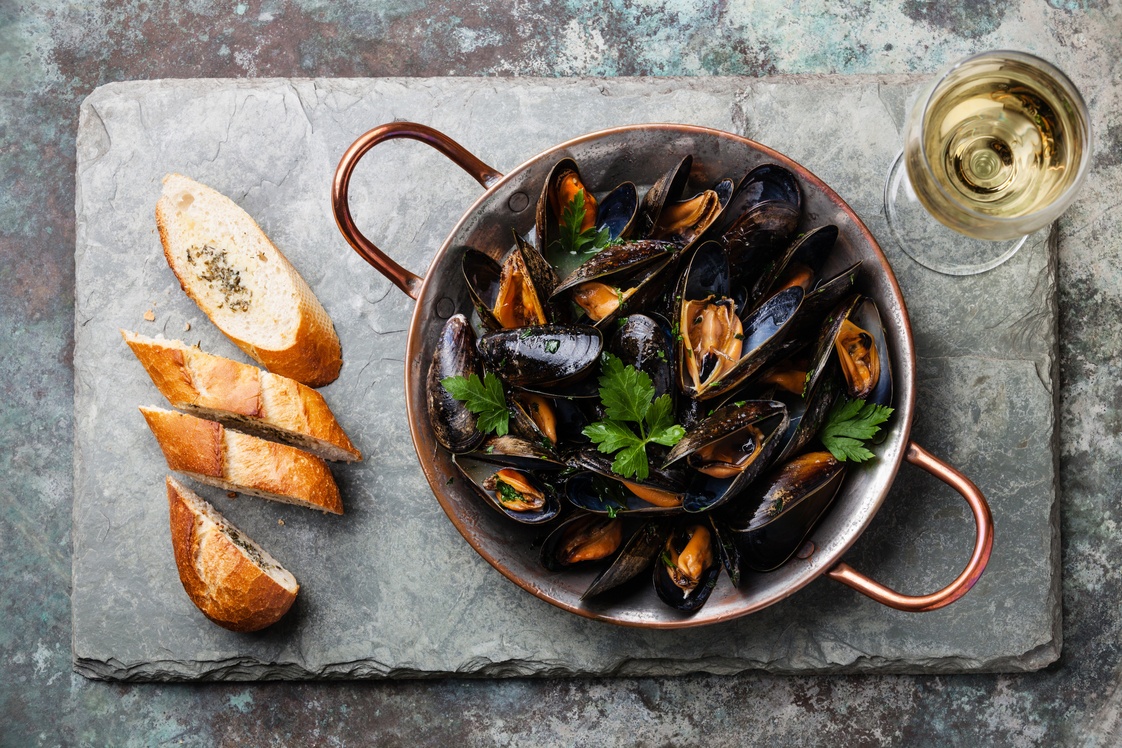
Mussels are cultivated in sheltered parts of Boka Bay and are most often cooked in buzara. The white version uses white wine, garlic, parsley and olive oil, allowing the shellfish to remain the main flavour. Red buzara adds tomato and produces a fuller sauce. The pan normally comes with bread for soaking up the liquid at the bottom. Choose white buzara for your first taste of local mussels and red when you want a stronger sauce and a more substantial meal.
Boka fish stew made with small fish
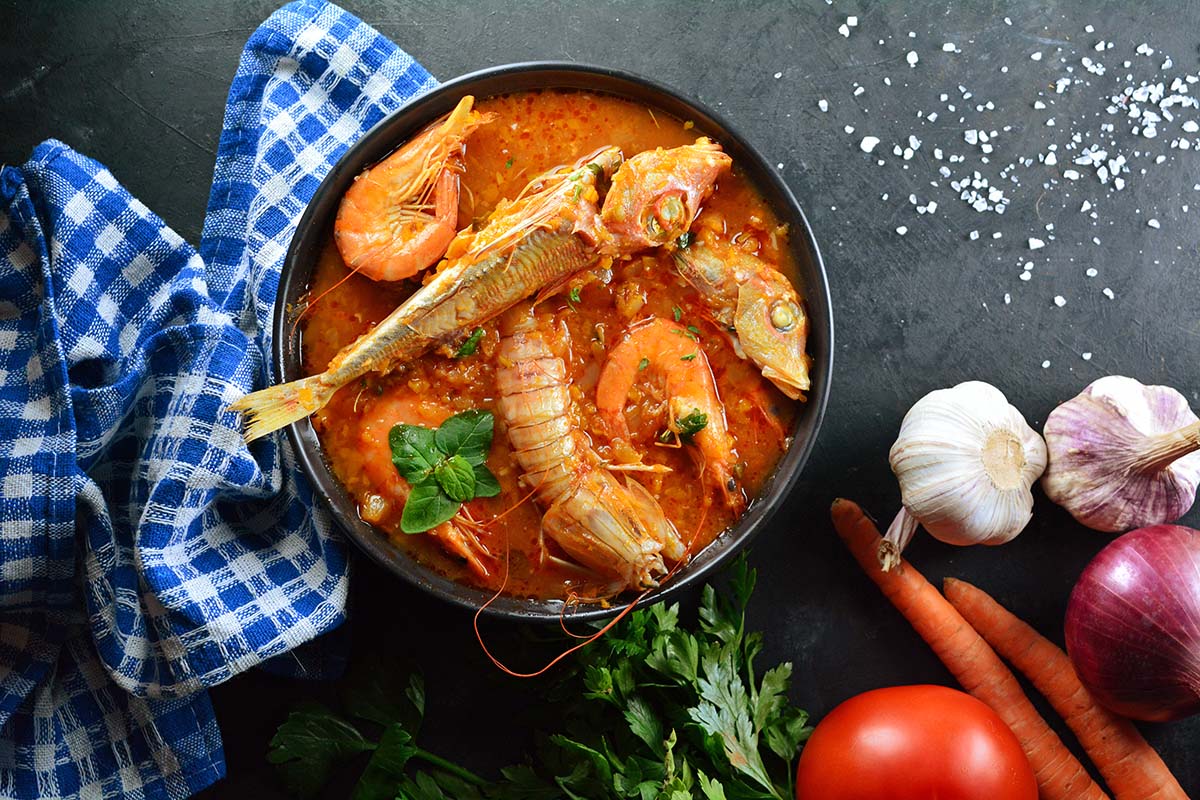
Boka fish stew began as a fisherman's dish made with one type of smaller fish that had not sold at the market. Traditional versions use conger eel, sardines or other small local fish with plenty of onion, garlic, olive oil, white wine and a little tomato. Slow cooking turns the fish and onions into a thick sauce, usually served with polenta. Unlike many Adriatic brodets that mix several species, the Boka version keeps to one. Order it when it has been prepared that day, because it cooks slowly and is not a quick fish soup made to order.
02Fish, risotto and old pasta dishes
The day's catch guides the choice from the grill, while black risotto, gnocchi and pašticada show Kotor's Mediterranean layer.
Fish, risotto and old pasta dishes
The day's catch guides the choice from the grill, while black risotto, gnocchi and pašticada show Kotor's Mediterranean layer.
Grilled fish and gently poached scorpionfish
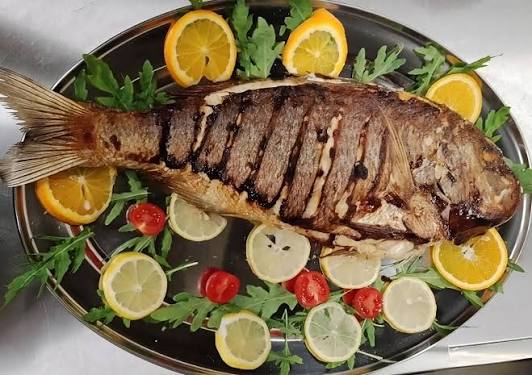
The daily catch matters more than a fixed species when ordering grilled fish. Sea bass, sea bream, red mullet or another Adriatic fish is cooked simply with olive oil, garlic, parsley and lemon, with chard and potatoes as the classic side. Scorpionfish prepared lešo is gently poached and keeps more of its own juices. Whole fish is often priced by weight, so check the weight and final cost before it is cooked. Choose the grill for a stronger roasted flavour and lešo for tender fish and a lighter meal.
Black risotto, squid and octopus
Black risotto gets its colour and seafood flavour from cuttlefish ink, while the rice absorbs stock, wine and the juices from the pan. It is an Adriatic dish rather than something created only in Kotor, but it represents the coastal side of local menus well. Squid is usually grilled or fried, while octopus appears as a chilled salad or a slow-roasted main course. Choose black risotto for a deeper seafood flavour, squid for a simpler plate and octopus when it is part of the fresh daily offering.
Gnocchi, pašticada and makaruli
Boka Bay cooking preserves a strong Mediterranean influence through handmade pasta and slow-cooked sauces. Carnival gnocchi are closely tied to Kotor's festivities, while pašticada is beef cooked slowly in a dark, sweet-and-sour sauce and normally served with gnocchi. Makaruli are simpler homemade pasta that may come with cheese, olive oil or a meat sauce. When a menu offers homemade gnocchi or makaruli, ask which sauce is made in the kitchen, because that determines whether you are getting an older local dish or standard restaurant pasta.
03Kotor desserts and food from Lovćen
Kotor pašta and Dobrota cake belong to the city and the bay, while prosciutto, cheese and sač come from the mountain hinterland.
Kotor desserts and food from Lovćen
Kotor pašta and Dobrota cake belong to the city and the bay, while prosciutto, cheese and sač come from the mountain hinterland.
Kotor pašta and Dobrota cake
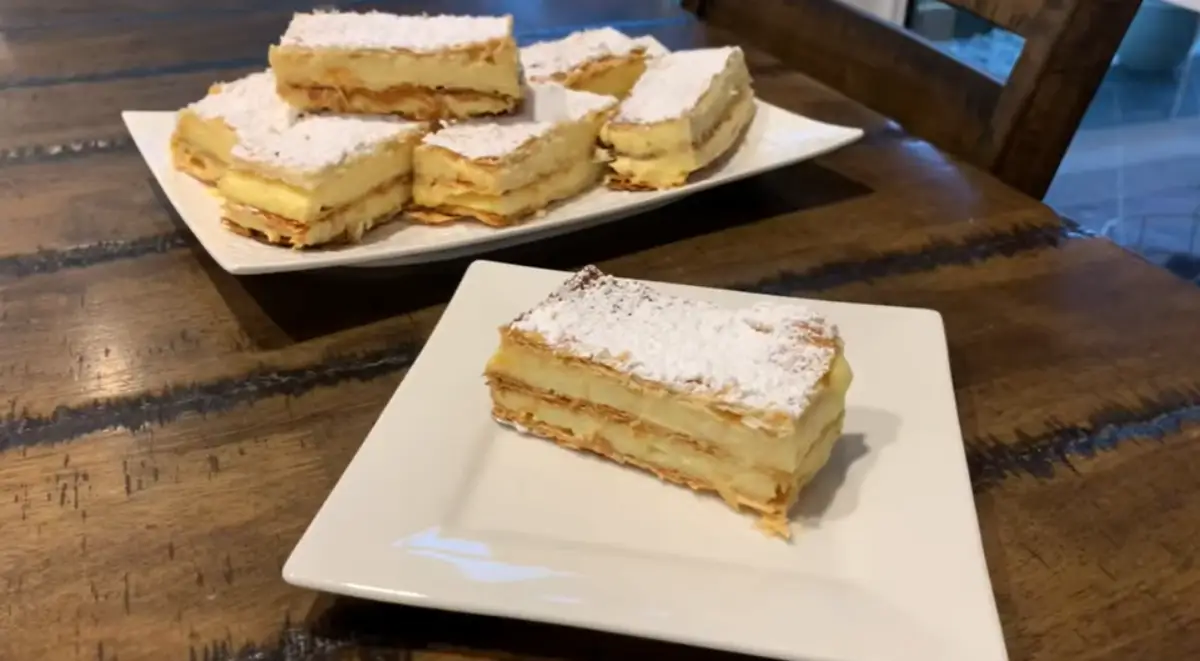
Kotor pašta is the city's version of a custard slice, made with three crisp pastry layers and two layers of vanilla custard. It should not be confused with an ordinary two-layer krempita or a cake filled with instant pudding or whipped cream. Dobrota cake belongs to the ceremonial cooking of nearby Dobrota and is based on walnuts, eggs and citrus. Both have a stronger local connection than generic baklava or pancakes. Choose Kotor pašta for a dessert tied directly to the city and Dobrota cake when it is available by the slice.
Njeguši prosciutto, cheese and meat cooked under a sač
Mountain food reaches Kotor through Njeguši and Lovćen. Prosciutto is cured and lightly smoked in Njeguši, then served in town in thin slices with firm cheese, olives and bread. Veal or lamb cooked under a sač spends several hours with potatoes beneath a metal lid covered in embers. These are not Kotor dishes, but they explain why the same menu often contains both seafood and hearty meat. Share prosciutto and cheese as a starter. Treat sač as a substantial main course and check in advance which meat is being prepared that day.
04The market, meat-free food and local drinks
Kotor market shows the seasonal offer, followed by practical choices for a meat-free meal and drinks that suit the food.
The market, meat-free food and local drinks
Kotor market shows the seasonal offer, followed by practical choices for a meat-free meal and drinks that suit the food.
Kotor market and seasonal food
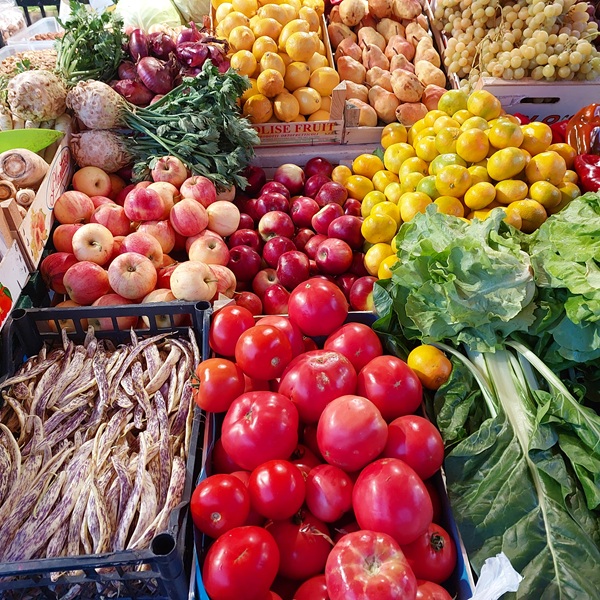
Kotor market sits beside the city walls between the Old Town and the sea. Morning stalls may have small fish from the day's catch, seasonal fruit and vegetables, cheese, prosciutto, olives, olive oil, honey, ruštule pastries, priganice and pies. Not every product is available every day, and the choice is widest earlier in the morning. For a simple local breakfast or snack, buy bread, a small piece of cheese, olives and whatever fruit is in season.
Food without meat or fish
Local cooking relies heavily on fish, shellfish and meat, but a meat-free meal can still feel connected to the coast. Chard with potatoes, grilled vegetables, salads, olives, local cheese, makaruli with cheese and priganice with honey provide a practical starting point. Black risotto and vegetable risotto may contain fish stock, while vegetables cooked under a sač may share the pan with meat. If you avoid that contact as well, ask about the stock and cooking method. A reliable vegan combination is grilled vegetables, chard and potatoes, olives, salad and bread without dairy additions.
Wine, rakija and coffee with Kotor food
Krstač and other dry white wines suit mussels, fish and black risotto better, while Vranac works with pašticada, prosciutto and meat cooked under a sač. Grape rakija is served in a small glass before or after food, and domestic coffee arrives unfiltered with grounds at the bottom of the cup. These drinks belong to Montenegro as a whole, not only Kotor. Keep the dish at the centre by choosing a dry white with buzara and fish, then saving a stronger red for the meat part of the meal.
Before booking, compare the hire price, deposit terms, luggage space and exact collection location.
Buzara puts shellfish and sauce first, grilling and poaching preserve the character of fish, and kotorska pašta and Dobrota cake represent the bay’s sweet tradition.
White buzara uses wine, garlic and olive oil, while the red version adds tomato and a fuller flavour.
Grilled fish has a stronger aroma, while poached fish remains softer and milder.
Kotorska pašta combines crisp layers and cream, while Dobrota cake brings walnuts and citrus aromas.
How much food costs in Kotor
Kotor market, a bakery and a restaurant beside the bay sit in very different price ranges. These figures are for planning, because season, location and the day's catch all affect the final bill.
Burek or another pastry with yoghurt usually costs about €2 to €4. Add coffee and a simple breakfast comes to roughly €4 to €7.
Bread can cost around €1, local cheese starts at about €15 per kilogram, prosciutto is roughly €25 to €30, and olive oil about €12 to €20 per litre. Seasonal fruit and vegetables vary the most.
Current menus put a serving of buzara mussels at roughly €14 to €25 and black risotto at about €12 to €22. Portion size and restaurant location make a substantial difference.
Budget about €10 to €20 per person for a straightforward main course. Whole fish priced by the kilogram, a starter, wine and dessert can raise the bill considerably, so confirm the fish's weight before cooking.