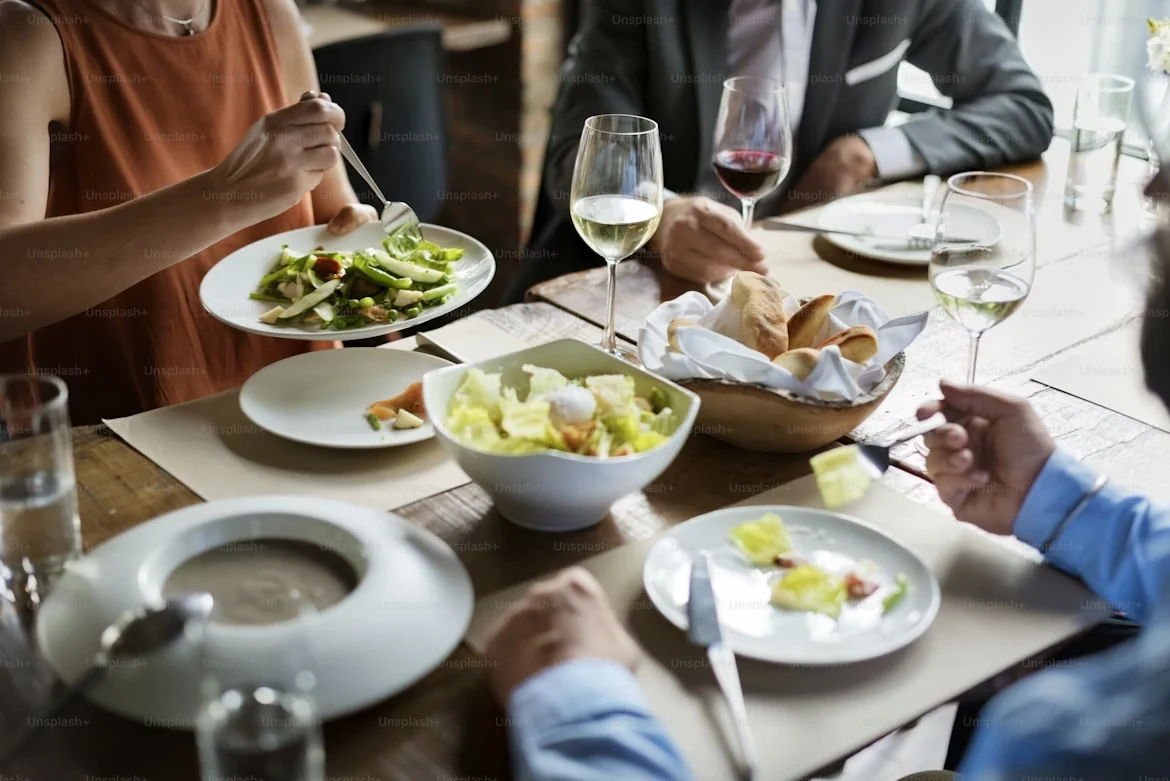
01Podgorički popeci and Zeta Plain cooking
Popeci are the city speciality, while japraci and raštan belong to the older cooking of the fertile plain around it.
Podgorički popeci and Zeta Plain cooking
Popeci are the city speciality, while japraci and raštan belong to the older cooking of the fertile plain around it.
What is truly Podgorica food and what is simply popular here
Podgorički popeci are the only widely recognised dish whose name and origin both point directly to the city. Japraci and raštan belong to the older cooking of the Zeta Plain, while carp, ukljeva and eel come from the Lake Skadar area. Kačamak, cicvara, priganice, pršut and meat cooked under the sač are common in Podgorica but represent Montenegro’s wider northern and mountain traditions. Burek and ćevapi are everyday Balkan food rather than local specialities.
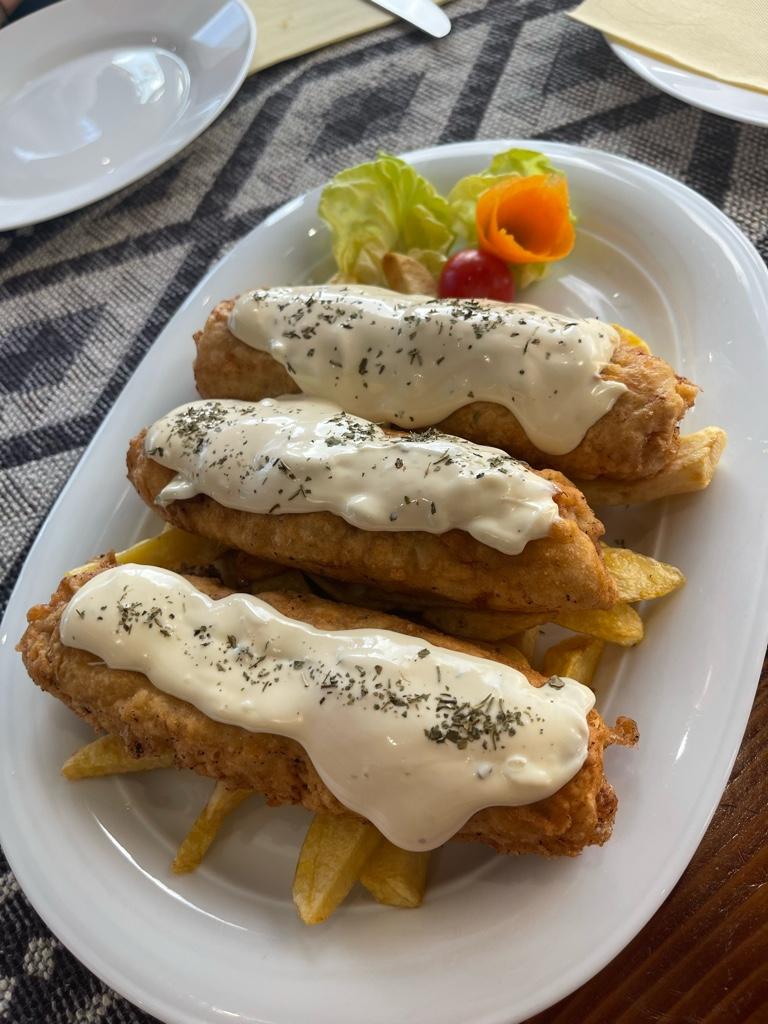
Podgorički popeci
Podgorički popeci are usually made with a thin pork or veal cutlet, depending on the kitchen, and filled with pršut, cheese or kajmak. The meat is rolled, breaded and fried, then served with potatoes and salad. Its crisp coating and salty, creamy filling make one portion a substantial lunch. Ask which meat is used and confirm the filling before ordering, especially if you avoid pork.
Japraci and raštan from the Zeta Plain
Japraci are small rolls of young raštan leaves, usually filled with minced meat and rice. Raštan also appears as a slow-cooked dish with potatoes and cured meat, which gives the greens a gentle smoky flavour. Both dishes belong to the older food culture of Podgorica and the Zeta Plain. These slow-cooked, home-style dishes are quite different from grilled or breaded meat.
02Breakfast, lake fish and mountain dishes
Burek belongs to everyday city life, freshwater fish comes from the nearby lake, and kačamak and cicvara come from the north.
Breakfast, lake fish and mountain dishes
Burek belongs to everyday city life, freshwater fish comes from the nearby lake, and kačamak and cicvara come from the north.
Burek and yoghurt for breakfast
Hot meat burek with cold yoghurt is one of Podgorica’s familiar quick breakfasts. Burek shops usually sell pies filled with cheese, greens or potato as well, although local usage generally reserves the word burek for the meat version. It is part of everyday city life and a habit shared across the Balkans, not a dish invented in Podgorica.
Carp, ukljeva and eel from Lake Skadar
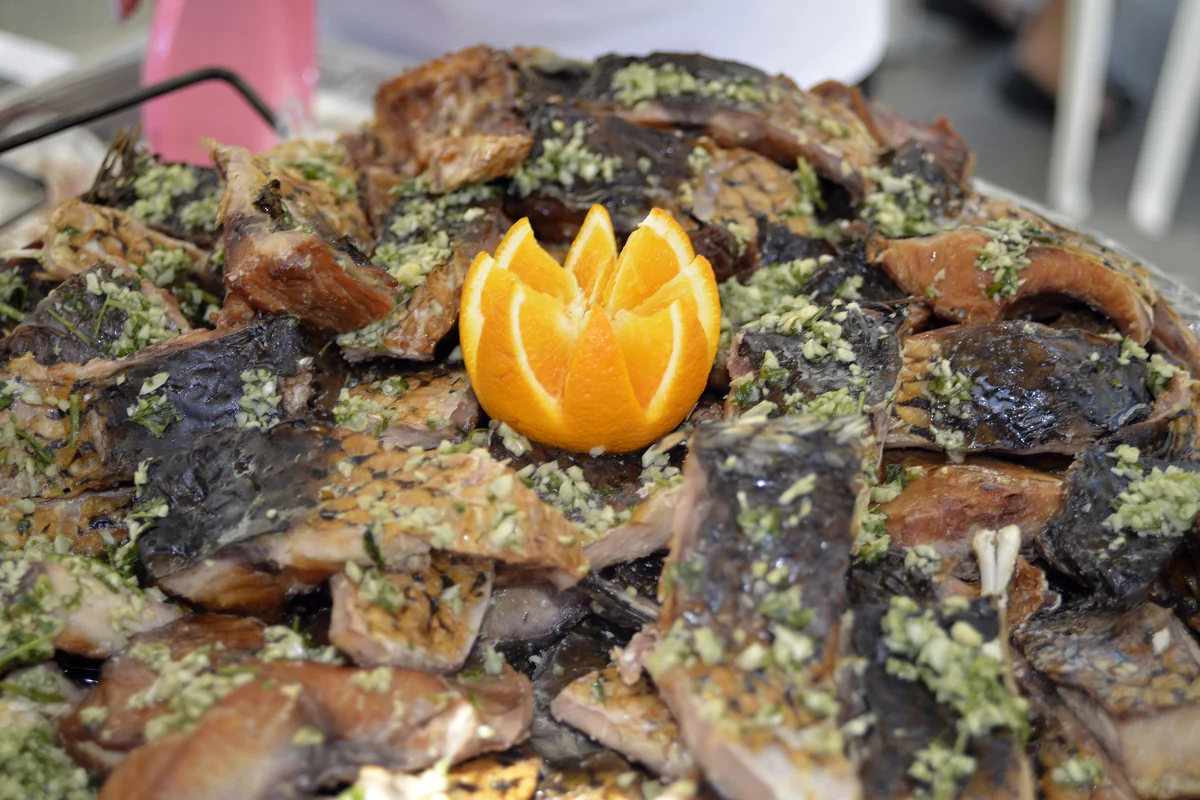
Lake Skadar adds a very different character to a table otherwise rich in meat and dairy. Carp may be baked, smoked or marinated, small ukljeva is often fried, dried or marinated, and eel has a richer, more pronounced taste. Marinated fish works well as a cold starter for sharing, while baked carp is a main course. For a whole fish, always check whether the quoted price is for a portion or per kilogram.
Kačamak, cicvara and meat cooked under the sač
Kačamak and cicvara represent Montenegro’s mountain cooking rather than food native to Podgorica. Smočani kačamak combines potato or maize meal with cheese and kajmak. Cicvara is softer, richer and even more centred on dairy. Veal or lamb cooked under the sač roasts slowly with potatoes beneath a metal lid covered with embers. It is worth asking in advance which meat is being prepared and when it will be ready.
03Traditional sweets and local drinks
Priganice and syrup-based sweets broaden the food selection, while Vranac, Krstač, rakija and traditional coffee accompany or close a meal.
Traditional sweets and local drinks
Priganice and syrup-based sweets broaden the food selection, while Vranac, Krstač, rakija and traditional coffee accompany or close a meal.
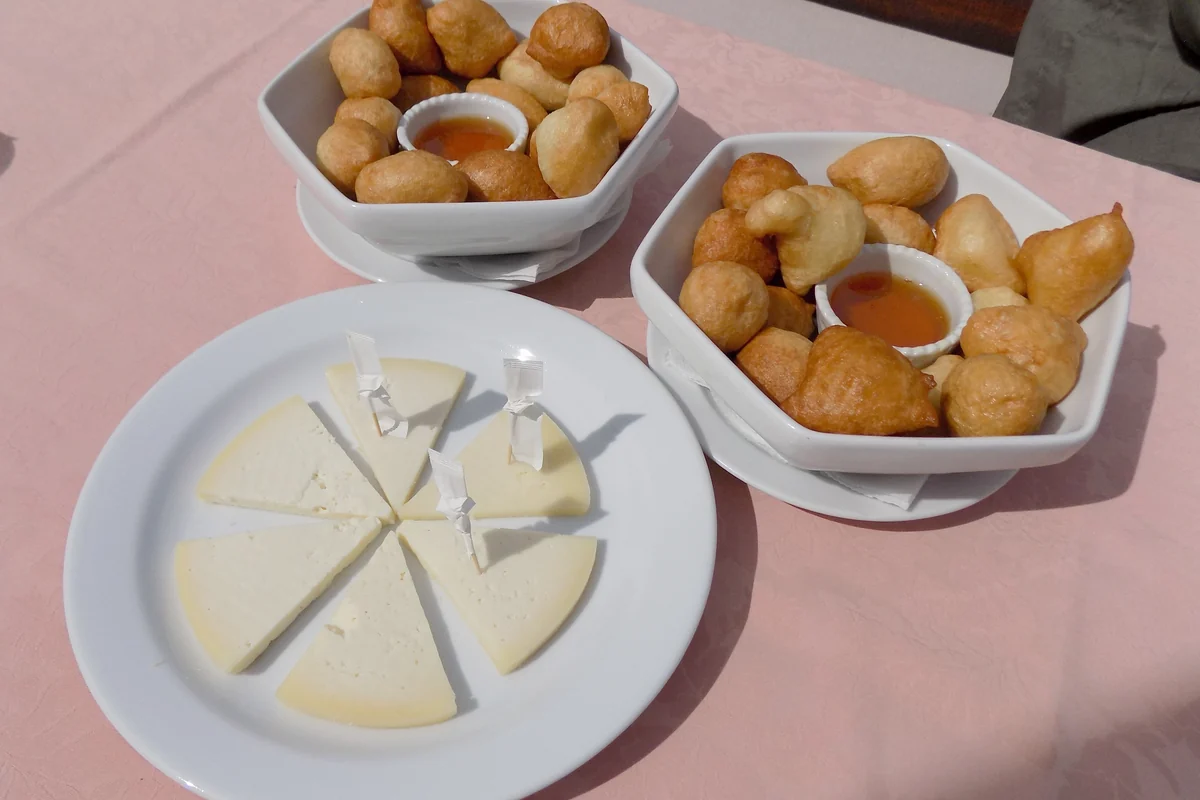
Priganice and traditional sweets
Priganice are small pieces of fried dough served warm with honey or jam, or in a savoury version with cheese or kajmak. They are not a Podgorica speciality, but they are one of Montenegro’s recognisable breakfast and welcome foods. Tufahija, baklava, tulumbe and urmašice belong to the wider Ottoman and Balkan sweet tradition. Tufahija is built around a cooked apple and walnuts, while the others rely more heavily on pastry and syrup.
Local drinks to try with the food
Vranac is a full-bodied red that suits popeci, meat and richer dishes. Krstač is a fresher white and a more natural partner for Lake Skadar fish and lighter starters. Both native grape varieties are closely linked to the large vineyard on Ćemovsko Field beside Podgorica. Grape rakija is served in a small measure before or after food, while traditional coffee is unfiltered and leaves grounds at the bottom of the cup.
04Seasonal produce and meat-free choices
Gintaš reflects seasonal produce from the Zeta Plain. Kačamak, cicvara and priganice broaden the meat-free choice. Ask how raštan, beans and vegetables cooked under the sač are prepared because they may include meat, stock or cooking juices.
Seasonal produce and meat-free choices
Gintaš reflects seasonal produce from the Zeta Plain. Kačamak, cicvara and priganice broaden the meat-free choice. Ask how raštan, beans and vegetables cooked under the sač are prepared because they may include meat, stock or cooking juices.
Seasonal produce and the green market at Gintaš
The influence of the Zeta Plain is clearest in warmer months, when tomatoes, peppers, watermelons, figs and grapes are in season. Colder weather brings more raštan, beans, pickled vegetables, cured meat and filling dishes made with cheese and kajmak. The green market in TC Gintaš, within Mall of Montenegro on Bratstva i jedinstva Street, is a practical place to buy produce, local cheese, kajmak, honey and cured meat. It is a working city market, not a polished visitor attraction.
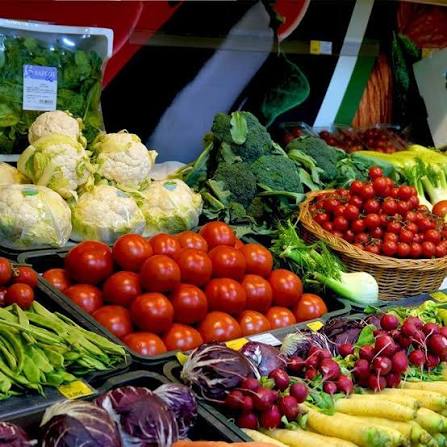
Vegetarian local food
Kačamak and cicvara are made without meat, but both contain cheese, kajmak or other dairy products. Priganice with honey or jam, cheese or greens pie, meat-free beans, roasted peppers, ajvar and seasonal salads broaden the choice. Raštan is often cooked with cured meat, and vegetables under the sač may share a pan and juices with meat. If you also avoid stock, animal fat or cross-contact, ask how the particular dish was prepared.
Before booking, compare the hire price, deposit terms, luggage space and exact collection location.
Popeci represent Podgorica, carp, bleak and eel connect it with Lake Skadar, and kačamak and cicvara show the mountain food that reached the capital from the north.
The breaded crust and filling of pršut, cheese and kajmak make a substantial dish whose name and origin are tied to the city.
Carp is grilled, smoked or marinated; small bleak is often fried or marinated, while eel has a fuller, fattier taste.
Smočani kačamak combines potato or cornmeal with cheese and kajmak, while cicvara relies more heavily on dairy ingredients.
What food costs in Podgorica
A market shop, a quick breakfast and a full restaurant meal sit at very different price points. These ranges help with a daily budget without turning the guide into a menu.
Espresso usually costs €1.20 to €1.70, cappuccino €1.70 to €2.40 and a plain pastry €1.60 to €2.60. Allow roughly €3 to €5 for a simple breakfast with coffee.
A litre of milk, a loaf of bread, 12 eggs and a large bottle of water together usually cost about €5 to €7. Local cheese is roughly €6 to €10 per kilogram, so a small piece is an easy addition to breakfast or a picnic.
Fruit and vegetable prices move most with the season. Apples commonly cost €0.75 to €2 per kilogram, tomatoes €1.60 to €3 and potatoes €0.60 to €1.
Allow €8 to €15 per person for Podgorički popeci, kačamak, pasta or a similar main course, and about €15 to €20 with a salad, drink or pudding. A mid-range dinner for two commonly costs €30 to €60 before drinks.