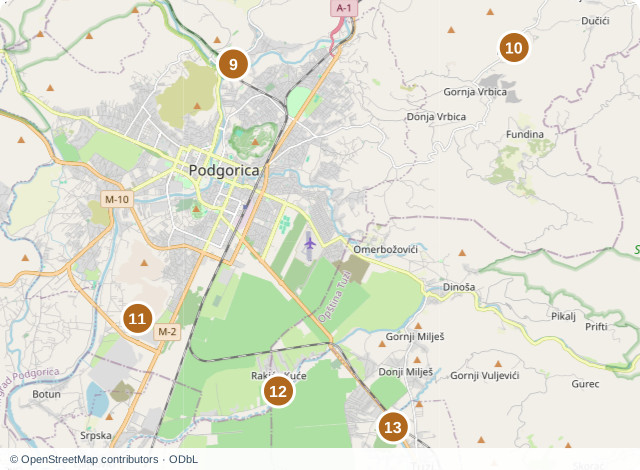
01Stara Varos, the Ribnica and Sastavci
Stara Varos, the Clock Tower and two mosques
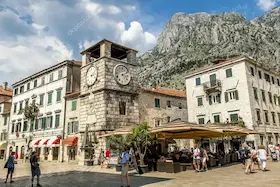
The Clock Tower, or Sahat-kula, stands on Trg Becir-bega Osmanagica in Stara Varos, south of the Ribnica. It is a stone clock tower from the Ottoman period. Its height and simple stone form set it apart from the lower houses around it.
Two mosques survive in the surrounding streets. In the courtyard of the Osmanagic Mosque is a turbe, a small tomb building. The Skender Caus Mosque dates from the late 15th century and is also known as the Starodoganjska Mosque. This second name is associated with the merchants who later maintained it.
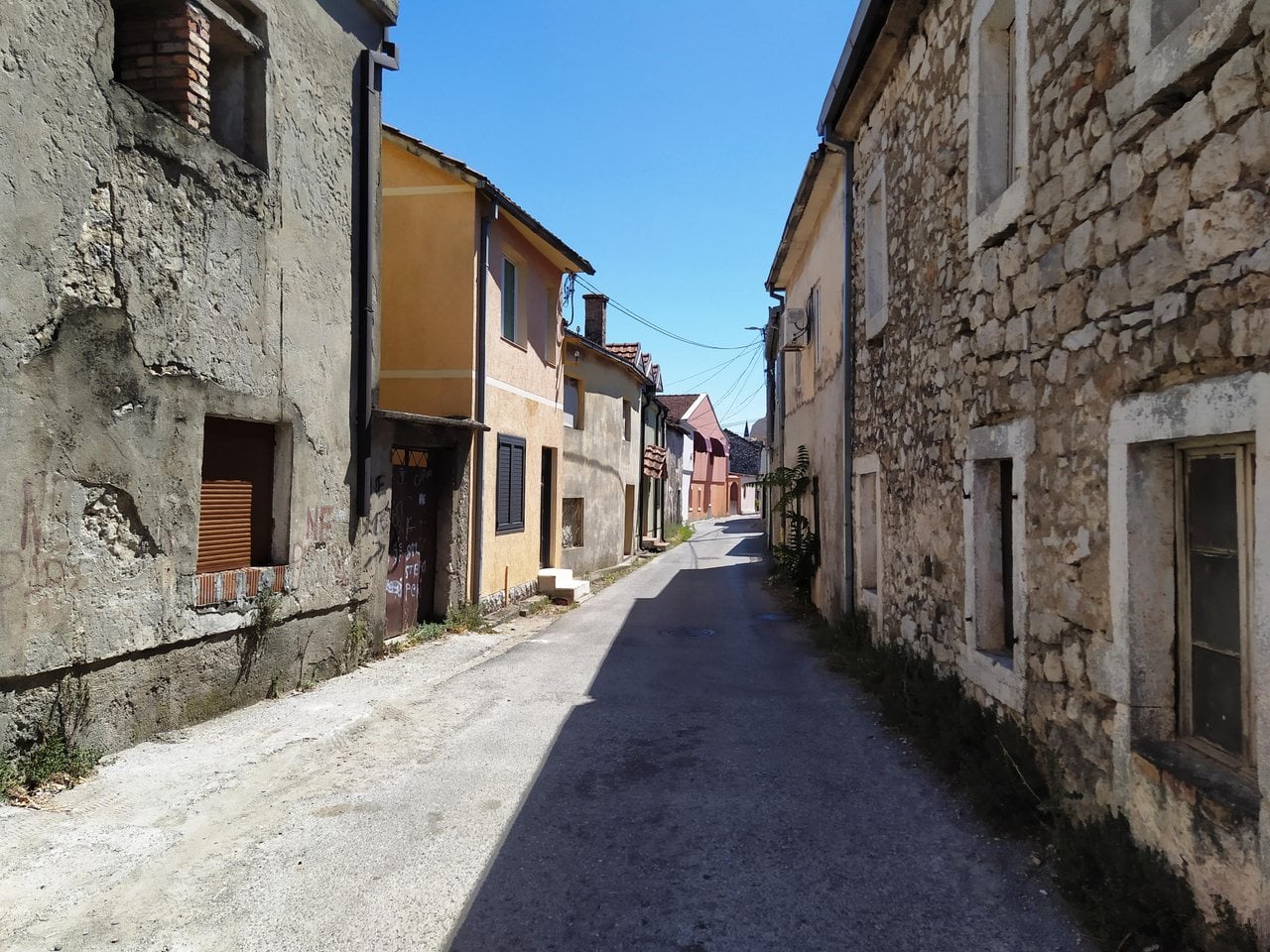
Narrow lanes run between these buildings in what is now a residential neighbourhood. Older houses and their courtyards stand alongside newer buildings, so the former town is most clearly recognisable in its surviving religious buildings, the tower and the layout of certain streets.
Stara Varos is an inhabited neighbourhood, so viewing the tower and old lanes takes you past houses where people still live. Private courtyards are not public passageways. The mosques serve their religious communities. Viewing their exteriors does not also imply access to the interiors.
Sastavci, the Old Bridge over the Ribnica and Depedogen
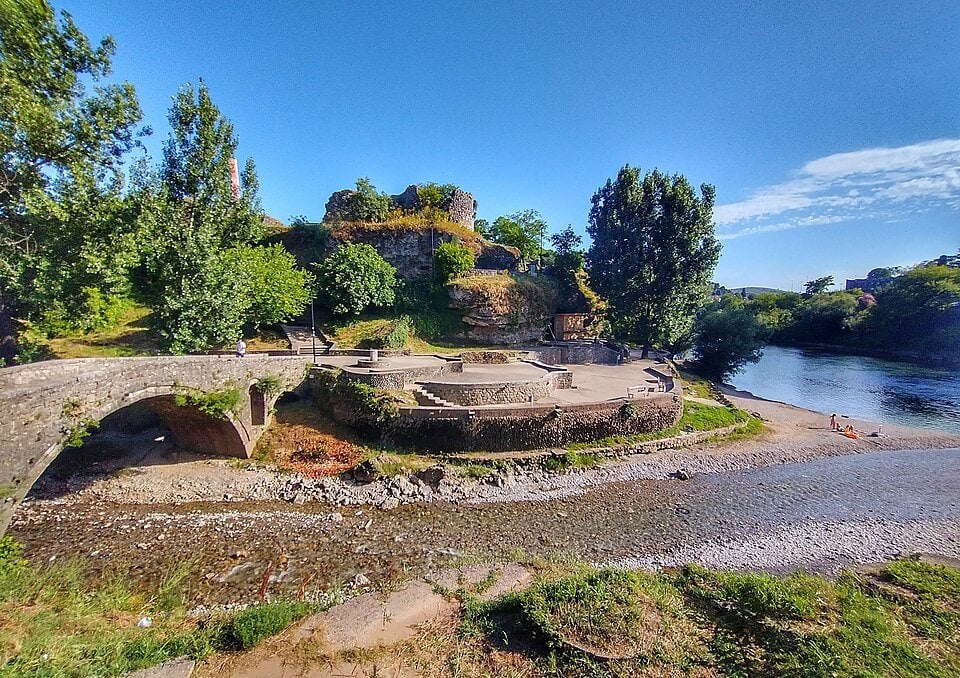
Sastavci is where the Ribnica meets the Moraca. A small stone bridge crosses the Ribnica just before it flows into the much wider river. You can see its large arch above the narrow riverbed and its stone paving up close after descending from the surrounding city streets. In this lower area, the rivers run between rocky banks, with city buildings and traffic above them.
Depedogen, an Ottoman fortress built in the second half of the 15th century, stood on the rise above the confluence. Its walls were built above both rivers, which protected the fortress on two sides. Parts of the former ramparts survive today.
Steps lead down to the bridge, and the lower area beside the water has stone surfaces and changes in level. A visit involves descending to the riverbed and climbing back up to the city streets.
02The centre, bridges, cathedral, Gorica and Hotel Podgorica
Independence Square, Ulica slobode and Njegoseva Street
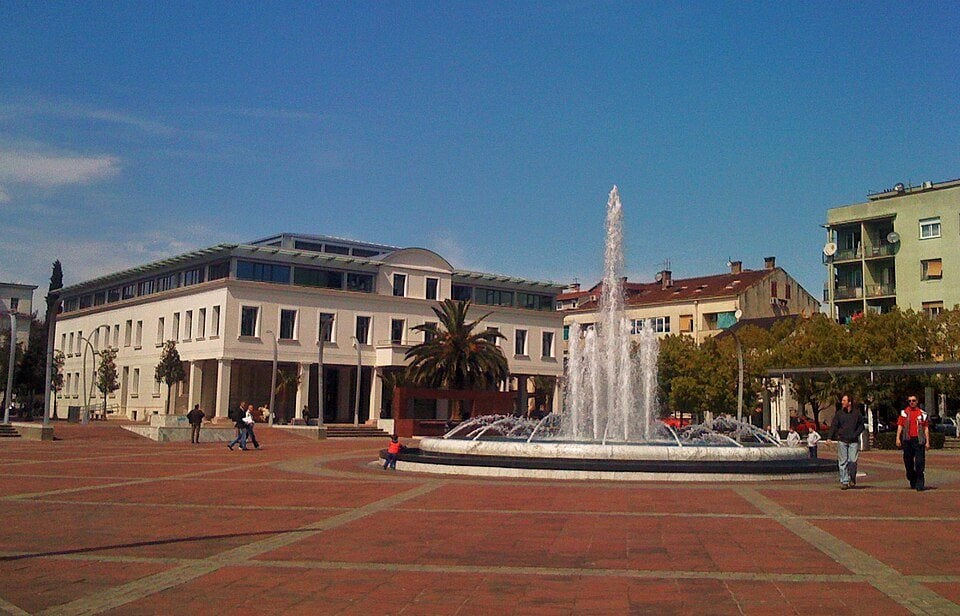
Independence Square, or Trg nezavisnosti, is a large public space in Nova Varos, the part of Podgorica laid out with a regular street pattern. Ulica slobode, lined with shops and places to eat and drink, runs along its eastern edge. Njegoseva Street lies to the west.
A monument to Marko Miljanov, a vojvoda, or military leader, and writer from Kuci, stands in Njegoseva Street. In the same street, the former Lexicographic Institute houses a gallery of the Museum of Contemporary Art. The Montenegrin National Theatre is in the neighbouring Stanka Dragojevica Street. You can view the square and monument regardless of the cultural programme, while entry to the gallery or theatre depends on the exhibition or performance taking place at the time.
Millennium Bridge, Moscow Bridge and the Vladimir Vysotsky monument
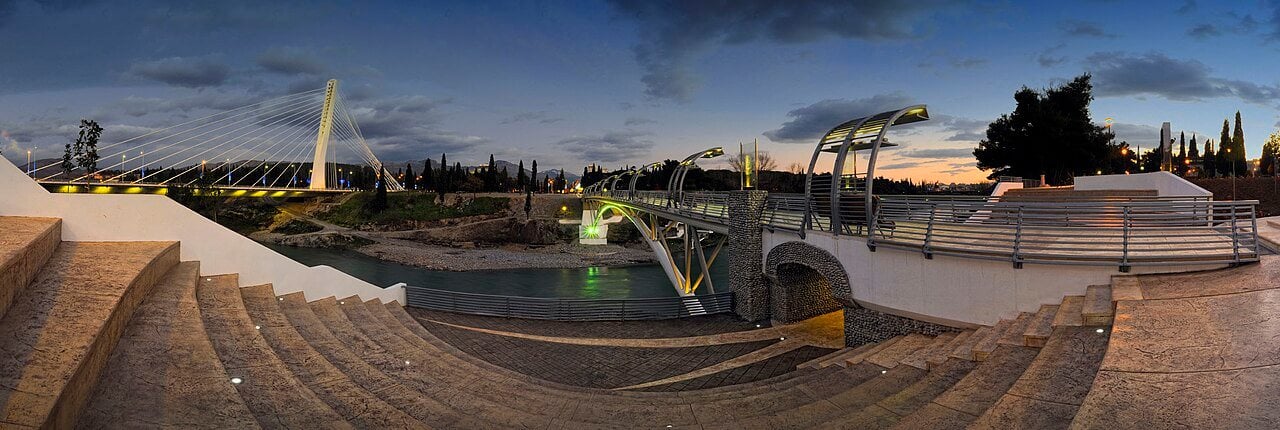
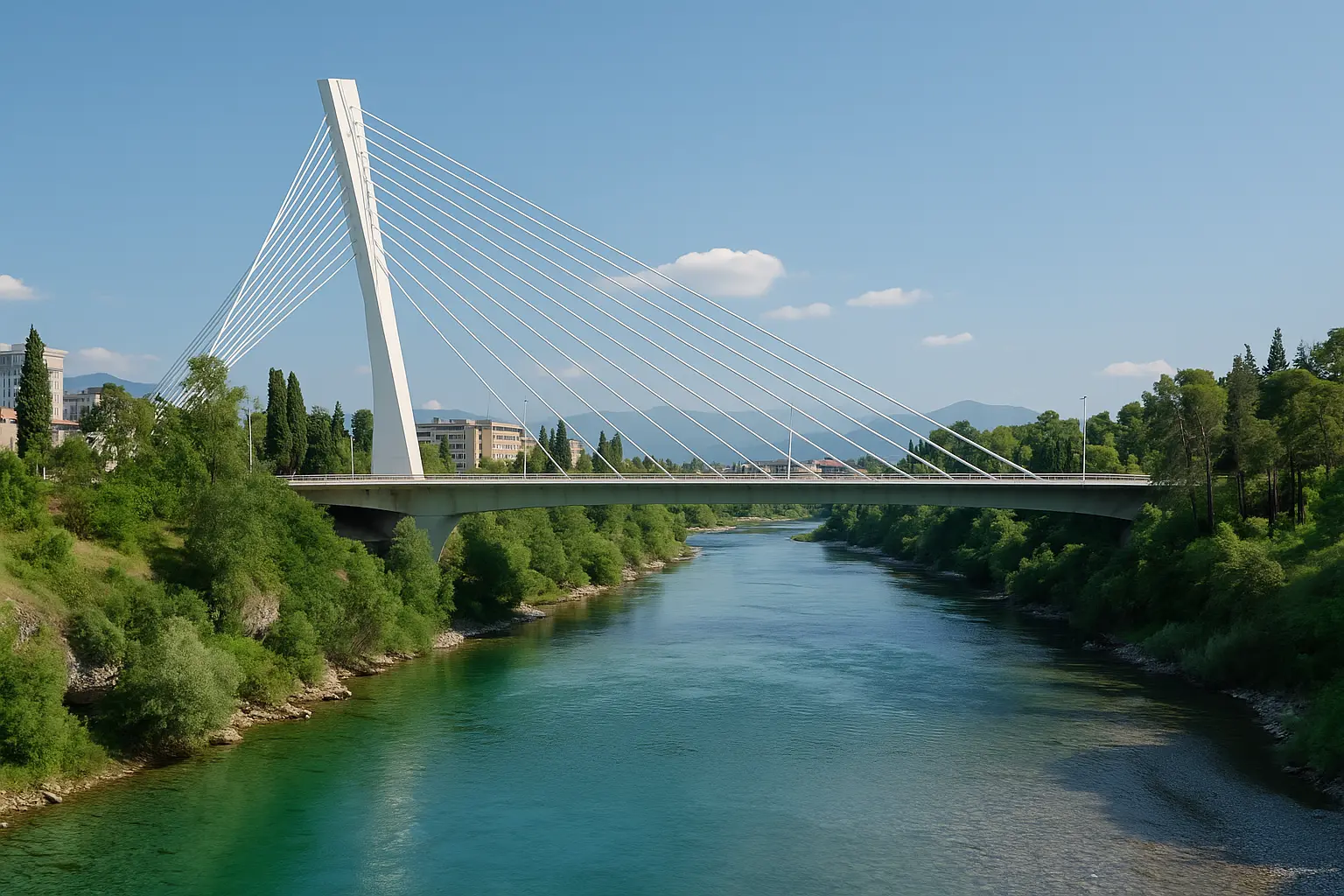
Millennium Bridge has a tall supporting tower, or pylon, and cables arranged like a fan, forming a distinctive structure across the Moraca. Both cars and pedestrians cross it, and the tall pylon is visible from both banks. The bridge opened on 13 July 2005 and was designed by Mladen Ulicevic.
Nearby is Moscow Bridge, a pedestrian bridge. From it, you can see the structure of Millennium Bridge across the river. On the right bank, between the two bridges, stands a monument to Vladimir Vysotsky, the Russian poet, actor and singer who visited Podgorica. The figure with a guitar forms part of a composition with an open metal frame.
Podgorica Park extends along the right bank beside Jovana Tomasevica Street. The first part of the park was laid out between Millennium Bridge and Moscow Bridge, and the second towards Gazela Bridge. Its paths and green spaces connect the area between these river crossings.
Cathedral of the Resurrection of Christ
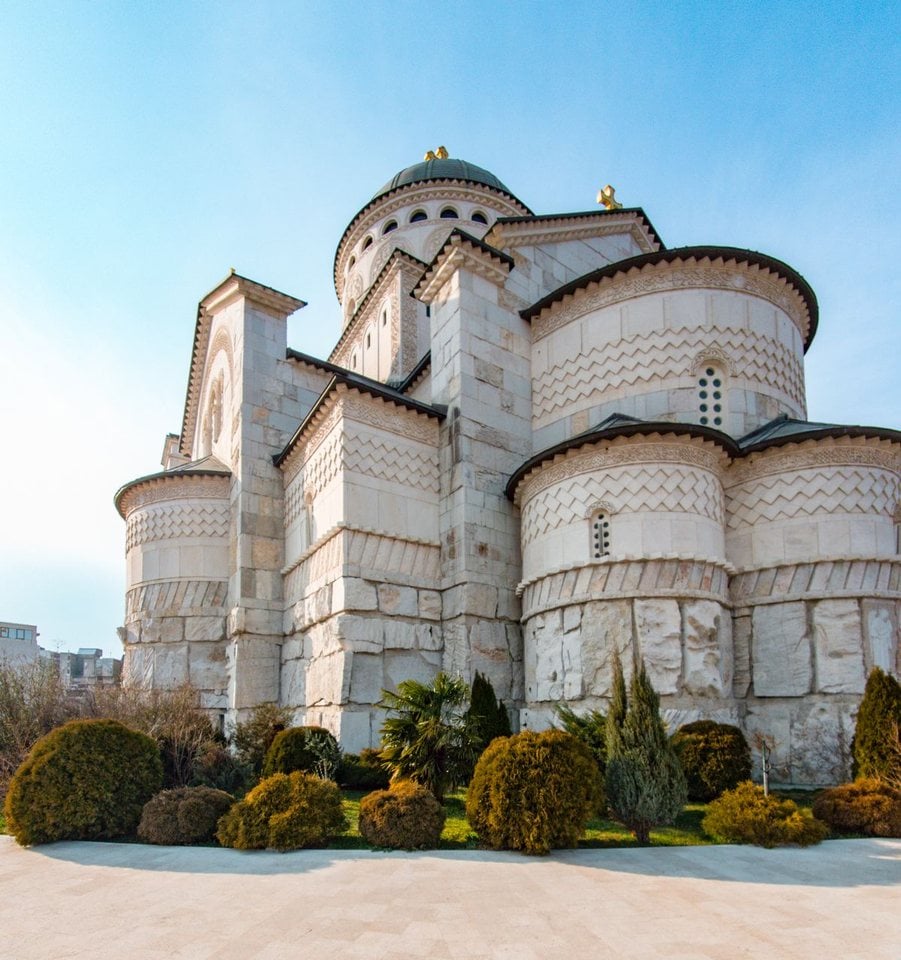
The Cathedral of the Resurrection of Christ in the Preko Morace district stands out above the surrounding residential blocks with its large central dome and two bell towers. Rough stone blocks at the base of the facade and the richly painted interior reveal two different aspects of the same building. Construction began in 1993, and the cathedral was consecrated in 2013.
Towards the upper parts of the facade, the stone is more finely worked and more richly decorated. Frescoes cover the interior walls and vaults, including the space beneath the dome. Beside the main worship space are smaller churches dedicated to Saint Simeon the Myrrh-Streaming and Saint Jovan Vladimir.
Orthodox services are held in the cathedral. Curators lead organised visits and explain the architecture and wall paintings. You can arrange such a visit through [email protected].
Gorica, Saint George’s Church and the Partisan Fighter Memorial
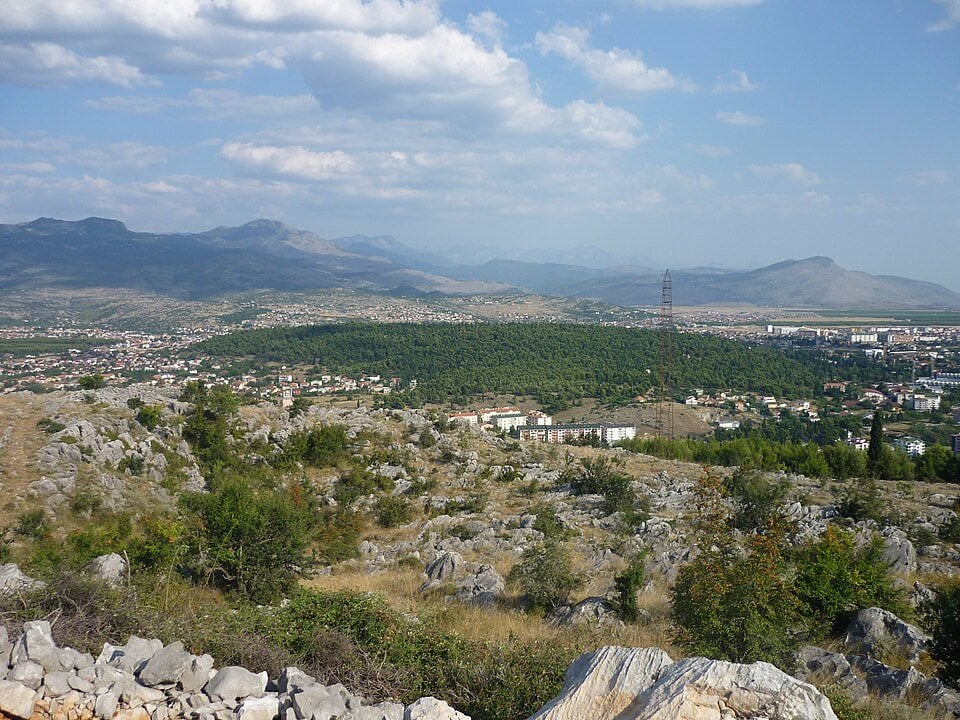
Gorica is a hill with a forest park north of the city centre. Walking and recreational paths climb from its foot through the pine forest. From higher on the hill, you can see the right bank of the Moraca and Millennium Bridge, while the church at the foot and the memorial further up the slope add places to visit beyond the forest walk itself.
Saint George’s Church stands at the foot of the hill. Its origins are associated with the period between the 9th and 11th centuries. It has been extended and altered over time, so the small stone church seen today bears traces of later work. Wall paintings by an unknown artist survive inside.
Higher on the hill is the Partisan Fighter Memorial, inaugurated on 13 July 1957. It is a mausoleum, a funerary monument where national heroes and revolutionaries killed in the Second World War are buried. It was designed by architect Vojislav Djokic and sculptor Drago Djurovic. Paths climb from the foot of the hill to the memorial.
Petrovic Palace and Krusevac Park
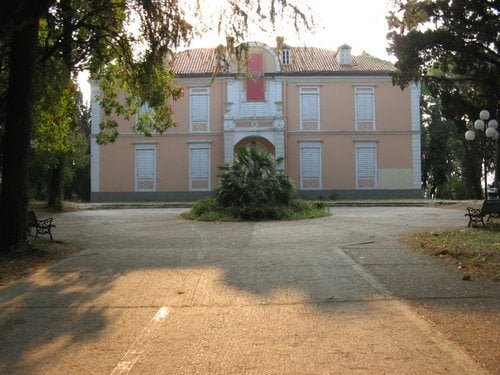
Petrovic Palace is a royal building in Krusevac Park, near the right bank of the Moraca. Today, you can visit contemporary art exhibitions inside, while the park and surrounding buildings can be viewed from outside. The palace was built in 1891-1892 for Prince Mirko, the son of Nikola Petrovic. Beside it stand Perjanicki dom and Saint Demetrius’s Church, the former family chapel. Work on laying out the park began in 1905.
The palace buildings later served as a hospital. The complex was restored in 1984 and converted into exhibition spaces, which are now used by the Museum of Contemporary Art of Montenegro. Changing exhibitions are held in the palace and Perjanicki dom, while the Music Chapel, an open structure built in 1997, is used for concerts, theatre performances and other programmes.
A visit inside does not take you through reconstructed royal rooms: what you see depends on the exhibition on display at the time.
Visiting: The park and the exteriors of the palace buildings can be explored separately from the exhibitions. Exhibition spaces are open Tuesday to Sunday, from 10:30 to 18:30. The €5 ticket covers all exhibition spaces of the Museum of Contemporary Art. Children aged up to 12 and all visitors on the first Wednesday of each month enter free of charge.
Museum of Contemporary Art tickets and opening hoursHotel Podgorica and the architecture of Svetlana Kana Radevic
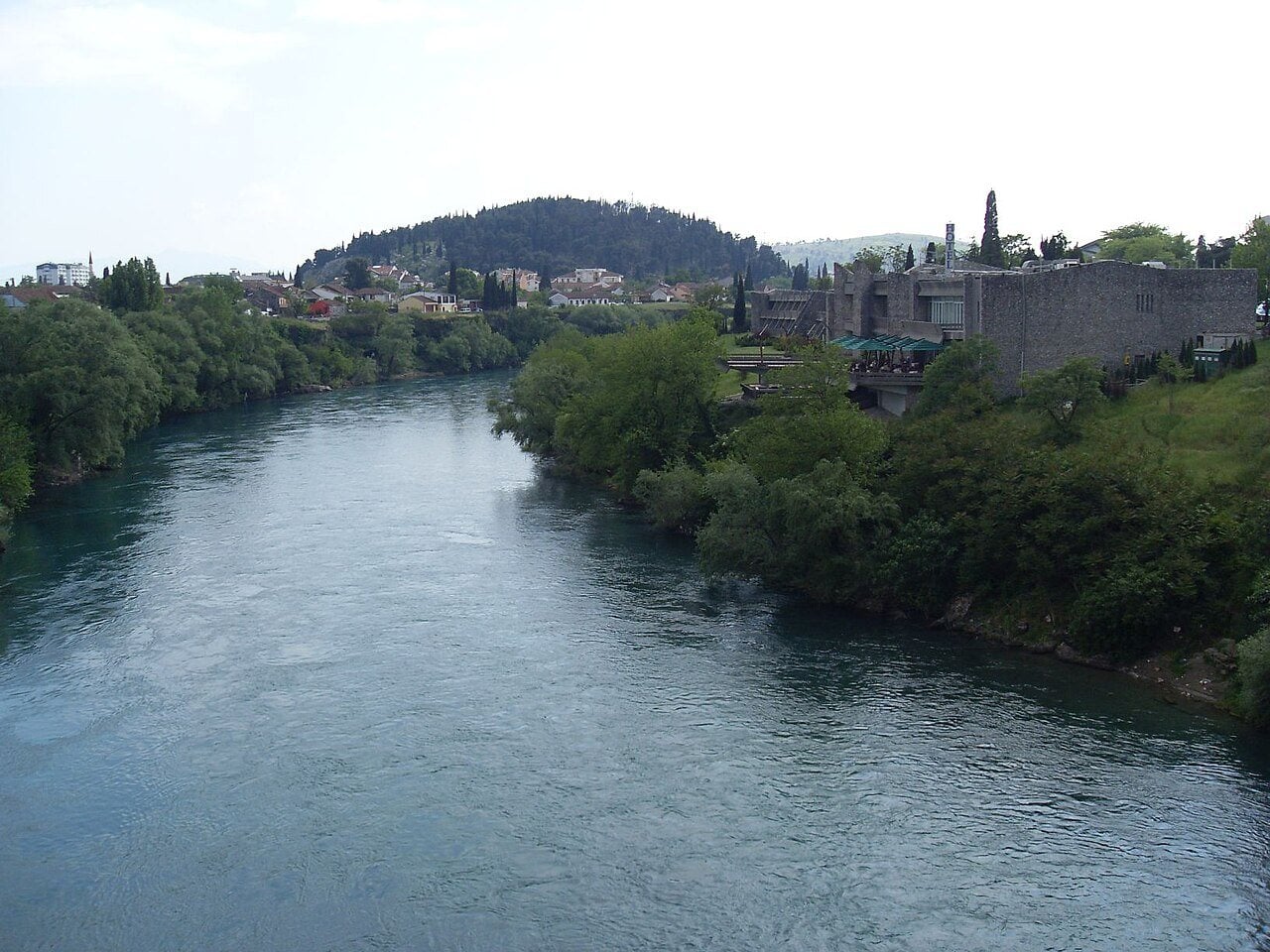
From the public bank across the Moraca, Hotel Podgorica is recognisable by the river pebbles on its facade and its terraces arranged on a steep slope. Opposite Stara Varos and the remains of Depedogen, the building shows a different use of stone from that of the old fortifications. It was built in 1967 to a design by Svetlana Kana Radevic, as part of post-war Podgorica. The terraces with restaurant areas are arranged lower down towards the river, while the rooms occupy the elongated upper section on two levels. The main entrance is at street level.
River pebbles were also used in parts of the interior. Kana Radevic combined concrete surfaces and rough stone in a building whose floors follow the difference in height between the street and the lower riverbank.
The hotel still operates as a place to stay and dine, with a restaurant beside the river. The rooms and restaurant terraces are used by hotel and restaurant guests. To view the architecture from outside, you can look across from the public bank on the opposite side of the river.
03Duklja, Medun and Dajbabe Monastery
Duklja
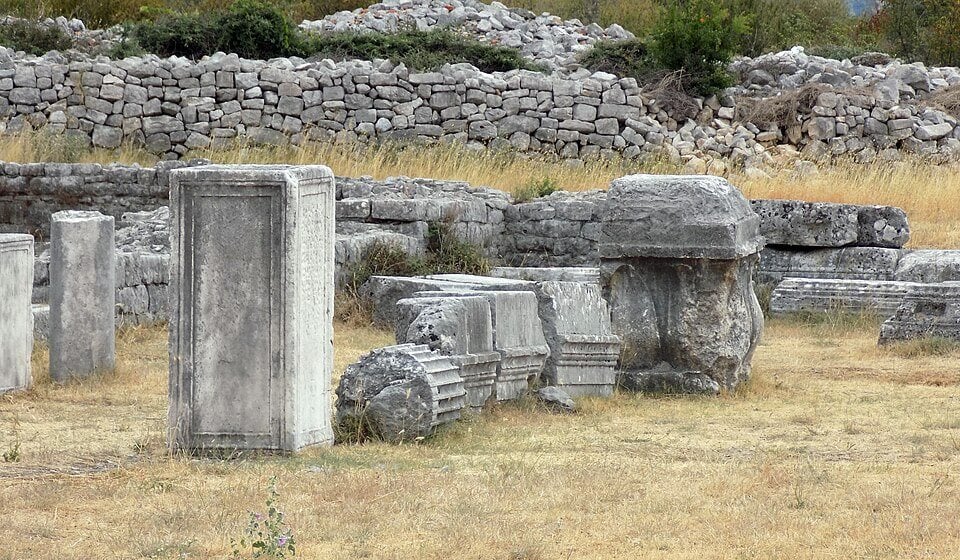
Duklja is an archaeological site towards Rogami, north of central Podgorica, between the Moraca, the Zeta and the Siralija stream. Today, you can explore the low walls, foundations and stone remains of the former Roman city in the open air. Doclea had regularly laid-out streets and public buildings.
The forum was the city square where public affairs were conducted. Beside it stood the basilica, a large hall for administrative and judicial matters. The baths were public bathing facilities. Remains of temples and a triumphal arch dedicated to Emperor Gallienus have also been found at the site. The layout of the surviving foundations shows where these buildings stood in relation to the main city streets.
The remains of Christian churches belong to a later period of the site’s use. Objects found during excavations can be viewed elsewhere: some are held by the Archaeology Department of the Podgorica City Museum. The walls and foundations remain at Duklja, while the museum is the place to see the portable finds.
Medun and the Marko Miljanov Museum
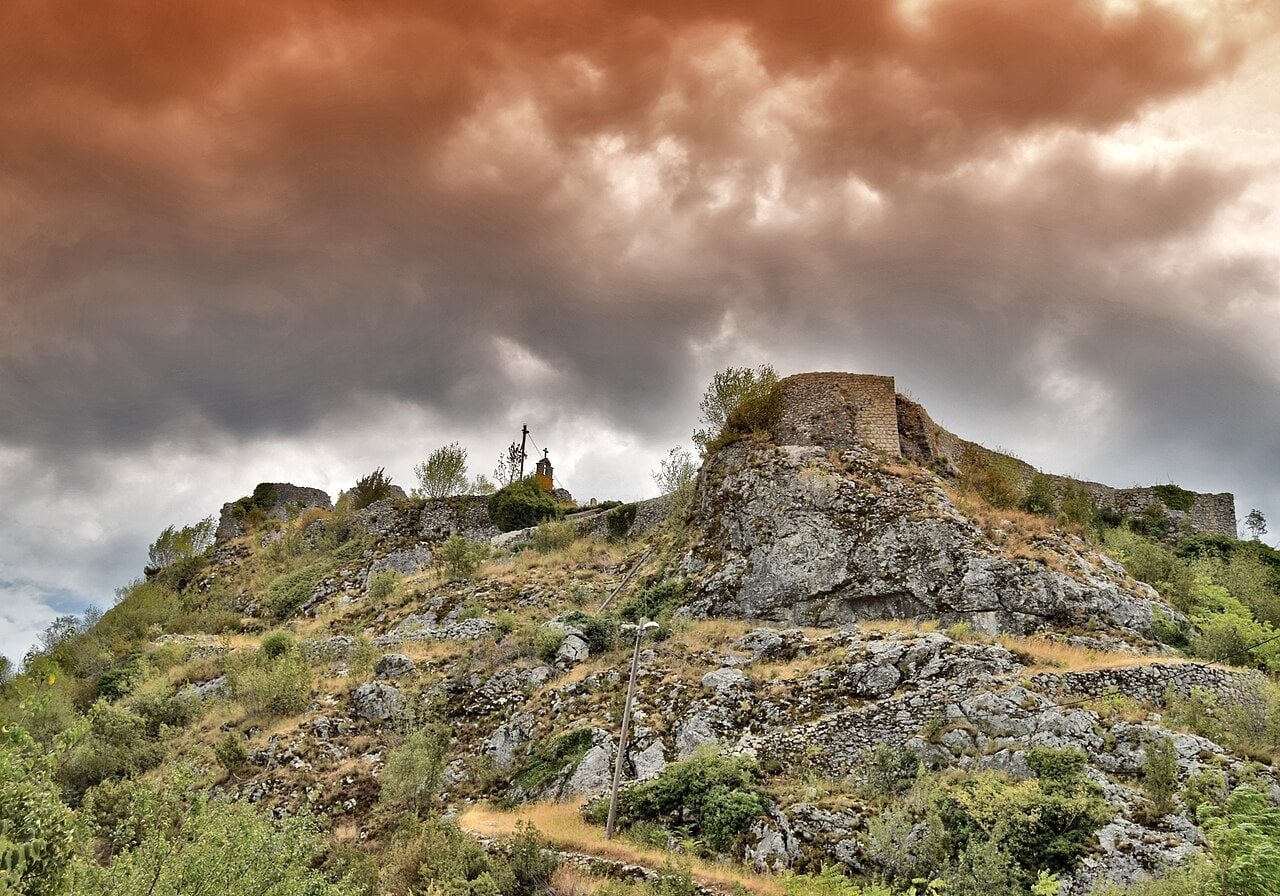
Medun is in Kuci, north-east of Podgorica. The surviving fortress walls and Saint Nicholas’s Church stand on a rocky rise high above the surrounding landscape. This was the site of Meteon, a settlement whose history begins in the Illyrian period. Later medieval and Ottoman additions changed the fortress.
The Marko Miljanov Museum is below the fortress, in a former Ottoman courthouse. The military leader and writer lived in this house from 1878 to 1901. The house where he was born has not survived.
The museum holds personal belongings, manuscripts, photographs and first editions of his works. Its ethnographic collection includes traditional dress worn by Orthodox, Muslim and Catholic communities, weapons and household objects. These materials present the clothing, daily tasks and lives of the communities with which Marko Miljanov was connected.
Visiting: The climb to the fortress and church crosses rocky terrain. The museum in the house below the hill is open Tuesday to Friday, from 08:00 to 16:00, and Saturday and Sunday, from 09:00 to 17:00.
Marko Miljanov MuseumDajbabe Monastery
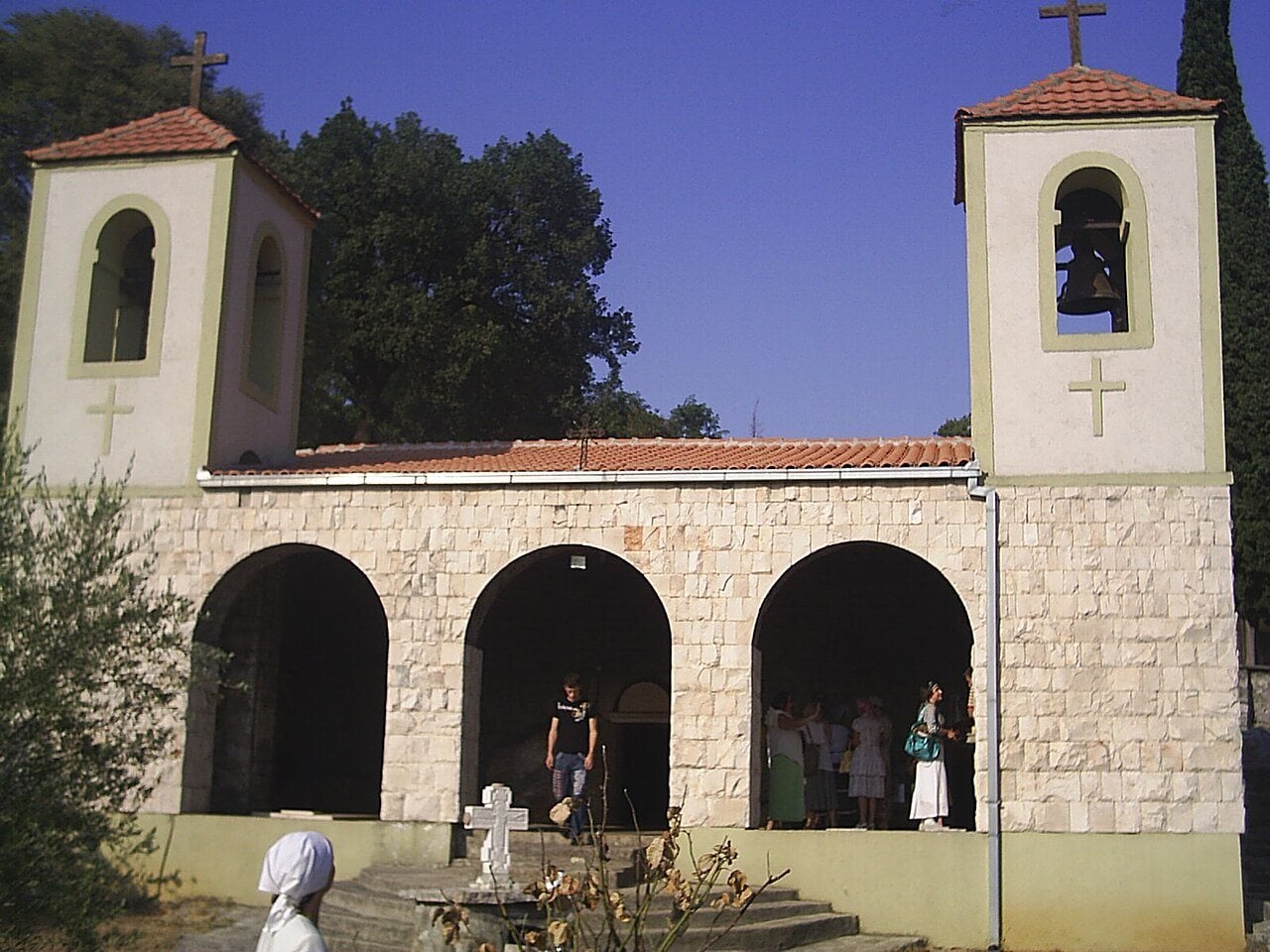
At Dajbabe Monastery, the church occupies a natural cave whose irregular walls and vaults bear painted scenes. The monastery is in the neighbourhood of the same name south of central Podgorica and is dedicated to the Dormition of the Mother of God. Simeon Popovic founded it in 1897. The cave was enlarged to accommodate worship and side chapels.
From outside, you can see a spacious entrance porch and two bell towers. Behind them, you enter the church within the rock, where the walls and vaults follow the cave’s irregular contours. Simeon Popovic painted these surfaces, adapting the scenes to the hollows and protrusions of the rock. He devoted decades to this work, continuing until his death in 1941.
Orthodox services are still held at the monastery. A visit to the cave church takes place within an active monastery and is subject to its entry conditions and worship schedule.
04The Cijevna and Sipcanik Wine Cellar
Waterfall on the Cijevna
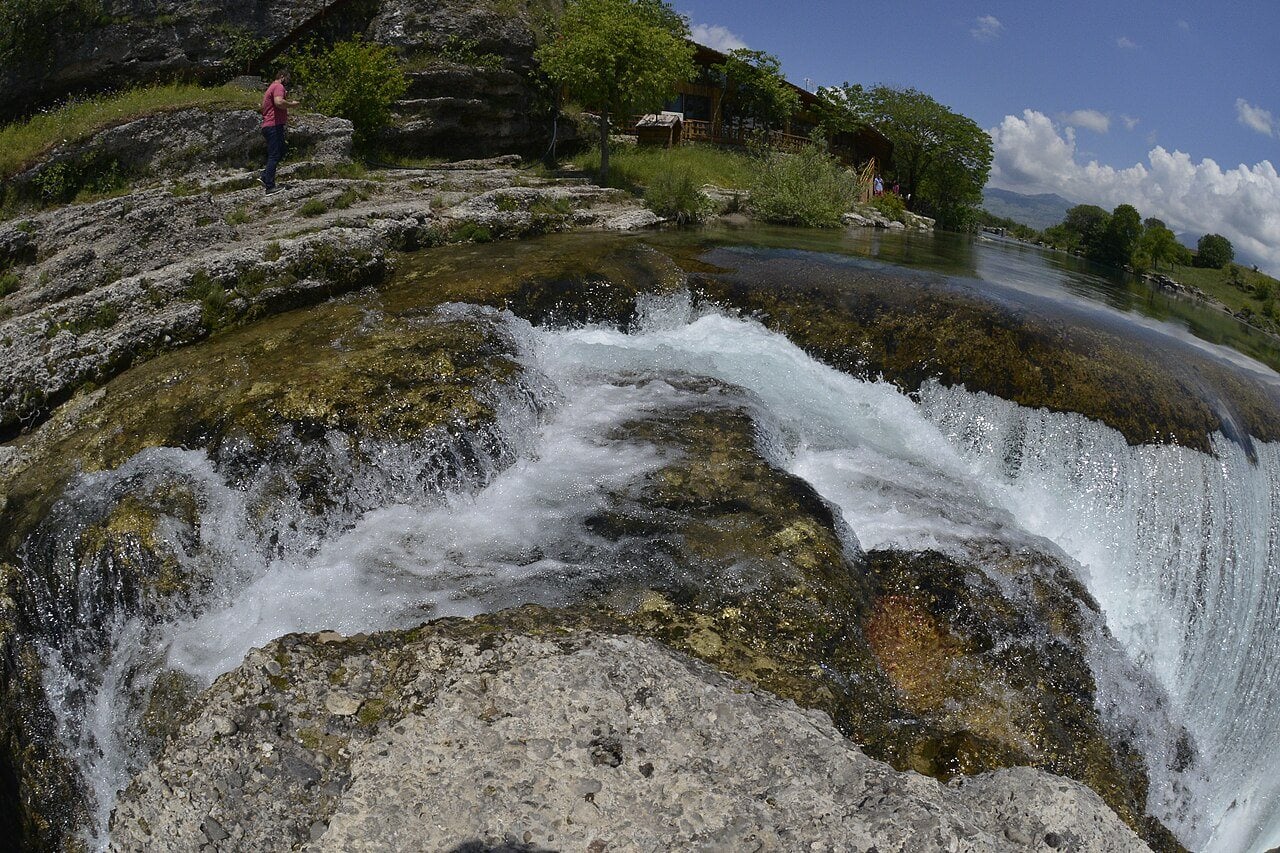
The waterfall on the Cijevna near Kuce Rakica, towards Tuzi, is known as Podgorica’s Niagara. Here, the river spills over a broad stone ledge and continues through a deeply cut riverbed. Beside the falls, you can see flat stone surfaces, hollows and the steep edges of the river channel.
During periods of higher rainfall, water spreads across more of the ledge and falls into the lower riverbed in several cascades. The lower reaches of the Cijevna can, however, dry up during a dry summer. When this happens, the falls give way to an exposed stone riverbed with hollows shaped by the water.
Sipcanik Wine Cellar
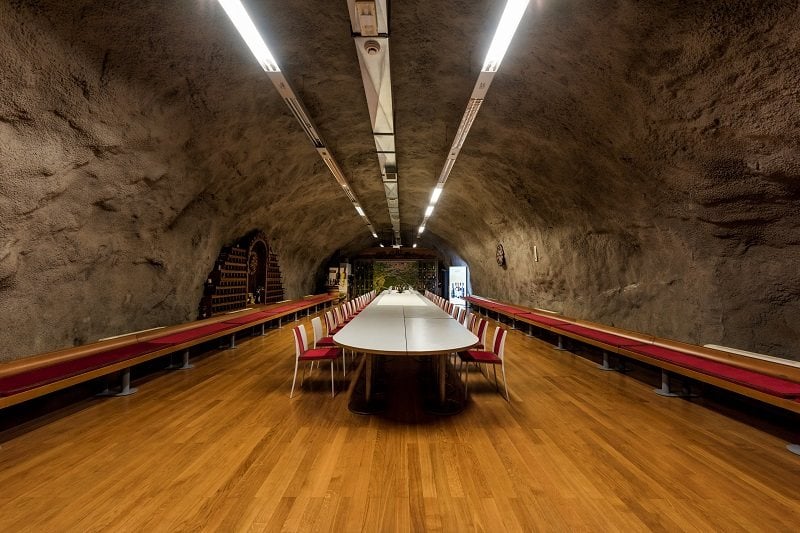
At Sipcanik Wine Cellar, you walk through a winding tunnel 356 metres long, more than 30 metres underground, lined with oak casks. The visit to this underground space is combined with a tasting in a programme booked in advance. The cellar is towards Tuzi, in the vineyards of 13. jul Plantaze on Cemovsko polje. The former military facility was converted into a wine cellar in 2007.
Wine ages in oak casks and barrels in the tunnel. The underground space maintains an even temperature and high humidity, both important for ageing wine.
The Bouquet tasting programme includes Crnogorski Krstac, Crnogorska Kratosija and Vranac Pro Corde, served with homemade bruschetta. This allows you to taste wines from three local grape varieties during one visit. Other programmes offer different selections of wine and food.
Reservation: Arrange the tunnel tour and tasting with Plantaze through [email protected]. The one-hour programme includes a sommelier, a cellar tour and a tasting for adult visitors.
Plantaze programmesViewing the palace complex from outside and visiting its current exhibition are two different options.
Expect a rocky climb to the fortress. The museum collections are in the house below the hill.
Entry to the wine tunnel requires an arranged programme, unlike exploring open-air sites on your own.
Four distinctions to help you find the right place
The central Republic Square, or Trg Republike, was renamed Independence Square, or Trg nezavisnosti, in 2016. Older maps and earlier descriptions of the city may use the previous name for the same place.
The Marko Miljanov Museum is in Medun, in Kuci. The Podgorica City Museum is a different institution, at 4 Marka Miljanova Street in central Podgorica.
On maps and in conversation, you may encounter the names Sastavci and Skaline for the area around the confluence. When looking for the stone bridge itself, the name Old Bridge over the Ribnica distinguishes it from the bridges crossing the Moraca.
Plantaze also has the Old Cellar in Ljeskopolje and the Cemovsko polje cellar. The underground tunnel is at Sipcanik, so specify this cellar when booking a tasting.
Roman objects and Podgorica’s cultural heritage
The Archaeology Department of the City Museum also holds jewellery, glass, pottery and stone finds from Duklja. These objects tell us about the lives of its inhabitants, while the structural remains at the site reveal the layout of the city.
In Examples of Humanity and Bravery, Marko Miljanov tells stories of courage, honour and relationships between people. In these stories, cojstvo means consideration for another person, even an opponent.
The Gallery of Art from Non-Aligned Countries opened in Petrovic Palace in 1984. It brought together works by artists from Africa, Asia, Latin America and other parts of the world. This collection is now held by the Museum of Contemporary Art of Montenegro alongside its other collections.
For her design of Hotel Podgorica, Svetlana Kana Radevic received the Federal Borba Award in 1968, a Yugoslav award for architectural achievement.