01Town attractions
Pine town promenade
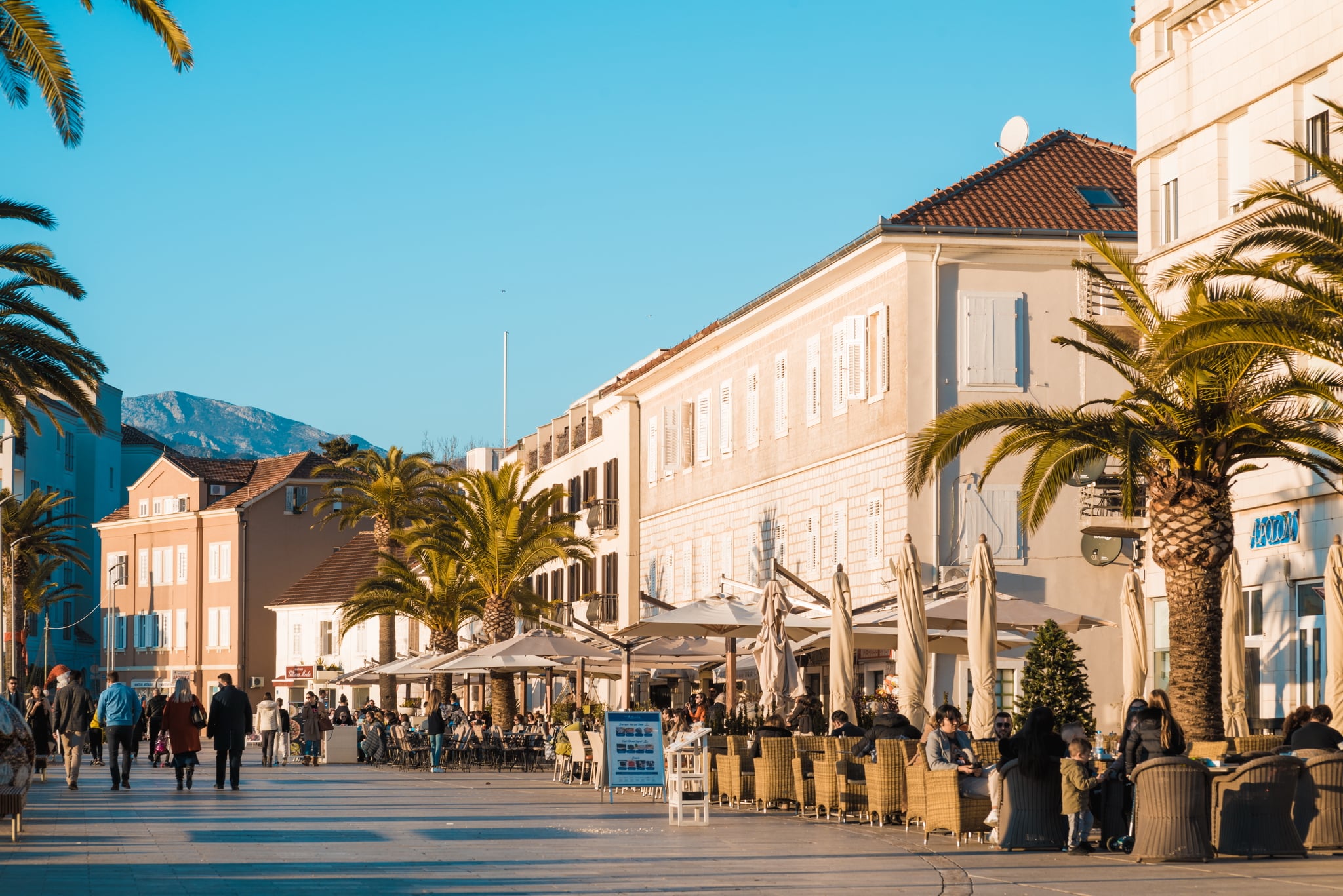
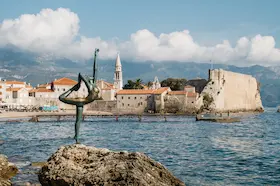
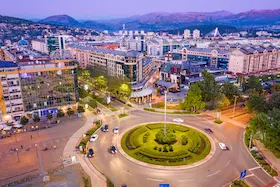
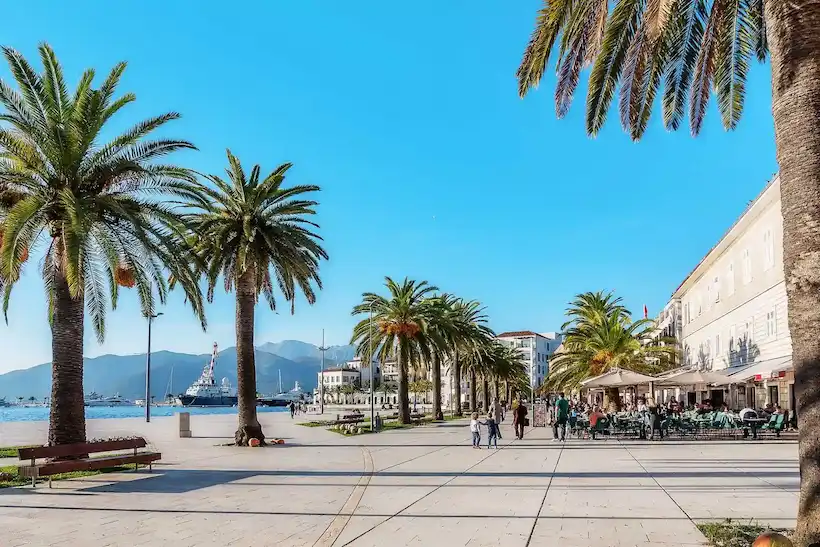
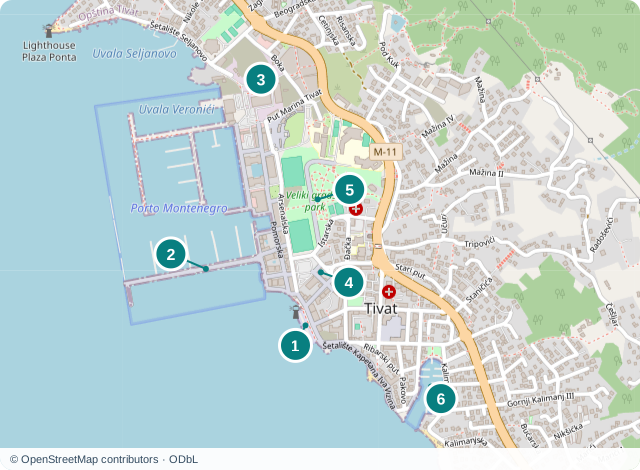
Pine is the town waterfront in central Tivat, with an open view across the bay. Palms, a wide paved promenade and terraces on the ground floors of waterfront buildings give it a recognisable appearance. The surrounding streets lead straight to the sea, so you see houses on one side of the waterfront and the bay on the other.
To the north, the promenade continues alongside Porto Montenegro. There, jetties, large vessels and buildings arranged around the marina replace the view across the water. Pine retains the character of a town waterfront with businesses and passers-by, which makes it worth seeing even if you do not plan to enter the marina.
Open town waterfront: Before visiting a particular vessel at the waterfront, check its berth and whether you can board. Pine is explored from land.
Tivat Tourist OrganisationPorto Montenegro and the old crane
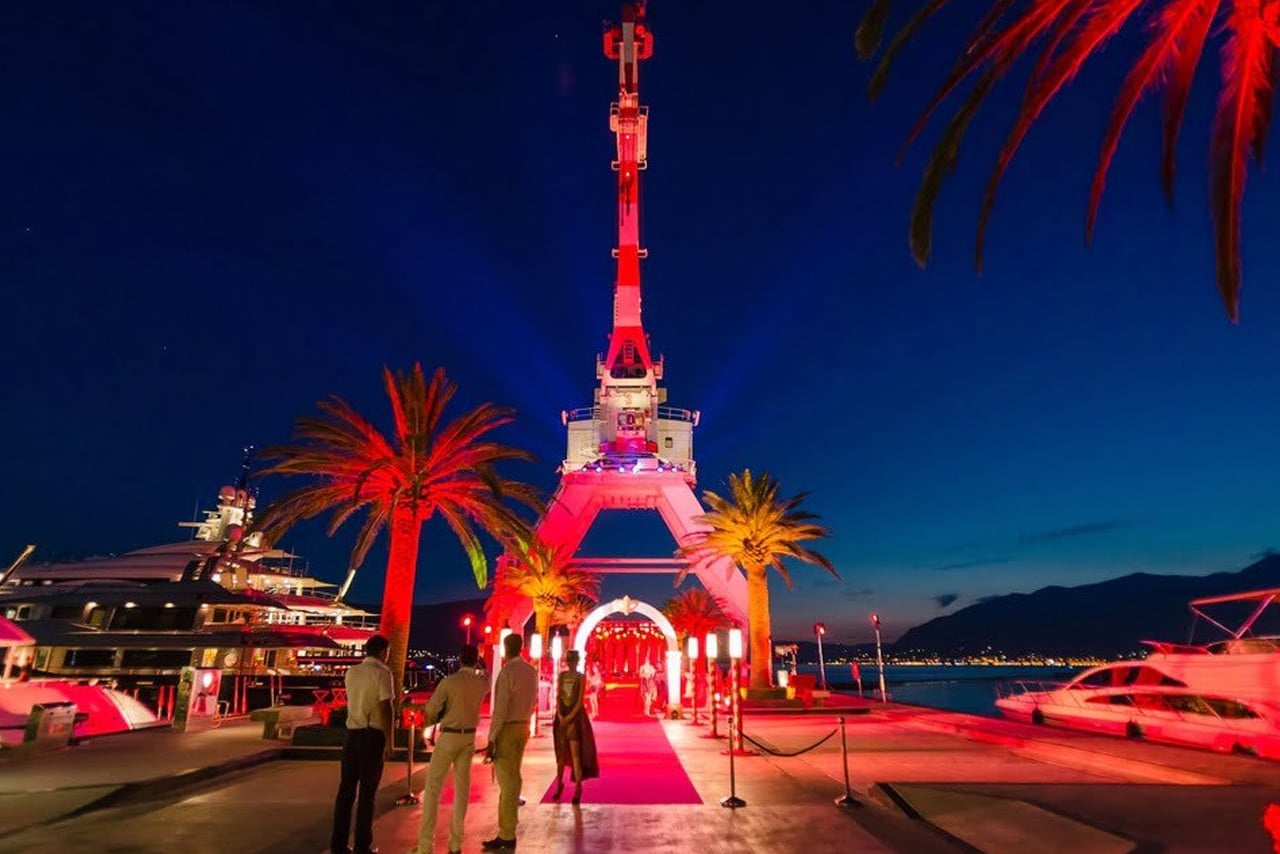
Porto Montenegro occupies the former naval Arsenal. Alongside today's jetties and large yachts, a red-and-white crane survives beside Jetty 1. Its tall metal structure rises above the vessels and waterfront buildings.
The crane is a reminder of the former shipyard among the marina's restaurants and shops. The Arsenal's origins and its importance to the town are covered in the modern history of Tivat.
Marina and private facilities: Distinguish a view from a permitted waterfront passage from access to a jetty, vessel, hotel or pool. Individual spaces have their own conditions.
Porto MontenegroNaval Heritage Collection and the Heroj submarine
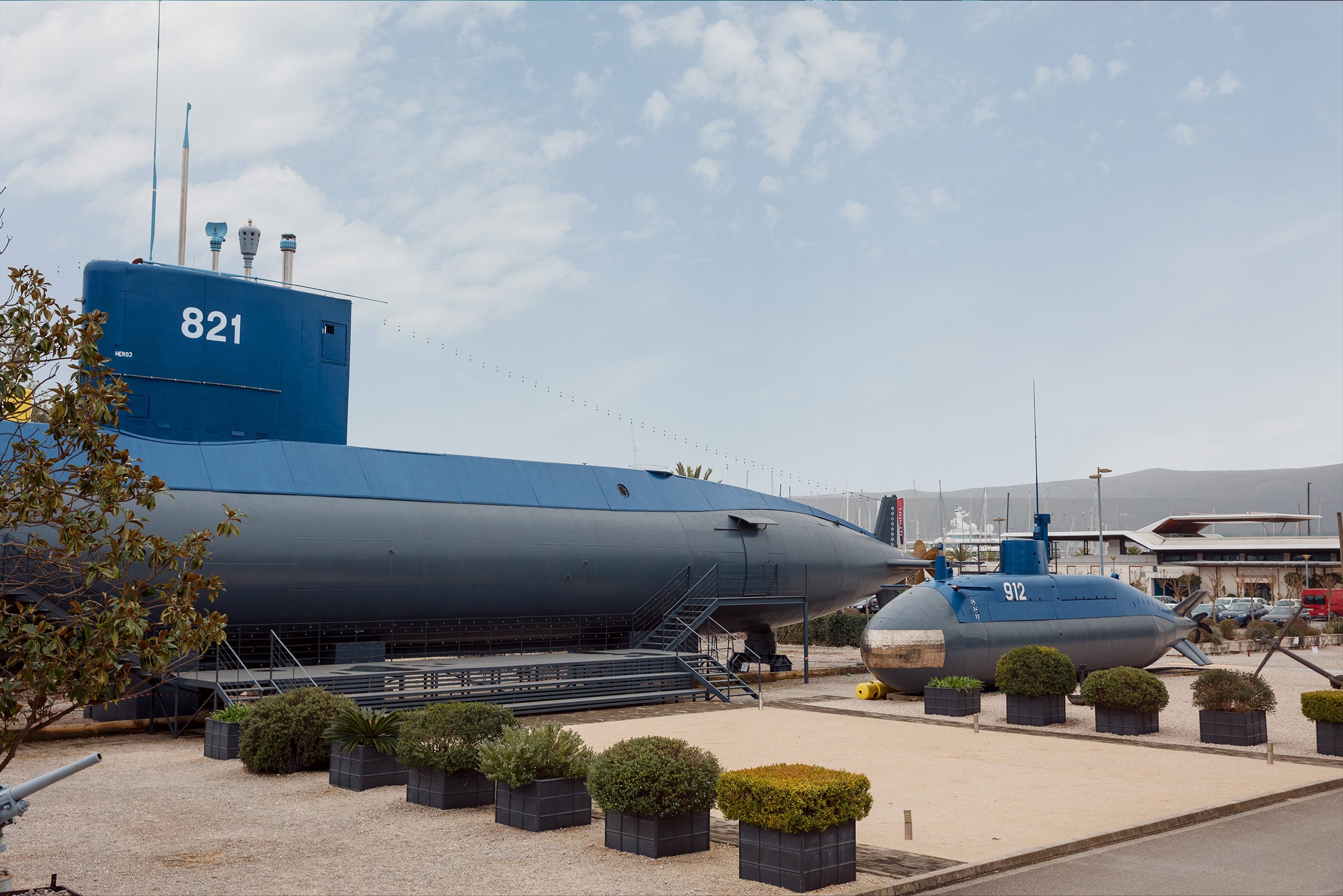
The Naval Heritage Collection occupies the restored sawmill of the former Arsenal. Beside the museum stands the P-821 Heroj submarine, its long metal hull hauled onto land. The industrial building's wooden beams and the submarine beside it give this visit a very different focus from the yachts seen in the marina.
The sawmill dates from the Austro-Hungarian period, and the collection opened in 2011 to preserve the Arsenal's naval heritage. Heroj was built for the Yugoslav Navy and launched in 1967. The preserved vessel reveals the shape of a naval craft that would have been largely below the sea's surface while in service.
The museum space also hosts temporary art exhibitions, so what you see can change with its programme. The naval objects belong to the heritage of the former military base, while an exhibition of contemporary art brings a different subject into the same industrial building.
Published museum and submarine hours: The Naval Heritage Collection and Heroj pages list Tuesday-Saturday 09-17 h. Confirm the ticket price and what it covers, entry into the submarine and accessibility with the museum.
Porto MontenegroBuca-Lukovic complex
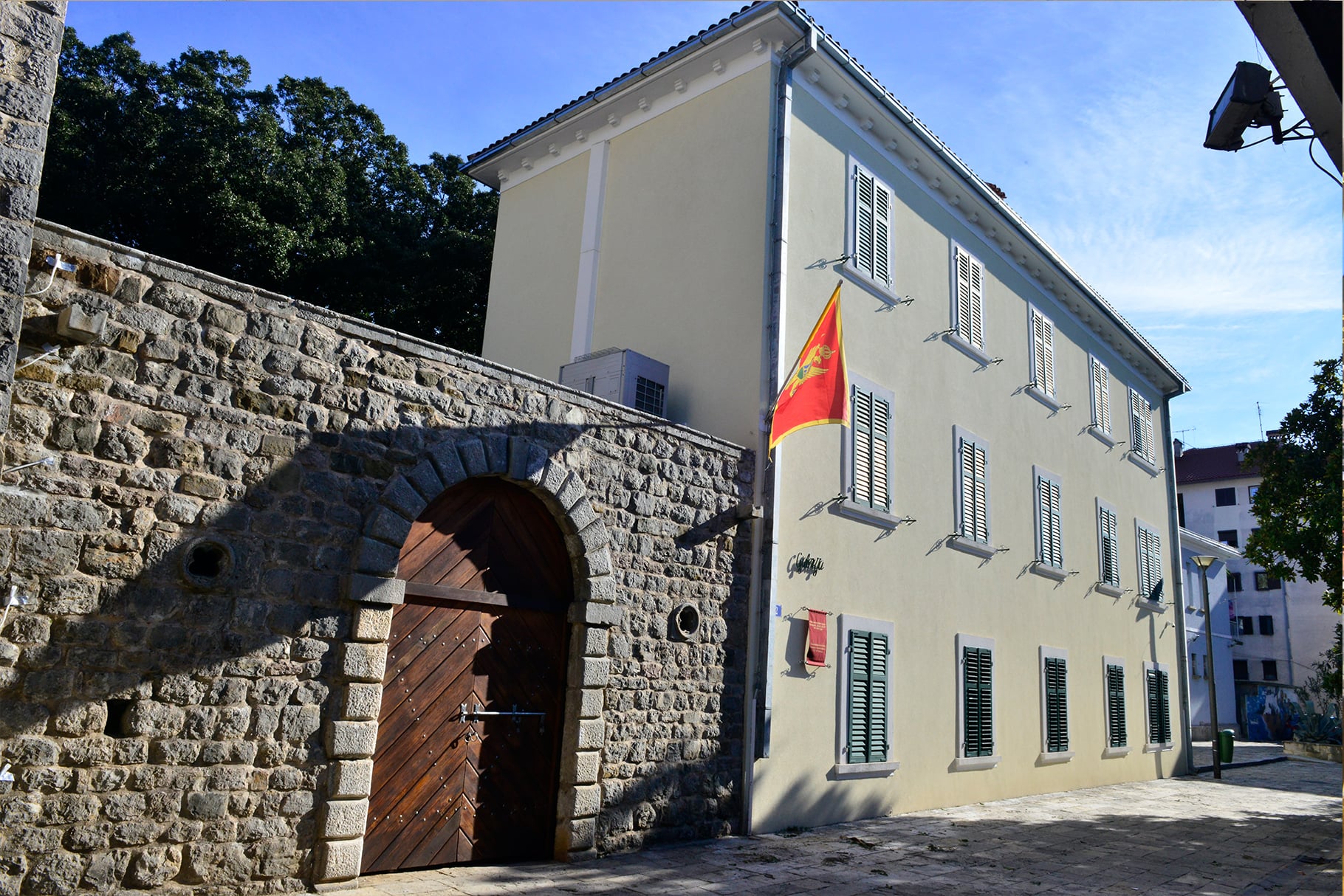
The Buca-Lukovic complex in central Tivat consists of a stone tower, a chapel and buildings of a former summer residence. The tower rises above the lower parts of the estate, while a passage through the stone portal leads into the former residence. The town museum and gallery now occupy the buildings, complementing the estate's architecture with ethnographic material and exhibitions.
The summer residence is part of the heritage of noble families from Boka who owned estates on this stretch of coast. The different surviving parts and later alterations do not all date from the same period. The fortified tower, approximately 15 metres tall, is therefore one part of the whole, rather than a name for the entire estate.
The museum's ethnographic displays cover traditional dress, crafts and other forms of local heritage. In a space that once belonged to a noble estate, you can now learn about objects and skills from life in the wider area. Art and documentary exhibitions add to those displays according to the institution's programme.
The institution's opening hours: Tivat Museum and Gallery publishes Tuesday-Sunday 10-16 h, closed on Mondays. Ask the institution at 2 Trg od kulture to confirm holiday arrangements and access to the tower and individual rooms.
Tivat Museum and GalleryGreat City Park
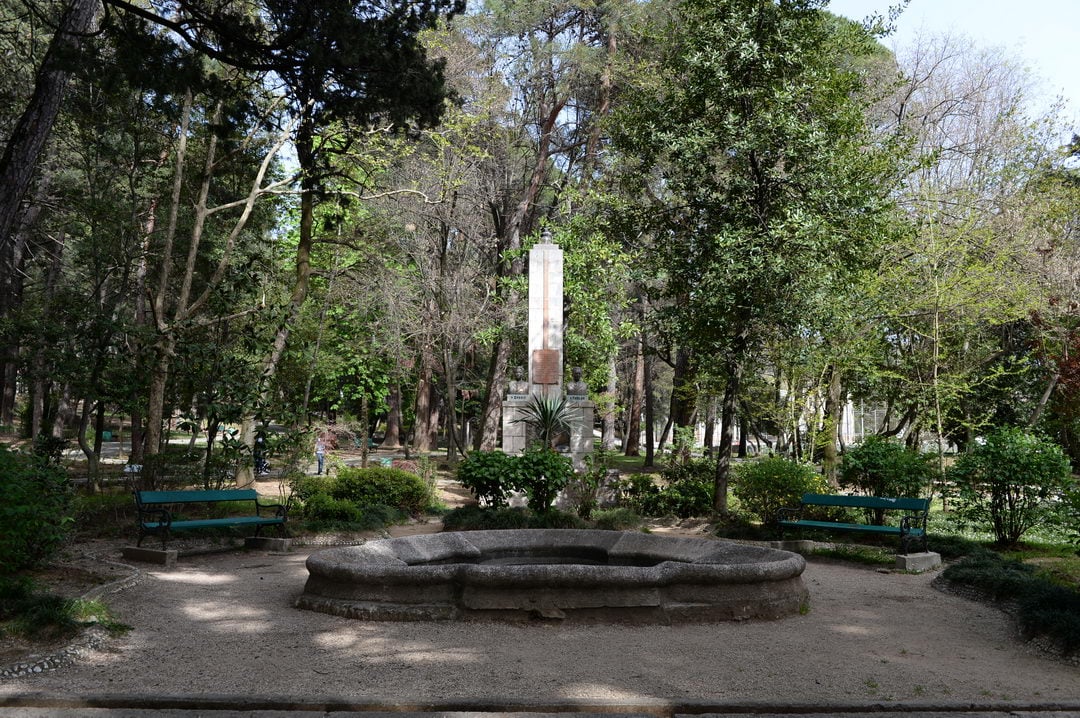
Great City Park is a historic landscaped park with maintained paths between tall pines, cypresses, eucalyptus trees and magnolias. The paths branch between groups of trees, linking benches and more open spaces. Unlike the tree-lined waterfront, the park is explored among its trees, where you can compare the shapes of their crowns and the planting arrangements farther inside.
The navy maintained the park for many years, and its history is linked to the naval town. The section on the town park explains more about how it was planted and its place in Tivat's development.
Kalimanj harbour
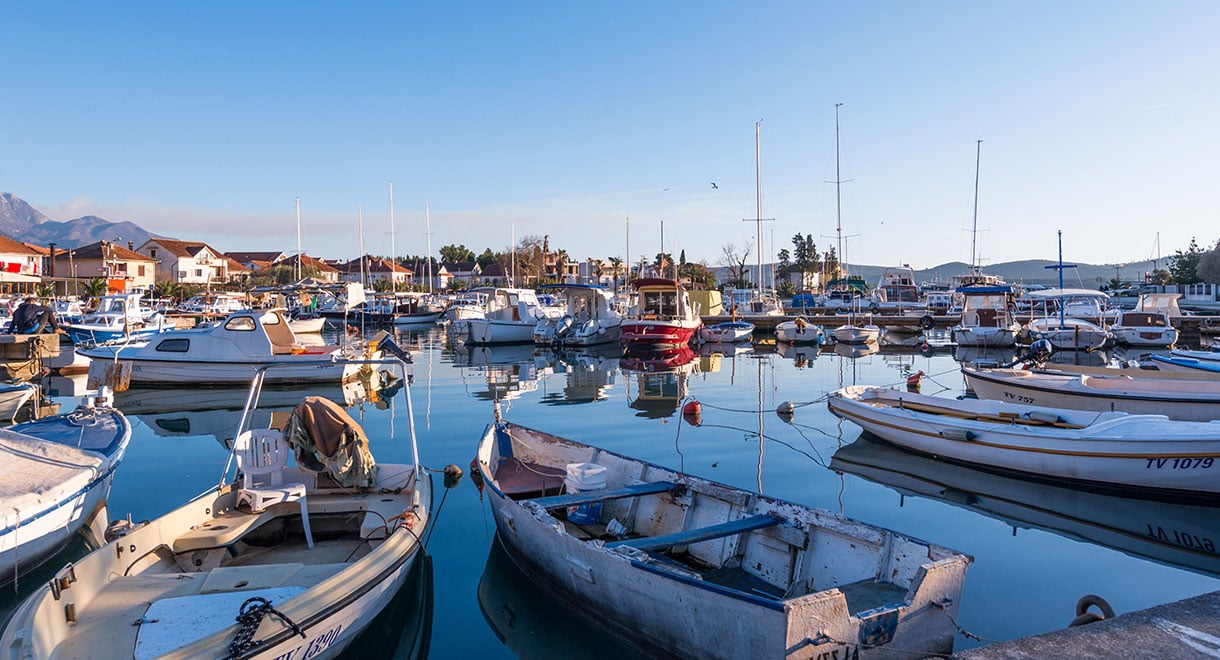
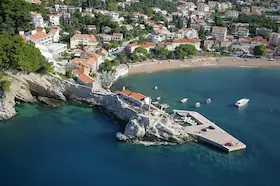
Kalimanj is a sea inlet extending between houses, with small boats and jetties along its shore. Its narrow opening towards the bay distinguishes it from the open waterfront and the large marina. Moorings, rings and bollards remain part of the harbour's everyday use, revealing a shoreline intended for small vessels.
The harbour mainly serves smaller boats belonging to local residents. It has ten jetties and a mulo 45 metres long, while its sheltered position reduces exposure to currents and winds. A mulo is a harbour wall or jetty used for mooring. Together with the arrangement of the moorings, it shows how vessels fit into this narrow space.
A working harbour: Viewing the harbour from the shore does not include entry to every jetty or boat. Contact Komunalno Tivat about specific uses and access to working areas.
Tivat Tourist Organisation02A separate visit to Solila
Tivat Solila
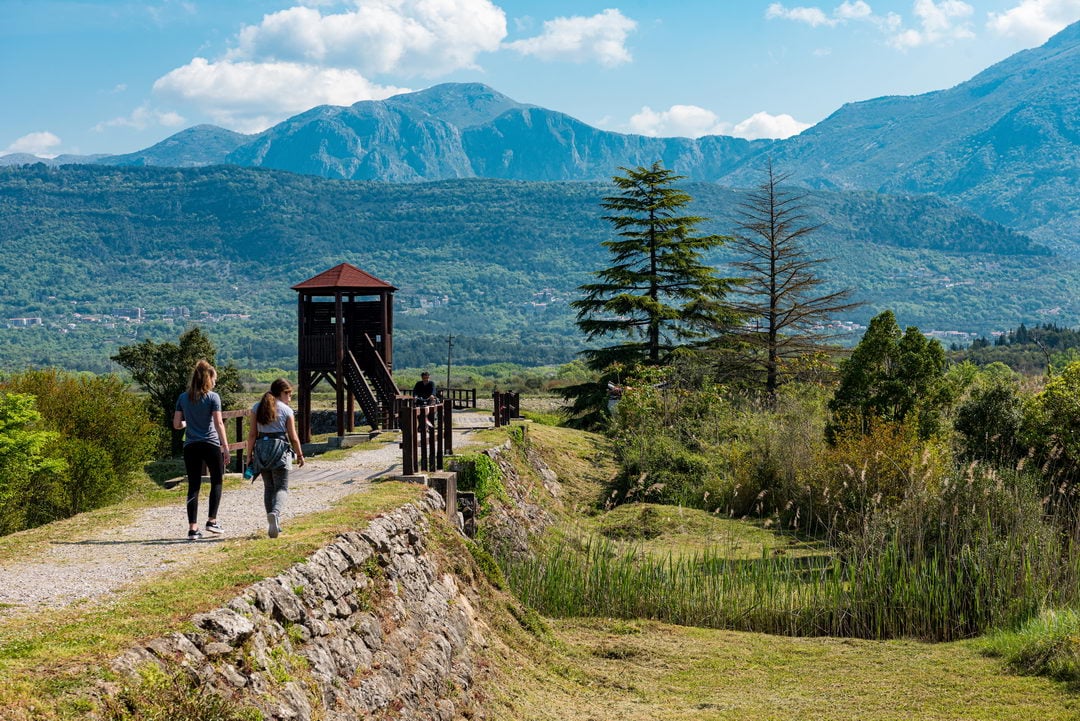
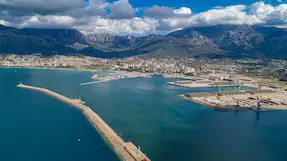
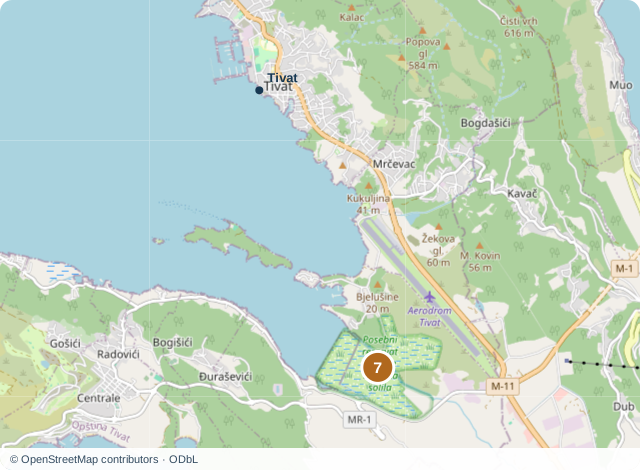
Tivat Solila is a shallow wetland area with channels, embankments and plants adapted to salt water. Unlike the town waterfront, its shoreline does not form a clear boundary. Water extends among low vegetation and earthen embankments. This landscape and its bird habitat are the main reasons to visit.
The reserve lies in Krtole Bay, across the water from central Tivat. Its area of 150 hectares was added to the Ramsar list of wetlands of international importance in 2013. For some birds, Solila is a wintering site, while others stop here during migration. The species present therefore change throughout the year, and the total number recorded does not describe a single visit.
Two observation towers have been provided, and a viewpoint beside the road towards Krtole offers a view across the wetland. From the embankments, you can distinguish open water, channels and low vegetation. These are different parts of the same habitat, rather than a beach or a developed town waterfront. Check access to these areas with the reserve's manager.
Conditions for entering the reserve: JP Morsko dobro requires its approval for tourist visits to the reserve. Before going, request the current entry conditions and availability of paths and observation towers. Arrange a separate time for a guided visit.
JP Morsko dobroAlong the coast, you can explore open passages without entering a vessel or building. For a museum, the exhibition and day of the week matter. For the reserve across the bay, you need its manager's approval.
The Naval Heritage Collection and Buca-Lukovic have different subjects and operators. The former presents objects associated with the navy, while the latter has an ethnographic and art programme. Choose which to enter according to the exhibition announced, and check separately what a visit inside the Heroj submarine includes.
Pine is a town promenade, Porto Montenegro a marina with commercial and private facilities, and Kalimanj a harbour serving smaller vessels. A view from the shore does not include access to a boat, every jetty or hotel spaces.
The town park is a historic landscaped space near the centre. Solila is a wetland habitat in Krtole, where movement depends on the available paths and observation towers. The choice is between exploring town greenery and a separate visit to the reserve across the bay.
Distinctions that are easy to overlook
The training ship and museum submarine are different vessels. Similarly, the tower's construction date does not describe the entire estate, and the two park names refer to separate places.
Heroj is a preserved submarine on land beside the Naval Heritage Collection. The tourist organisation associates Jadran with the Pine waterfront. A description of that waterfront does not confirm that Jadran is there every day or open to visitors. Heroj has separate museum information, which does not apply to boarding Jadran.
The year 1548 is associated with Buca-Lukovic's fortified tower. The estate includes other buildings and a chapel, together with later alterations. That year therefore does not date every wall or the founding of today's museum.
Captain's Park is a separate space listed among Porto Montenegro's facilities. Great City Park is the older town park described in this article. When looking for that park on the map, use its full name, Great City Park. The label Captain's Park points to a different place.
An art donation, a submarine's hull and saltworks channels
A donation from Dusseldorf expanded the town museum's art collection. The size of the submarine on land and the regular lines of the wetland channels reveal two more features of Tivat's naval and industrial heritage.
In 2004, the museum received a donation of 94 works by artists associated with Dusseldorf, thanks to Tivat painter Ivica Arandjus. The collection brings together 72 artists and has several parts, including works donated by Bernd Schwarzer. This explains why international contemporary art is found in a small town museum. The collection's existence does not mean that all 94 works are displayed during your visit.
Heroj is approximately 50 metres long. On land, its elongated hull can be seen in full, including the part that would remain below the surface in water. You can see its size from outside, independently of whether you can enter the submarine.
Solila's embankments and channels come from former salt production. Their more regular lines are not simply natural water margins. The surviving infrastructure shows how the area was laid out for saltworks. Today's wetland habitat thus includes traces of work that once changed the flow and retention of water.