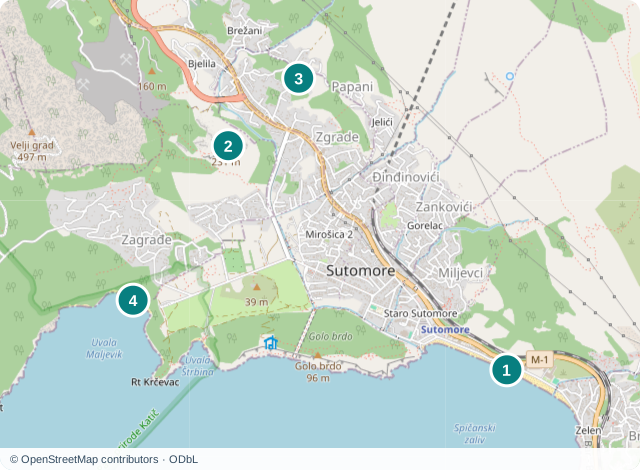
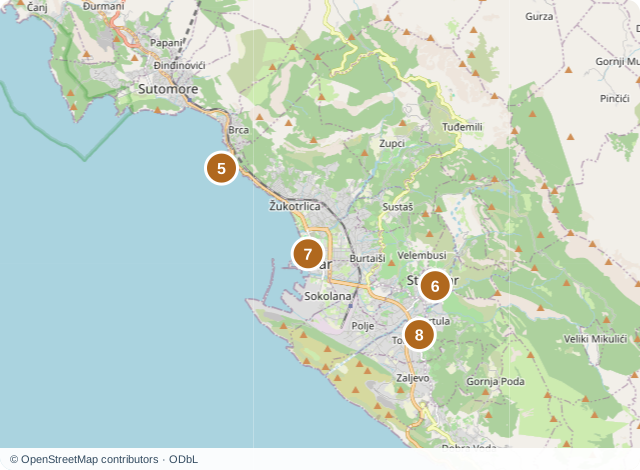
01The Sutomore coast and inland area
Sutomore Beach
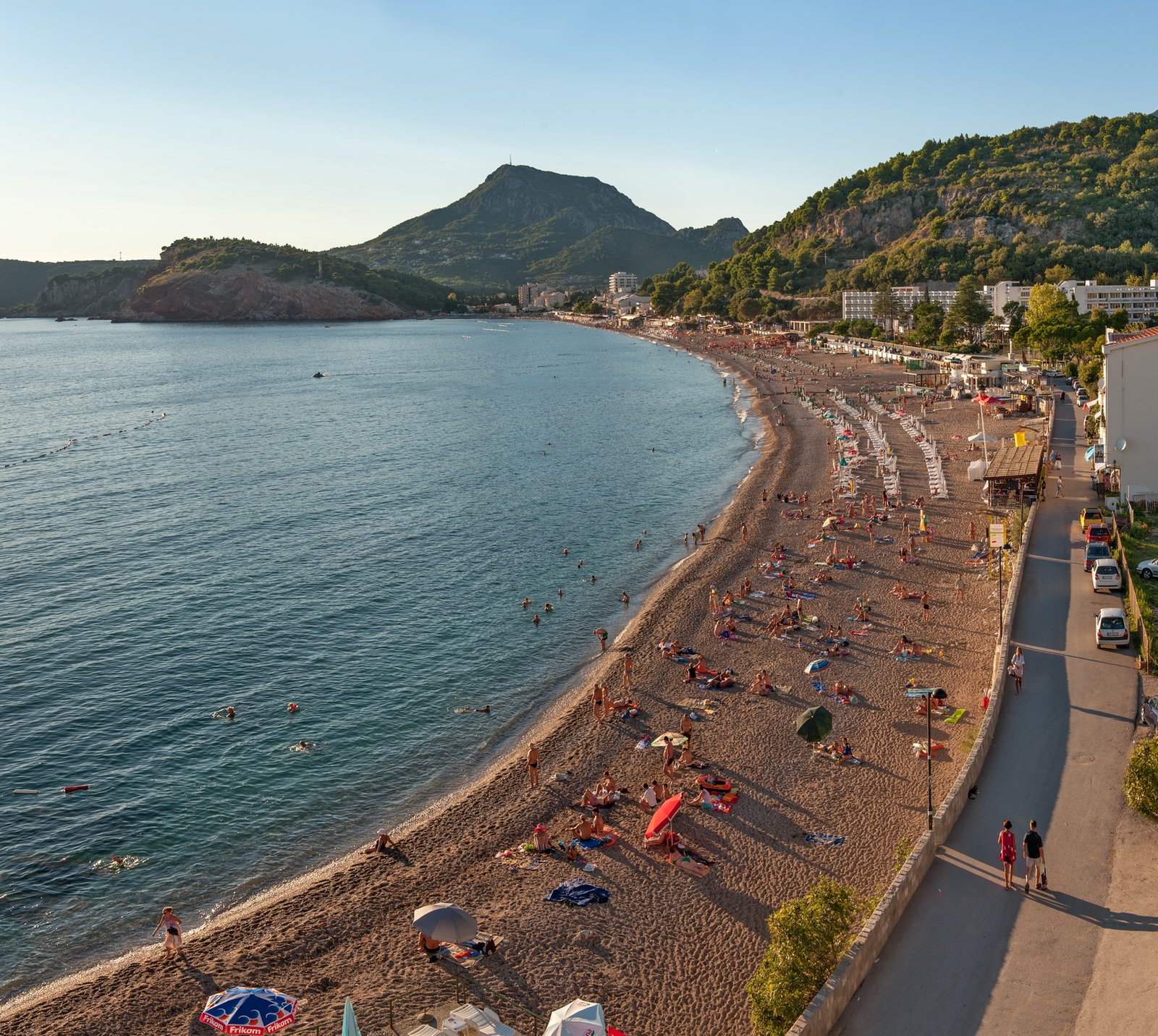
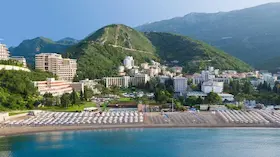
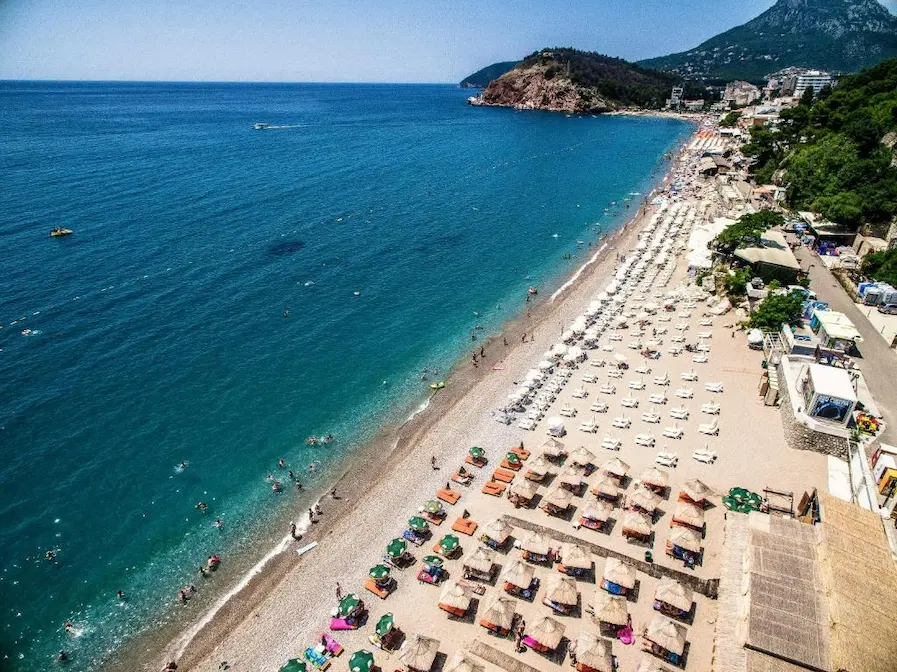
Sutomore Beach forms a long arc between the sea and the built-up shore, with hotels, terraces and cafes immediately behind the bathing area. From the shore, you can see the hills behind the settlement and the rocky ends of the bay.
The main beach is about 1,200 metres long. Sand and fine shingle alternate along the shore, as do organised areas with parasols and places where people spread out their towels. A promenade runs behind them, lined with buildings and cafe terraces.
Beach and services: Sun lounger and parasol prices depend on the part of the beach and the operator's offer. Equipment rental charges should not be confused with the conditions for using the entire beach.
Sutomore Beach - Bar Tourist OrganisationHaj-Nehaj Fortress
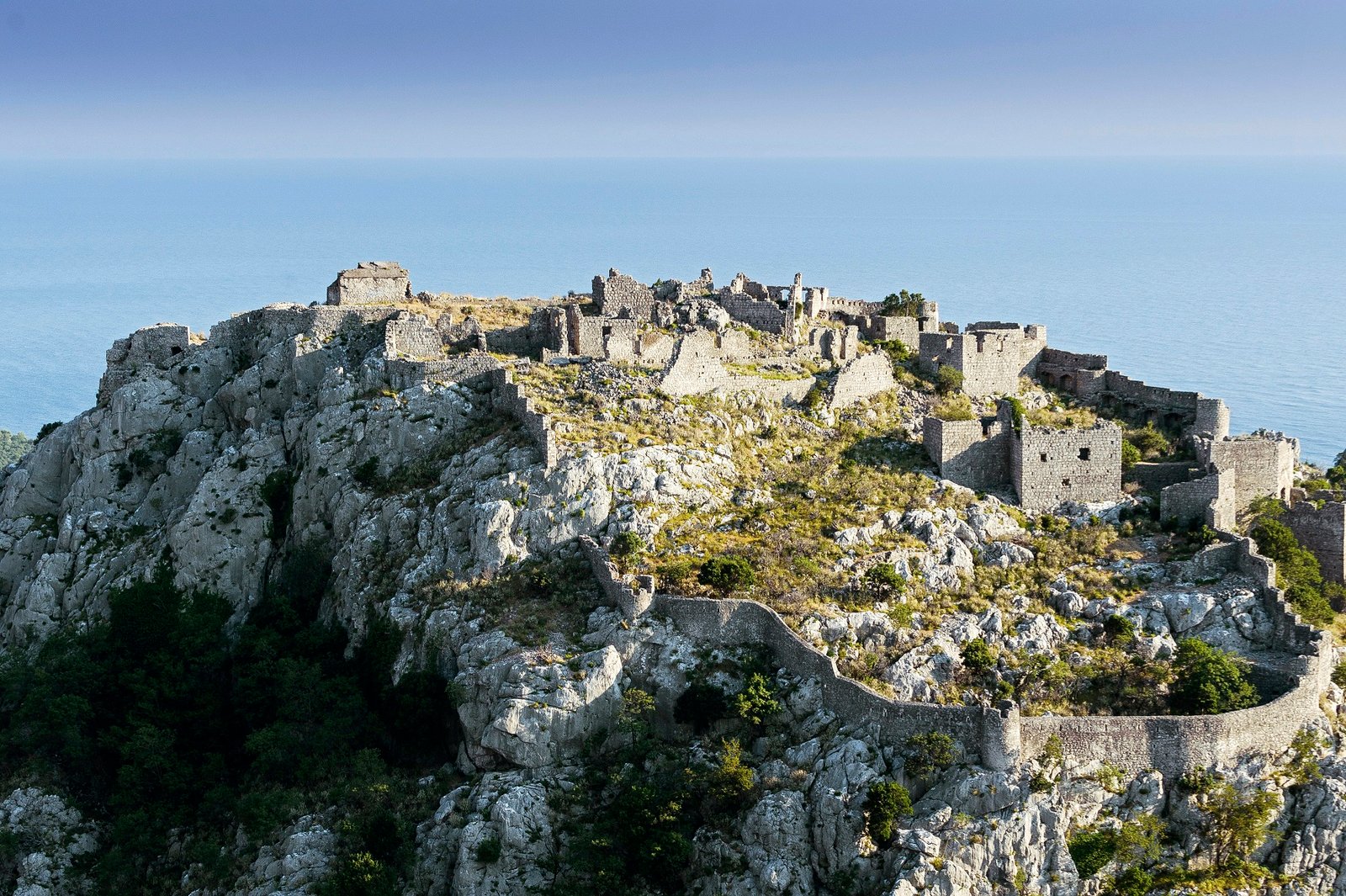
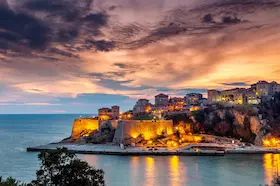
Haj-Nehaj occupies a rocky summit above Sutomore, with defensive walls built along the edges of the rock. Views of the sea open through the damaged walls, while the remains of several buildings can be seen within the defences.
The fortress is associated with the Venetian defence of this stretch of coast in the 15th century, although the first known written mention dates from 1542. Today, you explore its ruins, without restored living quarters to show what life there was like.
The ruins of the small Church of Saint Demetrius also stand inside the fortress. Built from dressed stone and once decorated with wall paintings, it suffered severe damage in the earthquake of 1979. Only the walls of the former place of worship remain, and there is no preserved church interior to visit.
The uphill walk: Reaching the walls involves an uphill walk over rocky ground. A published hiking route from Sutomore does not confirm that every part of the trail is passable at the time of your visit. Check the condition of the approach before setting off.
Walking routes - Bar Tourist OrganisationChurch of Saint Thecla
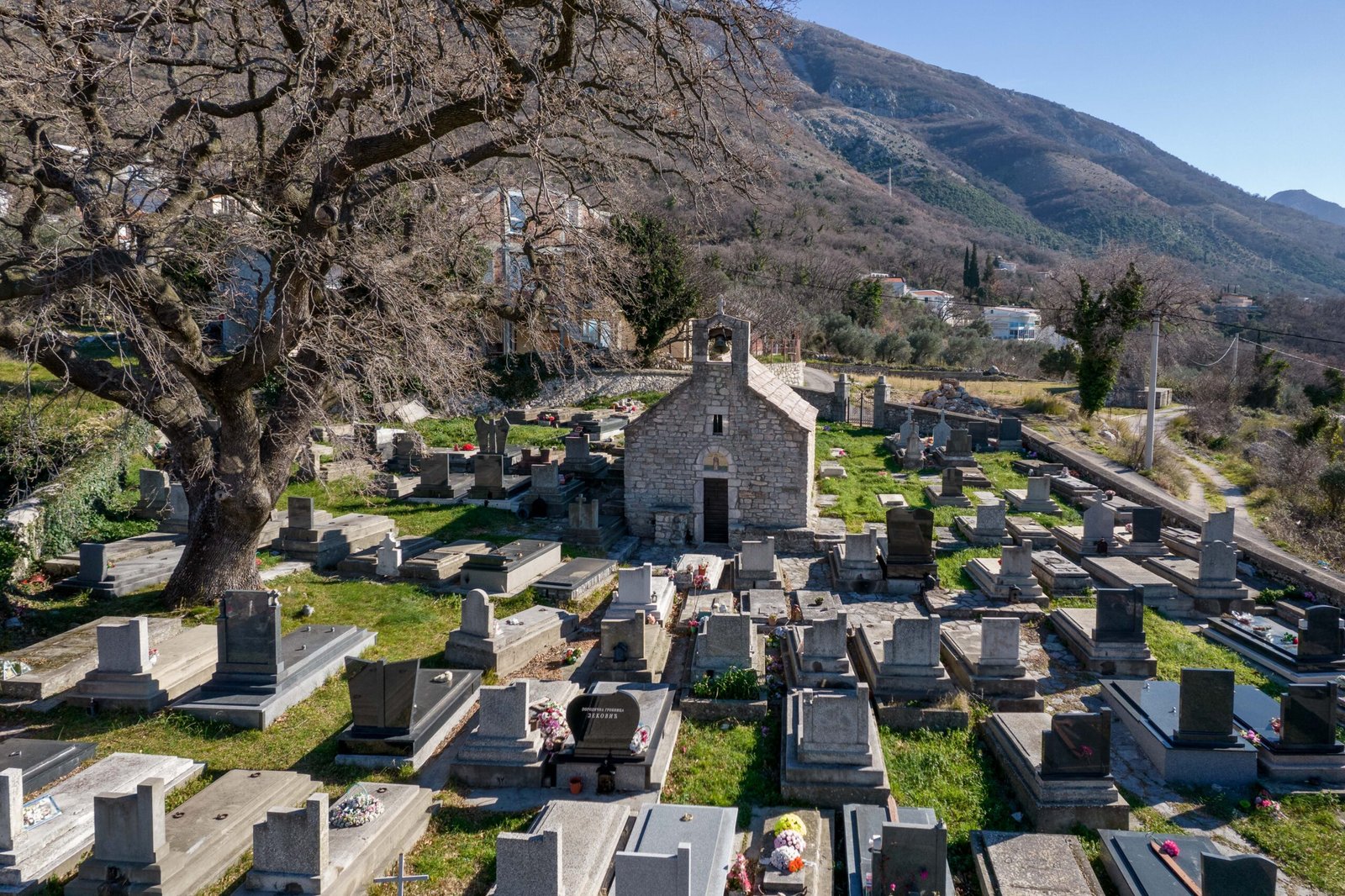
The Church of Saint Thecla is a small stone building with a bell in an opening above its front, surrounded by a cemetery. Its distinctive feature is the interior arrangement: one church space contains both an Orthodox and a Catholic altar.
Built in the 14th century, it stands west of Sutomore's main coastal strip. The Orthodox altar is in the apse, the semicircular end of the church, while the Catholic altar stands against the south wall. Priests of both faiths held services here, and Orthodox and Catholic communities also used the surrounding cemetery.
Church grounds and interior: The church is a place of worship within a cemetery. No regular tourist opening hours are published, so seeing the two altars depends on the church being open or on access inside being confirmed in advance.
Church of Saint Thecla - Bar Tourist OrganisationMaljevik Beach
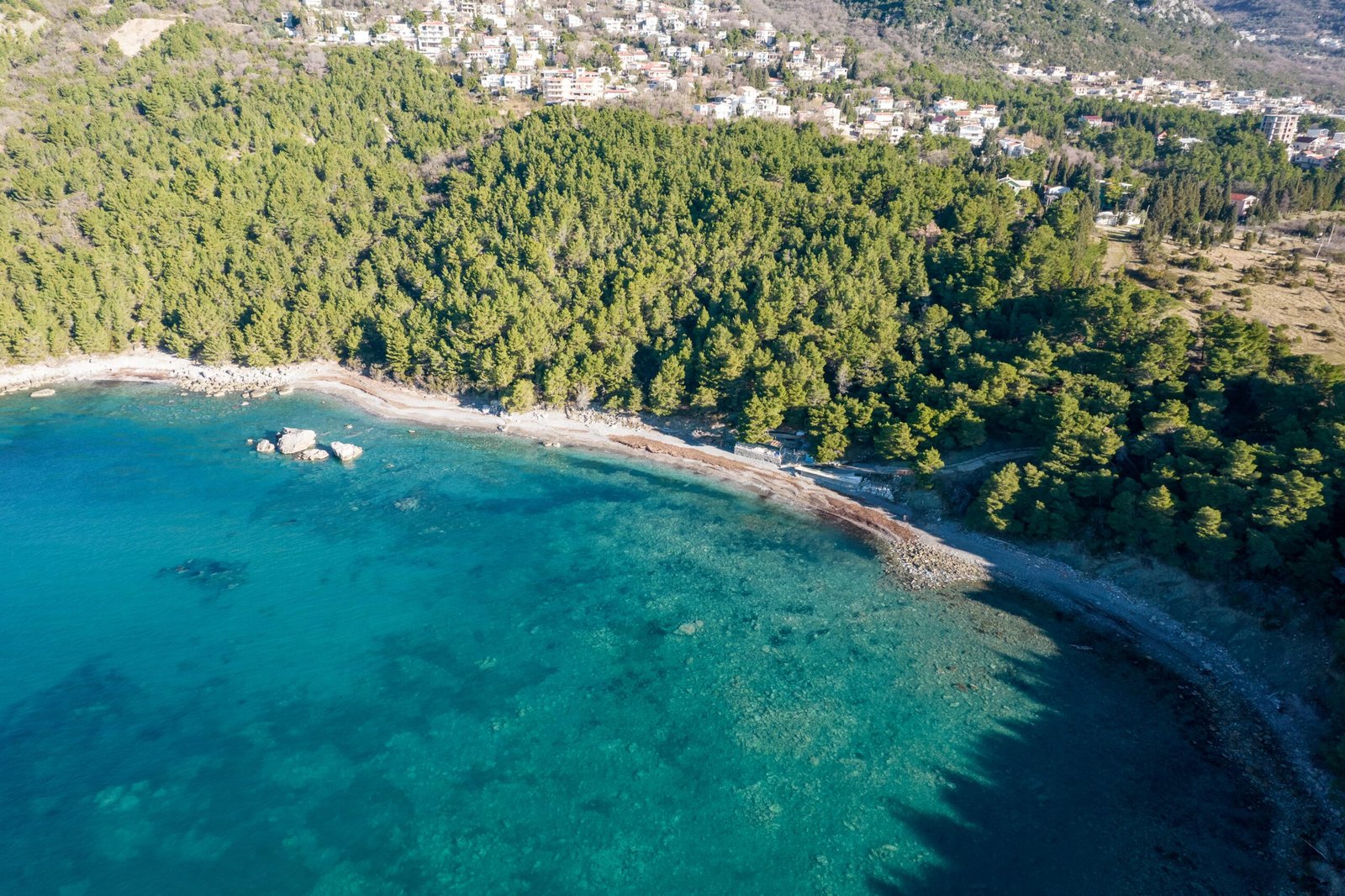
Maljevik is a shingle bay west of Sutomore's main beach, with woodland behind the shore and rocks at either end. Along this shorter beach, the greenery comes much closer to the water than it does in the built-up strip in front of Sutomore's hotels.
The beach is about 330 metres long and lies on the coast between Sutomore and Canj. Pebbles cover the middle of the bay, giving way to larger stones and rocks towards the ends. Houses can be seen higher on the slope, behind the wooded strip.
Services beside the beach: The published tourist description of Maljevik does not give regular opening hours for services beside the beach. If your visit depends on renting equipment or using a cafe, confirm its opening separately.
Maljevik - Bar Tourist Organisation02Ratac, Bar and Mirovica
Ruins of the Monastery of Our Lady of Ratac
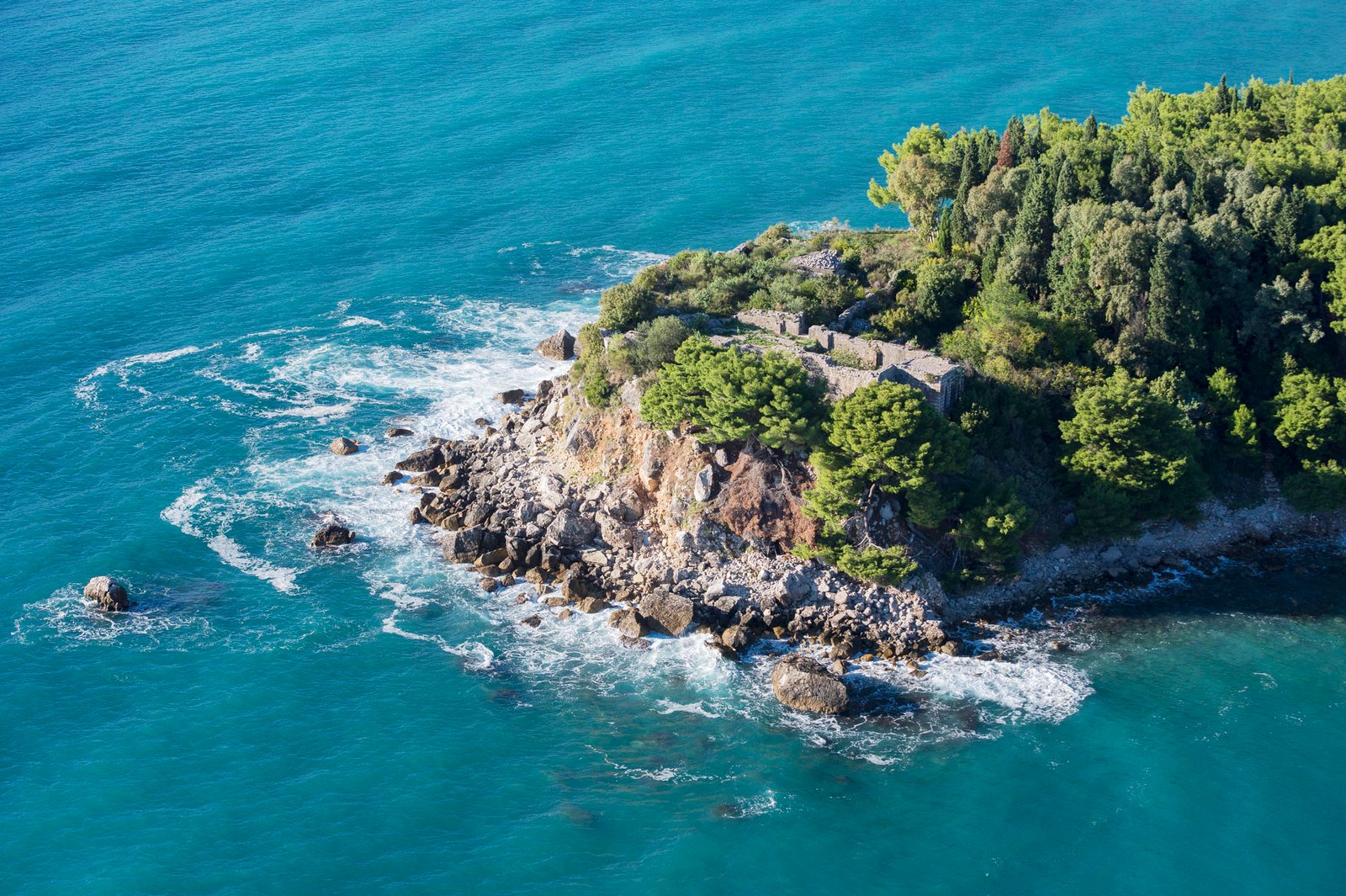
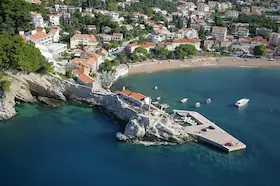
At the end of Cape Ratac, low stone walls of the former monastery stand directly above the rocky shore. The sea lies beside the complex, and vegetation surrounds the surviving building remains.
The Benedictine Monastery of Our Lady of Ratac dates from the 11th century. It contained three churches and other buildings, protected by defensive walls and towers. The surviving foundations belong to an entire monastic complex, rather than a single small church. The monastery was destroyed in the 16th century, so no preserved monastic interior remains on the coast today. The headland lies between Sutomore and Bar, separate from Sutomore's main beach.
Open-air archaeological remains: The visit is to monastery ruins in the open air on a rocky headland. This is not an active monastery with preserved rooms for visitors. The marker identifies the complex, not a designated parking area or a guaranteed coastal walking connection from Sutomore.
Monastery of Our Lady of Ratac - Bar Tourist OrganisationStari Bar
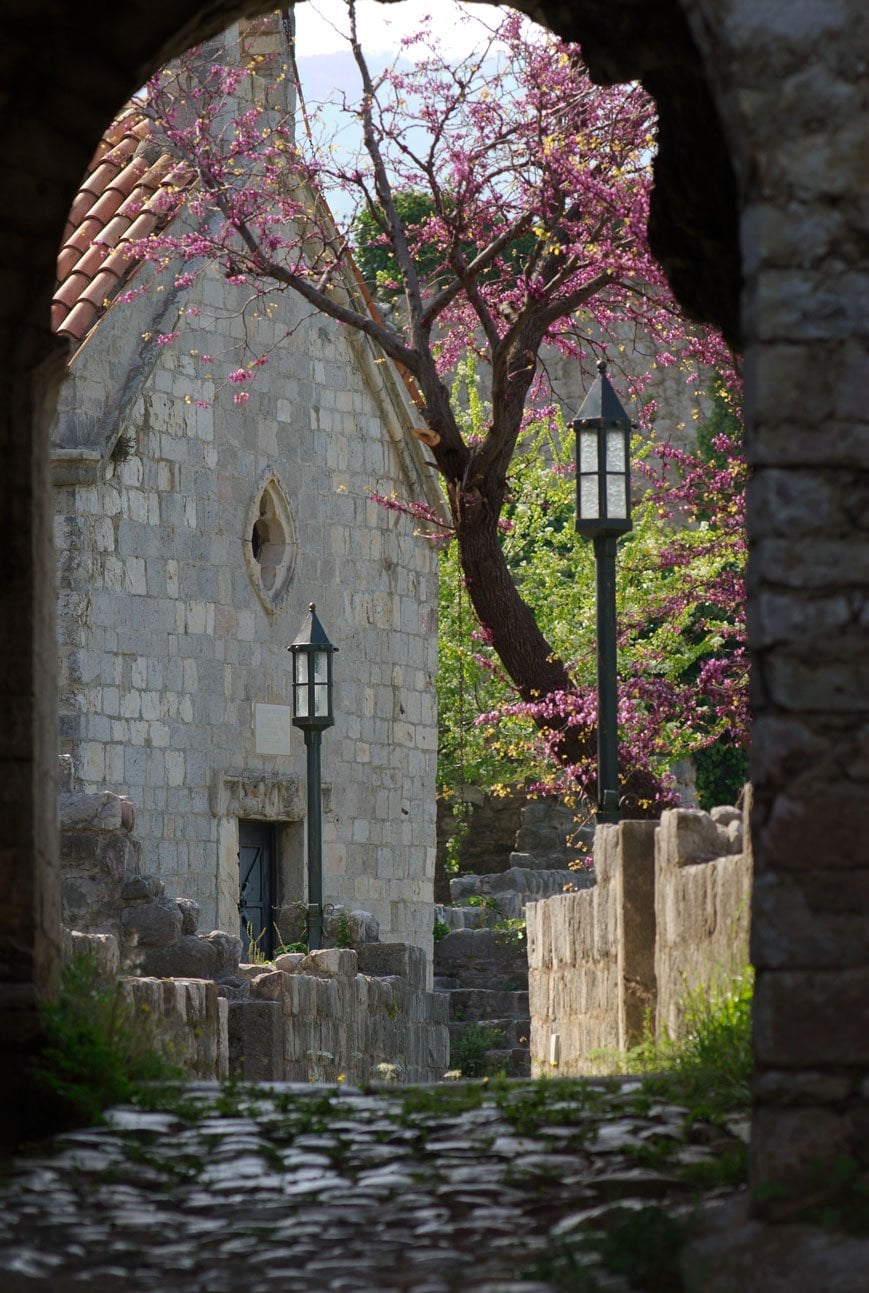
Stari Bar is a fortified town on a rock below Mount Rumija, with defensive walls, passageways and remains of houses and public buildings. Streets and squares can still be recognised inside the walls, so there is much more to explore than a single defensive tower. This larger historic site lies inland from Bar and requires a separate trip from Sutomore.
Some buildings have been restored, while others survive as walls and foundations. They include churches and palaces, while the hamam, a former public bathhouse, and the clock tower are associated with the Ottoman period. Their different uses show that, alongside defence, everyday town life once took place within the walls.
Above the town stands the citadel, its fortified defensive section, with views towards the surrounding slopes and coast. Stone passageways, steps and open spaces link the buildings. Individual places and other ways to extend your visit are described among the attractions in Bar.
Entry to the archaeological complex: Adult admission is €5, and published opening hours for the archaeological complex are 08-20. For possible changes to these hours or an organised group visit, contact the ticket office or the Bar Cultural Centre.
Opening hours and tickets - Bar Cultural CentreKing Nikola's Palace and the Local History Museum
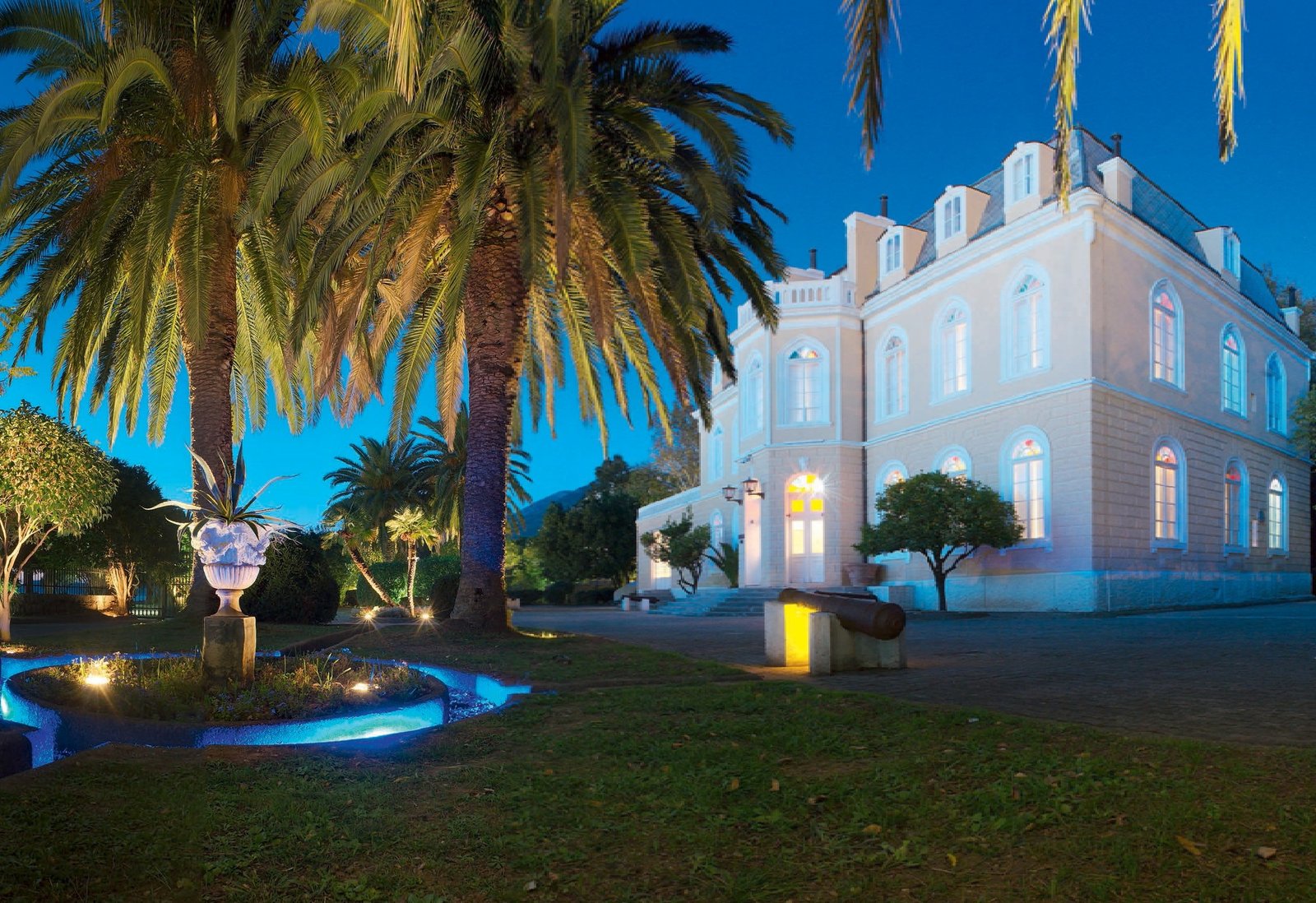
King Nikola's Palace stands beside the sea at Topolica in Bar, in a park with palms and other Mediterranean vegetation. Decorations around the windows and the central entrance stand out on the pale facade, giving the building the recognisable appearance of a former summer residence. A visit can include both the exterior architecture and the museum displays inside.
The palace was built in 1885 for Prince Petar Karadjordjevic, Prince Nikola's son-in-law. Nikola later bought it. The wider palace complex retains the Great Palace, smaller associated buildings and the park, with two low hexagonal guardhouses at the corners of its enclosing wall.
The Great Palace now houses the Local History Museum. Its collections include archaeological finds and old coins, weapons, photographs and traditional costume from the Bar area. The permanent display traces the area's past from prehistory to the first half of the 20th century, including King Nikola's era. The museum objects therefore do not relate only to former palace life: they also introduce the much longer history of Bar and its surroundings. Individual exhibitions may differ from the museum's full collection.
Google Maps - King Nikola's Palace and the Local History Museum.
Museum galleries: Adult admission is €4, and published museum opening hours are 08-20. You can confirm changes to these hours and group visiting conditions with the Bar Cultural Centre on +382 30 312 431. Looking around the park and exterior does not include entry to the museum galleries.
Local History Museum - Bar Cultural CentreOld Olive Tree at Mirovica
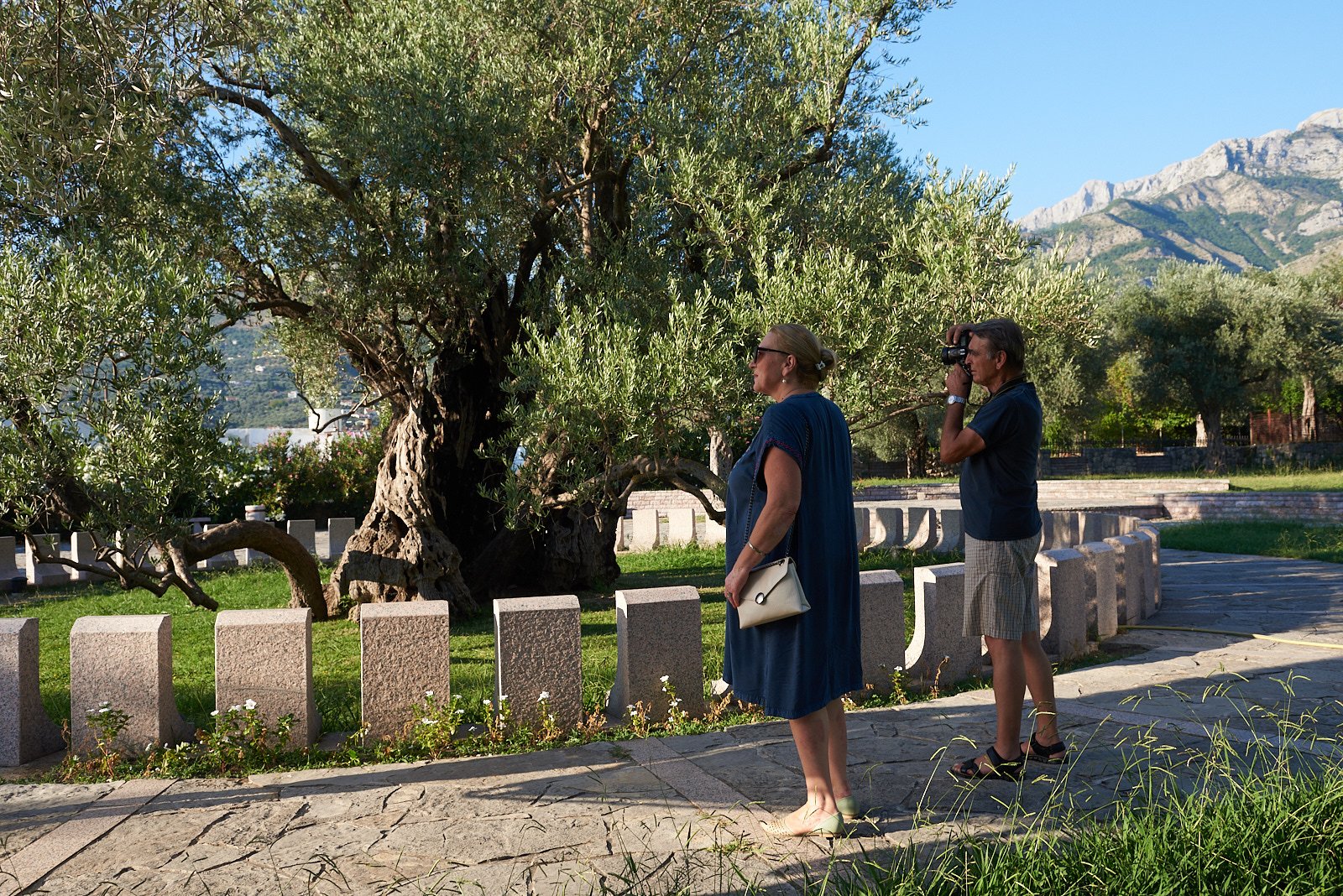
The Old Olive Tree at Mirovica has a broad, deeply furrowed trunk, with branches spreading low above the ground. A visitor area surrounds it, allowing you to look closely at the tree and compare it with nearby olive trees.
It stands near Bar, close to the road towards Ulcinj. It is protected as a natural monument and has managed visitor access, unlike a tree you happen to come across in an olive grove. It is estimated to be more than two thousand years old.
According to local tradition, feuding families reconciled beneath the Old Olive Tree's branches. This is also the origin of the traditional association between the name Mirovica and peace.
Ticketed visitor area: Adult admission is €2. The ticket office lists opening hours of 08-18, Monday to Sunday. The Old Olive Tree contact number is +382 67 137 931.
Old Olive Tree - House of OlivesChoose the museum in the palace at Topolica for collections displayed indoors. Stari Bar is a much larger open-air site, with stone passageways and buildings to explore along the way.
Choose coastal sights if you want to look around without a hike. At Haj-Nehaj, walking uphill is part of the visit, so whether that climb suits you matters when choosing it.
The museum has published opening hours and a ticket office. Saint Thecla has no regular tourist schedule, so you can plan an indoor museum visit around specific hours, while access inside the church needs separate confirmation.
Distinguish the locations and what each visit includes
The palace name refers to the former residence, while the Local History Museum is the institution now housed in its main building at Topolica. They are not two separate locations to look for on the map.
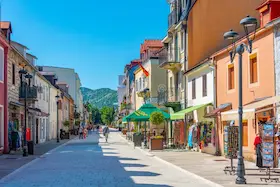
The area of restaurants and shops lies below the fortified town. Walking along that street does not include the archaeological site behind the gate, which requires a ticket.
The Old Olive Tree is at Mirovica. The House of Olives shop has a separate address in Stari Bar and its own opening hours. To reach the tree, use the Old Olive Tree location and contact, rather than the shop's general contact details.
More about the surviving sights
The small Church of Saint Demetrius is dated to the late 13th or early 14th century. Its remains belong to an older religious building, while the Venetian walls represent a later phase of construction on the same summit.
The ballroom was added along the western facade in 1910. It is now used for exhibitions, music and performing arts, so an event announcement at the palace may refer to this hall rather than a visit to the permanent display.
The olive tree's age was estimated through laboratory analysis of a wood sample. This is not a record of the year it was planted: neither the exact date nor the person who planted it is known.
The Old Town of Bar is on Montenegro's UNESCO Tentative List. This confirms that it has been proposed for consideration, but is not the same as inscription on the World Heritage List.