01Location and coastal landscape
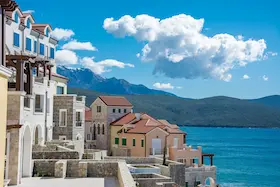
Petrovac on the Budva coast, its valley and Mediterranean surroundings.
Location and coastal landscape
Petrovac on the Budva coast, its valley and Mediterranean surroundings.
Petrovac's location and coastal landscape
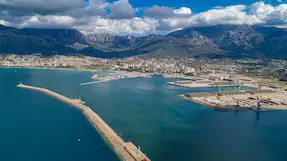
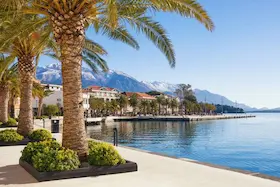
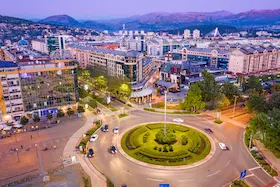
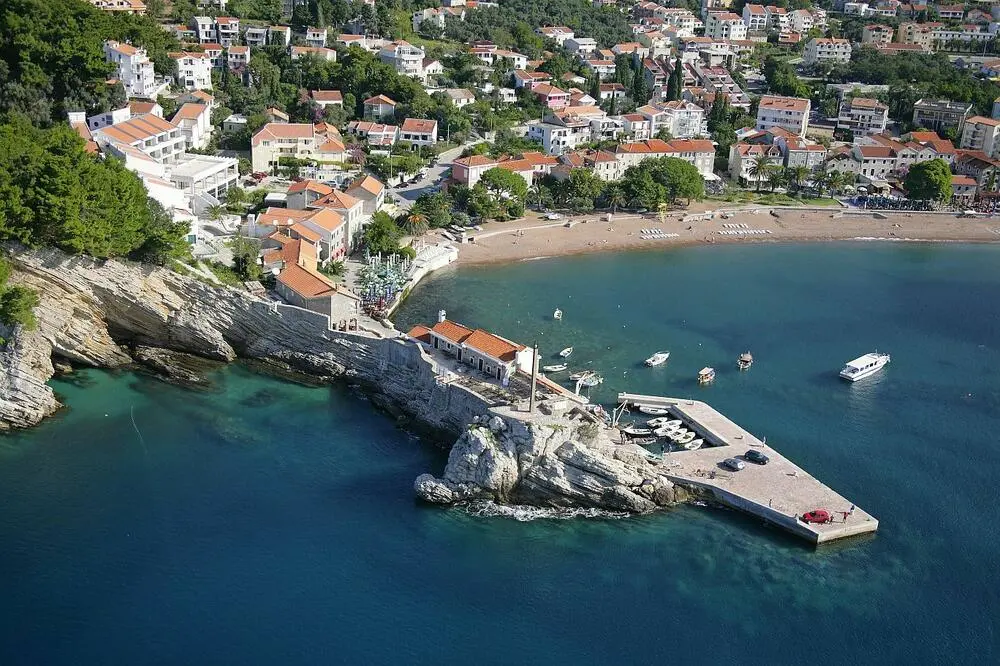
The hills around Petrovac descend almost to the sea, and the town sits in a valley between them. Houses extend from behind the town beach towards the slopes. Lucice, with pines and cypresses behind the beach, is a separate bay south of the town.
The coast between Budva and Bar has a Mediterranean climate with warm, dry summers and mild, rainy winters.
02Names and earlier history
Lastva, Kastel Lastva, the name Petrovac and the late antique mosaics at Mirista.
Names and earlier history
Lastva, Kastel Lastva, the name Petrovac and the late antique mosaics at Mirista.
Lastva, Kastel Lastva and the name Petrovac
The town's earlier name was Lastva. The Venetians built a fort above the present-day pier, and the town became known as Kastel Lastva. The fort itself retained the local name Kastio.
After the First World War, residents chose the name Petrovac at a town meeting in honour of Petar I Karadjordjevic. The words "na Moru", meaning "by the sea", were added later to distinguish it from other places with the same name.
Roman mosaics at Mirista
A late antique Roman mosaic was discovered at Mirista in 1902. The mosaic and a second one, discovered later, decorated the floors of a Roman building. The settlement is thought to have been a stopping point on the road along the Adriatic coast during the Roman period.
03The waterfront, pier and marine area
The Venetian fort, today's waterfront, the islands and protected marine habitats.
The waterfront, pier and marine area
The Venetian fort, today's waterfront, the islands and protected marine habitats.
Kastio, the pier and the waterfront
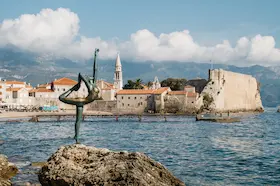
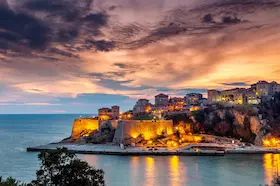
Kastio and the remains of Lazaret stand above the present-day pier and frame Petrovac's bay. The Venetian fort housed a garrison, while its warehouses stored wine and other goods for export by sea. Lazaret was used for quarantine during epidemics. The walls of these buildings have survived.
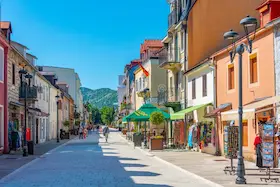
A waterfront promenade runs alongside the town beach. Directly beside it are houses with guest rooms and apartments, hotels, cafes and restaurants. The pier and rocky headland form one end of this stretch of coast, while the houses behind the beach rise up the hillside.
The islands and protected marine area
The islands of Katic and Sveta Nedjelja lie off Petrovac. A small church of the same name stands on the rocky islet of Sveta Nedjelja. The islands are uninhabited and visible from the town's waterfront.
The town beach and the islands are within Katic Nature Park, which covers both marine and coastal areas. Meadows of the seagrass Posidonia oceanica grow in the waters off Petrovac and around the islands. Their habitats are among the natural features for which this stretch of coast and sea is protected.
04The Red Commune and today's cultural centre
The commune's history, the memorial room, gallery and venues for public programmes.
The Red Commune and today's cultural centre
The commune's history, the memorial room, gallery and venues for public programmes.
The Red Commune and the town's political history
In 1920, the communists won Petrovac's municipal elections, took power and established the Red Commune. The name of today's Memorial House commemorates this episode in the town's political history.
The memorial room at the Memorial House displays copies of documents, photographs, correspondence and newspapers from the period when the commune was established. The display also includes photographs of old Petrovac and its residents.
The gallery and public cultural venues
The Crvena Komuna Memorial House is part of the public institution Museums and Galleries of Budva. Its Marko Krstov Gregovic Gallery is named after a painter from Petrovac who graduated from the fine arts academy in Vienna. Works by artists from Montenegro and abroad are presented in its exhibition spaces.
The cinema hall is used for film screenings, theatre performances, meetings and public discussions. The open-air amphitheatre in front of the building is used for musical performances, from classical music and jazz to coastal vocal groups and folk ensembles.
05A brief overview of places in Petrovac
Attractions and guides to dining and accommodation.
A brief overview of places in Petrovac
Attractions and guides to dining and accommodation.
A brief overview of places in Petrovac
Kastio, the Roman mosaics and the islands off the coast are covered in the guide to Petrovac's attractions.
For places to eat, the guide to dining in Petrovac covers specific venues. The Petrovac accommodation guide compares hotel rooms and apartments.
The headland, waterfront and cultural venues
The pier below the remains of the fort and Lazaret at one end of the town's bay.
The promenade beside the beach, guest accommodation and dining venues directly by the sea.
The memorial room, gallery and cinema hall, with an open-air amphitheatre in front of the building.